


How many teeth make a full set? A complete set of adult human teeth typically consists of 32 teeth, encompassing incisors, canines, premolars, and molars. Understanding the composition of a full set of teeth is crucial for maintaining optimal oral health and making informed decisions about dental care. At Albania Dental Implants, we are dedicated to helping you achieve and maintain a healthy, complete smile. If you are missing teeth, various solutions are available, including dental implants, a long-lasting and effective option. Our expertise in implantology in Albania and commitment to patient care ensures that you receive the best possible treatment. Our team is ready to guide you through every step of the process, offering personalised solutions tailored to your specific needs. Whether you need a single tooth implant or a full mouth reconstruction in Albania, we have the expertise to restore your smile and confidence.
Adult Full Set – How Many Teeth Make a Full Set?
When discussing adult teeth, it’s essential to understand what constitutes a full complement. In adults, a full set typically includes 32 permanent teeth. This includes the four different types of teeth, each playing a crucial role in chewing and maintaining proper oral function. However, the presence of wisdom teeth can sometimes be a complicating factor, as not everyone has them, and they may be removed for various reasons. Understanding the composition of an adult full set is the first step in appreciating the complexity of human dentition. Maintaining this full set is vital for both functionality and aesthetics. If you are considering options to restore your smile due to tooth loss, remember that Albania Dental Implants offers advanced solutions like full mouth reconstruction in Albania.
Adult Teeth Count
The standard adult teeth count is 32 teeth, comprising 16 in the upper jaw and 16 in the lower jaw. These teeth are categorised as incisors, canines, premolars, and molars. Each type has a specific function, from cutting and tearing food to grinding it for digestion. However, the number of teeth can vary due to factors such as genetics, missing teeth, or the absence of wisdom teeth. Keeping this count in mind is useful for understanding your own dental health and discussing treatment options with your dentist. If you are considering dental implants in Albania to replace missing teeth, knowing the ideal count can help you visualise the potential outcome and the scope of the treatment. We’re here to guide you to the ideal solution.
Permanent Teeth and Their Role
Permanent teeth are designed to last a lifetime with proper care. These teeth replace the milk teeth (primary teeth) during childhood and adolescence. Once the permanent teeth erupt, they are meant to function effectively for decades. Each type of permanent tooth serves a unique purpose. Incisors are used for biting, canines for tearing, premolars for grinding, and molars for the final stage of chewing. Preserving these teeth is critical for maintaining good oral health and overall well-being. But if tooth loss occurs, replacing them with dental implants can offer a permanent and natural-looking solution. Consider multiple implants with bridges in Albania to restore functionality and aesthetic appeal.
Do Wisdom Teeth Count as Part of a Full Set?
A common question is: do wisdom teeth count as part of a full set? While the potential adult teeth count is 32, this includes wisdom teeth. However, many people have their wisdom teeth removed due to impaction, crowding, or other dental issues. Therefore, it is entirely normal to have fewer than 32 teeth. Wisdom teeth typically erupt in the late teens or early twenties, and their presence can sometimes cause problems for other teeth. The decision to remove them is often based on individual circumstances and the recommendation of a dental professional. If you are missing teeth, whether from wisdom teeth removal or other causes, dental clinic in Albania Albania Dental Implants can provide solutions like dental implants in Albania to restore your smile and function.
Children’s Teeth – How Many Teeth Do Kids Have?
While adults have a different set of teeth, it’s equally important to know how many teeth do children have? The children teeth count is significantly lower than adults. Children typically have 20 milk teeth, also known as deciduous teeth. These teeth begin to erupt around six months of age and are usually all present by the age of three. The milk teeth play a crucial role in a child’s development, helping with chewing, speech development, and holding space for the future permanent teeth. Understanding the differences between milk teeth and permanent teeth is vital for parents to ensure their children receive proper dental care. If your child requires dental care, Albania Dental Implants also offer general dentistry in Albania.
Milk Teeth and Their Importance
Milk teeth, also called primary or deciduous teeth, are the first set of teeth to erupt in children. These teeth are smaller and whiter than permanent teeth and are essential for several reasons. They help children chew food properly, aid in speech development, and hold space in the jaws for the permanent teeth to erupt correctly. Taking care of milk teeth is crucial, as decay and premature loss can lead to problems with the alignment of permanent teeth. Parents should ensure their children brush their teeth regularly and visit the dentist for check-ups. Although milk teeth are eventually replaced, their role in early childhood development is undeniable.
Teeth Eruption Timeline in Children
The teeth eruption timeline in children varies, but generally, the first tooth erupts around six months of age. The lower central incisors are usually the first to appear, followed by the upper central incisors. By the age of three, most children have all 20 milk teeth. The eruption of permanent teeth typically begins around age six, starting with the first molars. As the permanent teeth erupt, they cause the roots of the milk teeth to resorb, leading to the milk teeth falling out. This process continues until all permanent teeth have erupted, usually by the early teens. Understanding this timeline can help parents anticipate and manage their children’s dental development.
What is the Difference Between Milk Teeth and Permanent Teeth?
The difference between milk teeth and permanent teeth lies in their number, size, and function. Milk teeth are smaller and fewer in number (20) compared to permanent teeth (32). Milk teeth also have thinner enamel and are more prone to decay. While milk teeth are temporary and eventually replaced, permanent teeth are meant to last a lifetime. Permanent teeth also have more developed roots and a different enamel composition, making them more resistant to wear and decay. Understanding these differences can help individuals appreciate the importance of proper dental care at all ages. Even if you’ve experienced tooth loss, Albania Dental Implants offers solutions to help restore your smile, like single tooth implants in Albania or even all on 4 dental implants in Albania for a full arch replacement.
Types of Teeth in a Full Set
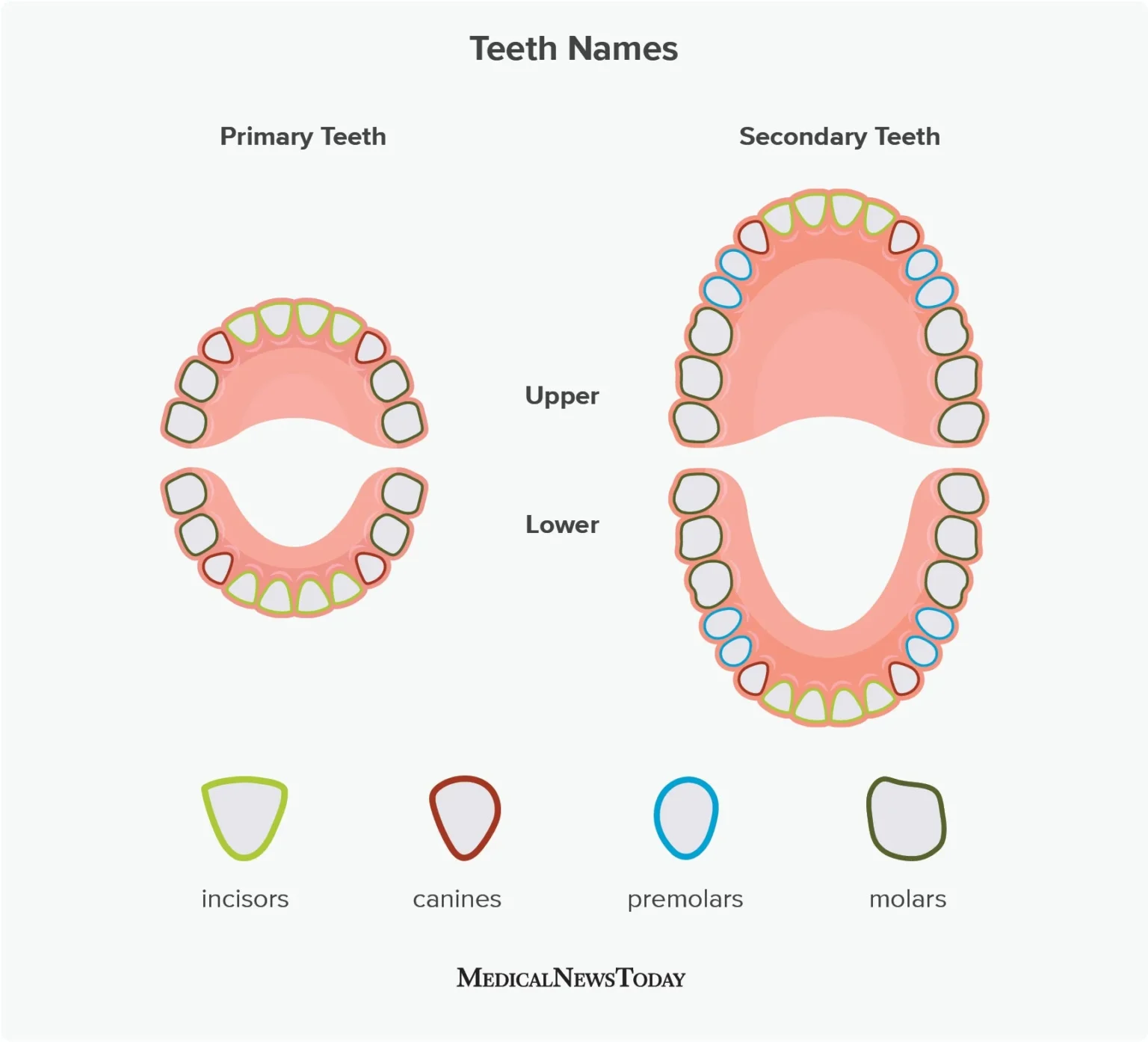
To fully understand how many teeth make a full set, it’s essential to know the different teeth types. The four main types are incisors, canines, premolars, and molars. Each type has a specific shape and function, contributing to the overall efficiency of chewing and digestion. Incisors are designed for cutting, canines for tearing, premolars for grinding, and molars for crushing food. Understanding the role and position of each type can help you appreciate the complexity and functionality of the human dentition. Preserving each type of tooth is crucial for maintaining optimal oral health and function.
Incisors: The Cutting Crew
Incisors are the eight teeth located at the front of your mouth – four on the top and four on the bottom. They are characterised by their flat, chisel-like shape, making them ideal for cutting food into smaller, manageable pieces. Incisors are the first teeth to come into contact with food as you bite, and their proper alignment is essential for efficient chewing. Maintaining healthy incisors is vital for both function and aesthetics. If incisors are damaged or missing, it can affect your ability to bite and speak clearly. Albania Dental Implants offers cosmetic dentistry in Albania including solutions to repair or replace damaged incisors, restoring your smile’s functionality and appearance.
Canines: The Tearing Titans
Canines, also known as cuspids, are the four pointed teeth located on either side of the incisors. They are characterised by their sharp, conical shape, making them perfect for tearing food, especially meat. Canines have the longest roots of all teeth, providing them with exceptional stability and support. These teeth play a crucial role in guiding the jaw during chewing and maintaining the overall structure of the mouth. Healthy canines contribute significantly to a confident smile and efficient oral function. If you experience issues with your canines, Albania Dental Implants can provide restorative options such as dental crowns in Albania.
Premolars: The Grinding Gears
Premolars, also known as bicuspids, are the eight teeth located behind the canines – two on each side of the upper and lower jaws. They are characterised by their broad, flat surfaces with ridges, making them ideal for grinding and crushing food. Premolars act as a transitional type of tooth, sharing characteristics of both canines and molars. These teeth help to further break down food particles, making them easier to digest. Maintaining healthy premolars is crucial for effective chewing and overall oral health. If you need to replace missing premolars, consider dental implants in Albania to restore the functionality and aesthetics of your smile.
Molars: The Crushing Kings
Molars are the twelve teeth located at the back of the mouth – three on each side of the upper and lower jaws. They are the largest and strongest teeth, characterised by their broad, flat surfaces with multiple cusps, making them supremely effective for crushing and grinding food. Molars perform the final stage of chewing, breaking down food into a fine paste for easy swallowing. These teeth bear the brunt of chewing forces and are essential for efficient digestion. Maintaining healthy molars is vital for overall health. If you have missing or damaged molars, Albania Dental Implants offers comprehensive solutions such as implantology in Albania and bone grafting in Albania to ensure a stable and functional replacement.
What Is the Dental Formula?
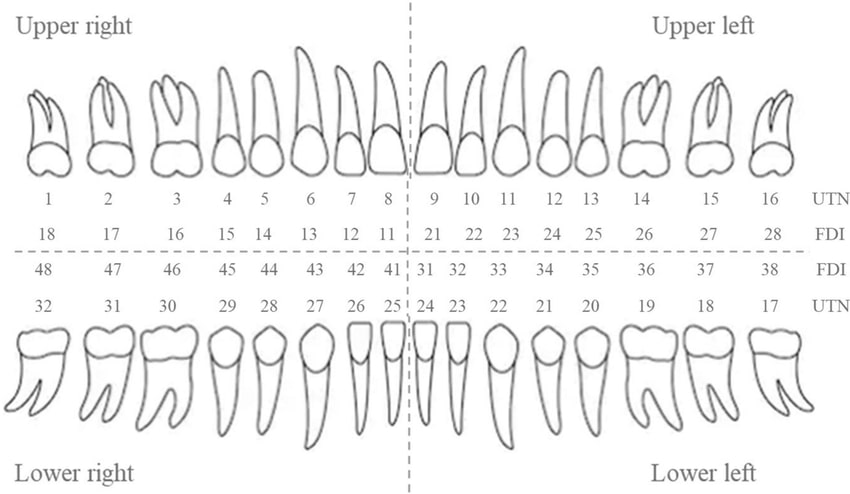
The dental formula is a shorthand way of representing the number and arrangement of teeth in one-half of the mouth. The human dental formula provides a concise overview of the dentition. It describes the number of incisors, canines, premolars, and molars present in each quadrant of the mouth. Understanding the dental formula is useful for dentists and dental professionals to quickly assess and communicate the state of a patient’s dentition. It’s also helpful for patients to better understand their dental health and treatment plans. If you require advanced dental care, our clinic can also handle oral surgery in Albania.
Human Dental Formula Explained
The human dental formula for permanent teeth is 2.1.2.3. This means that in one-half of the mouth, there are two incisors, one canine, two premolars, and three molars. The formula is written as: Incisors/Incisors, Canines/Canines, Premolars/Premolars, Molars/Molars. Therefore, the full dental formula is 2.1.2.3/2.1.2.3. This formula is multiplied by two to account for both sides of the mouth, resulting in a total of 32 teeth. For children with milk teeth, the dental formula is 2.1.0.2, indicating two incisors, one canine, zero premolars, and two molars in each quadrant, totalling 20 teeth. This notation helps simplify dental records and treatment planning.
Tooth Eruption Patterns
Tooth eruption patterns vary among individuals, but generally follow a predictable sequence. In children, the first teeth to erupt are typically the lower central incisors around six months of age, followed by the upper central incisors. By age three, most children have all 20 milk teeth. The eruption of permanent teeth begins around age six with the first molars, followed by the incisors, canines, premolars, and finally, the second and third molars (wisdom teeth). Understanding these patterns helps dentists identify potential issues early on and provide timely interventions. At Albania Dental Implants, we monitor tooth eruption and development and offer solutions for any problems that may arise such as orthodontics in Albania.
Summary Table of Teeth by Type and Number
Here is a summary table of teeth by type and number in a full adult set:
| Tooth Type | Number | Function |
|---|---|---|
| Incisors | 8 | Cutting food |
| Canines | 4 | Tearing food |
| Premolars | 8 | Grinding food |
| Molars | 12 | Crushing food |
| Total | 32 |
This table provides a clear overview of the different types of teeth and their respective functions, highlighting the importance of each in maintaining a healthy and functional dentition.
Common Causes for Missing Teeth
Many factors can lead to tooth loss. Understanding the common causes for missing teeth is crucial for prevention and treatment. The impact of wisdom teeth removal is a frequent reason, but tooth loss can also result from decay, trauma, gum disease, and dental anomalies. Addressing these causes early can help preserve your natural teeth for as long as possible. However, when tooth loss does occur, replacing the missing teeth is essential for maintaining proper oral health and function. Albania Dental Implants offers various solutions, including dental implants, to restore your smile and quality of life. Our experienced team can assess your specific situation and recommend the most appropriate treatment plan. In cases where bone grafting in Albania is necessary, we can handle that as well.
Impact of Wisdom Teeth Removal
The removal of wisdom teeth, also known as third molars, is a common dental procedure. The impact of wisdom teeth removal on the total number of teeth in a full set is significant, as it reduces the potential count from 32 to 28. Wisdom teeth are often removed due to impaction, crowding, or the risk of infection. While removing wisdom teeth does not directly impact the function of other teeth, it can alleviate pain and prevent future dental problems. Most people adapt well to having their wisdom teeth removed and experience no long-term effects on their chewing or speech. If you are missing other teeth, our team can help, we specialize in implant overdentures in Albania.
Tooth Loss Due to Decay, Trauma, Etc.
Tooth loss can occur due to various factors, including decay, trauma, and gum disease. Decay, also known as cavities, is caused by bacteria that erode the enamel and dentin of the teeth. Trauma, such as accidents or sports injuries, can result in teeth being knocked out or fractured. Gum disease, or periodontitis, is an infection that damages the gums and bone supporting the teeth, leading to tooth loss. Addressing these issues early through proper oral hygiene and regular dental check-ups can help prevent tooth loss. If you have experienced tooth loss, Albania Dental Implants provides effective replacement options, including dental implants in Albania, multiple implants with bridges in Albania, and full mouth reconstruction in Albania, to restore your smile and function.
Dental Anomalies and Variations
Dental anomalies and variations can also affect the number of teeth in a full set. Some people may have extra teeth, known as supernumerary teeth, while others may have fewer teeth than normal, known as hypodontia or agenesis. These conditions can be caused by genetic factors or developmental issues. Supernumerary teeth can cause crowding and alignment problems, while hypodontia can result in gaps between teeth. In some cases, dental anomalies may require orthodontic treatment or tooth extraction to correct the issue. At Albania Dental Implants, we can assess and address dental anomalies, offering tailored solutions to ensure a healthy and functional smile. This can range from orthodontics in Albania to dental implants in Albania, depending on your specific needs.
Importance of Maintaining a Full Set of Teeth
The importance of maintaining a full set of teeth extends far beyond just aesthetics. A complete set of teeth is crucial for oral health implications, proper chewing, clear speech, and maintaining the structure of the face. Missing teeth can lead to a range of problems, including shifting of adjacent teeth, bone loss in the jaw, difficulty eating, and changes in facial appearance. Prioritising dental care and replacing missing teeth is essential for preserving your overall health and well-being. Albania Dental Implants is dedicated to helping you achieve and maintain a full, healthy set of teeth through advanced dental treatments and personalised care.
Oral Health Implications of Missing Teeth
The oral health implications of missing teeth are significant. When teeth are missing, the remaining teeth can shift out of alignment, leading to bite problems and increased risk of decay and gum disease. Missing teeth can also cause bone loss in the jaw, affecting the stability of the remaining teeth and the overall structure of the face. Furthermore, gaps from missing teeth can trap food particles, making it harder to keep your mouth clean and increasing the risk of infection. Replacing missing teeth promptly is crucial for preventing these complications and maintaining good oral health. Options include single tooth implants in Albania or even all on 6 dental implants in Albania.
Functional and Aesthetic Aspects
Maintaining a full set of teeth is essential for both functional and aesthetic aspects of life. Functionally, teeth are necessary for chewing food properly, which is vital for digestion and overall nutrition. Missing teeth can make it difficult to eat certain foods, leading to dietary restrictions and potential health problems. Aesthetically, a full set of teeth contributes to a confident and attractive smile, which can positively impact your self-esteem and social interactions. Replacing missing teeth can improve your ability to eat, speak, and smile with confidence. Albania Dental Implants offers a range of cosmetic and restorative solutions, including dental veneers in Albania and hollywood smile in Albania, to enhance both the function and appearance of your smile.
Why Do Some People Have Fewer Than 32 Teeth?
While the standard adult teeth count is 32, many individuals have fewer teeth due to various factors. Common reasons include wisdom teeth removal, congenital absence of teeth (hypodontia), tooth loss from decay or trauma, and certain medical conditions. Having fewer than 32 teeth is often normal and does not necessarily indicate a health problem, especially if the missing teeth have been replaced with dental implants or other restorative options. If you are concerned about missing teeth, consulting with a dentist can help determine the cause and appropriate treatment plan. Whether you’re missing a single tooth or several, dental implants in Albania can restore your smile and improve your quality of life.
Is It Normal to Have Extra Teeth or Missing Teeth?
Yes, it is relatively normal to have either extra teeth (supernumerary teeth) or missing teeth (hypodontia). Supernumerary teeth are more common in the upper jaw and can cause crowding and alignment problems. Hypodontia, on the other hand, is often hereditary and can result in gaps between teeth. Both conditions can be managed with appropriate dental treatment, such as orthodontics, tooth extraction, or dental implants. Consulting with a dentist can help determine the best course of action for your specific situation. At Albania Dental Implants, we provide comprehensive assessments and personalised treatment plans to address both extra and missing teeth. We can help by offering invisalign aligners in Albania, as well as dental implants.
At What Age Do People Typically Get Their Full Set of Teeth?
People typically get their full set of permanent teeth, excluding wisdom teeth, by the age of 12 or 13. The eruption of permanent teeth begins around age six and continues throughout childhood and early adolescence. Wisdom teeth, or third molars, usually erupt in the late teens or early twenties, although some people never develop them. The timing of tooth eruption can vary, but generally follows a predictable sequence. If you have concerns about the timing of your tooth eruption, consulting with a dentist can provide reassurance and guidance. Even if you have lost teeth later in life, you can still achieve a full and functional set with options like full mouth reconstruction in Albania, offered by Albania Dental Implants. If you are considering dental tourism in Albania you can come to us, we offer an affordable and high-quality dental solution.
Conclusion
Understanding how many teeth make a full set is essential for maintaining optimal oral health and making informed decisions about dental care. A complete adult set typically consists of 32 permanent teeth, including incisors, canines, premolars, and molars, as well as wisdom teeth. However, variations are common, and many people have fewer teeth due to wisdom teeth removal, tooth loss, or dental anomalies. Regardless of the number of teeth you have, prioritising dental care and replacing missing teeth is crucial for preserving your oral health, function, and aesthetics. At Albania Dental Implants, we are committed to providing comprehensive and personalised dental solutions to help you achieve a healthy, confident smile. If you are considering dental implants or other restorative treatments, we invite you to contact us today to schedule a consultation and learn more about how we can help you restore your smile and improve your quality of life. Don’t wait, contact Albania dental implants today!