


The answer to how many implants do you need for 3 missing teeth depends on several clinical, functional and financial considerations, which will be discussed in detail throughout this guide. At Albania Dental Implants, we understand that each patient’s situation is unique, and we tailor our approach to provide the best possible outcome. We want our patients to be fully informed about their options, allowing them to make confident choices about their dental care.
I. Understanding Dental Implant Options for 3 Missing Teeth
When it comes to dental implants for multiple missing teeth, there are several solutions available. Understanding these options is crucial for making an informed decision about your treatment. At Albania Dental Implants, we offer comprehensive consultations to evaluate your specific needs and recommend the most suitable approach.
The Traditional Approach: One Implant Per Tooth
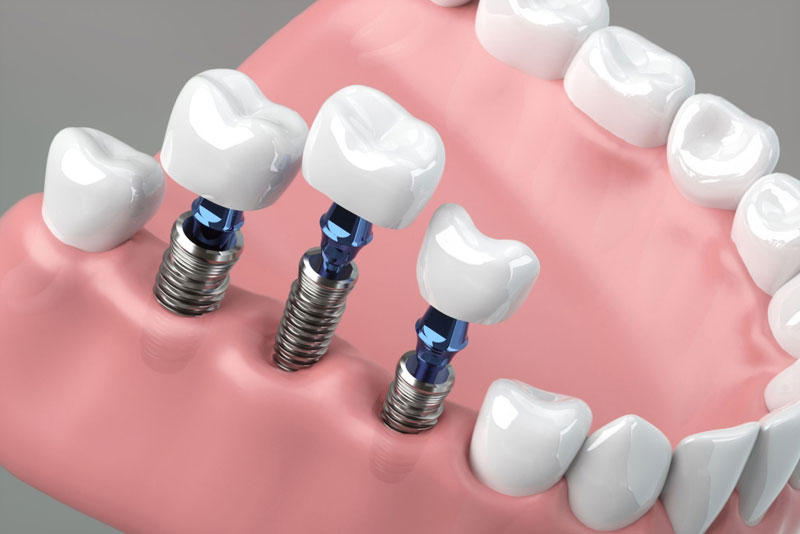
The traditional approach to replacing missing teeth involves placing one dental implant for each missing tooth. This method offers excellent stability and mimics the natural structure of your teeth. Each implant acts as an individual anchor, providing maximum support for the replacement teeth. While this approach can be more expensive, it often yields the most natural-looking and longest-lasting results. However, it may not always be necessary or feasible, depending on bone density and other factors.
The Modern Approach: Implant-Supported Bridges
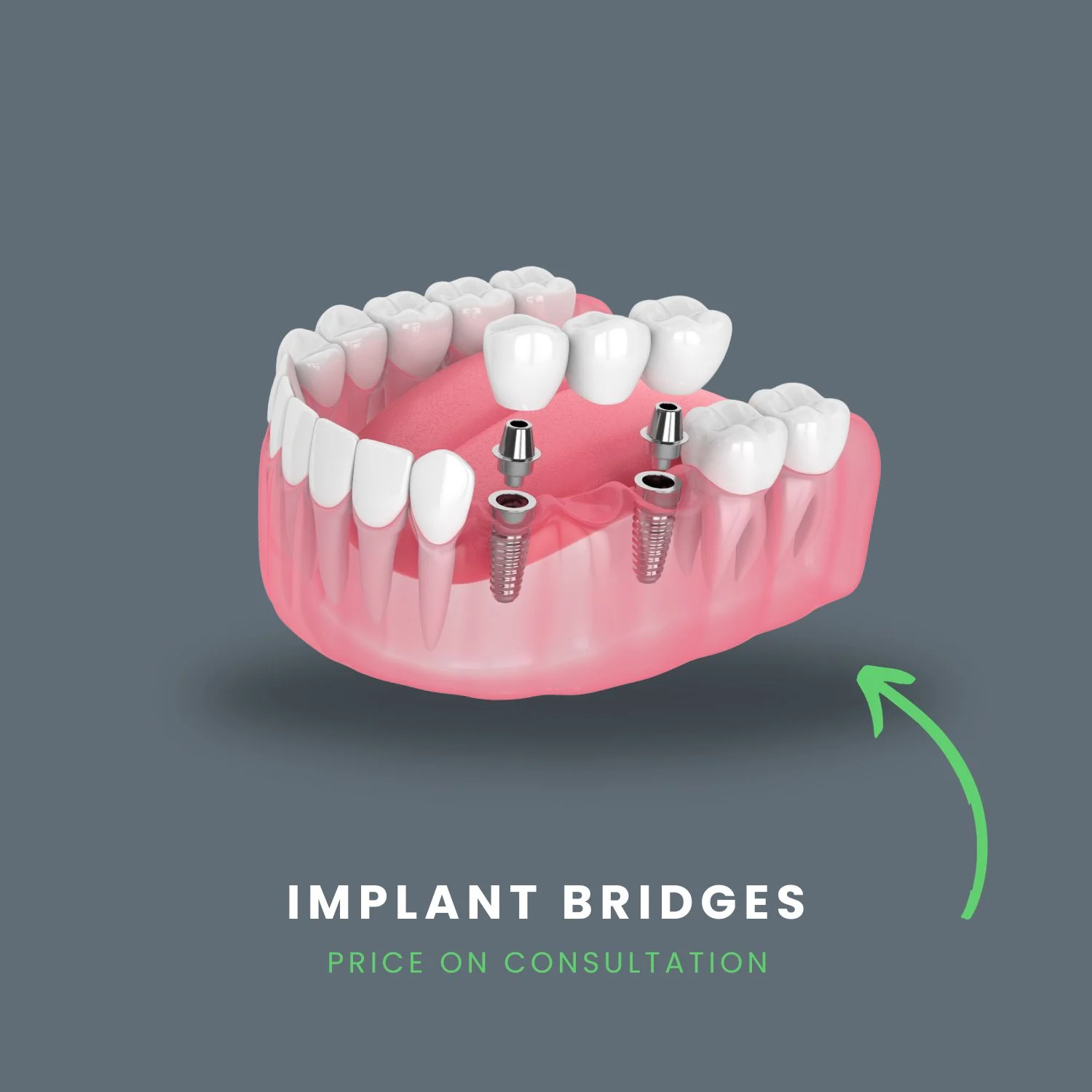
A more modern and often more cost-effective solution is the use of implant-supported bridges. Instead of placing an implant for every missing tooth, a bridge is anchored to two or more implants. This distributes the support across the implants, effectively replacing multiple teeth with fewer implants. This approach can be particularly beneficial for patients with limited bone density or those seeking a more budget-friendly option. For example, three missing teeth can sometimes be replaced with just two implants supporting a bridge.
II. How Many Implants Are Needed for 3 Missing Teeth?
When considering an implant bridge for 3 missing teeth, a common question is: how many teeth can one implant support? The number of implants needed depends on various factors, including the location of the missing teeth, bone quality, and the overall health of the patient.
Standard Recommendations by Dental Professionals
Dental professionals typically recommend either two or three implants to replace three missing teeth. The decision depends on a comprehensive assessment of your oral health. Two implants can often suffice if the bone quality is good and the missing teeth are located in a less critical area of the mouth. However, in some cases, three implants may be necessary to provide adequate support and stability.
Can Three Teeth Be Replaced with Two Implants?
Yes, three missing teeth can often be replaced with two dental implants using an implant-supported bridge. This involves placing two implants in strategic locations and then attaching a bridge consisting of three artificial teeth to those implants. The bridge acts as a single unit, distributing the chewing forces evenly across the implants. This approach is both effective and efficient for restoring functionality and aesthetics. At Albania Dental Implants Services, we specialize in creating custom implant-supported bridges that look and feel natural.
Scenarios Where Three Implants May Be Needed
In certain situations, using three implants to replace three missing teeth is the preferred method. This is often the case when: Bone quality is compromised, requiring additional support. The missing teeth are located in the back of the mouth (molars), where chewing forces are stronger. The patient has a history of bruxism (teeth grinding), which can put extra stress on the implants. In these scenarios, placing three individual implants provides maximum stability and reduces the risk of implant failure.
Impact of Bone Quality and Anatomy on Implant Number
Bone quality and jaw anatomy play a significant role in determining the number of implants needed. If the bone is dense and healthy, two implants may be sufficient to support a bridge. However, if there is significant bone loss, a bone grafting in Albania procedure might be necessary to increase bone volume and density. In such cases, three implants may be recommended to ensure long-term stability. A thorough examination, including X-rays and 3D scans, is essential to assess bone quality and plan the implant placement accurately.
III. Alternative Tooth Replacement Options
Exploring tooth replacement options is essential before deciding on dental implants. While implants offer numerous benefits, they may not be the right choice for everyone. Other alternatives include removable partial dentures and fixed dental bridges.
Removable Partial Denture
Removable partial dentures are a less invasive and more affordable option for replacing missing teeth. They consist of a plastic or metal framework with artificial teeth attached. The denture is designed to fit snugly around your existing teeth and can be removed for cleaning. While dentures can restore functionality and aesthetics, they may not provide the same level of stability and comfort as dental implants. They can also affect speech and taste, and require regular adjustments.
Fixed Dental Bridge (Without Implants)
A traditional fixed dental bridge involves anchoring a replacement tooth (pontic) to the adjacent teeth, which are crowned for support. This option is more stable than a removable denture but requires altering the structure of the adjacent teeth. Over time, bridges can put extra stress on the supporting teeth and may not prevent bone loss in the area of the missing tooth. Fixed bridges are a viable option, but they don’t offer the long-term benefits of dental implants, such as bone preservation.
Comparing Alternatives: Advantages and Disadvantages
Here’s a comparison of dental implants, removable partial dentures, and fixed dental bridges: Dental Implants: Advantages: Long-lasting, stable, preserves bone, natural-looking. Disadvantages: Higher cost, requires surgery, longer treatment time. Removable Partial Dentures: Advantages: Lower cost, non-invasive, quick to fabricate. Disadvantages: Less stable, can affect speech and taste, requires removal for cleaning. Fixed Dental Bridges: Advantages: More stable than dentures, relatively quick treatment time. Disadvantages: Requires altering adjacent teeth, does not prevent bone loss, may put extra stress on supporting teeth.
IV. Cost of Dental Implants for 3 Missing Teeth
The cost of dental implants for 3 teeth is a significant consideration for many patients. Understanding the financial aspects can help you make an informed decision about your treatment.
Typical Cost Breakdown (Consultation, Surgery, Prosthesis)
The cost of dental implants typically includes several components: Consultation and Examination: This initial appointment involves a thorough examination, X-rays, and a treatment plan. Implant Surgery: This covers the placement of the dental implants into the jawbone. Abutment: This is the connecting piece between the implant and the crown or bridge. Prosthesis (Crown or Bridge): This is the artificial tooth or teeth that attach to the abutment. Additional costs may include bone grafting, if required, and temporary restorations during the healing process. The overall cost can vary depending on the complexity of the case and the materials used. For detailed information on the financial aspects, you can visit our page on the cost of dental implants in Albania.
Cost Comparison: One Implant Per Tooth vs. Implant Bridge
Replacing three missing teeth with three individual implants will generally be more expensive than using an implant-supported bridge with two implants. The primary reason is the additional cost of the implant fixtures themselves and the associated surgical procedures. While the implant bridge may seem like the more economical option upfront, it’s crucial to consider the long-term value. Individual implants offer maximum stability and longevity, while an implant bridge can be a cost-effective solution with proper maintenance.
Insurance and Payment Options
Dental insurance coverage for implants can vary significantly. Some policies may cover a portion of the implant cost, while others may not cover it at all. It’s essential to check with your insurance provider to understand your specific coverage. At Albania Dental Implants, we offer various payment options to make dental implants more accessible. These may include financing plans or installment payments to help you manage the cost of your treatment.
V. The Procedure & Recovery for Multiple Implants
Understanding the procedure for getting multiple implants and the associated recovery time for multiple implants is crucial for preparing for your treatment.
Stages of Treatment Explained Step-by-Step
The dental implant procedure typically involves several stages: Initial Consultation: A comprehensive examination, including X-rays and a discussion of your treatment goals. Implant Placement: The surgical placement of the dental implants into the jawbone. Osseointegration: A healing period of several months, during which the implants fuse with the bone. Abutment Placement: The attachment of the abutments to the implants. Prosthesis Placement: The final placement of the crown or bridge onto the abutments. Each stage is carefully planned and executed to ensure the best possible outcome. The entire process, from initial consultation to final restoration, can take several months, but the long-term results are well worth the investment.
Typical Healing and Integration Timelines
The healing and integration process, known as osseointegration, is a critical part of the dental implant procedure. This typically takes 3 to 6 months, during which the bone grows around the implant, securing it in place. Factors such as bone quality, overall health, and smoking habits can affect the healing timeline. Regular follow-up appointments are necessary to monitor the healing process and ensure proper integration. At Albania Dental Implants, we provide detailed post-operative instructions to promote optimal healing and minimize complications.
Precautions During Recovery
Following the implant placement, it’s essential to take certain precautions to ensure a smooth recovery: Follow Post-Operative Instructions: Adhere to all instructions provided by your dentist, including medication schedules and dietary restrictions. Maintain Good Oral Hygiene: Gently brush and floss around the implant site to prevent infection. Avoid Hard or Sticky Foods: Stick to soft foods during the initial healing period to avoid putting excessive pressure on the implants. Refrain from Smoking: Smoking can significantly delay healing and increase the risk of implant failure. Attend Follow-Up Appointments: Regular check-ups are essential to monitor the healing process and address any concerns. By following these precautions, you can minimize the risk of complications and ensure the long-term success of your dental implants.
VI. Benefits of Implants Over Other Tooth Replacement Options
The benefits of dental implants over dentures/bridges are numerous, making them a popular choice for replacing missing teeth. Implants offer long-term function, aesthetics, and oral health advantages.
Long-Term Function and Aesthetics
Dental implants provide superior long-term function compared to other tooth replacement options. They are anchored directly into the jawbone, providing a stable and secure base for artificial teeth. This allows you to chew, speak, and smile with confidence, without worrying about slippage or discomfort. In terms of aesthetics, dental implants look and feel like natural teeth, blending seamlessly with your existing smile. The result is a natural-looking and fully functional set of teeth that can last a lifetime with proper care.
Bone Preservation and Oral Health
One of the most significant advantages of dental implants is their ability to preserve bone density. When a tooth is lost, the surrounding bone begins to deteriorate over time. Dental implants stimulate bone growth, preventing bone loss and maintaining the natural shape of your jaw. This not only improves the aesthetics of your smile but also supports the surrounding teeth and gums. Additionally, dental implants are easier to clean and maintain compared to dentures or bridges, promoting better oral health and reducing the risk of gum disease.
VII. Choosing the Right Solution: Factors and Consultation
Choosing the right solution for replacing missing teeth requires careful consideration of various factors. A professional assessment and personalized treatment planning are essential for achieving the best possible outcome.
Factors Influencing How Many Implants Are Needed (Location, Bone, Bite, Patient Preference)
Several factors influence the number of implants needed to replace three missing teeth: Location of Missing Teeth: Teeth in the back of the mouth (molars) experience greater chewing forces, potentially requiring more implants for support. Bone Quality and Density: Adequate bone volume and density are crucial for implant stability. Bone grafting may be necessary if bone is insufficient. Bite and Occlusion: The way your teeth come together (bite) can affect the stress on the implants. An improper bite may require additional implants to distribute forces evenly. Patient Preference and Budget: Your personal preferences and budget considerations also play a role in determining the best treatment option. Each of these factors is carefully evaluated during the consultation process to create a customized treatment plan. At Albania Dental Implants, we work closely with our patients to ensure their needs and preferences are met.
Importance of Professional Assessment and Personalized Treatment Planning
A professional assessment by a qualified dentist is essential for determining the most suitable treatment option for replacing missing teeth. During the consultation, your dentist will conduct a thorough examination, take X-rays or 3D scans, and discuss your treatment goals. This information is used to develop a personalized treatment plan that addresses your specific needs and maximizes the chances of success. A personalized treatment plan ensures that you receive the right number of implants, placed in the optimal locations, for long-term stability and functionality. To schedule your consultation, please contact Albania Dental Implants.
Frequently Asked Questions (FAQ)
1. Is one implant needed for each missing tooth?
No, one implant is not always needed for each missing tooth. In many cases, especially when dealing with multiple missing teeth, an implant-supported bridge can be used. This involves placing fewer implants than the number of missing teeth and using them to support a bridge that spans the gap. This approach can be more cost-effective and less invasive, while still providing excellent stability and aesthetics.
2. Can three missing teeth be replaced with two dental implants?
Yes, three missing teeth can often be replaced with two dental implants. This is achieved by using an implant-supported bridge, where two implants are placed and a three-unit bridge is attached to them. This option is suitable when the bone quality is good and the missing teeth are in a non-critical area of the mouth.
3. What is an implant-supported bridge, and how does it work?
An implant-supported bridge is a dental restoration that replaces multiple missing teeth using dental implants as anchors. Instead of attaching the bridge to adjacent natural teeth, as with a traditional bridge, it is attached to dental implants that are surgically placed in the jawbone. This provides greater stability, prevents bone loss, and does not require altering the adjacent teeth.
4. How long does the treatment process take for three missing teeth?
The treatment process for replacing three missing teeth with dental implants typically takes several months. This includes the initial consultation and examination, implant placement surgery, a healing period of 3 to 6 months for osseointegration, abutment placement, and finally, the placement of the crown or bridge. The exact timeline can vary depending on individual factors such as bone quality and overall health.
5. What are the main benefits of choosing dental implants for multiple missing teeth?
The main benefits of choosing dental implants for replacing several teeth with implants include: Long-lasting and durable solution. Improved stability and functionality compared to dentures. Preservation of bone density in the jaw. Natural-looking and aesthetically pleasing results. Improved speech and chewing ability. No need to alter adjacent teeth, as with traditional bridges. These benefits make dental implants a superior option for restoring your smile and oral health.
6. How much does it cost to replace three missing teeth with implants?
The cost to replace three missing teeth with implants varies depending on several factors, including the number of implants needed (two or three), the type of restoration (individual crowns or a bridge), and any additional procedures such as bone grafting. Generally, you can expect to pay more if you opt for three individual implants compared to an implant-supported bridge. We encourage you to contact Albania dental implants reviews for a detailed and customized cost estimate.
7. Are there alternatives if I do not have enough bone for implants?
Yes, if you do not have enough bone for dental implants, there are alternatives such as bone grafting, sinus lifts, or zygomatic implants. Bone grafting involves transplanting bone tissue to the area where the implant will be placed, increasing bone volume and density. A sinus lift is a procedure that adds bone to the upper jaw in the area of the molars and premolars. Zygomatic implants are longer implants that anchor into the zygomatic bone (cheekbone), bypassing the need for bone grafting in the upper jaw.
8. What is the recovery time for multiple dental implants?
The initial recovery time after dental implant surgery is typically 7 to 10 days. During this time, you may experience some swelling, bruising, and discomfort. It’s essential to follow your dentist’s post-operative instructions carefully, including taking prescribed medications, maintaining good oral hygiene, and avoiding hard or sticky foods. The complete healing and osseointegration process takes 3 to 6 months.
9. How do dental implants compare with dentures or conventional bridges?
Dental implants offer several advantages over dentures and conventional bridges: Stability: Implants are anchored directly into the jawbone, providing superior stability compared to dentures. Bone Preservation: Implants stimulate bone growth, preventing bone loss, while dentures and bridges can contribute to bone loss. Aesthetics: Implants look and feel like natural teeth, blending seamlessly with your smile. Functionality: Implants restore full chewing ability, allowing you to eat a wide range of foods without discomfort. Longevity: With proper care, dental implants can last a lifetime, while dentures and bridges typically need to be replaced every 5 to 10 years. While dentures and bridges may be more affordable upfront, dental implants offer a long-term solution with numerous benefits for oral health and quality of life.
10. Will dental insurance cover multiple dental implants?
Dental insurance coverage for implants varies depending on your specific policy. Some insurance plans may cover a portion of the implant cost, while others may not cover it at all. It’s best to check with your insurance provider to understand your coverage details. At Albania Dental Implants, we can assist you in navigating your insurance benefits and exploring financing options to make dental implants more affordable. To learn more about financing options, you can visit our page on dental tourism in Albania.
Conclusion
Deciding on the best course of action when facing the loss of three teeth can feel daunting. The good news is that modern dentistry offers reliable and aesthetically pleasing solutions to restore your smile and confidence. Whether you opt for individual implants or an implant-supported bridge, Albania Dental Implants is committed to providing you with top-quality care and personalized treatment plans. Don’t let missing teeth hold you back any longer. Contact Albania Dental Implants today to schedule your consultation and take the first step towards a brighter, healthier smile. Our team is ready to answer your questions and guide you through every step of the process.