




Is a dental bridge better than an implant? When facing tooth loss, choosing the right replacement option is crucial for your oral health and confidence. Both dental bridges and implants offer effective solutions, but understanding their differences, advantages, and disadvantages is essential to making an informed decision. This comprehensive guide will explore the nuances of dental bridges and implants to help you determine which option is best suited for your individual needs and circumstances.
Dental Bridge vs Implant – At a Glance
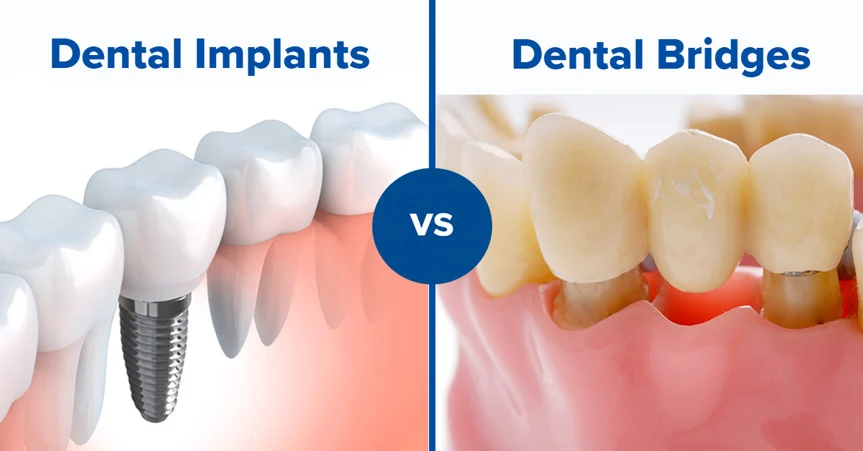
When considering dental bridge vs implant as tooth replacement options, it’s important to weigh the key differences. A dental bridge fills the gap created by a missing tooth by anchoring a false tooth (pontic) to the adjacent teeth. A dental implant, on the other hand, is a surgical procedure where a titanium post is placed into the jawbone to support a replacement tooth. Each has its own set of benefits and drawbacks, influencing factors like cost, durability, and long-term oral health.
What are the differences between a dental bridge and an implant?
The primary difference lies in the method of support. A dental bridge relies on the adjacent teeth for support, requiring them to be filed down to accommodate crowns that hold the bridge in place. An implant is a standalone solution that doesn’t affect the surrounding teeth. The implant fuses with the jawbone, providing a stable and long-lasting foundation for a replacement tooth.
What Is a Dental Bridge?
A dental bridge is a classic tooth replacement option that involves creating a prosthetic tooth (pontic) to fill the gap left by a missing tooth. One of the dental bridge advantages is that it is a non-surgical option and generally more affordable than an implant. The dental bridge procedure involves preparing the adjacent teeth (abutment teeth) to support the bridge. These teeth are crowned, and the pontic is attached to these crowns, effectively bridging the gap.
Pros and Cons of Dental Bridges
Understanding the pros and cons is vital before choosing a dental bridge. One of the significant dental bridge advantages is the lower cost of dental bridge compared to implants. Bridges can also be completed in a shorter timeframe. However, bridges have limitations. The dental bridge durability is typically less than that of an implant, usually lasting between 5 to 15 years with proper care. Maintaining oral health after bridge placement is crucial, as the area under the pontic can be prone to plaque accumulation and decay. Furthermore, bridges put extra stress on the abutment teeth, potentially leading to future dental problems.
- Pros:
- Lower initial cost
- Non-surgical procedure
- Faster treatment time
- Cons:
- Shorter lifespan compared to implants
- Requires altering adjacent teeth
- Increased risk of decay and gum disease around abutment teeth
- May not prevent bone loss after extraction
What Is a Dental Implant?
A dental implant is a modern and highly effective solution for replacing missing teeth. Dental implant benefits include long-term durability, stability, and the preservation of jawbone health. The dental implant procedure involves surgically placing a titanium post into the jawbone. Over several months, the bone fuses with the implant through a process called osseointegration. Once the implant is stable, a connector post (abutment) is attached, and a custom-made crown is placed on top, creating a natural-looking and functional replacement tooth. For individuals considering implantology in Albania, Albania Dental Implants offers comprehensive and affordable solutions.
Pros and Cons of Dental Implants
While dental implants offer numerous dental implant benefits, it’s important to consider the potential drawbacks. One of the most significant advantages is the implant lifespan, which can be a lifetime with proper care. Implants also stimulate bone growth, preventing bone loss after extraction. However, dental implant risks include surgical complications, infection, and implant failure. The dental implant recovery period can be longer compared to bridges, and the initial cost is typically higher. It’s important to assess who should not get dental implants, as certain health conditions can affect the success of the procedure.
- Pros:
- Long-lasting and durable
- Prevents bone loss
- Doesn’t affect adjacent teeth
- Natural look and feel
- Cons:
- Higher initial cost
- Surgical procedure with associated risks
- Longer treatment and recovery time
- Not suitable for everyone
Are dental implants more painful than bridges?
While both procedures involve some discomfort, dental implants are generally well-managed with local anaesthesia and pain medication. After the procedure, some soreness and swelling are normal, but this can be controlled with over-the-counter pain relievers. Bridges, on the other hand, may cause sensitivity in the abutment teeth, but this usually subsides over time.
Comparing Costs and Lifespan
When considering restorative dentistry alternatives, the cost of dental bridge and the implant lifespan are significant factors. A dental bridge typically costs less upfront than a dental implant. However, the long-term costs may even out or even favour implants. Since bridges have a shorter lifespan, they may need to be replaced multiple times, incurring additional expenses. Implants, with their potential to last a lifetime, can be a more cost-effective missing tooth solution in the long run. For a detailed breakdown, you can explore the cost of dental implants in Albania at Albania Dental Implants.
How long does a bridge last compared to an implant?
A dental bridge typically lasts between 5 and 15 years, depending on oral hygiene and maintenance. Dental implants, on the other hand, can last a lifetime with proper care. Factors like regular dental check-ups, good oral hygiene habits, and avoiding excessive stress on the implant can significantly impact its longevity.
Is a dental bridge cheaper than an implant?
Yes, a dental bridge is generally cheaper than a dental implant in terms of initial cost. The cost of a bridge includes the pontic and the crowns for the abutment teeth. The cost of an implant includes the surgical placement of the implant post, the abutment, and the crown. However, the long-term costs associated with bridges, such as replacements and potential issues with the abutment teeth, can make implants a more cost-effective option over time. Consider affordable options such as dental tourism in Albania to reduce initial costs.
Health Impact: Bone & Gum Considerations
The health impact of each tooth replacement option extends beyond just filling the gap. Bone loss after extraction is a significant concern. When a tooth is lost, the jawbone in that area begins to resorb due to lack of stimulation. Dental implants provide this stimulation, preventing bone loss and maintaining the integrity of the jawbone. Bridges, on the other hand, do not stimulate bone growth and may not prevent bone resorption. Oral health after bridge placement requires meticulous hygiene to prevent decay and gum disease around the abutment teeth and under the pontic. Implants, with proper care, can promote healthier gums and prevent future dental problems. One of the long-term dental implant benefits is the preservation of jawbone health, which contributes to a more youthful facial structure.
Is bone loss more likely with a bridge or implant?
Bone loss is more likely with a bridge than with an implant. When a tooth is lost, the jawbone in that area begins to resorb due to the lack of stimulation. A dental implant provides this stimulation, preventing bone loss and maintaining the integrity of the jawbone. A bridge, however, does not offer this stimulation and, therefore, does not prevent bone resorption.
Which option is safer for oral health in the long term?
In the long term, dental implants are generally considered safer for oral health. They do not affect the adjacent teeth, prevent bone loss, and are less prone to decay than bridges. Bridges, on the other hand, rely on the adjacent teeth for support, which can increase the risk of decay and gum disease in those areas. Meticulous oral hygiene is essential for maintaining the health of both bridges and implants, but implants offer a more stable and predictable long-term outcome. If you want to know what is the best alternative to dental implants contact us for more details.
Which Is Better for You?
Deciding which missing tooth solution is better for you depends on your individual needs, budget, and oral health. If you are looking for a more affordable option and are not concerned about the long-term effects on adjacent teeth or bone loss, a dental bridge may be suitable. However, if you prioritize long-term durability, preservation of jawbone health, and a natural-looking and feeling replacement tooth, a dental implant is the better choice. Cosmetic dental treatments can enhance the appearance of both bridges and implants, but implants generally offer a more natural aesthetic. When considering restorative dentistry alternatives, it’s important to consult with a qualified dentist who can assess your individual needs and recommend the best course of treatment. Albania Dental Implants offers a range of implant solutions to meet your specific requirements.
Can anyone get a dental implant or bridge?
Not everyone is a suitable candidate for dental implants or bridges. For dental implants, patients need to have sufficient bone density in the jaw to support the implant. Certain medical conditions, such as uncontrolled diabetes or autoimmune diseases, can also affect the success of dental implants. For bridges, the adjacent teeth need to be healthy enough to support the bridge. A thorough dental examination is necessary to determine if you are a good candidate for either procedure.
Which option looks more natural?
Dental implants generally look more natural than bridges. Because an implant is a standalone solution that emerges directly from the gum line, it closely mimics the appearance of a natural tooth. Bridges, on the other hand, can sometimes appear bulky or artificial, especially if the adjacent teeth are not perfectly aligned. With advancements in materials and techniques, both bridges and implants can achieve excellent aesthetic results, but implants typically offer a more seamless and natural look.
What are the risks or complications associated with bridges and implants?
Bridges and implants both have potential risks and complications. With bridges, the risks include decay and gum disease around the abutment teeth, sensitivity, and eventual failure of the bridge. With implants, the risks include surgical complications, infection, implant failure, nerve damage, and sinus problems. However, the risk of complications with implants is relatively low, especially when performed by an experienced and qualified dentist. Proper aftercare and maintenance are essential for minimizing the risks associated with both procedures.
How do I care for a new bridge versus an implant?
Caring for a new bridge and an implant requires different approaches. For a bridge, it is essential to clean under the pontic daily using floss threaders or interdental brushes to remove plaque and prevent decay. The abutment teeth also need to be carefully brushed and flossed to maintain their health. For an implant, it is important to brush and floss around the implant crown as you would with a natural tooth. Regular dental check-ups are also crucial for monitoring the health of both the bridge and the implant and addressing any potential problems early on.
Which option provides better chewing ability?
Dental implants generally provide better chewing ability than bridges. Because an implant is anchored directly into the jawbone, it offers a stable and strong foundation for chewing. Bridges, on the other hand, rely on the adjacent teeth for support, which can sometimes feel less stable and may limit the amount of force that can be applied during chewing. With dental implants, you can typically eat all the foods you enjoy without any restrictions.
Who should consider a dental bridge instead of an implant?
A dental bridge might be a better option than an implant for individuals who:
- Have healthy adjacent teeth that can support the bridge.
- Are looking for a more affordable tooth replacement solution.
- Have medical conditions that make them unsuitable for surgery.
- Prefer a faster treatment process.
It’s essential to consult with a dentist to assess your individual needs and determine the best treatment option for you.
Dental Tourism in Albania: A Cost-Effective Solution
For many individuals, the cost of dental implants can be a significant barrier. Dental tourism in Albania offers a cost-effective solution without compromising on quality. Albania Dental Implants provides comprehensive services, including single tooth implants in Albania, all on 4 dental implants in Albania, and all on 6 dental implants in Albania. By choosing Albania for your dental implant procedure, you can save a considerable amount of money while receiving top-quality care from experienced professionals. Consider also cosmetic dentistry in Albania to achieve a hollywood smile in Albania at a fraction of the cost compared to the UK.
Conclusion
Choosing between a dental bridge and an implant depends on your individual circumstances, priorities, and budget. While bridges offer a more affordable and faster solution, implants provide superior long-term durability, bone preservation, and a natural aesthetic. If you’re seeking a permanent and healthy solution for missing teeth, dental implants are often the preferred choice. Contact Albania Dental Implants today to schedule a consultation and explore your tooth replacement options. Let us help you restore your smile and confidence with our affordable and high-quality dental implant services in Albania. Restore your smile, invest in your health, and discover the benefits of dental implants in Albania! We also provide multiple implants with bridges in Albania!