



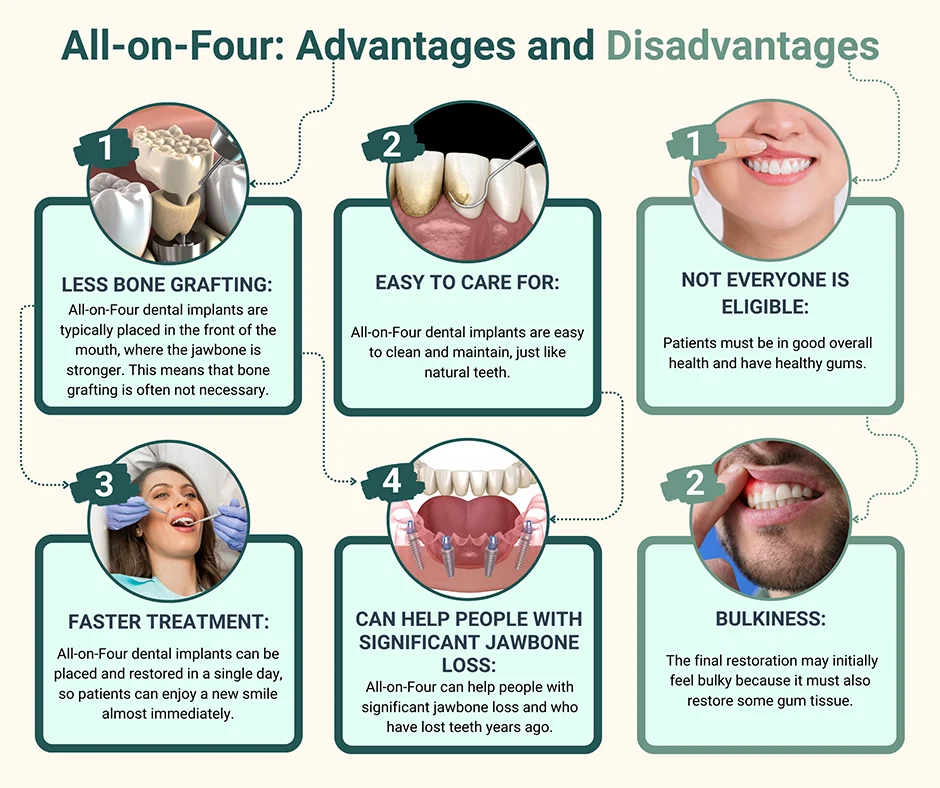

What are the cons of All-on-4 implants? While All-on-4 dental implants offer a revolutionary solution for replacing a full arch of teeth, it’s crucial to understand their potential drawbacks before making a decision. This comprehensive guide will explore the disadvantages, risks, and complications associated with All-on-4 implants, providing you with the information needed to make an informed choice about your dental health, potentially with services and Dental Tourism Albania.
Common Disadvantages of All-on-4 Dental Implants
When considering All-on-4 dental implants, it’s essential to weigh the advantages against the common disadvantages. While offering a quicker and less invasive alternative to traditional implants, All-on-4 isn’t without its potential drawbacks, and these disadvantages of All-on-4 dental implants can impact the overall patient experience and long-term success of the treatment.
Initial surgery risks
Like any surgical procedure, All-on-4 implant placement carries inherent risks. These initial surgery risks can include infection, bleeding, swelling, and pain. While dentists take precautions to minimize these risks, they can still occur, impacting recovery and potentially requiring additional treatment. Patients with pre-existing medical conditions may face an elevated risk of complications. For instance, individuals with diabetes or compromised immune systems may be more susceptible to infection, and this should be addressed when you contact Albania dental implants.
Not suitable for everyone (bone loss, oral health, etc.)
All-on-4 implants are not a one-size-fits-all solution. Certain factors can disqualify individuals from being suitable candidates. Significant bone loss in the jaw can compromise the stability of the implants. Poor oral hygiene or untreated gum disease can increase the risk of infection and implant failure. Systemic diseases, such as uncontrolled diabetes, can also affect the body’s ability to heal properly. A thorough evaluation by a qualified dentist is crucial to determine candidacy, and sometimes, a Bone Grafting in Albania, is necessary.
High upfront cost versus alternatives
The cost of All-on-4 implants can be a significant barrier for some individuals. The high upfront cost versus alternatives like dentures or traditional implants can make it seem like a less accessible option. While All-on-4 offers long-term benefits and improved quality of life, the initial investment can be substantial. It’s essential to consider the long-term value and potential for reduced maintenance costs compared to other tooth replacement options. At Albania Dental Implants, we provide competitive prices to make sure you can smile again.
All-on-4 Implant Problems in the Short and Long Term
Understanding the potential All-on-4 implant problems in both the short and long term is crucial for anyone considering this procedure. While All-on-4 offers numerous benefits, patients need to be aware of the potential complications that can arise.
Early complications (infection, pain, swelling)
Following All-on-4 surgery, early complications such as infection, pain, and swelling are possible. These are common side effects of any surgical procedure, but it’s important to manage them effectively to prevent further issues. Infections can occur if bacteria enter the surgical site, while pain and swelling are natural responses to tissue trauma. Dentists typically prescribe antibiotics and pain medication to address these early complications and ensure a smoother recovery.
Long-term challenges (wear, screw loosening, breakage)
Over time, All-on-4 implants can face long-term challenges. Wear and tear on the prosthetic teeth is inevitable, potentially requiring replacement after several years. Screw loosening within the implant system can also occur, requiring adjustments by a dentist. In rare cases, the implant components themselves may break, necessitating repair or replacement. Regular maintenance appointments and proper oral hygiene can help mitigate these long-term challenges, especially if you consider Albania Dental Implants.
Potential for implant failure
Although All-on-4 implants have a high success rate, there’s always a potential for implant failure. Factors such as poor bone integration, infection, or excessive stress on the implants can lead to failure. If an implant fails, it may require removal and replacement, adding to the overall cost and treatment time. Careful planning, precise surgical technique, and diligent post-operative care are essential to minimize the risk of implant failure.
All-on-4 Risks and Complications
Beyond the common disadvantages and potential problems, it’s critical to be aware of the specific All-on-4 risks and complications associated with this procedure. These risks can range from nerve damage to sinus issues and may require additional treatment to resolve.
Nerve damage risk
During All-on-4 implant placement, there’s a risk of nerve damage, particularly in the lower jaw. The inferior alveolar nerve, which provides sensation to the lower lip and chin, can be injured during surgery. Nerve damage can result in numbness, tingling, or pain in the affected area. While nerve damage is often temporary, it can be permanent in rare cases. Dentists take precautions to avoid nerve injury, but it’s important to be aware of this risk.
Sinus issues (upper jaw cases)
In upper jaw All-on-4 cases, there’s a risk of sinus issues. The maxillary sinuses are located near the upper jaw, and implant placement can sometimes affect these sinuses. Sinus issues can include sinusitis, sinus infections, or even perforation of the sinus membrane. Dentists carefully assess the sinus anatomy before surgery and take precautions to avoid sinus-related complications. In some cases, a sinus lift in Albania procedure may be necessary to augment the bone and prevent sinus problems.
Bone resorption beneath the prosthesis
Over time, bone resorption can occur beneath the All-on-4 prosthesis. This is a natural process where the jawbone gradually shrinks after tooth loss. While All-on-4 implants help to stimulate bone growth, some bone resorption may still occur. Bone resorption can lead to a loss of support for the prosthesis, potentially affecting its stability and fit. Regular check-ups and adjustments can help manage bone resorption and maintain the long-term success of the All-on-4 system.
Difficulty of future revision surgery
If complications arise or the All-on-4 system requires revision in the future, the surgery can be more difficult than the initial placement. Scar tissue, bone loss, or changes in the jaw anatomy can make it challenging to access the implants and perform necessary repairs. Revision surgery may require advanced techniques and specialized expertise. It’s important to choose an experienced dentist who is skilled in All-on-4 revision procedures.
All-on-4 vs Traditional Implants
When considering dental implants, it’s essential to understand the differences between All-on-4 and traditional implants. Each approach has its own advantages and disadvantages, and the best option depends on individual needs and circumstances. Comparing All-on-4 vs traditional implants involves considering factors such as longevity, maintenance, and flexibility.
Comparison of longevity and maintenance
Both All-on-4 and traditional implants are designed to be long-lasting solutions for tooth replacement. However, there are some differences in their expected longevity and maintenance requirements. Traditional implants, when properly cared for, can last a lifetime. All-on-4 implants also have a high success rate, but they may require more frequent maintenance appointments to address potential issues such as screw loosening or wear on the prosthetic teeth. Regular check-ups and diligent oral hygiene are crucial for both types of implants.
Flexibility for repairs or addition of implants
Traditional implants offer greater flexibility for repairs or the addition of implants in the future. If one traditional implant fails, it can be replaced without affecting the entire system. With All-on-4, the entire prosthesis is supported by only four implants, so the failure of one implant can compromise the entire restoration. Adding additional implants to an All-on-4 system can be more complex than with traditional implants.
Aesthetic and functional differences
All-on-4 and traditional implants can both provide excellent aesthetic and functional results. However, there are some subtle differences in their appearance and function. All-on-4 prostheses are typically designed to replace the entire arch of teeth, including the gums, which can create a more uniform and aesthetically pleasing smile. Traditional implants can be used to replace individual teeth or multiple teeth, allowing for greater customization of the smile. Functionally, both All-on-4 and traditional implants can restore chewing ability and speech, but some patients may find that All-on-4 feels slightly different than natural teeth.
Maintenance and Aftercare Issues
Proper maintenance and aftercare are essential for the long-term success of All-on-4 implants. Understanding the potential maintenance issues and challenges associated with All-on-4 is crucial for ensuring the longevity of your investment.
Cleaning challenges
Cleaning All-on-4 implants can be more challenging than cleaning natural teeth or traditional implants. The prosthesis is fixed in place, making it difficult to access certain areas for cleaning. Food particles and plaque can accumulate around the implants and under the prosthesis, potentially leading to infection and inflammation. Special tools, such as interdental brushes and water flossers, are often recommended to help clean these hard-to-reach areas. Your dentist can provide specific instructions on proper cleaning techniques.
Maintenance appointments and costs
Regular maintenance appointments are crucial for All-on-4 implants. These appointments allow the dentist to check the implants, prosthesis, and surrounding tissues for any signs of problems. The dentist may also perform professional cleaning to remove plaque and tartar buildup. Maintenance appointments and costs can vary depending on the dentist and the specific needs of the patient. It’s important to factor in these ongoing costs when considering All-on-4 implants.
Impact on oral hygiene routines
All-on-4 implants can impact oral hygiene routines. Patients need to be diligent about brushing, flossing, and using other cleaning aids to maintain the health of their implants. Poor oral hygiene can increase the risk of infection, inflammation, and implant failure. Patients may need to adjust their oral hygiene techniques to accommodate the All-on-4 prosthesis. Your dentist can provide guidance on how to modify your oral hygiene routine to ensure the long-term success of your implants. You might even consider a hollywood smile in Albania, for a perfect set of teeth.
Cost Considerations and Potential Hidden Expenses
Understanding the cost considerations and potential hidden expenses associated with All-on-4 implants is crucial for making an informed financial decision. While All-on-4 can offer long-term value, it’s essential to be aware of all the potential costs involved.
Upfront costs vs long-term value
The upfront costs of All-on-4 implants can be substantial, but it’s important to consider the long-term value. All-on-4 offers a permanent solution for tooth replacement, eliminating the need for dentures or other temporary options. Over time, the reduced maintenance costs and improved quality of life can offset the initial investment. Comparing the upfront costs vs long-term value can help you determine if All-on-4 is the right choice for you.
Insurance limitations
Dental insurance coverage for All-on-4 implants can vary widely. Some insurance plans may cover a portion of the cost, while others may not cover it at all. It’s important to check with your insurance provider to understand the extent of your coverage. Insurance limitations can significantly impact the overall cost of All-on-4 implants.
Repair/replacement costs
While All-on-4 implants are designed to be durable, repairs or replacements may be necessary over time. The prosthetic teeth can wear down, screws can loosen, or implant components can break. Repair/replacement costs can add to the overall expense of All-on-4 implants. It’s important to factor in these potential costs when considering this treatment option.
Frequently Asked Questions About All-on-4 Cons
To address common concerns and provide further clarity, here are some frequently asked questions about the cons of All-on-4 implants. These questions cover topics such as implant failure rate, bone loss, and recovery.
What are the main disadvantages of All-on-4 implants compared to other tooth replacement options?
Compared to other tooth replacement options, the main disadvantages of All-on-4 implants include the higher upfront cost, the potential for complications such as nerve damage or sinus issues, and the challenges associated with maintenance and cleaning. While alternatives like dentures or bridges may be more affordable initially, they don’t offer the same long-term stability and functionality as All-on-4 implants.
How likely are complications or implant failure with All-on-4?
The likelihood of complications or implant failure with All-on-4 is relatively low, but it’s not zero. Studies have shown that All-on-4 implants have a high success rate, but factors such as poor bone quality, smoking, or inadequate oral hygiene can increase the risk of complications. It’s important to choose an experienced dentist and follow their post-operative instructions carefully to minimize the risk of complications or failure.
Can All-on-4 implants lead to bone loss or require bone grafting?
While All-on-4 implants help to stimulate bone growth, some bone loss can still occur over time. In some cases, bone grafting may be necessary to augment the bone and ensure the stability of the implants. However, All-on-4 is often a good option for patients with some bone loss because of the tilted placement of the posterior implants. Your dentist can assess your bone density and determine if bone grafting is necessary.
What happens if one implant fails in the All-on-4 system?
If one implant fails in the All-on-4 system, it can compromise the entire restoration. The prosthesis is supported by only four implants, so the failure of one implant can weaken the entire system. In some cases, the failed implant can be replaced, but it may require additional surgery and bone grafting. If multiple implants fail, the entire All-on-4 system may need to be replaced with an alternative tooth replacement option.
Is recovery from All-on-4 implants longer or more difficult than other procedures?
Recovery from All-on-4 implants is generally similar to other dental implant procedures. Patients can expect some pain, swelling, and bruising after surgery. However, most patients can return to their normal activities within a few days. The recovery process can be longer or more difficult if complications arise, such as infection or nerve damage. Following your dentist’s post-operative instructions carefully can help speed up the recovery process.
Are there any ongoing maintenance issues with All-on-4 implants?
Yes, there are ongoing maintenance issues with All-on-4 implants. Patients need to be diligent about cleaning their implants and prosthesis to prevent plaque buildup and infection. Regular check-ups with the dentist are also necessary to monitor the health of the implants and address any potential problems. Maintenance appointments and costs can vary depending on the dentist and the specific needs of the patient.
What potential costs aren’t included in most All-on-4 quotes?
Most All-on-4 quotes include the cost of the surgery, implants, and prosthesis. However, there may be other potential costs that aren’t included, such as:
- Bone grafting (if needed)
- Extractions of existing teeth
- Temporary dentures
- Medications
- Maintenance appointments
- Repairs or replacements
It’s important to ask your dentist for a detailed breakdown of all the potential costs before proceeding with All-on-4 implants.
How do All-on-4 implants affect speech and chewing strength?
All-on-4 implants can improve speech and chewing strength compared to dentures or missing teeth. The implants provide a stable base for the prosthesis, allowing patients to speak and eat with greater confidence. However, it may take some time to adjust to the new prosthesis and learn how to speak and chew properly. Some patients may experience a slight change in their speech initially, but this usually improves over time. Chewing strength is typically restored to a level close to that of natural teeth. If you are not sure, you can get more information about general general dentistry in Albania.
Conclusion
While All-on-4 dental implants offer a life-changing solution for many, it’s crucial to be aware of the potential cons. By understanding the disadvantages, risks, and complications associated with this procedure, you can make an informed decision about your dental health. At Albania Dental Implants Services, we are committed to providing you with the highest quality care and helping you achieve a healthy, beautiful smile, so if you are looking for cost of dental implants in Albania, contact us today to schedule a consultation and explore your options.





