


Understanding how long it takes to recover from full mouth dental implant surgery is crucial for anyone considering this life-changing procedure. This comprehensive guide will provide a detailed timeline, covering the initial healing stages, potential symptoms, and essential aftercare tips to ensure a smooth and successful recovery journey with Albania Dental Implants.
What is Full Mouth Dental Implant Surgery?
Full mouth dental implant surgery, sometimes referred to as full arch restoration or full mouth reconstruction, is a transformative dental procedure designed to replace all of your missing or failing teeth with a complete set of permanent, natural-looking teeth.
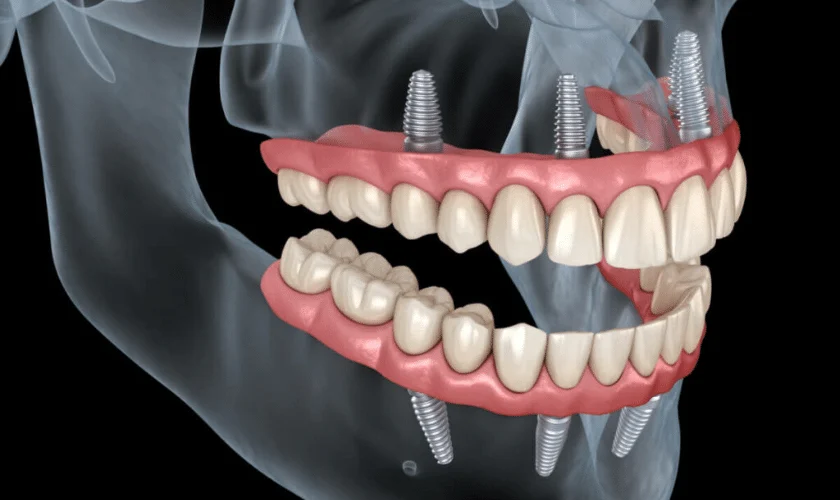
Full mouth dental implant surgery explained
In this procedure, a series of dental implants – small titanium posts – are surgically placed into your jawbone. These implants act as artificial tooth roots, providing a stable and secure foundation for a custom-made set of prosthetic teeth, typically a bridge or denture, that will be permanently attached to the implants. Unlike traditional dentures that rest on the gums, full mouth dental implants are anchored directly to the jawbone, offering superior stability, functionality, and aesthetics. At Albania Dental Implants, we offer high-quality full mouth dental implants in Albania, allowing you to restore your smile at an affordable cost.
Who is it for?
Full mouth dental implant surgery is an ideal solution for individuals who:
- Have lost most or all of their teeth due to decay, gum disease, injury, or other reasons.
- Are currently wearing dentures and are seeking a more stable and comfortable alternative.
- Have sufficient bone density in their jaw to support dental implants (or are willing to undergo bone grafting to improve bone density).
- Are committed to maintaining excellent oral hygiene and attending regular dental check-ups.
Brief overview of typical procedure steps
The full mouth dental implant procedure typically involves the following steps:
- Comprehensive Examination and Treatment Planning: Your dentist will conduct a thorough examination of your oral health, including X-rays and scans, to assess your suitability for dental implants and create a personalized treatment plan.
- Tooth Extraction (if necessary): If you have any remaining teeth that need to be removed, this will be done prior to implant placement.
- Implant Placement: The dental implants are surgically placed into your jawbone. Depending on your specific case, you may receive anywhere from four to eight implants per arch.
- Osseointegration: Over the next few months, the implants will fuse with your jawbone in a process called osseointegration. This process provides a strong and stable foundation for your new teeth.
- Abutment Placement: Once osseointegration is complete, abutments (small connectors) are attached to the implants. These abutments will serve as the attachment points for your final prosthetic teeth.
- Prosthetic Teeth Placement: Finally, your custom-made set of prosthetic teeth is attached to the abutments, completing your full mouth restoration.
Full Mouth Dental Implant Recovery Timeline
The full mouth dental implant recovery time varies from person to person, but it generally follows a predictable timeline. Understanding the stages of dental implant healing will help you prepare for the process and know what to expect.
Immediate recovery (first 24-72 hours)
The first 24-72 hours after your full mouth dental implant surgery are crucial for initial healing. During this time, you can expect some discomfort, swelling, and possibly some bleeding. Your dentist will provide you with specific instructions on how to manage these symptoms, which may include:
- Taking pain medication as prescribed.
- Applying ice packs to your face to reduce swelling.
- Eating soft foods and avoiding chewing on the implant sites.
- Gently rinsing your mouth with saltwater.
- Avoiding strenuous activity.
One week post-surgery
One week post-surgery, you should notice a significant improvement in your symptoms. The pain and swelling will likely have subsided, and any bleeding should have stopped. You may still need to follow a soft food diet, but you can gradually start to incorporate more solid foods as your comfort level allows. It is important to maintain good oral hygiene by gently brushing your teeth and rinsing your mouth with saltwater. You will likely have a follow-up appointment with your dentist to check on your progress and remove any sutures. Remember to use the right tools for cleaning and maintaining your implants, such as the best toothpaste for all on 4 implants to ensure they stay healthy and last long.
One month post-surgery
One month after surgery, the initial healing phase should be well underway. The implant sites should be healing nicely, and you should be able to eat a wider variety of foods. You will continue to maintain good oral hygiene and attend regular check-up appointments with your dentist. At this stage, your dentist may take impressions of your mouth to begin fabricating your final prosthetic teeth. If you’re curious about what to expect in the long term, exploring how long do dental implants last in the UK can give you an idea of the durability of your new smile.
Long-term healing (3-6 months)
The long-term healing phase, which typically lasts from 3 to 6 months, is when osseointegration occurs. During this time, the dental implants fuse with your jawbone, creating a strong and stable foundation for your new teeth. You may not notice any significant changes during this phase, but it is crucial for the long-term success of your implants. Continue to follow your dentist’s instructions and maintain excellent oral hygiene. Many people consider dental tourism in Albania to make this procedure more affordable. At Albania Dental Implants, we provide comprehensive services to help you through the whole process.
When is the process considered complete?
The full mouth dental implant process is considered complete when:
- Osseointegration is successful, and the implants are firmly integrated with your jawbone.
- Your final prosthetic teeth have been placed and adjusted to ensure a comfortable and natural-looking fit.
- You are able to eat, speak, and smile with confidence.
- You are committed to maintaining excellent oral hygiene and attending regular dental check-ups.
Typical Symptoms and Side Effects During Healing
Experiencing some symptoms and side effects during the healing process after full mouth dental implant surgery is normal. Understanding these potential issues, such as pain after dental implant surgery and how to manage them will help you navigate your recovery with greater ease and confidence.
Pain levels (when to expect the worst/discomfort)
It is normal to experience some pain and discomfort after full mouth dental implant surgery. The pain levels will vary depending on individual factors, such as your pain tolerance, the complexity of the surgery, and whether you had any pre-existing conditions. Generally, the worst discomfort is experienced during the first 24-72 hours after surgery. Your dentist will prescribe pain medication to help manage the pain. As the initial healing phase progresses, the pain should gradually subside. If you have concerns about pain, exploring how painful are dental implants can provide additional insights and reassurance.
Swelling and bruising
Swelling and bruising are common side effects after full mouth dental implant surgery. The swelling is usually most pronounced during the first 48-72 hours and gradually decreases over the next few days. Bruising may also occur around the surgical sites, and it may take up to two weeks for the bruises to fade completely. Applying ice packs to your face can help reduce swelling and bruising. Keep in mind that there are several ways to relieve pain effectively.
Bleeding
Some bleeding is to be expected after full mouth dental implant surgery. Your dentist will provide you with instructions on how to control the bleeding, which may include applying pressure to the surgical sites with gauze pads. The bleeding should gradually decrease over the first 24-48 hours. If you experience excessive or persistent bleeding, contact your dentist immediately.
Normal vs. problematic symptoms
It’s important to distinguish between normal and problematic symptoms during the healing process. Normal symptoms include mild pain, swelling, bruising, and some bleeding. Problematic symptoms that require immediate attention from your dentist include:
- Excessive or uncontrolled bleeding.
- Severe pain that is not relieved by pain medication.
- Signs of infection, such as fever, chills, redness, or pus.
- Numbness or tingling that persists beyond the first few days.
- Implant mobility or instability.
Aftercare and Tips for a Smooth Recovery
Proper aftercare is crucial for a smooth and successful recovery after full mouth dental implant surgery. Following your dentist’s instructions and adopting healthy habits will help you minimize discomfort, prevent complications, and promote optimal healing. Here are some essential aftercare and tips for a smooth recovery, designed to speed up dental implant recovery.
Oral hygiene
Maintaining excellent oral hygiene is essential for preventing infection and promoting healing. Gently brush your teeth with a soft-bristled toothbrush, being careful to avoid the surgical sites. Rinse your mouth with saltwater after each meal to help keep the area clean. Your dentist may also recommend using an antimicrobial mouthwash. In addition to your regular brushing and rinsing routine, you may need to explore the best toothpaste for all 4 implants to give them the special care they need.
Diet and eating suggestions
Following a soft food diet is crucial during the initial healing phase. Avoid hard, crunchy, or chewy foods that could irritate the surgical sites. Good food choices include:
- Soup
- Yogurt
- Mashed potatoes
- Scrambled eggs
- Smoothies
Gradually introduce more solid foods as your comfort level allows. It’s also essential to stay hydrated by drinking plenty of water. For those with All-on-4 implants, understanding whether you can eat steak with all on four implants is a common concern, and while it may be possible after some time, it’s best to follow your dentist’s recommendations.
Habits to avoid
Certain habits can interfere with the healing process and increase the risk of complications. Avoid the following:
- Smoking
- Drinking alcohol
- Using tobacco products
- Chewing gum
- Using a straw
- Touching the surgical sites with your fingers or tongue
Importance of follow-up appointments
Attending all of your scheduled follow-up appointments with your dentist is crucial for monitoring your progress and ensuring that the implants are healing properly. Your dentist will check the implant sites, assess your oral hygiene, and make any necessary adjustments to your treatment plan.
When Can You Return to Normal Activities?
Knowing what to expect after full mouth dental implants and returning to normal activities can vary based on individual healing rates and the nature of your daily routine. However, here’s a general guideline to help you plan your recovery:
Work and physical exercise
Most people can return to work within a few days after full mouth dental implant surgery, depending on the nature of their job. If your job involves strenuous physical activity, you may need to take a week or more off to allow your body to heal. Avoid strenuous exercise for at least two weeks after surgery to prevent complications.
Social activities
You can usually resume social activities within a few days after surgery, as long as you are feeling comfortable and confident. However, you may want to avoid activities that could put you at risk of trauma to the surgical sites, such as contact sports. If you are considering what your new teeth will feel like, knowing whether All-on-4 feel like real teeth can help manage your expectations.
When to resume stressful or strenuous activity
It’s best to avoid stressful or strenuous activities for at least two weeks after surgery. These activities can increase your blood pressure and heart rate, which can interfere with the healing process. When you do resume these activities, do so gradually and listen to your body. If you experience any pain or discomfort, stop and rest.
Signs to contact your dentist/surgeon
Contact your dentist or surgeon immediately if you experience any of the following signs or symptoms:
- Excessive or uncontrolled bleeding
- Severe pain that is not relieved by pain medication
- Signs of infection, such as fever, chills, redness, or pus
- Numbness or tingling that persists beyond the first few days
- Implant mobility or instability
Frequently Asked Questions (FAQ)
Here are some frequently asked questions about full mouth dental implant recovery:
How long does it take to recover from full mouth dental implant surgery?
The initial recovery period after full mouth dental implant surgery typically lasts for one to two weeks, during which you’ll experience some discomfort, swelling, and dietary restrictions. The long-term healing phase, when the implants fuse with your jawbone, can take anywhere from three to six months. The entire process is considered complete once osseointegration is successful, your final prosthetic teeth have been placed, and you are able to eat, speak, and smile with confidence. Remember, the timeline can vary depending on individual factors.
Is full recovery faster or slower than single implants?
Full mouth dental implant recovery is generally more extensive than single implant recovery due to the larger surgical area involved. While the initial healing phase may be similar, the overall recovery time for full mouth implants can be longer as the body needs to heal multiple implant sites and adapt to a complete set of new teeth. If you’re curious about the single implant process, you might want to research single tooth implants in Albania to understand the differences in procedure and recovery.
What are common complications that might delay recovery?
Common complications that might delay recovery after full mouth dental implant surgery include infection, implant failure, nerve damage, sinus problems, and poor bone healing. These complications can prolong the healing process and require additional treatment, such as antibiotics, surgery, or bone grafting. Following your dentist’s aftercare instructions carefully can help minimize the risk of complications. To gain insights into potential problems, exploring what is the downside of dental implants can be helpful.
Can I work during the recovery period?
Whether you can work during the recovery period depends on the nature of your job and your individual healing progress. If your job is not physically demanding, you may be able to return to work within a few days after surgery. However, if your job involves strenuous physical activity, you may need to take a week or more off to allow your body to heal properly.
When can I eat solid foods again?
You will typically need to follow a soft food diet for several weeks after full mouth dental implant surgery. Gradually introduce more solid foods as your comfort level allows. Avoid hard, crunchy, or chewy foods that could irritate the surgical sites. Your dentist will provide you with specific instructions on when you can resume eating solid foods. It’s useful to understand the guidelines around what you can eat with certain types of implants, for example, whether can you eat steak with all on four implants after a certain period.
How can I relieve pain and swelling effectively?
You can relieve pain and swelling effectively by taking pain medication as prescribed by your dentist, applying ice packs to your face, gently rinsing your mouth with saltwater, and avoiding strenuous activity. Over-the-counter pain relievers, such as ibuprofen or acetaminophen, can also help manage pain. It is vital to adhere to the recommended dosage and consult with your dentist if the pain persists or worsens. For persistent discomfort, it’s helpful to understand what is the most painful part of a dental implant process and how to manage it.
What are risks if I don’t follow aftercare instructions?
Failing to follow aftercare instructions can significantly increase the risk of complications, such as infection, implant failure, and delayed healing. Neglecting oral hygiene, smoking, drinking alcohol, and eating hard or chewy foods can all interfere with the healing process. Adhering to your dentist’s instructions and maintaining good oral hygiene are crucial for a successful recovery.
Are there signs that mean my implants are not healing properly?
Yes, several signs may indicate that your implants are not healing properly. These include excessive or uncontrolled bleeding, severe pain that is not relieved by pain medication, signs of infection (fever, chills, redness, pus), numbness or tingling that persists, and implant mobility or instability. If you experience any of these symptoms, contact your dentist immediately.
Conclusion
In summary, understanding how long it takes to recover from full mouth dental implant surgery is essential for setting realistic expectations and preparing for the journey ahead. The recovery timeline varies, but generally includes an initial healing phase of one to two weeks, followed by a longer-term osseointegration phase of three to six months.
To get a personalized assessment and recovery timeline, we encourage you to contact Albania Dental Implants for a consultation. Our experienced team can evaluate your individual needs and provide you with the best possible care. Schedule your consultation today and take the first step towards a confident, healthy smile!