



The question on many minds after receiving dental implants is: Can you eat chips with implants? The answer, while not a straightforward yes or no, depends on several factors, including the stage of healing, the type of implant, and your overall oral health. This article will guide you through the do’s and don’ts of eating crunchy foods like chips after getting dental implants, ensuring the longevity of your investment with Albania Dental Implants.
Understanding Dental Implants
Before delving into dietary specifics, it’s crucial to understand the nature of dental implants. This includes understanding what are dental implants, their components (titanium posts, abutments, and artificial teeth), and how they compare to natural teeth. Dental implants are a long-term solution for missing teeth, offering stability and functionality that dentures or bridges often lack. At Albania Dental Implants, we specialize in providing high-quality dental implants that are both durable and aesthetically pleasing, with a wide array of Albania Dental Implants Services to cater to your individual needs.
What are Dental Implants?
Dental implants are artificial tooth roots, typically made of titanium, surgically implanted into the jawbone. Over time, the bone fuses with the implant through a process called osseointegration, providing a secure and permanent base for a replacement tooth or crown. Implants offer a strong and stable foundation, allowing for comfortable chewing and speaking.
How Do Dental Implants Function Compared to Natural Teeth?
Unlike dentures, which rest on the gums, dental implants are anchored directly into the jawbone, mimicking the function of natural teeth. This provides superior stability and prevents bone loss, a common issue with dentures. Implants also don’t require altering adjacent teeth, as bridges do, making them a more conservative and long-term solution. This innovative approach to tooth replacement has transformed the lives of countless individuals, restoring their smiles and their self-confidence.
Foods to Avoid with Dental Implants
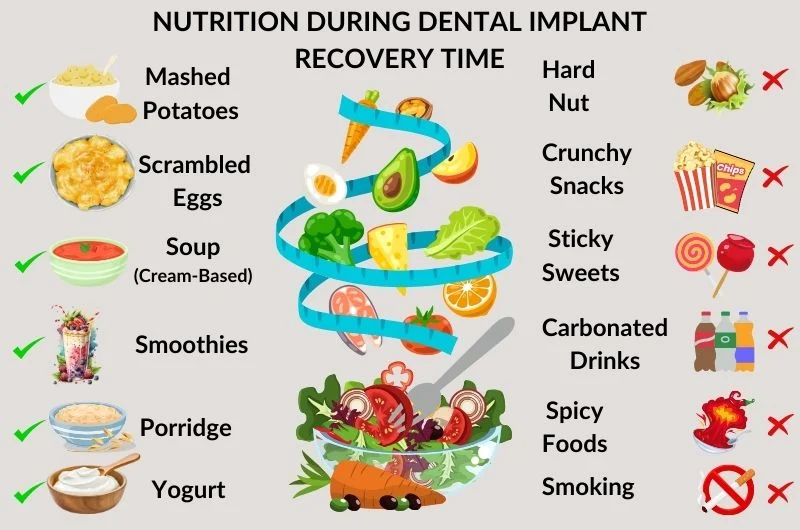
After receiving dental implants, particularly in the initial recovery phase, it’s essential to be mindful of your diet. This includes knowing which crunchy foods and hard foods to avoid, understanding the post-surgery diet recommendations, and recognizing the importance of implant care in maintaining the health and integrity of your new teeth. Dentists advise caution with certain foods to protect the implants during the critical osseointegration period.
Why Do Dentists Advise Caution with Certain Foods?
Dentists advise caution with hard and crunchy foods because excessive pressure can hinder the healing process and potentially damage the newly placed implants. During the first few weeks after surgery, the bone around the implant is still fusing, making it vulnerable to disruption. Avoiding foods that require significant chewing force helps ensure successful osseointegration and long-term implant stability.
Short-Term Restrictions vs. Long-Term Habits
The dietary restrictions are most stringent in the short term, typically the first few weeks following the implant procedure. During this period, a soft food diet is recommended to minimize stress on the implants. However, even after the initial healing phase, adopting mindful eating habits is crucial for long-term implant maintenance. While you can gradually reintroduce some harder foods, it’s essential to do so carefully and avoid consistently subjecting your implants to excessive force. We find that patients who are careful with implant protection after oral surgery in Albania tend to have better and longer-lasting results.
Can You Eat Chips After Getting Implants?
The big question: eating chips with dental implants. Can you enjoy your favorite crunchy snack after getting dental implants? Let’s address the question Can you eat chips with implants right after surgery? and explore when you can safely reintroduce chips into your diet. While the idea of giving up chips entirely might sound daunting, understanding the timeline and precautions can help you navigate your post-implant diet with confidence.
Can you eat chips with implants right after surgery?
Immediately following your dental implant surgery, it is not recommended to eat chips or any hard, crunchy foods. Your mouth will be tender, and the implants need time to integrate with your jawbone. Sticking to a soft food diet during this initial healing phase is crucial to prevent complications and ensure a successful outcome. Consuming chips immediately after surgery can lead to pain, inflammation, and potentially dislodge the implant.
When Can You Safely Reintroduce Chips into Your Diet?
The timeline for reintroducing chips into your diet varies depending on individual healing progress and your dentist’s recommendations. Generally, after 2-3 months, once osseointegration is well underway, you can cautiously try softer chips. It’s important to start slowly, perhaps by soaking the chip in water or milk to soften it slightly, and assess your comfort level. Avoid biting directly into hard chips, and instead, break them into smaller pieces. If you experience any pain or discomfort, it’s best to refrain from eating chips and consult with your dentist.
How to Enjoy Crunchy Foods with Implants Safely
Just because you have dental implants doesn’t mean you have to say goodbye to all your favorite crunchy snacks forever. By practicing careful dental care, maintaining optimal oral hygiene, and adopting a few smart strategies, you can continue to enjoy chips and other crunchy foods without jeopardizing your implants. Let’s explore safer ways to eat chips and other crunchy snacks with implants and delve into some practical tips for avoiding damage.
Safer Ways to Eat Chips and Other Crunchy Snacks with Implants
One of the best ways to enjoy crunchy foods with implants is to modify the way you eat them. Instead of biting directly into a hard chip, try breaking it into smaller pieces and chewing gently with your back teeth. This reduces the force on the implant and minimizes the risk of damage. You can also opt for softer varieties of chips, such as baked chips or those made from alternative ingredients like sweet potatoes or vegetables. Softer chips and snacks offer a satisfying crunch without posing a significant threat to your implants.
Tips for Avoiding Damage
In addition to modifying your eating habits, practicing good oral hygiene is essential for protecting your dental implants. Brushing twice a day with a soft-bristled toothbrush and flossing daily helps remove plaque and food particles that can accumulate around the implant and cause inflammation. Using an interdental brush can also help clean hard-to-reach areas around the implant. Regular dental check-ups are also crucial for monitoring the health of your implants and addressing any potential issues early on. Remember, taking proactive steps to care for your implants can significantly extend their lifespan and allow you to enjoy your favorite foods without worry. Consider visiting our dental clinic in Albania for comprehensive care and guidance.
Common Concerns about Eating with Dental Implants
It’s natural to have concerns about eating with dental implants, especially regarding their implant longevity, potential implant damage, and necessary post-procedure care. Understanding these concerns and taking preventive measures can help ensure the long-term success of your implants. Knowing the signs of damage to watch for and when to consult your dentist can empower you to address issues promptly and maintain a healthy, functional smile.
Signs of Damage to Watch For
While dental implants are incredibly durable, they are not immune to damage. Some signs to watch out for include:
- Pain or discomfort around the implant
- Swelling or inflammation of the gums
- Loose implant or crown
- Difficulty chewing
- Bleeding when brushing or flossing
- Changes in bite
If you experience any of these symptoms, it’s crucial to contact your dentist immediately. Early detection and treatment can prevent further damage and save your implant.
When to Consult Your Dentist
Regular dental check-ups are essential for monitoring the health of your dental implants. However, don’t hesitate to consult your dentist between appointments if you have any concerns or experience any unusual symptoms. Your dentist can assess the situation, diagnose any problems, and recommend appropriate treatment. Remember, proactive care is key to maintaining the health and longevity of your dental implants.
If you’re considering dental tourism in Albania, remember to follow your dentist’s guidance and prioritize your post-operative care for the best results.
Frequently Asked Questions
Here are some frequently asked questions about eating with dental implants to provide further clarity and guidance:
Are there types of chips that are safer to eat with implants?
Yes, some types of chips are generally safer to eat with implants than others. Baked chips, which are often thinner and less dense than fried chips, are a good option. Similarly, chips made from alternative ingredients like sweet potatoes or vegetables tend to be softer and easier to chew. Avoid thick-cut or kettle-cooked chips, as they can be very hard and pose a greater risk of damage to your implants.
Can eating chips cause dental implant failure?
While eating chips alone is unlikely to cause dental implant failure, consistently subjecting your implants to excessive force from hard or crunchy foods can increase the risk of complications. Over time, this can lead to implant loosening, damage to the crown, or even failure of the implant. It’s essential to practice mindful eating habits and take precautions to protect your implants.
How long should I wait before eating hard foods after implant surgery?
The recommended waiting period before reintroducing hard foods after implant surgery is typically 2-3 months. This allows sufficient time for osseointegration, the process by which the bone fuses with the implant, to occur. However, it’s important to follow your dentist’s specific recommendations, as healing times can vary depending on individual factors.
What other foods should I avoid with dental implants?
In addition to hard and crunchy foods like chips, there are several other foods to avoid with dental implants, particularly during the initial healing phase. These include:
- Sticky foods like caramel or gummy candies
- Chewy foods like steak or jerky
- Hard nuts and seeds
- Ice
These foods can put excessive stress on the implants and hinder the healing process. Opt for softer, easier-to-chew options instead.
Are dental implants stronger than real teeth?
While dental implants are incredibly strong and durable, they are not necessarily stronger than real teeth. Dental implants are designed to withstand significant chewing forces, but they are not impervious to damage. Real teeth have a protective enamel layer and are supported by ligaments that provide cushioning and flexibility. Dental implants lack these natural shock absorbers, making them more susceptible to damage from excessive force.
What should I do if my implant feels loose after eating chips?
If your implant feels loose after eating chips, it’s essential to contact your dentist immediately. A loose implant can indicate a problem with osseointegration or damage to the surrounding bone. Your dentist can assess the situation, diagnose the cause of the looseness, and recommend appropriate treatment to stabilize the implant and prevent further complications. Ignoring a loose implant can lead to implant failure and the need for additional procedures.
To learn more about dental implant options and aftercare, consider exploring our Albania Dental Implants website.
Conclusion
So, can you eat chips with implants? The answer is yes, but with caution and careful consideration. By understanding the healing process, adopting mindful eating habits, and practicing good oral hygiene, you can enjoy your favorite crunchy snacks without jeopardizing the long-term success of your dental implants. Remember, consulting with your dentist regularly is key to monitoring the health of your implants and addressing any potential issues early on. At Albania Dental Implants, we are committed to providing you with high-quality dental implants and comprehensive aftercare services to help you maintain a healthy, functional, and confident smile for years to come. Contact us today to learn more about our services and how we can help you achieve your dream smile!





