


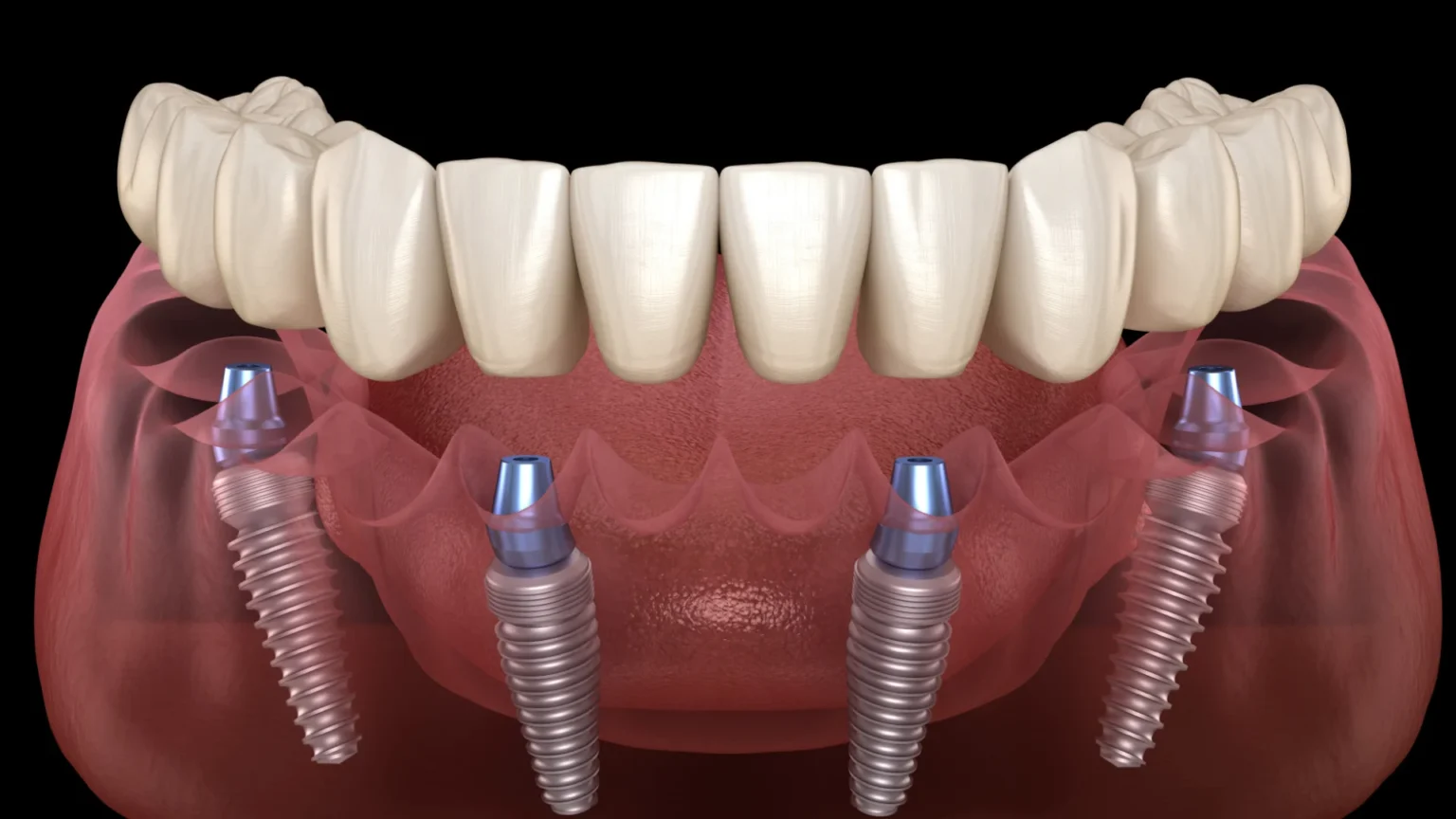

All in 4 dental implants are a revolutionary technique for replacing a full arch of teeth with just four strategically placed implants. This innovative solution offers a fixed, stable, and natural-looking alternative to traditional dentures, providing a new lease on life for those with significant tooth loss. While alternatives like traditional implants and dentures exist, All-in-4 offers a unique blend of efficiency, affordability, and long-term stability.
What Are All in 4 Dental Implants?
The concept of full mouth dental implants can seem daunting, but All-in-4 simplifies the process. Instead of using one implant for every tooth, this procedure strategically places four implants in the jawbone to support an entire arch of replacement teeth. This approach maximizes the use of available bone, often eliminating the need for bone grafting, and provides a secure foundation for a functional and aesthetic smile. The dental implant procedure itself involves careful planning, precise placement, and the attachment of a custom-made prosthesis that looks and feels like natural teeth.
Understanding the Basics of All-in-4
- Four implants support a full arch of teeth
- Implants are strategically placed for maximum stability
- Often eliminates the need for bone grafting
- Provides a fixed and permanent solution
The All-in-4 technique is a game-changer for patients who have lost most or all of their teeth due to decay, injury, or gum disease. It offers a way to regain a confident smile, improve chewing function, and enhance overall quality of life.
Benefits of Choosing All-in-4
The allure of full mouth dental implants via the All-in-4 method extends beyond just aesthetics. Functionally, it restores the ability to eat a wider range of foods without discomfort. Psychologically, it can boost self-esteem and social confidence, helping patients feel more comfortable in their daily lives. Choosing to get dental implants in Albania is a great alternative. Dental tourism in Albania is on the rise because of the affordable price.
Benefits of All in 4 Dental Implants
The benefits of all in 4 dental implants are numerous, making it a popular choice for those seeking a comprehensive tooth replacement solution. This innovative technique offers significant advantages over traditional implants, providing a faster, more cost-effective, and less invasive approach to restoring a full arch of teeth.
Key Advantages of All-in-4
- Reduced Treatment Time: All-in-4 typically requires fewer appointments and a shorter overall treatment time compared to traditional implants.
- Cost-Effective: By using only four implants per arch, the All-in-4 procedure can be more affordable than replacing each tooth individually.
- Minimally Invasive: The strategic placement of implants often eliminates the need for bone grafting, reducing surgical complexity and recovery time.
- Immediate Results: In many cases, patients can receive a temporary set of teeth on the same day as the implant placement, allowing for immediate function and aesthetics.
- High Success Rate: The success rate of all in 4 dental implants is generally high, with long-term studies demonstrating excellent stability and functionality.
Improved Quality of Life
Beyond the practical advantages, All-in-4 dental implants can dramatically improve a patient’s quality of life. With a fixed and stable set of teeth, individuals can enjoy eating their favorite foods, speaking with confidence, and smiling without hesitation. This can lead to increased self-esteem, improved social interactions, and a greater sense of overall well-being.
Who Is Suitable for All in 4 Dental Implants?
Determining who is suitable for All-in-4 dental implants is crucial for ensuring the success of the procedure. While this technique offers a versatile solution for many, it’s not necessarily right for everyone. Understanding the ideal candidates and any potential limitations is essential for making an informed decision.
Ideal Candidates for All-in-4
- Individuals who have lost most or all of their teeth in one or both arches
- Patients with sufficient bone density to support the implants (although All-in-4 can sometimes overcome bone loss issues)
- Those seeking a fixed and permanent alternative to dentures
- People who are in good overall health and can undergo minor surgery
Addressing Bone Loss with All-in-4
One of the significant advantages of All-in-4 is its ability to address bone loss. The strategic placement of the implants, often angled to maximize contact with existing bone, can eliminate the need for bone grafting in many cases. However, in situations with severe bone loss, additional procedures like a sinus lift in Albania may be necessary to ensure adequate support for the implants. A sinus lift is an oral surgery that allows for additional bone to be added.
The Procedure: How All in 4 Dental Implants Work
Understanding the step-by-step process of All-in-4 dental implants can help alleviate any anxiety and provide a clear picture of what to expect. From the initial consultation to the final placement of the prosthesis, each stage is carefully planned and executed to ensure the best possible outcome.
The All-in-4 Process: A Detailed Overview
- Initial Consultation and Evaluation: The dentist will assess your oral health, take X-rays or CT scans, and discuss your treatment goals to determine if All-in-4 is right for you.
- Treatment Planning: Using advanced imaging technology, the dentist will create a detailed plan for the placement of the implants, taking into account bone density, nerve location, and other critical factors.
- Implant Placement: During a minor surgical procedure, four implants are strategically placed in the jawbone. In many cases, this can be done under local anesthesia or sedation.
- Temporary Prosthesis: A temporary set of teeth is attached to the implants, allowing you to function normally and maintain your aesthetics while the implants heal.
- Osseointegration: Over the next few months, the implants will fuse with the jawbone in a process called osseointegration, creating a solid foundation for the final prosthesis.
- Final Prosthesis: Once osseointegration is complete, the temporary prosthesis is replaced with a custom-made, permanent set of teeth that is designed to look and feel natural.
All in 4 vs Traditional Implants: Key Differences
When comparing all in 4 vs traditional implants, it’s essential to consider the unique advantages of each approach. All-in-4 offers a streamlined and efficient solution for full-arch replacement, while traditional implants may be more suitable for individual tooth replacement or situations with ample bone density. The best option depends on the patient’s specific needs and circumstances.
Cost of All in 4 Dental Implants
The cost of all in 4 dental implants is a significant consideration for many individuals. While the price can vary depending on several factors, understanding the average prices and available financing options can help make this life-changing procedure more accessible.
Factors Influencing the Cost
- Location: The cost of dental implants can vary depending on the geographic location of the dental practice.
- Dentist’s Experience: More experienced dentists may charge higher fees for their services.
- Materials Used: The type of implants and prosthesis used can affect the overall cost.
- Additional Procedures: If bone grafting or other additional procedures are required, the cost will increase.
Financing Options for All-in-4
Recognizing that the cost of All-in-4 can be a barrier for some, many dental practices offer financing options to help make the procedure more affordable. These may include payment plans, third-party financing companies, or dental insurance coverage. Exploring these options can help you find a payment solution that fits your budget. You may also find getting a full mouth reconstruction in Albania is more affordable. A full mouth reconstruction is an effective way to reconstruct your smile.
Recovery and Aftercare
The recovery process for all in 4 dental implants is a crucial aspect of the overall treatment. Understanding the healing timeline and proper aftercare instructions can help ensure a smooth and successful recovery.
The Healing Timeline
- Initial Healing (1-2 weeks): During the first few weeks, you may experience some swelling, bruising, and discomfort. Pain medication can help manage any pain.
- Osseointegration (3-6 months): Over the next few months, the implants will fuse with the jawbone in a process called osseointegration. It’s important to follow your dentist’s instructions carefully during this time.
- Long-Term Maintenance: Once the implants have fully integrated, it’s essential to maintain good oral hygiene and schedule regular checkups with your dentist to ensure the long-term health and stability of your implants.
Maintenance of Dental Implants
Proper maintenance of dental implants is essential for their long-term success. This includes brushing and flossing daily, using a soft-bristled toothbrush and non-abrasive toothpaste, and avoiding habits like smoking and teeth grinding. Regular checkups with your dentist are also crucial for monitoring the health of your implants and addressing any potential issues early on.
Risks and Complications
While All-in-4 dental implants have a high success rate, it’s essential to be aware of the potential risks and complications. Understanding these possible side effects and how to minimize risks can help you make an informed decision and prepare for any potential challenges.
Potential Complications
- Infection: As with any surgical procedure, there is a risk of infection at the implant site.
- Nerve Damage: In rare cases, implant placement can cause damage to nearby nerves, resulting in numbness or tingling in the lips, chin, or tongue.
- Implant Failure: Although rare, implants can fail to integrate with the jawbone, requiring removal and replacement.
- Prosthesis Problems: The prosthesis can become loose, damaged, or require adjustments over time.
Minimizing Risks
Choosing an experienced and qualified dentist, following all pre- and post-operative instructions carefully, and maintaining good oral hygiene can help minimize the risks associated with All-in-4 dental implants. Regular checkups with your dentist are also crucial for monitoring the health of your implants and addressing any potential issues early on.
Frequently Asked Questions (FAQs)
What are all in 4 dental implants and how do they work?
All-in-4 dental implants are a technique that replaces a full arch of teeth using only four implants. The implants are strategically placed in the jawbone to provide maximum support and stability for a custom-made prosthesis. This approach often eliminates the need for bone grafting and provides a fixed and permanent solution for those with significant tooth loss.
Who is a candidate for all in 4 dental implants?
Ideal candidates for All-in-4 dental implants include individuals who have lost most or all of their teeth in one or both arches, have sufficient bone density to support the implants, are seeking a fixed alternative to dentures, and are in good overall health. However, a thorough evaluation by a qualified dentist is necessary to determine individual suitability.
How much do all in 4 dental implants cost in the UK?
The cost of all in 4 dental implants in the UK can vary depending on several factors, including the location of the dental practice, the dentist’s experience, and the materials used. Generally, the procedure can range from £10,000 to £20,000 per arch. However, this is an estimated cost. For those seeking more affordable options, exploring dental implants in Albania with services such as Albania Dental Implants can be a solution.
What are the advantages compared to traditional implants?
All-in-4 offers several advantages over traditional implants, including reduced treatment time, lower cost, minimally invasive surgery, and the potential for immediate results. By using only four implants per arch and often eliminating the need for bone grafting, All-in-4 provides a more efficient and cost-effective solution for full-arch tooth replacement.
How long do all in 4 dental implants last?
With proper care and maintenance, All-in-4 dental implants can last for many years, even a lifetime. Regular checkups with your dentist, good oral hygiene practices, and avoiding habits like smoking and teeth grinding can help ensure the long-term health and stability of your implants.
What is the recovery time after surgery?
The recovery time after surgery for All-in-4 dental implants typically involves some swelling, bruising, and discomfort for the first few weeks. Pain medication can help manage any pain. The implants will then need several months to fuse with the jawbone in a process called osseointegration. Most patients can return to normal activities within a few days, but it’s important to follow your dentist’s instructions carefully to ensure a smooth recovery.
Are there any risks or complications?
As with any surgical procedure, there are potential risks and complications associated with All-in-4 dental implants. These may include infection, nerve damage, implant failure, and prosthesis problems. However, choosing an experienced dentist, following all instructions carefully, and maintaining good oral hygiene can help minimize these risks.
How do I care for my all in 4 dental implants?
Caring for your All-in-4 dental implants involves brushing and flossing daily, using a soft-bristled toothbrush and non-abrasive toothpaste, and avoiding habits like smoking and teeth grinding. Regular checkups with your dentist are also crucial for monitoring the health of your implants and addressing any potential issues early on.
Is the procedure painful?
The All-in-4 dental implant procedure is typically performed under local anesthesia or sedation, minimizing any pain or discomfort during the surgery. After the procedure, you may experience some soreness and swelling, which can be managed with pain medication.
Can I get all in 4 dental implants if I have bone loss?
One of the advantages of All-in-4 is its ability to address bone loss. The strategic placement of the implants, often angled to maximize contact with existing bone, can eliminate the need for bone grafting in many cases. However, in situations with severe bone loss, additional procedures may be necessary to ensure adequate support for the implants.
Where can I get all in 4 dental implants near me?
Finding a qualified dentist who offers All-in-4 dental implants near you involves researching local dental practices, reading reviews, and scheduling consultations. If you’re open to traveling for more affordable options, consider all on 4 dental implants in Albania, where you can receive high-quality treatment at a fraction of the cost. Contact Albania Dental Implants today!
Conclusion
All-in-4 dental implants offer a revolutionary solution for replacing a full arch of teeth with just four strategically placed implants. With numerous benefits, including reduced treatment time, lower cost, and improved quality of life, All-in-4 provides a fixed, stable, and natural-looking alternative to traditional dentures. If you’re considering All-in-4 dental implants, we encourage you to schedule a consultation with a qualified dentist to determine if this procedure is right for you. Regain your smile, confidence, and quality of life with All-in-4 dental implants!
Ready to transform your smile? Contact Albania Dental Implants today to learn more about All-in-4 dental implants and schedule a consultation. Call us or visit our website to take the first step towards a confident and healthy smile!