



Which is cheaper, implants or dentures? Many people are searching for the most cost-effective tooth replacement option. Understanding the nuances of each option, including upfront costs, long-term expenses, and other factors beyond price, is crucial in making an informed decision. This comprehensive guide will explore the costs associated with dental implants and dentures, helping you determine which solution best fits your budget and oral health needs, especially when considering options like dental tourism in Albania.
Understanding Dental Implants and Dentures
Before diving into the cost comparison, it’s essential to understand what dental implants and dentures are and how they work. This will provide a solid foundation for evaluating their respective costs and benefits.
Dental Implants Explained
A dental implant is a surgical component that interfaces with the bone of the jaw or skull to support a dental prosthesis such as a crown, bridge, denture, or facial prosthesis or to act as an orthodontic anchor. The dental implant procedure typically involves several steps:
- Initial Consultation: Examination and assessment of your oral health.
- Implant Placement: Surgical insertion of the implant into the jawbone.
- Osseointegration: The process where the implant fuses with the bone.
- Abutment Placement: Attachment of a connector to the implant.
- Prosthesis Placement: Fitting of the crown, bridge, or denture onto the abutment.
Dental implants are known for their durability and natural feel, providing a long-term solution for missing teeth. Options such as zirconia implants in Albania offer aesthetically pleasing, metal-free alternatives.
Dentures Explained
Dentures are removable replacements for missing teeth and surrounding tissues. They are made to closely resemble your natural teeth and can be used to replace all or some of your teeth. There are several types of dentures, including:
- Full Dentures: Used when all natural teeth are missing.
- Partial Dentures: Used when some natural teeth remain.
- Implant-Supported Dentures: Attach to dental implants for added stability.
Dentures are a more traditional and often more affordable option for tooth replacement. They are custom-made to fit your mouth and can significantly improve your ability to eat and speak.
Upfront Cost Comparison: Implants vs Dentures
When considering tooth replacement options, one of the first questions people ask is about the cost. Let’s break down the dental implants cost and dentures cost in the UK, considering both NHS and private options. Understanding these figures is essential for budgeting and making an informed decision.
Average Cost of Dental Implants in the UK (NHS and Private)
The cost of dental implants in the UK can vary widely depending on several factors, including the type of implant, the location of the clinic, and the complexity of the procedure. According to the NHS, dental implants are rarely available unless there is a medical need. Private dental clinics are the primary providers of dental implants, and the costs are as follows:
- Single Tooth Implant: £2,500 – £4,000
- All-on-4 Implants: £10,000 – £20,000 per arch
- Full Mouth Implants: £20,000 – £40,000
These costs typically include the implant, abutment, crown, and all associated procedures, such as consultations and follow-up appointments. Consider options like Albania Dental Implants Services for more affordable solutions.
Average Cost of Dentures in the UK (NHS and Private)
Dentures are generally more affordable than dental implants, but the cost can still vary based on the type of denture and whether you choose NHS or private treatment. The average costs are as follows:
- NHS Dentures: £282.80 for a full set (upper and lower)
- Private Dentures: £600 – £2,000 per arch
The cost of private dentures can vary based on the materials used (e.g., acrylic or porcelain) and the complexity of the case. Partial dentures may also vary in price depending on the number of teeth being replaced and the design of the denture.
Maintenance and Long-Term Expenses
While the initial cost is a significant factor, it’s essential to consider the long-term expenses associated with both dental implants and dentures. Maintenance costs for implants vs dentures can differ significantly, impacting your overall financial commitment.
Cleaning and Care: Implants vs Dentures
Maintaining dental implants involves similar oral hygiene practices as natural teeth. This includes:
- Brushing: Twice daily with a soft-bristled toothbrush.
- Flossing: Daily to remove plaque and food particles.
- Regular Check-ups: Professional cleanings and check-ups with your dentist.
The cost of these routine cleanings and check-ups is typically similar to that of natural teeth. For dentures, the cleaning and care routine is different:
- Daily Cleaning: Removing and cleaning dentures with a denture brush and cleaner.
- Soaking: Soaking dentures overnight in a denture cleaning solution.
- Regular Check-ups: Monitoring the fit and condition of the dentures with your dentist.
While the daily cleaning routine for dentures might seem straightforward, the cost of denture cleaners and adhesives can add up over time.
Replacement and Repair Over Time
Longevity of dental implants and dentures is a critical factor in determining their long-term cost-effectiveness. Dental implants are designed to be a permanent solution, with many lasting a lifetime with proper care. However, the crown or bridge attached to the implant may need replacement every 10-15 years, costing between £500 and £1,500 per replacement.
Dentures, on the other hand, typically need to be replaced every 5-10 years due to wear and tear and changes in the mouth’s structure. The cost of replacing dentures can range from £600 to £2,000 per arch, depending on the type and material. Additionally, dentures may require relining or adjustments to ensure a proper fit, adding to the overall expense.
What Affects the Cost?
Several factors can influence the final cost of dental implants and dentures. Understanding these variables can help you better estimate the expenses and make informed decisions.
Number of Teeth Replaced
The number of teeth being replaced is a primary factor affecting the cost. A partial dentures vs full dentures scenario will obviously impact the price. Replacing a single tooth with an implant will cost less than replacing an entire arch with All-on-4 implants. Similarly, a partial denture will be less expensive than a full denture.
Material Choices
The materials used in dental implants and dentures can also affect the cost. For implants, materials such as titanium and zirconia are common, with zirconia implants often being more expensive due to their aesthetic qualities. For dentures, acrylic and porcelain are common materials, with porcelain dentures typically costing more due to their durability and natural appearance.
Complexity and Additional Treatments Required
The complexity of the case and any additional treatments required can significantly impact the overall cost. For example, if bone loss has occurred, a bone grafting in Albania procedure may be necessary before placing dental implants, adding to the expense. Similarly, if extractions or other oral surgeries are needed, these will increase the overall cost.
Pros and Cons Beyond Price
While cost is a significant consideration, it’s also important to evaluate the advantages of dental implants vs dentures and the pros and cons of implants and dentures beyond price. Factors such as durability, comfort, aesthetics, and impact on oral health should also be taken into account.
Durability and Functionality
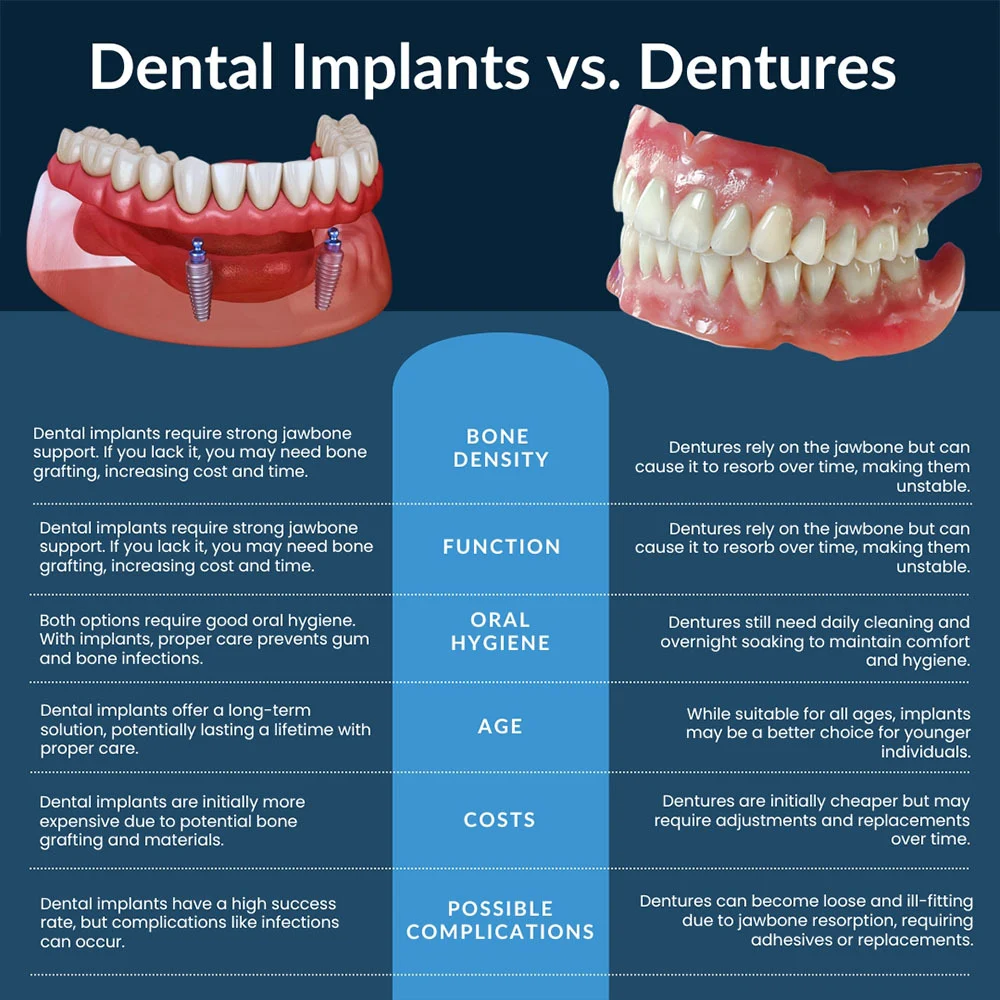
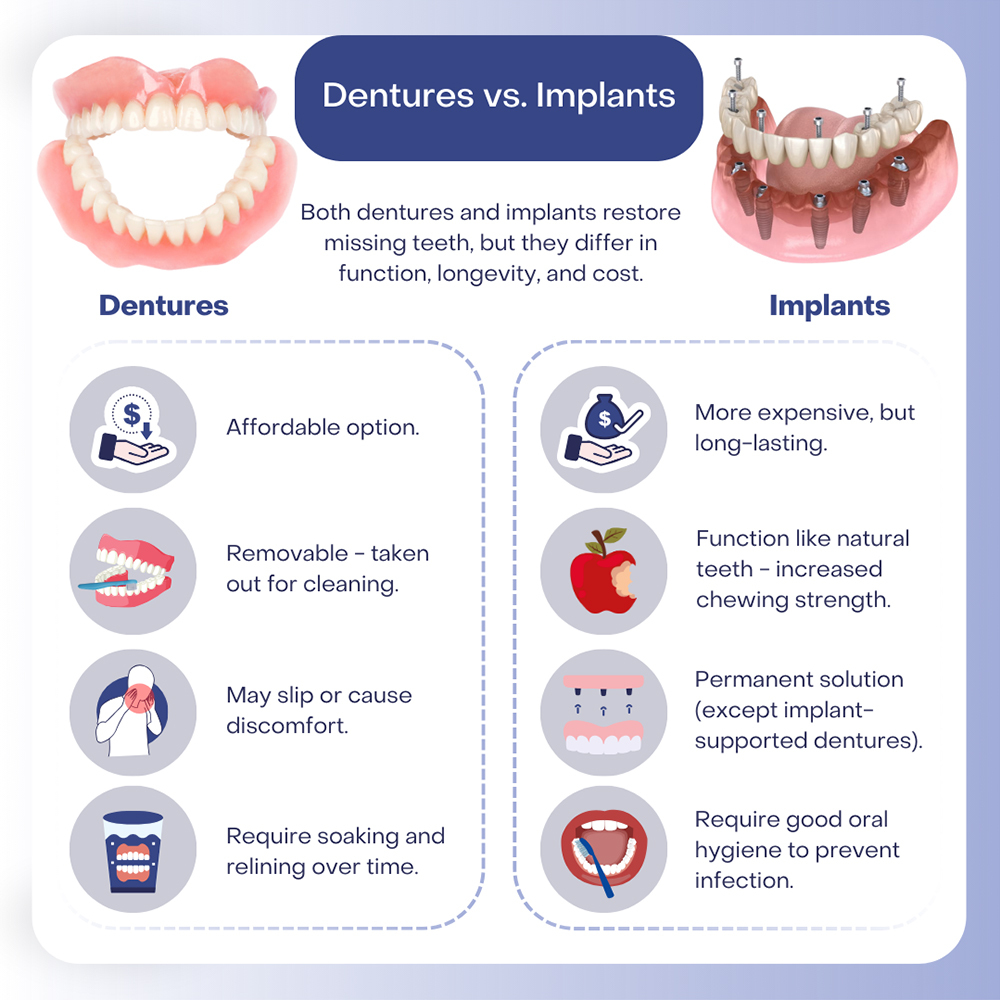
Dental implants are known for their superior durability and functionality. They fuse with the jawbone, providing a stable and long-lasting solution that functions much like natural teeth. This allows you to eat, speak, and smile with confidence. Dentures, while functional, may not offer the same level of stability and can sometimes slip or move, affecting your ability to eat certain foods or speak clearly.
Comfort and Aesthetics
Dental implants are generally more comfortable than dentures because they are fixed in place and don’t move around. They also look and feel more like natural teeth, enhancing your overall appearance. Dentures, especially traditional ones, can sometimes feel bulky or uncomfortable and may require adjustments to ensure a proper fit. However, modern dentures are designed to be more comfortable and aesthetically pleasing than their predecessors.
Impact on Oral Health
Dental implants can have a positive impact on oral health by preventing bone loss in the jaw and preserving the structure of the surrounding teeth. They also don’t require altering adjacent teeth, as is the case with dental bridges. Dentures, on the other hand, can sometimes contribute to bone loss and may require the use of adhesives, which can irritate the gums. However, proper care and maintenance can minimize these risks.
Which Option Is Right for You?
Choosing between dental implants and dentures depends on your individual needs, preferences, and budget. Consider the following scenarios and suitability factors to help you make the best decision.
Typical Scenarios for Implants vs Dentures
- Scenario 1: You are missing one or a few teeth and want a long-lasting, natural-looking solution. Dental implants may be the best option, providing superior durability and functionality.
- Scenario 2: You are missing all or most of your teeth and are looking for a more affordable solution. Dentures may be a suitable option, especially if you are comfortable with the idea of removable appliances.
- Scenario 3: You want a balance of affordability and stability. Implant-supported dentures may be a good compromise, providing more stability than traditional dentures at a lower cost than full dental implants.
Suitability Factors: Age, Oral Health, Budget
- Age: While there is no upper age limit for dental implants, younger patients may need to wait until their jawbone has fully developed before undergoing the procedure.
- Oral Health: Good oral health is essential for the success of dental implants. Conditions such as gum disease and bone loss may need to be addressed before proceeding with implant placement.
- Budget: Dental implants are a significant investment, while dentures are generally more affordable. Consider your budget and financing options when making your decision.
Frequently Asked Questions
Here are some frequently asked questions to help you better understand the costs and considerations of dental implants and dentures. Understanding these answers is vital for making an informed decision.
Which is more affordable: implants or dentures?
Dentures are typically more affordable upfront than dental implants. The cost of a full set of dentures on the NHS is around £282.80, while private dentures can range from £600 to £2,000 per arch. In contrast, a single dental implant can cost between £2,500 and £4,000, and full mouth implants can range from £20,000 to £40,000.
How much do dental implants cost in the UK?
The cost of dental implants in the UK varies depending on the type and complexity of the procedure. A single tooth implant can cost between £2,500 and £4,000, while All-on-4 implants can range from £10,000 to £20,000 per arch. Full mouth implants can cost between £20,000 and £40,000.
How much do dentures cost in the UK?
The cost of dentures in the UK depends on whether you choose NHS or private treatment. NHS dentures cost £282.80 for a full set, while private dentures can range from £600 to £2,000 per arch. The cost of private dentures can vary based on the materials used and the complexity of the case.
Are implants ever available on the NHS?
Dental implants are rarely available on the NHS and are typically only offered in cases of medical necessity, such as after trauma or cancer surgery. In most cases, patients seeking dental implants will need to pursue private treatment.
Do dentures last as long as implants?
No, dentures do not last as long as implants. Dental implants are designed to be a permanent solution and can last a lifetime with proper care. Dentures, on the other hand, typically need to be replaced every 5-10 years due to wear and tear and changes in the mouth’s structure.
Is maintenance more expensive for implants or dentures?
The long-term maintenance costs can be similar for both implants and dentures. Implants require regular check-ups and professional cleanings, similar to natural teeth. Dentures require daily cleaning and soaking, as well as periodic relining or adjustments. The cost of denture cleaners and adhesives can add up over time.
Can you switch from dentures to implants?
Yes, it is possible to switch from dentures to implants. If you are initially fitted with dentures but later decide you want a more stable and permanent solution, you can explore the option of implant-supported dentures or full dental implants. A consultation with a dentist is necessary to assess your suitability for implant treatment.
Are there hidden costs for either option?
Yes, there can be hidden costs for both options. For implants, additional procedures such as bone grafting or sinus lifts may be necessary, adding to the overall expense. For dentures, the cost of denture cleaners, adhesives, and periodic relining or adjustments should be taken into account. It’s essential to discuss all potential costs with your dentist before proceeding with treatment.
What is the most cost-effective in the long run?
In the long run, dental implants may be more cost-effective due to their longevity and durability. While the initial cost is higher, implants can last a lifetime with proper care, eliminating the need for frequent replacements. Dentures, on the other hand, require periodic replacement and adjustments, which can add up over time.
Which is less painful to get: implants or dentures?
The level of pain associated with dental implants and dentures can vary depending on the individual and the specific procedure. Dental implant placement involves surgery and may cause some discomfort during the healing process. However, most patients report that the pain is manageable with over-the-counter pain relievers. Getting dentures is generally less painful than getting implants, although some patients may experience soreness or irritation as they adjust to wearing the dentures.
Choosing between dental implants and dentures is a significant decision that requires careful consideration of your individual needs, preferences, and budget. While dentures may be more affordable upfront, dental implants offer superior durability, functionality, and aesthetics in the long run. Consider exploring options like Albania Dental Implants for affordable, high-quality dental care to help you achieve a healthy and confident smile. Contact us today to schedule a consultation and learn more about how we can help you restore your smile with our dental services.
“`





