



Full Jaw Implants: A Complete Guide to Restoring Your Smile
Full jaw implants are an advanced solution for patients who require complete restoration of either the upper or lower jaw with permanent, fixed teeth. This comprehensive guide provides an overview of full mouth dental implants, also known as full mouth reconstruction in Albania, discussing who they are recommended for and what the procedure entails. If you’re seeking a permanent solution for missing or damaged teeth, restoring your smile and confidence, then full jaw implants could be the answer.
What Are Full Jaw Implants?
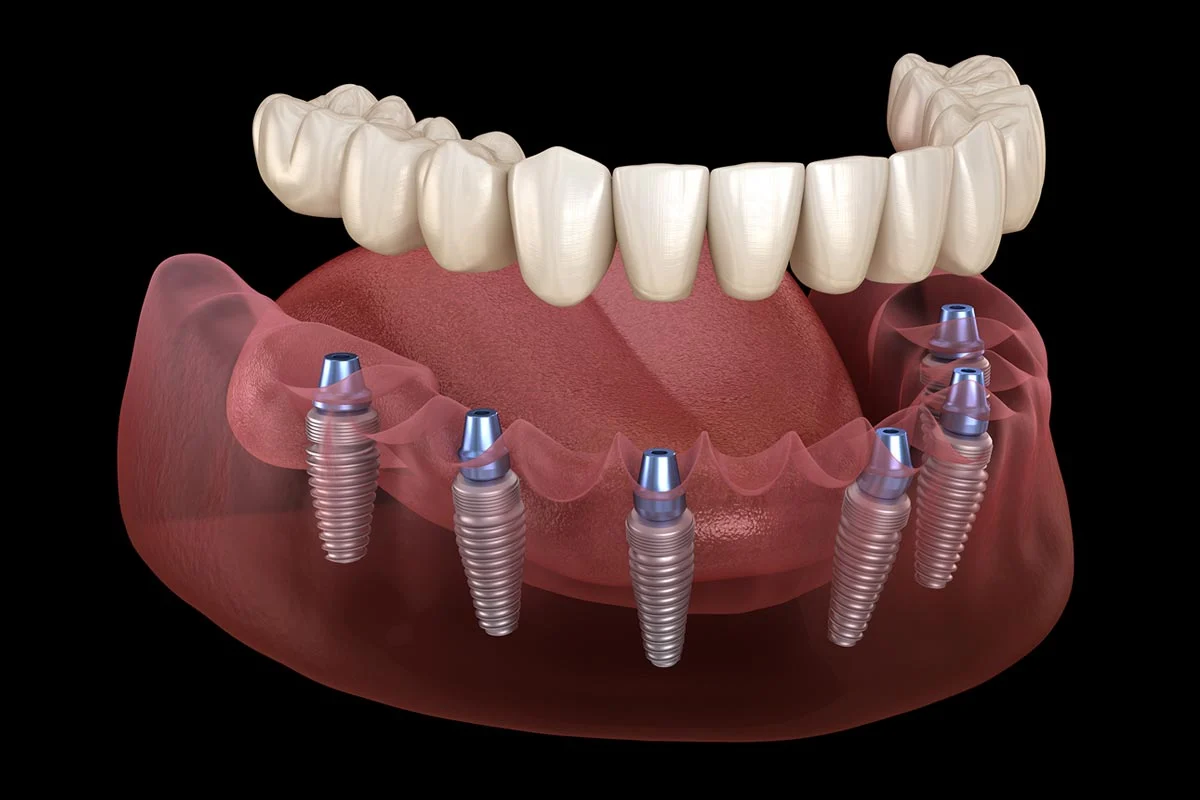
Full jaw implants, also known as full arch implants or all-on-x systems, are a revolutionary approach to replacing an entire row of teeth with a fixed prosthetic. Unlike traditional dentures, which are removable and can sometimes be uncomfortable, full jaw implants are permanently anchored to the jawbone using dental implants.
Definitions and Comparison to Other Options
Traditional dentures rest on the gums and can slip or cause irritation. Partial dentures fill in gaps where some teeth are missing but also rely on surrounding teeth for support. In contrast, full jaw implants offer superior stability and functionality because they fuse with the jawbone, similar to natural teeth. Full jaw implants can improve speech, chewing ability, and overall oral health.
Overview of Different Techniques
Several techniques are used for full jaw implants, including:
- All-on-4: This technique uses four dental implants to support an entire arch of teeth. It’s often a good option for patients with some bone loss, as the implants can be angled to maximize contact with the existing bone. Learn more about all on 4 dental implants in Albania.
- All-on-6: Similar to All-on-4, but uses six implants for added stability, especially in patients with good bone density.
- Zygomatic Implants: These are longer implants that anchor into the zygomatic bone (cheekbone), bypassing the need for bone grafting in patients with severe bone loss in the upper jaw.
- Implant Supported Dentures: A hybrid option where a denture is secured to implants, providing more stability than traditional dentures but less than a fixed bridge. Discover implant overdentures in Albania.
Benefits Over Traditional Dentures
Compared to traditional dentures, full jaw implants offer numerous benefits:
- Improved Stability: Implants are fixed in the jawbone, eliminating slipping and discomfort.
- Enhanced Functionality: Allows you to eat any foods without worry. Learn if you can eat steak with all on four implants.
- Better Speech: No more slurred speech or clicking noises.
- Natural Look and Feel: Implants feel and function like natural teeth.
- Bone Preservation: Implants stimulate bone growth, preventing bone loss that can occur with dentures.
- Increased Confidence: A beautiful, stable smile can significantly boost self-esteem.
Who Is a Good Candidate for Full Jaw Implants?
Determining your eligibility for full jaw implants involves a thorough assessment of your overall health, oral health, and bone density. While full jaw implants offer a fantastic solution for many, they are not suitable for everyone. Understanding the key criteria will help you determine if this treatment is right for you. If you have questions, contact Albania dental implants for guidance.
Health and Dental Requirements
Ideal candidates for full jaw implants generally meet the following health requirements:
- Good Overall Health: Patients should be in relatively good health, as certain medical conditions can affect healing and implant success.
- Healthy Gums: Gum disease must be treated before implant placement to ensure a stable foundation.
- Commitment to Oral Hygiene: Excellent oral hygiene is crucial for long-term implant success.
- Non-Smoker or Willing to Quit: Smoking significantly impairs healing and increases the risk of implant failure.
Conversely, certain conditions may make someone a less ideal candidate:
- Uncontrolled Diabetes: Can impair healing.
- Severe Cardiovascular Disease: May pose risks during surgery.
- Active Infections: Must be resolved before implant placement.
- Certain Autoimmune Diseases: May affect healing and implant integration.
Bone Density and the Need for Bone Grafting
Sufficient jaw bone density is essential for supporting dental implants. If you’ve experienced significant bone loss due to missing teeth, gum disease, or other factors, a bone grafting procedure may be necessary. Bone grafting involves adding bone material to the jaw to increase its density and volume, creating a stable base for the implants. Bone grafting in Albania is a common procedure.
Typical Age Groups and Factors Determining Suitability
While there’s no strict age limit for full jaw implants, the suitability of the procedure depends more on individual health and bone quality than on age alone. Both younger and older adults can be good candidates if they meet the necessary criteria.
- Younger Adults: Should have fully developed jawbones before considering implants.
- Older Adults: Can be excellent candidates if they are in good health and have adequate bone density (or can undergo bone grafting).
Can I get full jaw implants if I have severe bone loss?
Yes, it is possible to get full jaw implants even with severe bone loss. Techniques such as zygomatic implants, which anchor into the cheekbone, and bone grafting procedures can help to overcome bone deficiencies and provide a stable foundation for implants. Consulting with an experienced implant dentist is essential to determine the best course of treatment.
The Procedure: What to Expect
Undergoing full jaw implant surgery involves several carefully planned stages, from the initial consultation to the final fitting of your new teeth. Understanding each step can help ease anxiety and ensure a smooth and successful experience.
Step-by-Step Breakdown
- Consultation and Planning: This initial appointment involves a thorough examination, including X-rays and CT scans, to assess your bone density, gum health, and overall oral condition. Your dentist will discuss your goals and create a personalized treatment plan.
- Implant Placement Surgery: The surgery is typically performed under local anesthesia with sedation or general anesthesia, depending on your comfort level and the complexity of the case. The dentist will make incisions in the gums to expose the jawbone and carefully insert the dental implants.
- Healing Period (Osseointegration): Over the next few months (typically 3-6 months), the implants will fuse with the jawbone in a process called osseointegration. During this time, you may wear temporary dentures or a temporary bridge.
- Abutment Placement: Once osseointegration is complete, abutments (small connectors) are attached to the implants. These abutments will serve as the base for your new teeth.
- Final Restoration (Prosthesis Fitting): Custom-made prosthetic teeth (a full arch bridge) are attached to the abutments. Your dentist will ensure a perfect fit and adjust the bite as needed.
- Follow-up Appointments: Regular check-ups are essential to monitor the health of your implants and ensure proper function.
Pain Management and Typical Recovery Time
Most patients experience some discomfort after implant surgery, but this can be effectively managed with pain medication prescribed by your dentist. Swelling and bruising are common but usually subside within a few days. The typical recovery timeline includes:
- First Few Days: Rest, ice packs, and pain medication to manage discomfort.
- 1-2 Weeks: Swelling and bruising gradually decrease; soft food diet recommended.
- 3-6 Months: Osseointegration process; avoid hard or chewy foods.
- After 6 Months: Regular dental check-ups and cleanings.
How painful are dental implants? The procedure is well-managed with local anesthesia and post-operative pain relief.
Risks and Possible Complications
While full jaw implant surgery is generally safe and predictable, as with any surgical procedure, there are potential risks and complications:
- Infection: Can be treated with antibiotics.
- Implant Failure: Can occur if the implant doesn’t properly fuse with the bone. The failure rate of All-on-4 dental implants is low.
- Nerve Damage: Can cause numbness or tingling in the lips, chin, or tongue.
- Sinus Problems: In the upper jaw, implants can sometimes protrude into the sinus cavity.
- Bleeding: Some bleeding is normal after surgery, but excessive bleeding should be reported to your dentist.
Choosing an experienced and qualified implant dentist can minimize these risks and ensure a successful outcome. If you have existing bad teeth, you may still be able to get implants after careful assessment and planning.
Costs and Financing Options
Understanding the costs associated with full jaw implants is crucial for planning your treatment. The price can vary depending on several factors, but knowing what to expect can help you make an informed decision. Keep in mind that Albania Dental Implants offers high-quality and affordable full jaw dental implant options.
Average Costs in the UK
The average cost of full jaw implants in the UK can range from £7,000 to £25,000 per arch. This is a significant investment, but it’s important to consider the long-term benefits and improved quality of life that implants can provide. How much does a full set of teeth implants cost in the UK? This is a question many are asking.
Factors Affecting Pricing
Several factors can influence the price of full jaw implants:
- Type of Implants: Different brands and types of implants have varying costs.
- Number of Implants: All-on-4, All-on-6, and zygomatic implants each have different costs based on the number of implants used.
- Bone Grafting: If bone grafting is required, this will add to the overall cost.
- Anesthesia: The type of anesthesia used (local, sedation, or general) can affect the price.
- Dental Clinic Location: Prices may vary depending on the location of the dental clinic.
- Dentist’s Experience: Highly experienced implant dentists may charge more for their services.
- Prosthetic Material: The material used for the final restoration (e.g., acrylic, porcelain, zirconia implants in Albania) can impact the cost.
Information on NHS Coverage and Private Options
Unfortunately, the NHS rarely covers the cost of full jaw implants unless there’s a medical necessity (e.g., cancer reconstruction). In most cases, full jaw implants are considered a cosmetic procedure and are only available through private dental clinics. The average UK price for full dental implants is important to understand.
Available Payment and Financing Plans
Many private dental clinics offer payment plans or financing options to help make full jaw implants more affordable. These may include:
- Monthly Payment Plans: Spreading the cost over several months or years. You can pay monthly for dental work.
- Dental Loans: Financing options specifically for dental treatments. You can get finance for dental implants.
- Third-Party Financing: Companies that specialize in healthcare financing.
- In-House Payment Options: Some clinics offer their own payment arrangements.
Exploring these options can help you find a payment plan that fits your budget. Consider dental tourism in Albania for more affordable options.
Outcomes and Long-Term Care
The success of full jaw implants depends not only on the initial procedure but also on proper long-term care and maintenance. Understanding how to care for your implants will help ensure their longevity and optimal function.
Typical Lifespan and Durability of Full Jaw Implants
With proper care, full jaw implants can last for many years, often a lifetime. Studies have shown that dental implants have a high success rate, with many lasting 20 years or more. How long do dental implants last in the UK? This is a common question among dental patients.
Oral Hygiene and Care Recommendations
Maintaining excellent oral hygiene is essential for the long-term success of your implants. This includes:
- Brushing: Brush your teeth at least twice a day with a soft-bristled toothbrush and fluoride toothpaste.
- Flossing: Floss daily to remove plaque and debris from around the implants.
- Interdental Brushes: Use interdental brushes to clean hard-to-reach areas around the implants.
- Mouthwash: Rinse with an antibacterial mouthwash to help prevent infection.
- Regular Professional Cleanings: Visit your dentist for regular check-ups and professional cleanings to remove plaque and tartar buildup. Be sure to know how to clean under all 4 implants.
Regular Dental Visits and Maintenance
Regular dental visits are crucial for monitoring the health of your implants and detecting any potential problems early on. Your dentist will check the stability of the implants, assess the surrounding tissues, and provide professional cleaning to remove plaque and tartar. What is the best toothpaste for All-on-4 implants? Your dentist can help you decide on this.
Alternatives to Full Jaw Implants
While full jaw implants offer the most stable and long-lasting solution for replacing an entire arch of teeth, they may not be the right choice for everyone. Several alternatives are available, each with its own pros and cons.
Removable Dentures
Removable dentures are a traditional and more affordable option for replacing missing teeth. They consist of a set of artificial teeth attached to a plastic or metal base that rests on the gums. While dentures can restore your smile and improve chewing ability, they have several drawbacks compared to implants:
- Instability: Dentures can slip or move, causing discomfort and difficulty eating.
- Bone Loss: Dentures do not stimulate bone growth, leading to bone loss over time.
- Speech Problems: Dentures can affect speech and may cause clicking noises.
- Maintenance: Dentures require daily cleaning and soaking.
Are snap-in dentures cheaper than implants? Yes, but they lack the stability and longevity of implants.
Bridges
Dental bridges are a fixed option for replacing one or more missing teeth. A bridge consists of a false tooth (pontic) that is anchored to the adjacent teeth (abutments) with crowns. Bridges can restore your smile and improve chewing ability, but they also have some limitations:
- Requires Alteration of Adjacent Teeth: The abutment teeth must be filed down to accommodate the crowns.
- Limited Lifespan: Bridges typically last 5-10 years and may need to be replaced.
- Risk of Decay: The abutment teeth are at increased risk of decay.
Is a dental bridge better than an implant? Implants generally offer better long-term stability and do not require altering adjacent teeth.
Mini Dental Implants
Mini dental implants are smaller in diameter than traditional implants and can be used to stabilize dentures or support single teeth. They are less invasive and more affordable than traditional implants, but they may not be as stable or durable. What is a mini dental implant? It’s a smaller version of a traditional dental implant.
Snap-In Dentures
Snap-in dentures, also known as implant-supported dentures, are a hybrid option that combines the stability of implants with the affordability of dentures. Snap-in dentures attach to dental implants, providing a more secure and comfortable fit than traditional dentures. This offers a good balance between cost and functionality.
Situations Where Alternatives Are Preferable
Alternatives to full jaw implants may be preferable in the following situations:
- Limited Budget: Dentures are generally the most affordable option.
- Insufficient Bone Density: If bone grafting is not an option, dentures or mini implants may be considered. What can you do if you don’t have enough bone for dental implants?
- Certain Medical Conditions: Some medical conditions may make implant surgery too risky.
Frequently Asked Questions
Here are some frequently asked questions about full jaw implants to help you make a well-informed decision.
How painful is the full jaw implant process?
While some discomfort is expected after surgery, full jaw implant procedures are typically well-managed with local anesthesia during the procedure and pain medication afterward. Most patients report that the pain is manageable and subsides within a few days.
How long does the procedure take from start to finish?
The entire full jaw implant process, from the initial consultation to the final fitting of the prosthetic teeth, can take several months. The implant placement surgery itself usually takes 2-4 hours per arch. The healing period (osseointegration) typically takes 3-6 months. How long does it take to remove all teeth and get implants?
Are there age limits or medical conditions that prevent getting full jaw implants?
There’s no strict age limit for full jaw implants. Suitability depends more on overall health and bone quality. However, certain uncontrolled medical conditions, such as diabetes or severe cardiovascular disease, may increase the risks associated with the procedure. Who should not get dental implants?
Are the results permanent?
Full jaw implants are designed to be a long-lasting solution for missing teeth. With proper care and maintenance, they can last for many years, often a lifetime. The dental implant longevity depends on good oral hygiene and regular dental visits.
How natural will my implants look and feel?
Full jaw implants are designed to look and feel very similar to natural teeth. The prosthetic teeth are custom-made to match the color, shape, and size of your existing teeth, creating a seamless and natural-looking smile. The feel comes close, but may not feel exactly like natural teeth. Do All-on-4 feel like real teeth?
Can I eat all foods after getting full jaw implants?
One of the biggest advantages of full jaw implants is that they allow you to eat any foods without worry. Once the implants have fully integrated with the bone, you can enjoy a normal diet, including hard and chewy foods. However, it’s best to start with softer foods during the initial healing period. Can you eat steak with all on four implants?
What are the main risks or side effects?
As with any surgical procedure, there are potential risks and side effects associated with full jaw implants, including infection, implant failure, nerve damage, and sinus problems. However, these complications are rare, and choosing an experienced implant dentist can minimize the risks. What is the downside of dental implants?
Will I need temporary teeth during the healing process?
Yes, most patients will need to wear temporary teeth (dentures or a temporary bridge) during the healing process while the implants are fusing with the bone. This allows you to maintain your smile and chewing ability during the osseointegration period. How can I cover my missing teeth while waiting for the implant?
Is there any difference between All-on-4 and other full jaw techniques?
Yes, All-on-4 is a specific technique that uses four implants to support an entire arch of teeth. Other full jaw techniques, such as All-on-6 or zygomatic implants, may use a different number or type of implants depending on the patient’s individual needs and bone density. Is all on 6 better than All-on-4? Understanding the differences can help you decide.
Conclusion
Full jaw implants offer a transformative solution for individuals seeking to restore their complete smile, function, and confidence. This advanced treatment provides numerous advantages over traditional dentures, including improved stability, enhanced functionality, and a natural look and feel.
If you’re considering full jaw implants, it’s crucial to consult with a qualified and experienced implant dentist who can assess your individual needs and create a personalized treatment plan. At Albania Dental Implants Services, we are dedicated to providing high-quality and affordable full jaw implant solutions to help you achieve the smile of your dreams. Contact Albania dental implants today for a tailored assessment and take the first step towards a brighter, healthier future.