


Who Cannot have implants? Understanding who is ineligible for implants is crucial before considering treatment options. While dental implants are a fantastic solution for replacing missing teeth, certain conditions and lifestyle factors can make them unsuitable for some individuals. This comprehensive guide explores the factors that determine dental implant eligibility, helping you make informed decisions about your oral health and explore alternative solutions if needed.
What are Dental Implants and Who is Typically Eligible?
Dental implants offer a long-lasting and natural-looking solution for missing teeth. To understand who cannot have implants, it’s helpful to first understand what they are and who is typically eligible. This section provides a dental implants overview and outlines the typical candidate for implants.
Defining Dental Implants
Dental implants are artificial tooth roots, usually made of titanium, that are surgically placed into the jawbone. Over time, the implant fuses with the bone through a process called osseointegration, providing a stable foundation for a replacement tooth or teeth. This makes them a robust and durable solution for replacing missing teeth, offering better stability and function compared to dentures or bridges.
Standard Eligibility Criteria
While dental implants in Albania are a great option, not everyone is automatically a candidate. Standard eligibility criteria include:
- Sufficient Bone Density: Adequate bone volume in the jaw is essential to support the implant.
- Good Overall Health: Candidates should be in reasonably good health to undergo surgery and heal properly.
- Healthy Gums: The gums must be free from periodontal disease.
- Commitment to Oral Hygiene: Candidates need to be committed to maintaining good oral hygiene after the procedure.
- Non-Smoker or Willing to Quit: Smoking significantly impacts implant success.
If you meet these criteria, you’re likely a good candidate. However, a thorough assessment by a dentist is crucial to determine your individual suitability.
Medical Conditions That May Prevent Implant Placement
Certain medical conditions can significantly affect your dental implant eligibility. Understanding potential contraindications for implants is paramount. This section details medical risks of dental implants and clarifies when are implants not recommended.
Absolute Contraindications
Absolute contraindications are medical conditions that make implant placement highly risky or completely unadvisable. These include:
- Uncontrolled Diabetes: High blood sugar levels can impair healing and increase the risk of infection.
- Severe Heart Conditions: Certain heart conditions, especially recent heart attacks or unstable angina, can make surgery too dangerous.
- Active Cancer Therapy: Chemotherapy and radiation can weaken the immune system and bone, affecting osseointegration.
- Immunosuppression: Conditions or medications that suppress the immune system (e.g., organ transplant recipients, autoimmune diseases) increase the risk of infection and implant failure.
- Active Infections: Systemic infections can compromise the healing process.
Relative Contraindications
Relative contraindications are medical conditions that may increase the risk of complications but don’t necessarily rule out implant placement. These situations require careful evaluation and management:
- Osteoporosis: Reduced bone density can affect implant stability. However, with proper management and potentially bone grafting in Albania, implants may still be possible.
- Bleeding Disorders: Conditions that affect blood clotting can increase the risk of excessive bleeding during and after surgery.
- Recent Cancer Therapy: Even after completing cancer therapy, the effects on bone and immune function may persist for some time.
- Certain Medications: Bisphosphonates, used to treat osteoporosis and other bone conditions, can, in rare cases, lead to osteonecrosis of the jaw (ONJ), a serious complication.
It’s crucial to disclose your full medical history to your dentist so they can assess the potential risks and develop a suitable treatment plan. If you have osteoporosis, you might explore options for bone grafting in Albania to strengthen the jawbone before implant placement.
Oral Health Factors Influencing Implant Suitability
Beyond general health, specific oral health and implants factors play a critical role in determining implant success. This section focuses on the impact of bone density for implants and the gum disease implants risk.
Insufficient Bone Density/Volume
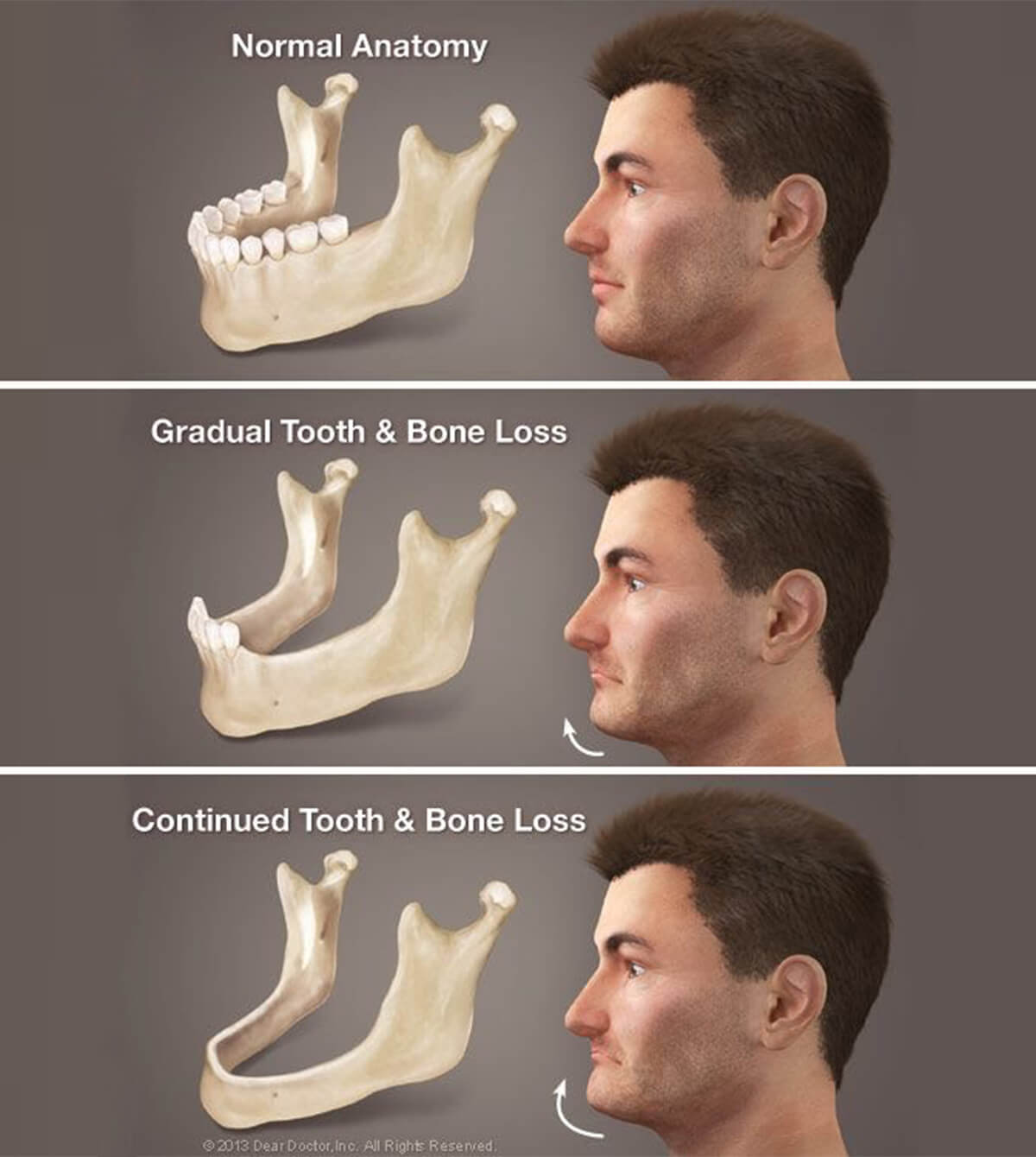
Adequate bone density and volume are crucial for implant stability. If there’s not enough bone to support the implant, it may fail to integrate properly. This is because the implant needs a strong, solid foundation to fuse with the jawbone. If you don’t have enough bone, a sinus lift in Albania or bone grafting procedure may be recommended.
Untreated Periodontal (Gum) Disease
Active gum disease can lead to bone loss and inflammation, jeopardizing the stability of the implant. Bacteria from the infected gums can attack the surrounding tissues, preventing proper osseointegration and eventually causing implant failure. Periodontal disease must be treated and controlled before implant placement to ensure a healthy environment for the implant.
Active Oral Infection
Any active oral infection, such as a tooth abscess or a fungal infection, needs to be resolved before proceeding with dental implants. Infections can spread to the implant site, compromising the healing process and increasing the risk of failure. A healthy oral environment is key to implant success.
Ongoing Tooth Decay in Adjacent Teeth
If adjacent teeth have significant decay, it can affect the overall health of the mouth and potentially impact the implant. Addressing decay in nearby teeth helps ensure a stable and healthy environment for the implant. Your dentist will assess the condition of your existing teeth and recommend any necessary treatments before implant placement.
Lifestyle and Age Restrictions
Certain lifestyle choices and age considerations can impact the success of dental implants. This section examines age limits for implants, the effects of smoking and dental implants, and the importance of an implant success lifestyle.
Smokers and Poor Oral Hygiene
Smoking is a significant risk factor for implant failure. It impairs blood flow to the gums, hindering healing and increasing the risk of infection. Smokers often experience a higher rate of implant failure compared to non-smokers. Poor oral hygiene further exacerbates these risks, as it can lead to gum disease and peri-implantitis (inflammation around the implant). If you are a smoker, quitting smoking is strongly recommended before considering dental implants.
Age: Children/Adolescents with Incomplete Jaw Growth
Dental implants are generally not recommended for children and adolescents whose jaws are still developing. Placing implants before the jaw has fully grown can interfere with normal growth and development. The ideal age for implants is after the jaw has reached skeletal maturity, typically in the late teens or early twenties. There is no upper age limit for implants, but older adults need to be medically fit for surgery.
Alcohol/Drug Abuse
Excessive alcohol or drug use can impair healing and increase the risk of infection, similar to the effects of smoking. Substance abuse can also lead to poor oral hygiene and neglect of dental care, further compromising implant success. Individuals struggling with substance abuse should address these issues before considering dental implants.
Poor Compliance with Aftercare
Following your dentist’s aftercare instructions is crucial for implant success. Poor compliance with aftercare, such as neglecting oral hygiene, skipping follow-up appointments, or ignoring warning signs, can increase the risk of complications and implant failure. A commitment to diligently following aftercare guidelines is essential for ensuring the long-term success of your implants.
Alternative Options for Those Who Cannot Have Implants
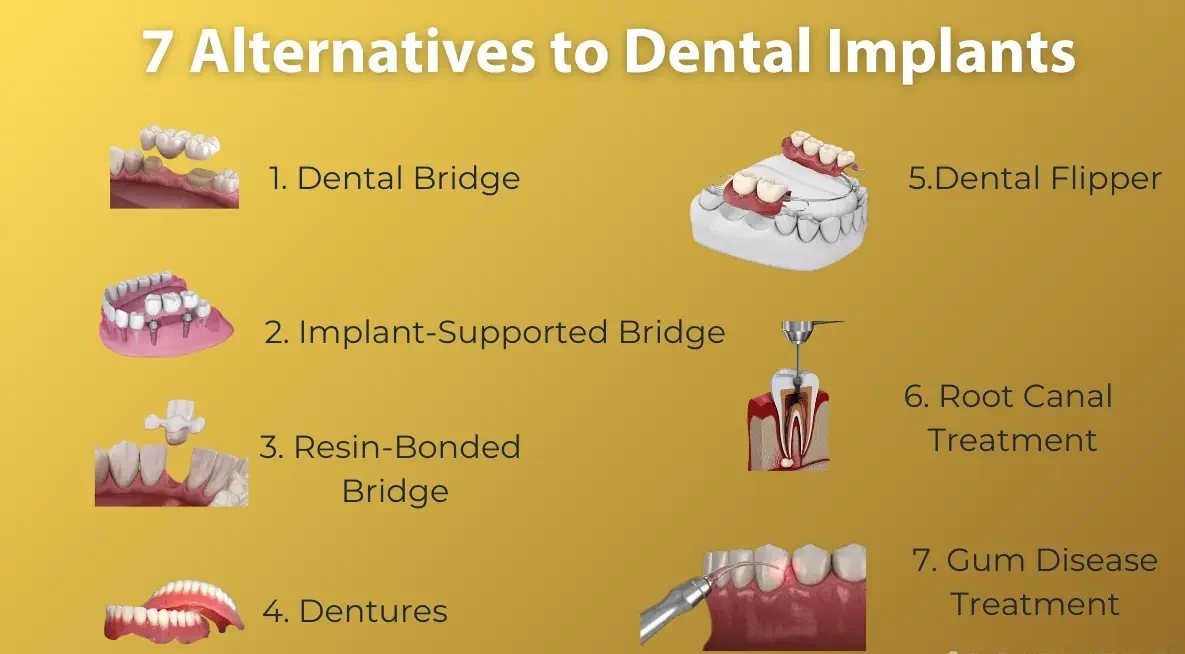
If you’re deemed ineligible for dental implants, don’t worry! Several effective alternatives to dental implants exist. This section explores dentures vs. implants and implant bridges, offering solutions tailored to different needs.
Dentures
Dentures are removable appliances that replace missing teeth. They can be full dentures (replacing all teeth in an arch) or partial dentures (replacing some teeth). While dentures don’t offer the same stability and function as implants, they are a more affordable and less invasive option. Modern dentures are designed to look natural and provide adequate chewing function. At Albania dental implants services we can explore all options with you.
Bridges
Dental bridges are fixed appliances that replace one or more missing teeth by attaching to adjacent teeth. A bridge consists of a replacement tooth (pontic) held in place by crowns placed on the neighboring teeth (abutments). Bridges are a good option if the adjacent teeth are healthy and strong, but they do require altering those teeth to support the bridge. If you do not want adjacent teeth prepared, implants are better.
Removable Partial Dentures
Removable partial dentures are similar to full dentures but replace only a few missing teeth. They are typically held in place by clasps that attach to adjacent teeth. Partial dentures are a cost-effective option for replacing multiple missing teeth, but they can be less stable and comfortable than implants or bridges.
Mini-Implants (Conditional Suitability)
Mini-implants are smaller versions of traditional dental implants. They may be suitable for individuals with limited bone density or those who are not candidates for conventional implants. Mini-implants are often used to stabilize dentures, providing improved retention and function. Their suitability depends on individual circumstances and requires careful assessment by a dentist.
Consultation and Individual Assessment
Ultimately, determining your suitability for dental implants requires a thorough dental implant assessment. This section emphasizes the necessity of a detailed medical and dental assessment and the importance of expert advice for borderline cases.
The Necessity of a Detailed Medical and Dental Assessment
A comprehensive assessment is crucial to identify any potential risks and ensure the safety and success of implant treatment. This assessment typically involves:
- Medical History Review: Assessing your overall health and any existing medical conditions.
- Dental Examination: Evaluating your oral health, including teeth, gums, and bone.
- X-rays and Scans: Taking X-rays or CT scans to assess bone density and identify any underlying issues.
- Discussion of Treatment Options: Reviewing the benefits and risks of dental implants, as well as alternative treatment options.
This thorough evaluation allows your dentist to develop a personalized treatment plan that addresses your specific needs and maximizes the chances of success. Contact Albania dental implants today!
The Importance of Expert Advice for Borderline Cases
If you have certain medical conditions or oral health issues that may affect implant success, seeking expert advice is essential. A qualified and experienced implant dentist can carefully evaluate your individual circumstances and determine whether implants are a viable option. In some cases, with proper management and treatment, implants may still be possible. Albania Dental Implants is there to help you make that decision.
FAQ Section
Who cannot have dental implants due to medical reasons?
Individuals with uncontrolled diabetes, severe heart conditions, active cancer therapy, immunosuppression, or active systemic infections may not be suitable candidates for dental implants due to increased risks of complications and implant failure.
Is age a barrier for dental implants?
Age is generally not a barrier to dental implants for adults. However, implants are not recommended for children and adolescents whose jaws are still developing. The ideal age for implants is after the jaw has reached skeletal maturity, typically in the late teens or early twenties. There is no upper age limit for implants, but older adults need to be medically fit for surgery.
Can smokers get dental implants?
While smokers can get dental implants, smoking significantly increases the risk of implant failure. Smoking impairs blood flow to the gums, hindering healing and increasing the risk of infection. Quitting smoking is strongly recommended before considering dental implants to improve the chances of success. If you are looking to undergo a full mouth reconstruction in Albania you must quit smoking before.
What happens if you don’t have enough bone for implants?
If you don’t have enough bone to support dental implants, bone grafting procedures may be necessary. Bone grafting involves adding bone to the jaw to increase bone density and volume, creating a stable foundation for the implant. Bone grafting in Albania is offered at Albania Dental Implants.
Are dental implants safe for diabetics?
Dental implants can be safe for diabetics, but it depends on the control of their blood sugar levels. Uncontrolled diabetes increases the risk of infection and impairs healing, potentially leading to implant failure. Diabetics with well-managed blood sugar levels may be suitable candidates for implants, but they require careful monitoring and management.
What are the alternatives if you are not suitable for implants?
Alternatives to dental implants include dentures, bridges, and removable partial dentures. Dentures are removable appliances that replace missing teeth, while bridges are fixed appliances that attach to adjacent teeth. Removable partial dentures are similar to full dentures but replace only a few missing teeth.
How do doctors assess if I can have implants?
Doctors assess implant suitability through a comprehensive medical and dental assessment. This involves reviewing your medical history, conducting a dental examination, taking X-rays or CT scans, and discussing treatment options. This thorough evaluation allows them to identify any potential risks and develop a personalized treatment plan.
Can implants be placed with gum disease?
Implants cannot be placed with active gum disease. Gum disease can lead to bone loss and inflammation, jeopardizing the stability of the implant. Gum disease must be treated and controlled before implant placement to ensure a healthy environment for the implant.
What if I have a metal allergy?
If you have a metal allergy, especially to titanium, zirconia implants may be an alternative option. Zirconia implants are made from a biocompatible ceramic material that is less likely to cause allergic reactions. Speak to contact Albania dental implants for more information.
Are there temporary or less invasive alternatives?
Temporary alternatives to dental implants include dentures and bridges. Less invasive alternatives include mini-implants, which are smaller versions of traditional implants, and implant-supported dentures, which are dentures that attach to implants for improved stability.
Conclusion
Determining whether you’re a suitable candidate for dental implants involves careful consideration of your medical history, oral health, lifestyle, and age. While dental implants offer a fantastic solution for missing teeth, certain conditions can make them unsuitable. By understanding the factors that influence implant eligibility, you can make informed decisions about your oral health and explore alternative solutions if needed. At Albania Dental Implants, we provide comprehensive assessments and personalized treatment plans to help you achieve a healthy and confident smile. Contact us today to schedule a consultation and learn more about your options for tooth replacement. Consider the benefits of dental tourism in Albania!