




NHS Dental Implant Price – What You Need to Know
NHS dental implant price is a frequent concern for patients seeking tooth replacement options through the National Health Service in the UK. Understanding the costs, eligibility, and alternatives is crucial for making informed decisions about restoring your smile. While accessing dental implants through the NHS can be challenging, this guide provides a comprehensive overview, including a comparison with private options and exploring affordable solutions like Albania Dental Implants.
What Are NHS Dental Implants?
(NHS dental implants cost, NHS implant eligibility)
Understanding what constitutes NHS dental implants is the first step in exploring this treatment option. The NHS primarily focuses on providing essential dental care, and while dental implants can be a life-changing solution for missing teeth, their availability on the NHS is limited.
NHS vs. Private Implants: What’s the Difference?
The main difference between NHS and private implants lies in cost, availability, and choice. NHS dental treatments are subsidized, making them more affordable. However, strict eligibility criteria and long waiting lists often apply. Private dental implants, while more expensive, offer greater flexibility in treatment options, materials, and appointment scheduling. Many patients are now considering dental tourism in Albania to get high quality implants at a fraction of the price compared to the UK.
Who Qualifies for NHS Dental Implants?
Eligibility for NHS dental implants is restricted to cases where there’s a clear medical need. This typically includes patients who have lost teeth due to trauma, cancer treatment, or certain congenital conditions. Cosmetic reasons alone are not sufficient to qualify for NHS funding.
Typical Scenarios for NHS Funding
Typical scenarios where NHS funding might be considered include:
- Patients who have suffered significant facial trauma resulting in tooth loss.
- Individuals who have undergone surgery for oral cancer.
- Patients with inherited conditions affecting tooth development.
NHS Dental Implant Price – How Much Do They Cost?
(NHS dental implants cost, How much does an implant cost UK)
The question of NHS dental implant price is paramount for those exploring this option. While NHS dental treatment is subsidized, patients are still required to pay a contribution towards the cost.
Actual Cost for NHS Dental Implants
The cost of NHS dental implants varies depending on the complexity of the case and the specific band of charges applied. As of 2024, dental implants would likely fall under Band 3 which is the most expensive band. Band 3 includes more complex procedures such as crowns, dentures and bridges.
Comparison to Private Dental Implant Prices
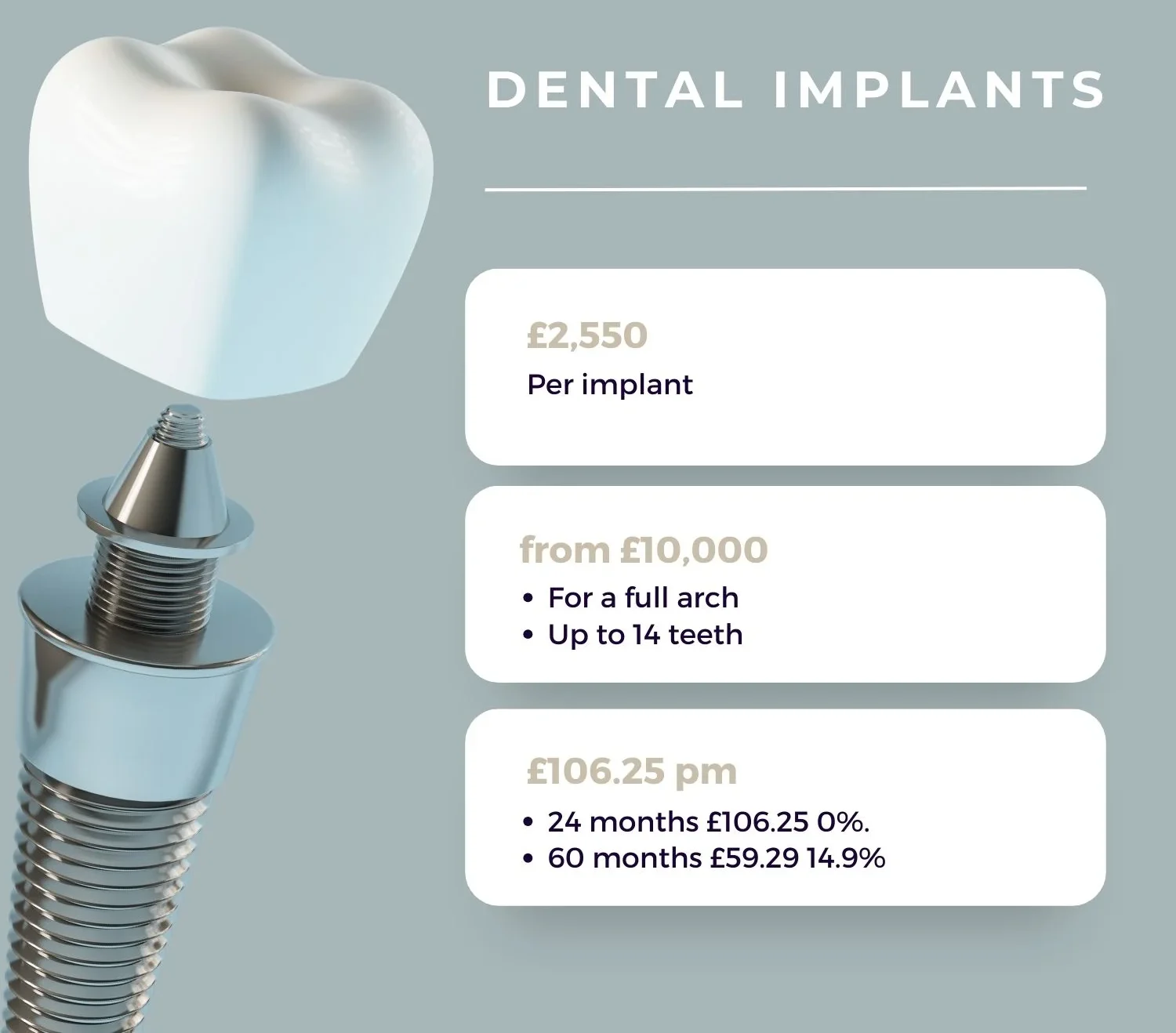
Private dental implant prices in the UK are significantly higher than NHS charges. A single dental implant in the UK private sector can range from £2,000 to £4,000 or more, whereas the equivalent treatment on the NHS would be considerably less, if you qualify.
Factors Influencing NHS Pricing
Factors that influence NHS pricing include:
- The complexity of the implant procedure.
- The materials used for the implant and crown.
- Any additional treatments required, such as bone grafting or sinus lifts.
It’s important to note that the NHS primarily focuses on functionality rather than aesthetics, which can also influence the choice of materials and techniques used.
How much do dental implants cost on the NHS?
While accessing dental implants through the NHS is rare, if you qualify, you’ll typically pay the standard NHS Band 3 charge, which covers complex procedures. This is significantly less than private dental implant costs, but availability is limited to specific medical needs.
Private Dental Implants UK – Price Comparison
(Private dental implant prices UK, NHS vs private implants)
For those who don’t qualify for NHS dental implants or prefer a wider range of options, the private dental sector offers numerous choices. Understanding the price comparison between NHS and private dental implants is crucial for informed decision-making.
Average Private Dental Implant Prices
The average cost of a single dental implant in the UK private sector ranges from £2,000 to £4,000. This price typically includes the implant fixture, abutment, and crown. However, additional costs may apply for consultations, X-rays, and any necessary pre-implant treatments.
Key Differences: Cost, Coverage, Aftercare
The key differences between NHS and private dental implants are:
- Cost: Private implants are significantly more expensive.
- Coverage: NHS eligibility is limited to specific medical needs. Private treatment is available to anyone who can afford it.
- Aftercare: Both NHS and private dentists provide aftercare, but private clinics may offer more comprehensive packages and follow-up appointments.
When NHS is Not an Option
NHS dental implants are rarely available due to strict eligibility criteria and funding limitations. If you’re seeking dental implants for cosmetic reasons or don’t meet the NHS requirements, private treatment is usually the only option. However, exploring options such as dental tourism in Albania can make private treatment more affordable. The cost of dental implants in Albania are significantly less compared to the UK.
NHS Dental Implant Funding and Eligibility
(Dental implant funding on NHS, NHS implant waiting lists)
Securing dental implant funding on NHS requires navigating specific criteria and processes. The demand for NHS dental services is high, and resources are limited, making access to dental implants challenging.
Funding Criteria Explained
The primary criterion for NHS dental implant funding is medical necessity. This means that the implants must be essential for restoring oral function or preventing significant health problems. Cosmetic improvements alone are not sufficient.
Referral Process
The referral process typically starts with your general dentist, who will assess your eligibility and refer you to a specialist dental implant clinic if appropriate. The specialist will then conduct a more detailed evaluation and determine whether you meet the NHS funding criteria.
Typical Waiting Times
Waiting times for NHS dental implants can be extensive, often stretching to several months or even years. This is due to the high demand for NHS dental services and the limited number of specialist clinics offering implant treatment.
Special Categories (Trauma, Medical Need)
Patients who have experienced significant trauma or have specific medical needs may be prioritized for NHS dental implant funding. This includes individuals who have suffered facial injuries, undergone cancer treatment, or have certain congenital conditions affecting tooth development.
Full Mouth and Multiple Implants – NHS and Private Costs
(Full mouth dental implants UK price, Dental implant procedure on NHS)
The availability and costs associated with full mouth and multiple implants vary considerably between the NHS and private sectors. Understanding these differences is crucial for patients considering extensive tooth replacement.
Case Study: Multiple Implants Cost
Consider a patient who requires multiple implants to replace several missing teeth. In the private sector, this could easily cost upwards of £10,000 to £20,000, depending on the number of implants, the materials used, and the complexity of the case. On the NHS, the cost would be significantly lower, but eligibility is strictly limited.
Availability Through NHS and Private Sector
Full mouth dental implants are rarely available through the NHS due to funding constraints. The NHS typically focuses on providing essential dental care, and full mouth reconstruction is often considered a cosmetic procedure. The private sector offers greater availability, but the costs can be prohibitive for many patients. For those seeking full mouth reconstruction, exploring options like full mouth reconstruction in Albania can provide significant cost savings.
Can I get full mouth dental implants on the NHS?
Getting full mouth dental implants on the NHS is extremely rare. The NHS primarily funds dental implants in cases of severe medical need, such as after trauma or cancer surgery. For cosmetic or general tooth loss, full mouth implants are typically not covered.
Alternatives to NHS Dental Implants
(Alternatives to NHS dental implants)
When NHS dental implants aren’t an option, several alternatives can provide functional and aesthetic tooth replacement. These alternatives vary in cost, durability, and suitability for individual needs.
Bridges, Dentures, Partials
Common alternatives to dental implants include:
- Dental Bridges: These fill the gap created by a missing tooth by anchoring a false tooth to the adjacent teeth.
- Dentures: These are removable appliances that replace all or some of the teeth.
- Partial Dentures: Similar to dentures, but used when only some teeth are missing.
Pros and Cons of Alternatives
Each alternative has its pros and cons:
- Dental Bridges:
- Pros: Less invasive than implants, quicker treatment time.
- Cons: May require altering adjacent teeth, not as durable as implants.
- Dentures:
- Pros: More affordable than implants, non-invasive.
- Cons: Can be uncomfortable, may affect speech and eating, require regular adjustments.
When Alternatives Are Recommended by NHS
The NHS often recommends bridges or dentures as alternatives to dental implants due to their lower cost and wider availability. These options can provide functional tooth replacement, although they may not offer the same long-term benefits and aesthetic appeal as dental implants.
Answering Your Questions About NHS Dental Implant Prices
Here are some of the most frequently asked questions regarding dental implant costs and options within the NHS system:
Is dental implant surgery covered by the NHS?
In limited cases, dental implant surgery is covered by the NHS, but this is usually reserved for patients with significant medical needs, such as those who have experienced trauma or undergone cancer treatment. General tooth loss or cosmetic reasons are typically not covered.
Why are NHS dental implants rarely available?
NHS dental implants are rarely available due to funding constraints and strict eligibility criteria. The NHS prioritizes essential dental care, and dental implants are often considered a cosmetic procedure, unless there’s a clear medical need.
What is the price difference between NHS and private dental implants?
The price difference between NHS and private dental implants is significant. Private dental implants can cost several thousand pounds per tooth, while NHS charges are considerably lower. However, accessing NHS treatment is challenging due to limited availability and strict eligibility requirements.
How long is the waiting list for NHS dental implants?
The waiting list for NHS dental implants can be extensive, often stretching to several months or even years. This is due to the high demand for NHS dental services and the limited number of specialist clinics offering implant treatment.
What are alternatives if I do not qualify for NHS funding?
If you don’t qualify for NHS funding, alternatives include dental bridges, dentures, and partial dentures. Private dental implants are also an option, although they can be expensive. Exploring options like dental tourism can make private treatment more affordable.
What documentation is needed for NHS implant eligibility?
To demonstrate NHS implant eligibility, you’ll need comprehensive documentation, including a referral from your general dentist, detailed medical history, and evidence supporting the medical necessity of the implant treatment. This may include X-rays, scans, and letters from specialists.
Are aftercare and follow-up appointments included in NHS dental implant treatment?
Yes, aftercare and follow-up appointments are typically included in NHS dental implant treatment. However, the extent and frequency of these appointments may vary depending on the clinic and the complexity of the case.
Considering Dental Implants? Look Beyond the NHS.
While navigating the NHS for dental implants can be challenging, remember that affordable and high-quality alternatives exist. At Albania Dental Implants, we offer a comprehensive range of dental implant services at a fraction of the cost compared to the UK. Our experienced team, state-of-the-art facilities, and commitment to patient care make us a leading choice for dental tourism.
Benefits of Choosing Albania Dental Implants
- Cost Savings: Save up to 70% compared to UK prices.
- High-Quality Treatment: Experienced dentists and modern facilities.
- Comprehensive Care: From initial consultation to aftercare support.
- Combine Treatment with a Holiday: Enjoy a relaxing break in beautiful Albania while restoring your smile.
Take the Next Step Towards Your Dream Smile
Don’t let the high cost of dental implants in the UK hold you back. Contact Albania Dental Implants today to learn more about our services and how we can help you achieve a healthy, confident smile at an affordable price. Your journey to a better smile starts here!





