



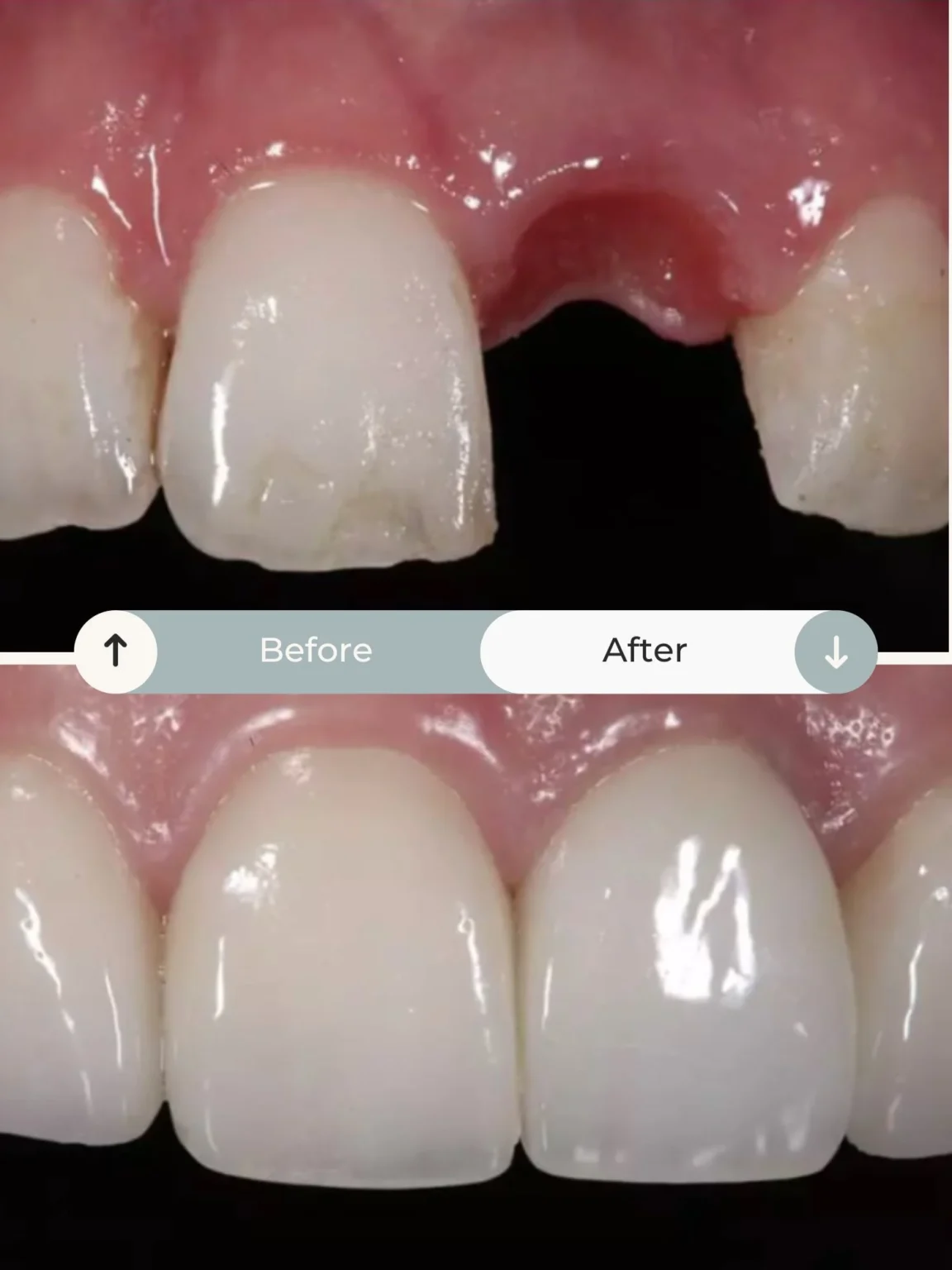

How many implants for two missing teeth? This is a common question for individuals seeking to restore their smile and oral function after tooth loss. The answer isn’t always straightforward and depends on several factors, including your oral health, the location of the missing teeth, and your budget. At Albania Dental Implants, we provide comprehensive solutions for replacing missing teeth, offering high-quality and affordable dental implants in Albania.
Dental implants for two missing teeth – What are your options?
When considering dental implants for two missing teeth, you have a couple of primary options. Each option offers unique benefits and considerations, and the best choice depends on your specific needs and circumstances. Understanding these tooth replacement options is crucial for making an informed decision.
Single implant per tooth: is this always best?
The most common approach is to place a single dental implant for each missing tooth. This method offers excellent stability and mimics the natural function of individual teeth. Each implant acts as an independent anchor, providing strong support for the replacement teeth. While it may be the “ideal” solution, it’s not always the most practical or cost-effective. Single tooth implants in Albania are a popular option for those seeking a permanent solution.
Implant-supported bridge: how can two teeth be replaced with one implant?
An implant-supported bridge is an alternative option where two adjacent missing teeth are replaced using a single dental implant to support a bridge. The bridge consists of two artificial teeth fused together, with one end attached to the implant and the other end supported by the adjacent tooth or another implant. This can be a more economical approach than placing two individual implants. Multiple implants with bridges in Albania are a great alternative if bone density is a concern.
Factors influencing the number of implants required
Several factors influence the decision of whether to use one or two implants when replacing two missing teeth. These factors take into account the health of your mouth and your personal preferences. It’s important to explore these factors with your dentist when considering single tooth implant vs multiple implants options. These are important aspects of the implant procedure steps.
Bone health and volume
Sufficient bone volume is essential for successful implant placement. If bone loss has occurred in the area of the missing teeth, a bone grafting in Albania procedure may be necessary to augment the bone before implants can be placed. In some cases, if bone volume is limited, an implant-supported bridge might be preferred to minimize the need for extensive bone grafting.
Position of missing teeth (adjacent or separate)
The location of the missing teeth also plays a role. If the missing teeth are adjacent to each other, an implant-supported bridge is a viable option. However, if the missing teeth are separated by one or more natural teeth, individual implants are usually recommended to provide optimal support and prevent potential issues with the adjacent teeth.
Patient preference and dentist recommendation
Ultimately, the decision of how many implants to use is a collaborative one between the patient and the dentist. Your dentist will assess your individual situation, discuss your goals and preferences, and recommend the most appropriate treatment plan. Cost considerations, treatment timelines, and potential risks and benefits of each option will also be discussed.
Cost considerations for implants replacing two teeth
The cost of implants for two missing teeth can vary significantly depending on several factors, including the number of implants required, the type of restoration used, and the location of the dental practice. Before proceeding, it is important to weigh the alternatives to dental implants and their respective costs.
Single vs multiple implants: price differences
Placing two individual implants will generally be more expensive than placing a single implant to support a bridge. Each implant requires its own surgical procedure and components, adding to the overall cost. However, individual implants may offer better long-term stability and reduce the risk of complications compared to a bridge.
Cost of implant-supported bridges
While an implant-supported bridge may be less expensive upfront, it’s important to consider the potential long-term costs. Bridges can place additional stress on the supporting implant and adjacent teeth, potentially increasing the risk of failure or other dental problems. Maintenance and potential future repairs should also be factored into the overall cost.
Financing and insurance coverage
Dental implant treatment can be a significant investment. Fortunately, many financing options are available to help make treatment more affordable. Dental tourism in Albania offers a more affordable option, while still maintaining high-quality care. Some dental insurance plans may also cover a portion of the cost of implants, so it’s important to check with your insurance provider to determine your coverage.
Procedure overview for two implants or bridges
The implant procedure steps for replacing two missing teeth typically involve several stages, regardless of whether you choose to have two individual implants or an implant-supported bridge. Here’s an overview of what to expect during the process. Be prepared for recovery after dental implants, the healing process is a vital part of the procedure.
Consultation and diagnosis
The first step is a comprehensive consultation with your dentist. During this appointment, your dentist will examine your teeth, gums, and jawbone to assess your overall oral health. X-rays and/or CT scans may be taken to evaluate the bone volume and identify any potential issues. Your dentist will discuss your treatment goals and explain the different options available.
Surgical placement and technical choices
The next step is the surgical placement of the dental implant(s). This procedure involves making a small incision in the gum tissue and inserting the implant(s) into the jawbone. In some cases, bone grafting may be performed at the same time to augment the bone. The implant(s) are then left to heal and integrate with the bone over a period of several months.
Healing, aftercare, and timelines
After the implant(s) have fully integrated with the bone, the final restoration (crown or bridge) can be attached. This involves taking impressions of your teeth and creating a custom-made restoration that matches the color, shape, and size of your natural teeth. The restoration is then securely attached to the implant(s), completing the treatment process. Proper aftercare, including regular brushing, flossing, and dental checkups, is essential for maintaining the health and longevity of your implants.
Benefits and drawbacks of replacing two missing teeth with implants
Replacing missing teeth with implants offers numerous benefits, but it’s essential to weigh these advantages against the potential drawbacks before making a decision. Understanding the benefits of dental implants and considering the implant success rate will assist in making an informed choice.
Stability and function
Dental implants provide excellent stability and function compared to other tooth replacement options, such as dentures or bridges. Implants are anchored directly into the jawbone, providing a strong and secure foundation for the replacement teeth. This allows you to chew, speak, and smile with confidence.
Aesthetic outcomes
Dental implants offer highly aesthetic outcomes, as the replacement teeth are designed to look and feel like natural teeth. Implants can restore your smile to its former glory, improving your self-esteem and confidence. The cost of dental implants in Albania offers a more affordable solution for achieving excellent aesthetics.
Longevity and oral health impact
With proper care, dental implants can last a lifetime. Implants help to preserve the jawbone and prevent bone loss, which can occur after tooth loss. Implants also do not rely on the adjacent teeth for support, unlike bridges, which can place additional stress on those teeth. However, dental implants aren’t always successful; and it’s essential to recognise when when not to have a dental implant.
Alternatives to dental implants for two missing teeth
While dental implants are the gold standard for tooth replacement, there are alternatives to dental implants that may be more suitable for some individuals. These alternatives include traditional dental bridges and removable partial dentures.
Dental bridge (non-implant)
A traditional dental bridge involves anchoring a replacement tooth to the adjacent teeth. The adjacent teeth are prepared by removing a portion of the enamel to accommodate the bridge. While bridges are less expensive than implants, they can place additional stress on the adjacent teeth and may require more frequent maintenance. A dental bridge in comparison to a dental implant NHS is a decision to explore with your dentist.
Removable partial dentures
Removable partial dentures are a less invasive and more affordable option for replacing missing teeth. Dentures are made of plastic or metal and are designed to fit over the gums and replace the missing teeth. While dentures are less stable than implants or bridges, they can be a good option for individuals who are not candidates for those treatments. If you’re wondering what is the best alternative to dental implants if you can’t proceed with them, dentures are a good option to discuss with your dentist.
Is one implant enough to replace two missing teeth?
Whether one implant is sufficient for replacing two missing teeth depends on several factors. An implant-supported bridge, where one implant supports two artificial teeth, can be a viable option if the missing teeth are adjacent and you have sufficient bone density. However, individual implants for each tooth generally offer better long-term stability and function.
Can you use an implant-supported bridge for two missing teeth?
Yes, you can use an implant-supported bridge for two missing teeth. This involves placing a single implant and attaching a bridge consisting of two artificial teeth to the implant. The bridge is designed to look and function like natural teeth, restoring your smile and ability to chew properly.
What are the pros and cons of one vs two implants for two teeth?
One implant with a bridge is more cost-effective but may not be as stable as two individual implants. It also places more stress on the single implant. Two implants offer better stability and function, but they are more expensive and require two separate surgical procedures.
How much does it cost to have implants for two teeth?
The cost of dental implants for two teeth varies depending on the number of implants, the type of restoration, and the location of the dental practice. Generally, you can expect to pay anywhere from £2,000 to £6,000 or more for implants to replace two missing teeth in the UK. For a more budget-friendly alternative, consider dental tourism in Albania.
How long does recovery take after getting implants for two teeth?
The recovery time after getting implants for two teeth varies from person to person. In general, you can expect some discomfort and swelling for the first few days after the procedure. It takes several months for the implants to fully integrate with the bone.
Is it possible to replace two teeth with a single implant?
Yes, it is possible to replace two adjacent teeth with a single implant using an implant-supported bridge. This option can be more cost-effective than placing two individual implants.
What are the alternatives if I cannot have dental implants?
If you are not a candidate for dental implants, alternatives include traditional dental bridges and removable partial dentures. Bridges involve anchoring a replacement tooth to the adjacent teeth, while dentures are removable appliances that replace the missing teeth. It is worth considering what the average cost of dental implants is, versus a bridge or dentures as a long-term solution.
Do I always need two implants for two missing teeth?
No, you don’t always need two implants for two missing teeth. An implant-supported bridge is a viable option where a single implant supports two artificial teeth. This decision depends on factors like bone health, location of the missing teeth, and cost considerations.
What factors affect the number of implants needed?
Factors affecting the number of implants needed include bone health and volume, the position of the missing teeth (adjacent or separate), patient preference, and the dentist’s recommendation.
Will dental implants for two missing teeth look natural?
Yes, dental implants are designed to look and feel like natural teeth. Dentists take great care in matching the color, shape, and size of the replacement teeth to your existing teeth, ensuring a seamless and natural-looking smile.
Choosing the right solution for replacing two missing teeth requires careful consideration of your individual needs, preferences, and budget. Consulting with a qualified dentist is essential for determining the best treatment plan for you. At Albania Dental Implants, we offer comprehensive dental implant services in Albania, providing high-quality and affordable solutions for restoring your smile and oral function. Contact Albania Dental Implants today to schedule a consultation and learn more about your options.





