



What is the difference between a cap and a crown? In dentistry, these terms are often used interchangeably, but subtle distinctions exist that patients and professionals should understand. This article will clarify the terminology, materials, procedures, and reasons behind these common dental restorations, helping you make informed decisions about your oral health needs, particularly if you are considering dental tourism in Albania.
Defining Dental Caps and Crowns
When discussing dental restorations, the terms “cap” and “crown” often cause confusion. Let’s explore the origins of both terms and clarify how they are used in the dental field. Understanding the subtle nuances can help you communicate more effectively with your dentist and feel more confident about your treatment plan.
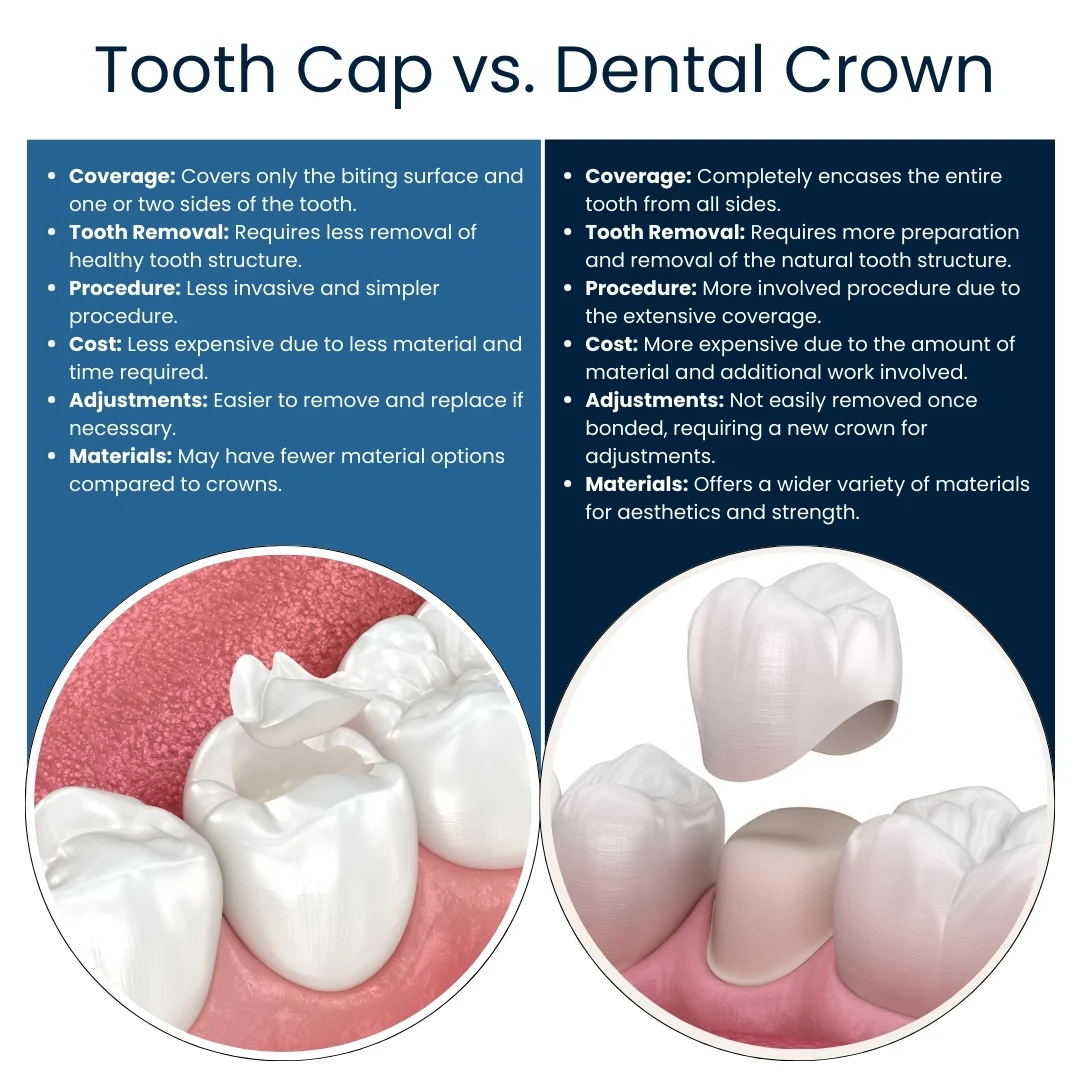
What is a dental cap?
The term “cap” is generally considered a layperson’s term for what dental professionals call a “crown.” Its use stems from the visual idea of something covering or capping the tooth. Think of it as a simple, descriptive word that patients use to explain the restoration. While not technically incorrect, it is less precise than “crown”.
Definition of a dental crown
A “crown,” on the other hand, is the professional, more technical term used by dentists. It describes a dental restoration that covers the entire visible portion of a tooth above the gum line. Dental crowns are custom-made to fit the exact shape and size of the tooth, providing strength, protection, and an improved appearance. At Albania Dental Implants, our expert team specialises in providing high-quality dental crowns that blend seamlessly with your natural teeth.
Terminology differences: Regional and professional language preferences
While “crown” is the universally accepted professional term, “cap” might be more common in certain regions or among older generations. It’s important to remember that both terms refer to the same thing. If your dentist uses the word “crown,” they are referring to the same type of restoration you might call a “cap.”
Materials Used for Caps and Crowns
The material used for a dental crown or cap can greatly influence its appearance, durability, and cost. Modern dentistry offers a variety of materials, each with its own set of advantages. The choice of material depends on factors such as the tooth’s location, the patient’s aesthetic preferences, and the functional requirements of the restoration. At Albania Dental Implants, we offer a range of materials to suit every need and budget.
Types of dental crowns
Several materials are commonly used for dental crowns. Here are some of the most popular:
- Porcelain: Known for its natural appearance, porcelain is a popular choice for front teeth. It can be matched to the exact shade of your existing teeth, providing a seamless blend.
- Ceramic: Similar to porcelain, ceramic crowns offer excellent aesthetics and biocompatibility. They are a good option for patients with metal allergies.
- Porcelain-fused-to-metal (PFM): These crowns combine the strength of metal with the aesthetic appeal of porcelain. They are a durable and cost-effective option, although the metal base may be visible as a dark line near the gumline.
- Gold alloys: Gold crowns are extremely durable and resistant to wear. They are a good choice for back teeth, where strength is more important than aesthetics.
- Zirconia: This is a very strong and biocompatible material that offers a natural appearance. Zirconia crowns are highly resistant to chipping and cracking, making them a long-lasting option. We also offer zirconia implants in Albania, known for their strength and aesthetic appeal.
Porcelain cap vs metal crown
The choice between a porcelain cap (or crown) and a metal crown often comes down to aesthetics versus durability. Porcelain offers a more natural look, while metal crowns are generally stronger and more resistant to wear. Your dentist can help you weigh the pros and cons of each option based on your specific needs.
Do materials impact terminology?
The material used does not change the terminology. Whether a crown is made of porcelain, metal, or any other material, it is still referred to as a “crown” by dental professionals. The term “cap” remains an informal way of describing any type of crown.
How Are Caps and Crowns Applied?
The procedure for placing a dental cap or crown is similar, reinforcing the fact that these terms refer to the same restoration. Understanding the step-by-step process can help you feel more prepared and comfortable during your dental appointment.
Dental crown procedure: A step-by-step outline
Here’s what you can typically expect during a dental crown procedure:
- Initial Examination: The dentist will examine the tooth and take X-rays to assess the extent of the damage and check for any underlying issues like decay or infection.
- Tooth Preparation: The tooth is reshaped to make room for the crown. This involves removing a layer of enamel from the top and sides of the tooth.
- Impressions: An impression of the prepared tooth is taken using a dental mold or digital scanner. This impression is sent to a dental lab, where the custom crown is made.
- Temporary Crown: A temporary crown is placed on the prepared tooth to protect it while the permanent crown is being fabricated.
- Permanent Crown Placement: Once the permanent crown is ready, the temporary crown is removed, and the permanent crown is fitted and cemented onto the tooth. The dentist will check the fit and bite to ensure proper alignment and comfort.
Cap placement: Ensuring a proper fit
The success of a crown or cap depends on a precise fit. The dentist will make adjustments as needed to ensure that the crown sits comfortably and does not interfere with your bite. This may involve minor reshaping of the crown or adjustments to the adjacent teeth.
Tooth preparation steps: Same for caps and crowns
The tooth preparation steps are identical whether you call the restoration a “cap” or a “crown.” The dentist must reshape the tooth to create the necessary space for the restoration, regardless of the term used. This further emphasizes that “cap” and “crown” are functionally the same.
When Is a Cap or Crown Needed?
Dental crowns are versatile restorations used to address a variety of dental issues. Understanding the common clinical indications can help you recognize when a crown might be the right solution for your dental needs. At Albania Dental Implants, we assess each patient’s unique situation to determine the most appropriate treatment plan.
Reasons for dental crown: Common clinical indications
Here are some common reasons why a dentist might recommend a dental crown:
- Restoring a broken or fractured tooth: Crowns can protect and stabilize teeth that have been severely damaged by trauma or decay.
- Protecting a weak tooth from decay: If a tooth is weakened by a large filling or extensive decay, a crown can provide added strength and prevent further damage.
- Covering a dental implant: Crowns are used to cover and protect dental implants, providing a natural-looking and functional replacement for missing teeth. If you are considering Albania Dental Implants, our clinic offers top-quality implant services.
- Improving the appearance of a discolored or misshapen tooth: Crowns can enhance the aesthetics of teeth that are severely stained, misshapen, or otherwise unattractive.
- After a root canal: Following a root canal, a crown is often placed to protect the weakened tooth and restore its function.
- Supporting a dental bridge: Crowns are used to anchor dental bridges, which replace one or more missing teeth.
Restorative dentistry: The role of caps and crowns
Caps and crowns play a vital role in restorative dentistry, helping to preserve damaged teeth and restore their function and appearance. They are a versatile and effective treatment option for a wide range of dental problems.
Tooth repair options: Choosing the right solution
When it comes to tooth repair, several options are available, including fillings, inlays, onlays, and crowns. The best choice depends on the extent of the damage and the location of the tooth. Your dentist can help you weigh the pros and cons of each option to determine the most appropriate treatment plan for your specific needs.
Frequently Asked Questions
Let’s address some frequently asked questions about dental crowns and caps to provide further clarification and address common concerns.
Are a cap and a crown the same thing?
Yes, a cap and a crown are the same thing. “Cap” is simply an informal term for a dental crown, which is a restoration that covers the entire visible portion of a tooth. The procedures and materials used are identical, regardless of which term you use.
Does the material differ between a cap and a crown?
No, the material does not differ. Both caps and crowns can be made from the same materials, including porcelain, ceramic, metal, and zirconia. The choice of material depends on factors such as aesthetics, durability, and cost, but it does not affect the terminology.
Is one term more professional or up-to-date?
The term “crown” is considered the more professional and up-to-date term in dentistry. While “cap” is still understood, it is generally used by patients rather than dental professionals.
How long do dental crowns/caps last?
Dental crowns or caps can last anywhere from 5 to 15 years, or even longer, with proper care. Factors that affect their lifespan include oral hygiene habits, diet, and the material used for the restoration.
How do I care for my dental crown or cap?
Caring for a dental crown or cap is similar to caring for your natural teeth. Here are some tips:
- Brush your teeth twice a day with fluoride toothpaste.
- Floss daily to remove plaque and debris from around the crown.
- Avoid biting on hard or sticky foods that could damage the crown.
- Visit your dentist regularly for check-ups and cleanings.
What affects the price of a crown or cap?
Several factors can affect the price of a crown or cap, including:
- The material used: Porcelain and zirconia crowns tend to be more expensive than metal or PFM crowns.
- The location of the tooth: Crowns on front teeth may cost more due to the need for precise aesthetics.
- The dentist’s fees: Dentists in different areas may charge different fees for the same procedure.
- Additional procedures: If you need a root canal or other treatment before getting a crown, this will add to the overall cost.
Exploring options abroad, such as cosmetic dentistry in Albania, could provide considerable cost savings without sacrificing quality.
Comparing Caps and Crowns – Table
Here is a table summarizing the key differences (or lack thereof) between caps and crowns:
| Feature | Cap | Crown |
|---|---|---|
| Usage | Informal/layperson | Professional term |
| Materials | Same as crowns | Same as caps |
| Dental Procedure | Same as crowns | Same as caps |
| Recommendation | Both refer to same restoration | Both refer to same restoration |
| Cost | No difference | No difference |
Competitor Analysis
To provide you with the most comprehensive and authoritative information, we’ve analyzed several top dental information resources. Our goal is to offer clearer language, more authoritative facts, and a more detailed FAQ section than our competitors.
Here’s how we aim to outperform:
- NHS: Dental crowns overview: We provide more detailed explanations and address a wider range of patient concerns.
- Bupa Dental Care: Dental crowns explained: Our article offers more in-depth information on materials and procedures.
- Colgate: Types of dental crowns & when to get them: We offer a more comprehensive comparison of crown types and their suitability for different situations.
- My Private Dentist UK: Cap vs crown explained: Our content provides a more nuanced understanding of the terminology differences.
- Healthline: Dental crowns: procedure, risks, costs: We offer more specific cost information relevant to the UK and discuss options for affordable treatment, including cost of dental implants in Albania.
Conclusion – Understanding Your Options
In summary, while the terms cap and crown are often used interchangeably, it’s essential to understand that they refer to the same dental treatment. Consulting with your dentist is key to determining the best restoration for your individual needs. At Albania Dental Implants, we provide personalized treatment plans to help you achieve a healthy, beautiful smile. Contact Albania Dental Implants today to discuss your options and embark on your journey to improved oral health.