



What Foods Not to Eat After Dental Implants – Complete Guide for a Smooth Recovery
If you’ve just had dental implants, knowing what foods not to eat after dental implants procedure is key to ensuring a quick, pain-free recovery and long-term implant success—right from the first meal. At Albania Dental Implants, we want your journey to a confident smile to be as smooth as possible.
Introduction
Dental implants are a life-changing investment, offering a permanent solution to missing teeth and restoring your smile. However, your dietary choices in the first days and weeks can make or break your results. Eating the wrong foods can lead to complications, delay healing, and even compromise the success of your implants. This is especially important if you are travelling for dental tourism in Albania and want to maximize your experience.
Protecting Your Investment: The Importance of Post-Implant Diet
Choosing the right foods after your dental implant surgery is crucial for several reasons:
- Promoting Healing: A soft diet allows the surgical site to heal undisturbed.
- Preventing Infection: Avoiding certain foods reduces the risk of bacterial contamination.
- Ensuring Implant Stability: Minimizing chewing force protects the newly placed implants.
- Avoiding Discomfort: A gentle diet prevents pain and irritation.
This guide details the foods to avoid—and alternatives to enjoy—so you protect your new implants, speed up healing, and avoid complications. We’ll cover everything from the initial post-op days to when you can gradually resume your normal diet.
Foods to Avoid and Alternatives After Dental Implants
Understanding what can I eat after dental implants and what to avoid is paramount. This guide serves as your roadmap to a successful recovery, outlining specific food restrictions and suggesting delicious, nutrient-rich alternatives. At Albania Dental Implants, we believe in empowering our patients with the knowledge they need to achieve optimal results.
Essential Food Restrictions for Dental Implant Aftercare
Navigating your post dental implant diet can feel overwhelming, but it’s a critical step in ensuring your implants heal properly. Knowing foods to avoid after dental implant placement helps prevent complications and ensures long-term success. Adhering to these restrictions is crucial in the immediate aftermath of your surgery.
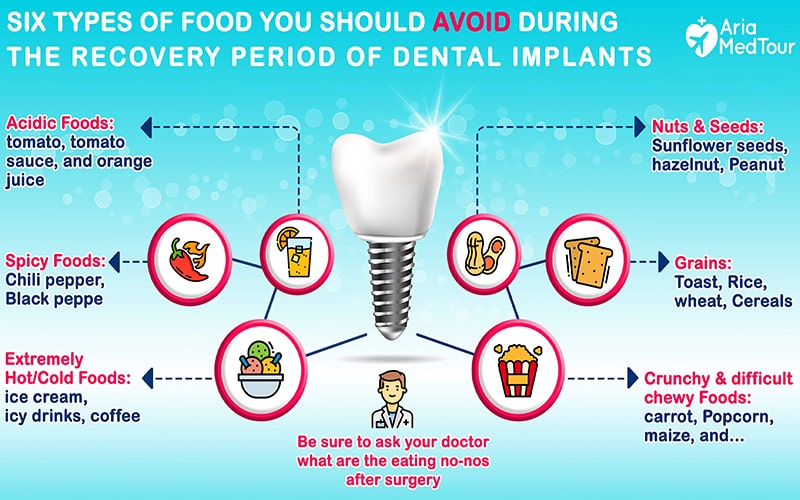
Hard and Crunchy Foods: A Recipe for Disaster
Nuts, seeds, hard breads, raw vegetables, and chips pose a significant risk to the surgical site. Chewing these foods can damage the delicate tissues, disrupt the healing process, and even cause the implants to shift before they fully integrate with the jawbone. Think of it as giving your mouth a chance to rest and recover without the added stress of breaking down tough textures.
Sticky and Chewy Foods: A Clot’s Worst Enemy
Caramel, gum, and sticky candies are notorious for dislodging blood clots and causing irritation. Blood clots are essential for healing, as they protect the surgical site from infection and promote tissue regeneration. These foods can also get stuck around the implant site, creating a breeding ground for bacteria. Consider swapping gum for a gentle mouthwash to keep your mouth clean.
Hot Foods and Beverages: Aggravating Sensitive Tissue
Soups, coffee, and tea, while comforting, can actually aggravate sensitive tissue. Heat can increase blood flow to the surgical site, potentially leading to inflammation and discomfort. It’s best to opt for lukewarm or cool options to soothe your gums and minimize irritation. Remember, patience is key during this initial healing phase.
Spicy and Acidic Foods: A Recipe for Discomfort
Citrus, tomatoes, and hot sauce can irritate the surgical site, causing significant discomfort. The acids in these foods can also interfere with the healing process. Opt for milder flavors and gentler options until your gums have fully recovered. Remember, this is a temporary restriction, and you’ll be able to enjoy your favorite flavors again soon.
Alcoholic Beverages: Interfering with Healing
Alcoholic beverages may interfere with healing and interact negatively with medications. Alcohol can thin the blood, potentially leading to increased bleeding and delayed healing. It can also weaken your immune system, making you more susceptible to infection. If you are taking medication, be sure to consult with your dentist about potential interactions with alcohol.
Can I eat spicy food after dental implants?
No, it’s generally recommended to avoid spicy food after dental implants. Spicy foods can irritate the surgical site and cause discomfort, potentially delaying the healing process. It’s best to stick to milder flavors during the initial recovery period.
How long should I avoid hard foods after dental implant surgery?
You should avoid hard foods for at least 2-3 months after dental implant surgery, or until your dentist advises otherwise. This allows the implants to fully integrate with the jawbone without the risk of damage or dislodgement.
Is coffee safe after dental implants?
Lukewarm or cold coffee is preferable to hot coffee after dental implants. Very hot beverages can aggravate sensitive tissues and potentially increase inflammation. It is better to wait before consuming coffee, because it can interfere with medications that may have been prescribed
Can I drink alcohol after getting dental implants?
It is best to avoid alcohol after dental implants. Alcohol can interfere with healing and interact negatively with medications. It can also thin the blood, potentially leading to increased bleeding. Consult your dentist about when it’s safe to resume alcohol consumption.
Following these foods to avoid after dental implant healing guidelines is crucial for a smooth and successful recovery. Remember to consult your dentist if you have any questions or concerns about your diet.
What to Eat After Dental Implants for Optimal Healing
While knowing what to avoid is crucial, understanding best foods after dental implants is equally important. A well-planned soft diet after dental implants can promote healing, reduce swelling, and ensure you stay nourished during the recovery period. The right dental implant recovery foods will make this process easier.
Soft, Nutrient-Rich Foods: Fueling Your Recovery
Yogurt, mashed potatoes, scrambled eggs, and smoothies are excellent choices during the initial healing phase. These foods are easy to chew, gentle on the surgical site, and packed with essential nutrients to support tissue regeneration. They also provide a good source of protein, which is crucial for healing.
Cold Foods: Soothing Swelling and Discomfort
Ice cream and chilled soups can help reduce swelling and soothe sore gums. The cold temperature provides a numbing effect, alleviating discomfort and promoting healing. Just be sure to choose options that are low in sugar to prevent bacterial growth. It’s like giving your mouth a mini ice pack from the inside out.
Hydrating Liquids: Essential for Healing
Water and herbal teas are crucial for staying hydrated and promoting overall healing. Proper hydration helps maintain saliva production, which is essential for keeping the mouth clean and preventing infection. Avoid using straws, as the sucking action can dislodge blood clots and delay healing. Small sips are the way to go.
What are the best soft foods to eat after dental implants?
The best soft foods include yogurt, mashed potatoes, scrambled eggs, smoothies, pudding, and well-cooked cereals. These options are easy to chew, gentle on the surgical site, and provide essential nutrients for healing.
Can I eat dairy products after dental implants?
Yes, you can eat dairy products after dental implants, unless you are lactose intolerant. Dairy products like yogurt and cheese are good sources of protein and calcium, which support healing. However, be sure to choose soft and easy-to-chew options.
How can I stay nourished on a liquid diet after dental implants?
To stay nourished on a liquid diet, focus on nutrient-rich options like protein shakes, smoothies with fruits and vegetables, and broth-based soups. Add protein powder to your smoothies, and consider taking a multivitamin to ensure you’re getting all the essential nutrients your body needs.
Remember, these best foods after dental implants recommendations are designed to support your body’s natural healing process. Consult your dentist or a registered dietitian for personalized advice tailored to your specific needs.
How Long to Avoid Certain Foods and When You Can Resume Normal Eating
Understanding the dental implant healing time is crucial for knowing when can I eat normally after dental implants. This timeline provides a general guideline, and your dentist may provide specific recommendations based on your individual healing progress. Adhering to proper post-op dental implant care ensures a smoother recovery and minimizes the risk of complications.
Immediate Post-Op (0–3 days): Liquid Paradise
In the first few days after surgery, strictly avoid all restricted foods and stick to liquids only. This includes water, broth, clear soups, and protein shakes. The goal is to minimize any disturbance to the surgical site and allow the initial healing process to begin undisturbed. Think of this phase as a liquid vacation for your mouth.
First Week: The Soft Food Reintroduction
Gradually reintroduce more solid (but still soft) foods as comfort permits. Mashed potatoes, scrambled eggs, yogurt, and well-cooked cereals are good options. Avoid anything that requires significant chewing or could potentially irritate the surgical site. Listen to your body and don’t push yourself to eat anything that causes discomfort.
Two Weeks Onward: A Slow and Steady Return
Slowly resume your normal diet, but continue to avoid extremely hard or sticky foods until fully healed. This process typically takes several months, as the implants need to fully integrate with the jawbone. Even after you resume your normal diet, it’s wise to exercise caution when eating potentially problematic foods. Remember, long-term implant success depends on continued care and attention.
When can I start eating bread after dental implants?
You can start eating soft bread after about a week, as long as it’s easy to chew and doesn’t irritate the surgical site. Avoid crusty or hard bread until your dentist advises otherwise.
How do I know if I’m ready to eat harder foods?
You’ll know you’re ready to eat harder foods when you can comfortably chew soft foods without any pain or discomfort. Always consult with your dentist before making significant changes to your diet.
What are the signs I’ve eaten something I shouldn’t have?
Signs that you’ve eaten something you shouldn’t have include pain, bleeding, swelling, and irritation at the surgical site. If you experience any of these symptoms, contact your dentist immediately.
Mistakes That Can Jeopardize Dental Implant Success
Avoiding dental implant complications is essential for ensuring the longevity of your investment. Understanding what not to do after dental implants can help you avoid common errors after implant surgery and promote a smoother recovery.
Eating Too Soon: Pushing the Limits
Resuming a normal diet before the site heals can cause pain, bleeding, or even implant failure. The implants need time to fully integrate with the jawbone, and subjecting them to excessive chewing force prematurely can compromise this process. Patience is key to ensuring long-term success.
Ignoring Swelling or Pain: A Red Flag
Persistent discomfort may indicate a problem, such as infection or implant instability. Contact your dentist if symptoms worsen or don’t improve with over-the-counter pain medication. Ignoring these signs can lead to more serious complications and potentially jeopardize the entire implant procedure.
Missing Follow-Up Appointments: A Critical Step
Follow-up appointments are essential for monitoring healing and catching potential issues early. Your dentist can assess the implant site, identify any signs of infection, and provide personalized recommendations for care. Missing these appointments can increase the risk of complications and compromise the long-term success of your implants.
What happens if I eat hard food too soon?
Eating hard food too soon can damage the surgical site, disrupt the healing process, and even cause the implants to shift before they fully integrate with the jawbone.
How do I deal with pain after eating the wrong food?
If you experience pain after eating the wrong food, try rinsing your mouth with warm salt water and taking over-the-counter pain medication. Contact your dentist if the pain persists or worsens.
Who should I contact if I have a problem?
If you experience any problems after dental implant surgery, such as persistent pain, bleeding, swelling, or signs of infection, contact your dentist immediately. They can assess the situation and provide appropriate treatment.
By avoiding these common mistakes, you can significantly increase the likelihood of a successful and long-lasting dental implant outcome. Trust us at Albania Dental Implants when we say it’s best to be safe than sorry! You can also check our offers for Albania Dental Implants Services to get the smile you have always wanted.
Frequently Asked Questions About Foods and Dental Implants
Here, we delve into the most dental implant food FAQ, providing clear, actionable advice based on dental professional recommendations. These what not to eat FAQs are answered with precision to guide you through a smooth and successful recovery. We aim to address all your dental implant recovery questions with clarity and empathy.
Can I eat spicy food after dental implants?
As mentioned earlier, spicy foods can irritate the surgical site and cause discomfort, potentially delaying the healing process. Therefore, it’s generally recommended to avoid spicy food during the initial recovery period, typically for the first few weeks after surgery. Stick to milder flavors and gentler options until your gums have fully recovered.
How long should I avoid hard foods after dental implant surgery?
You should avoid hard and crunchy foods for at least 2-3 months after dental implant surgery, or until your dentist advises otherwise. This allows the implants to fully integrate with the jawbone without the risk of damage or dislodgement. After this period, you can gradually reintroduce harder foods, but it’s wise to exercise caution and listen to your body.
Is coffee safe after dental implants?
Lukewarm or cold coffee is preferable to hot coffee after dental implants. The heat can aggravate sensitive tissues and potentially increase inflammation. Additionally, it’s best to avoid coffee altogether for the first few days after surgery, as caffeine can interfere with healing. You can start drinking lukewarm or cold coffee about a week after surgery, but be sure to monitor your gums for any signs of irritation.
Can I drink alcohol after getting dental implants?
It is best to avoid alcohol after getting dental implants. Alcohol can interfere with healing and interact negatively with medications. It can also thin the blood, potentially leading to increased bleeding. It’s generally recommended to abstain from alcohol for at least the first week after surgery, or until your dentist advises otherwise. When you do resume alcohol consumption, do so in moderation.
What are the best soft foods to eat after dental implants?
The best soft foods include yogurt, mashed potatoes, scrambled eggs, smoothies, pudding, and well-cooked cereals. These options are easy to chew, gentle on the surgical site, and provide essential nutrients for healing. You can also consider options like apple sauce, broth-based soups, and soft cheeses. Experiment with different flavors and textures to find what you enjoy and what your mouth tolerates best.
Can I eat dairy products after dental implants?
Yes, you can eat dairy products after dental implants, unless you have lactose intolerance. Dairy products like yogurt and cheese are good sources of protein and calcium, which support healing. However, be sure to choose soft and easy-to-chew options. Avoid hard cheeses and opt for soft or melted varieties. Also, be mindful of the sugar content in some dairy products, as excessive sugar can promote bacterial growth.
How can I stay nourished on a liquid diet after dental implants?
To stay nourished on a liquid diet, focus on nutrient-rich options like protein shakes, smoothies with fruits and vegetables, and broth-based soups. Add protein powder to your smoothies, and consider taking a multivitamin to ensure you’re getting all the essential nutrients your body needs. You can also explore options like meal replacement shakes and liquid supplements to boost your calorie and nutrient intake.
When can I start eating bread after dental implants?
You can start eating soft bread after about a week, as long as it’s easy to chew and doesn’t irritate the surgical site. Avoid crusty or hard bread until your dentist advises otherwise. When you do reintroduce bread into your diet, start with small pieces and chew them carefully.
How do I know if I’m ready to eat harder foods?
You’ll know you’re ready to eat harder foods when you can comfortably chew soft foods without any pain or discomfort. This typically takes several weeks or months, depending on your individual healing progress. Always consult with your dentist before making significant changes to your diet. They can assess the implant site and provide personalized recommendations based on your specific needs.
What are the signs I’ve eaten something I shouldn’t have?
Signs that you’ve eaten something you shouldn’t have include pain, bleeding, swelling, and irritation at the surgical site. If you experience any of these symptoms, contact your dentist immediately. They can assess the situation and provide appropriate treatment.
Conclusion
Navigating the dietary restrictions after dental implant surgery is a crucial step towards ensuring the success and longevity of your investment. By understanding the key foods to avoid and embracing the best dietary practices, you can promote healing, minimize discomfort, and prevent complications. Remember, your choices in the first days, weeks, and months after surgery play a significant role in the long-term health of your implants.
Embrace the Journey to a Confident Smile
At Albania Dental Implants, we’re committed to providing our patients with the highest quality care and support. We also offer dental tourism in albania, making high-quality dental care affordable, helping UK residents get the treatments they need at reasonable prices. A dental treatment and a great vacation what can be better!
Take Action Today
Ready to take the next step towards a confident, healthy smile? Contact us today to schedule a consultation and learn more about our comprehensive dental implant services. You can also reach out and contact albania dental implants team.
We have affordable prices with quality materials and you can replace your tooth with permanent implants. Do not postpone your treatment any longer and contact us. Our expert team will be waiting for you. Let Albania Dental Implants be the provider of your smile.





