




NHS Dental Implant: What You Need to Know in the UK
NHS dental implant is a term frequently searched by individuals in the UK considering tooth replacement options available through the National Health Service. This article provides essential information, outlines the processes, and addresses crucial considerations for exploring dental implants on the NHS, as well as highlighting alternative options like seeking treatment abroad, such as at Albania Dental Implants.
NHS Dental Implant Eligibility and Criteria
CLUSTER: NHS dental implant criteria, NHS dental implant requirements, qualifying for NHS dental implants
Understanding the eligibility and criteria for NHS dental implants is crucial. While the NHS primarily focuses on treatments necessary for health, function, and aesthetics, the availability of dental implants is limited and subject to strict criteria. A key difference exists between private and NHS dental implant eligibility, with private options offering broader access.
Who qualifies for NHS dental implants and what are the criteria?
Generally, the NHS offers dental implants only when there’s a clear medical need, not for purely cosmetic reasons. Qualifying factors might include:
- Congenital defects (e.g., cleft palate)
- Trauma resulting in tooth loss
- Tooth loss following cancer treatment
Each case is assessed individually, requiring a comprehensive evaluation by a dentist or specialist to determine if the patient meets the specific criteria.
Main reasons the NHS offers dental implants instead of other treatments
The NHS may offer dental implants over other treatments, such as dentures or bridges, in specific cases where these alternatives are unsuitable or ineffective. Reasons include:
- Improved Function: Implants offer better chewing ability and speech clarity compared to dentures.
- Bone Preservation: Implants help prevent bone loss in the jaw, which can occur with missing teeth.
- Enhanced Stability: Implants provide a stable and permanent solution compared to removable appliances.
The decision to offer implants is based on the patient’s overall oral health and the potential long-term benefits of this treatment option.
Difference between private and NHS dental implant eligibility
Eligibility for dental implants varies significantly between the NHS and private dental practices.
- NHS: Strict criteria focusing on medical necessity, congenital defects, trauma, or post-cancer treatment.
- Private: Broader eligibility, including cosmetic improvements, with the primary requirement being good overall oral health and sufficient jawbone density.
Those who don’t qualify for NHS implants often turn to private options or consider seeking more affordable solutions abroad, such as dental tourism in Albania.
NHS Dental Implant Procedure: Step by Step
CLUSTER: NHS dental implant process, NHS dental implant procedure, what happens during NHS dental implant treatment
The NHS dental implant procedure involves several carefully planned steps to ensure the best possible outcome. From the initial assessment and referral to the final restoration, each stage is crucial for the success of the treatment.
Assessment and referral
The first step involves a thorough assessment by your general dentist. During this evaluation, the dentist will:
- Examine your oral health
- Take X-rays to assess bone density and structure
- Discuss your medical history
If you are deemed a potential candidate, your dentist will refer you to a specialist for further evaluation.
What is the process for being referred for NHS dental implants?
The referral process from an NHS dentist to a hospital or specialist involves several stages:
- Initial Assessment: Your dentist assesses your oral health and determines if a referral is necessary.
- Referral Letter: Your dentist writes a referral letter explaining the reason for the referral and your medical history.
- Specialist Evaluation: The specialist assesses your case and determines if you meet the criteria for NHS-funded implants.
- Treatment Planning: If approved, a detailed treatment plan is created.
This process can take time, and approval isn’t guaranteed, as resources are limited and criteria are strict.
Steps of treatment and timeline overview
The actual dental implant procedure typically involves these steps:
- Implant Placement: The implant (a titanium screw) is surgically placed into the jawbone.
- Osseointegration: A healing period of several months (typically 3-6 months) is required for the bone to grow around the implant, fusing it in place.
- Abutment Placement: Once osseointegration is complete, an abutment (a connector piece) is attached to the implant.
- Crown Placement: Finally, a custom-made crown (artificial tooth) is attached to the abutment, completing the restoration.
The entire process can take several months to over a year, depending on individual healing and specific case requirements. Given potentially long NHS dental implant waiting time, many consider dental implants in Albania to shorten the period of treatment.
NHS Dental Implant Costs and Charges
CLUSTER: NHS dental implant cost, how much are dental implants on the NHS, dental implant band NHS
Understanding the costs and charges associated with NHS dental implants is essential for patients. NHS dental charges are structured into different bands, each covering specific treatments. However, it’s important to note that dental implants are not routinely available on the NHS due to funding limitations.
What patients pay under NHS dental charges
NHS dental charges are divided into three bands:
- Band 1 (£26.80): Includes examinations, diagnosis, and preventative care.
- Band 2 (£73.50): Covers everything in Band 1, plus fillings, root canal treatment, and extractions.
- Band 3 (£319.10): Includes everything in Bands 1 and 2, plus crowns, dentures, and bridges.
If you are eligible for NHS dental implants, they would fall under Band 3. However, eligibility is rare, and most patients will need to consider private options.
Situations when treatment may be free
Certain individuals are exempt from paying NHS dental charges. These include:
- Those under 18
- Pregnant women and those who have had a baby in the last 12 months
- Individuals receiving certain benefits (e.g., Income Support, Universal Credit)
Even if you qualify for free dental treatment, it doesn’t guarantee access to dental implants, as they are rarely provided by the NHS.
How much do dental implants cost on the NHS?
Due to limited availability, it’s difficult to determine an exact NHS dental implant cost. In cases where implants are deemed medically necessary and approved, the cost would fall under Band 3 (£319.10). However, most patients do not qualify for this option and must consider private treatment. For full mouth dental implants, patients may find cost effective dental tourism options abroad.
Differences between NHS and private cost
The cost of dental implants varies significantly between the NHS and private dental practices.
- NHS: If eligible, costs are capped at Band 3 charges (£319.10).
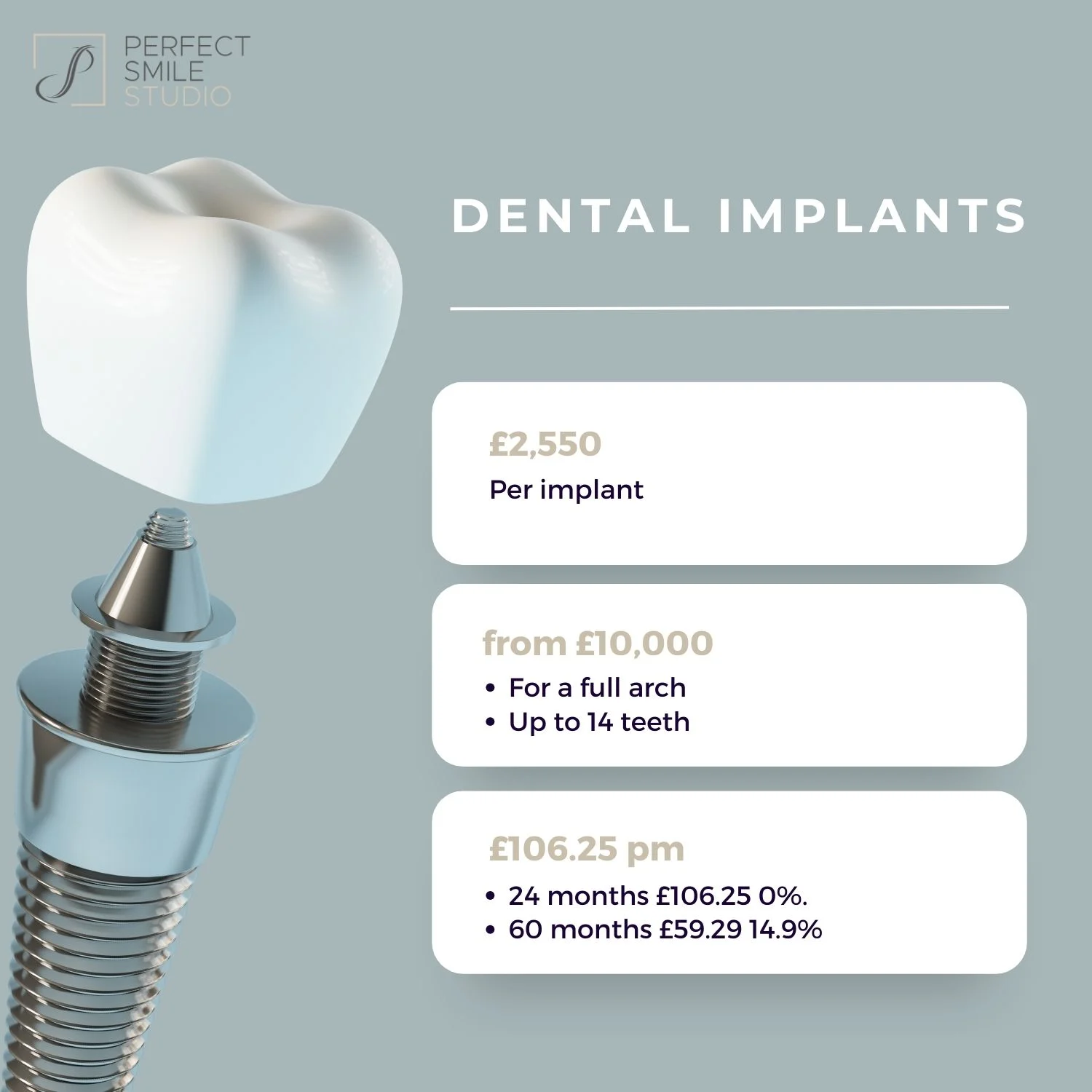
- Private: Costs can range from £2,000 to £4,000 per implant, depending on location, complexity, and materials used.
The higher cost of private implants reflects the use of advanced technology, materials, and specialist expertise, offering a wider range of treatment options and quicker access.
Alternatives to NHS Dental Implants
CLUSTER: NHS dental implant alternatives, NHS dentures, NHS dental bridges, best tooth replacement on NHS
When NHS dental implants aren’t an option, there are alternative tooth replacement treatments typically offered by the NHS. These alternatives provide functional and aesthetic solutions, although they may not offer the same long-term benefits as implants.
Alternatives typically offered by NHS
Common alternatives to dental implants provided by the NHS include:
- Dentures: Removable appliances that replace missing teeth.
- Bridges: Fixed appliances that attach to adjacent teeth to fill the gap.
These options are more readily available on the NHS and offer a cost-effective way to restore your smile and chewing ability.
Pros and cons compared to implants
Each alternative has its own set of advantages and disadvantages when compared to dental implants:
- Dentures:
- Pros: More affordable, non-invasive.
- Cons: Less stable, can affect speech and taste, require frequent adjustments.
- Bridges:
- Pros: Fixed appliance, more stable than dentures.
- Cons: Requires altering adjacent teeth, may not prevent bone loss, shorter lifespan than implants.
Dental implants offer superior stability, longevity, and bone preservation but are more expensive and require surgery.
When alternative treatments are advised
Alternative treatments may be advised in several situations:
- When a patient doesn’t meet the strict criteria for NHS dental implants.
- When the patient has significant medical conditions that make surgery risky.
- When the patient prefers a non-surgical, more affordable option.
The best treatment option is determined based on individual needs, preferences, and overall oral health.
Private versus NHS Dental Implants: A Comparison
CLUSTER: NHS dental implant vs private, NHS versus private dental implants, should I go private for dental implants
Choosing between private and NHS dental implants involves weighing several factors, including cost, waiting times, and treatment options. Understanding the differences can help you make an informed decision that aligns with your needs and preferences. Increasingly, patients are considering options abroad for affordable treatment including Albania Dental Implants.
Differences in approach, cost, and waiting times
The key differences between NHS and private dental implants lie in their approach, cost, and waiting times:
- Approach:
- NHS: Focuses on essential treatments with limited availability.
- Private: Offers a wide range of options, including cosmetic enhancements and advanced techniques.
- Cost:
- NHS: More affordable if eligible (Band 3 charges).
- Private: Significantly more expensive, reflecting the use of premium materials and specialist expertise.
- Waiting Times:
- NHS: Long waiting lists due to limited resources.
- Private: Quicker access to treatment, with flexible scheduling options.
Is it better to have dental implants privately or through the NHS?
The decision depends on individual circumstances, but private implants generally provide a superior experience due to:
- Faster Access: No waiting lists, allowing for quicker treatment.
- Wider Range of Options: Access to advanced techniques and materials.
- Personalized Care: More attention and tailored treatment plans.
However, private implants come at a higher cost, which may not be feasible for everyone.
When private care may be preferable
Private dental implant treatment may be preferable in several situations:
- When you don’t meet the eligibility criteria for NHS implants.
- When you want quicker access to treatment without long waiting lists.
- When you prefer a wider range of treatment options and personalized care.
- When you can afford the higher costs associated with private dental care.
For those seeking more affordable alternatives, dental tourism options like Albania Dental Implants offer a cost-effective solution without compromising quality.
Common Questions About NHS Dental Implants
CLUSTER: NHS dental implant FAQ, NHS dental implant waiting time, NHS dental implant availability, NHS dental implant success rate
Many patients have questions about NHS dental implants, including waiting times, success rates, and suitability. Here are answers to some of the most frequently asked questions to help you make an informed decision.
Can I appeal if I am refused NHS dental implant treatment?
Yes, if you are refused NHS dental implant treatment, you have the right to appeal the decision. This involves:
- Formal Complaint: Submitting a formal complaint to the dental practice or NHS England.
- Review Process: The complaint will be reviewed, and you may be asked to provide additional information.
- Appeal to the Ombudsman: If you are not satisfied with the outcome, you can appeal to the Parliamentary and Health Service Ombudsman.
However, successful appeals are rare, as resources are limited and criteria are strict.
How long is the wait for NHS dental implants?
Waiting times for NHS dental implants can vary significantly depending on:
- The specific NHS trust
- The availability of specialists
- The complexity of the case
Some patients may wait several months to over a year for treatment. Due to the extended NHS implant waiting list, patients consider private treatment to avoid delays.
How successful are NHS dental implants?
The success rate of NHS dental implants is generally high, similar to that of private implants. Factors affecting success include:
- The patient’s overall health
- Bone density
- Oral hygiene
- The expertise of the dental professional
With proper care and maintenance, dental implants can last many years, providing a stable and functional solution for missing teeth.
Are NHS dental implants suitable for everyone?
NHS dental implants are not suitable for everyone. Eligibility is determined by:
- Meeting strict medical necessity criteria
- Having good overall oral health
- Having sufficient bone density in the jaw
- Not having certain medical conditions that could compromise the success of the implant
Patients who do not meet these criteria may need to explore alternative treatment options.
What are the risks or downsides?
Like any surgical procedure, dental implants carry some risks and potential downsides:
- Infection
- Nerve damage
- Sinus problems (for upper implants)
- Implant failure (rare)
However, these risks are relatively low when the procedure is performed by a skilled and experienced dental professional.
Do children or elderly patients qualify?
The eligibility of children and elderly patients for NHS dental implants varies:
- Children: Generally not eligible, as their jawbones are still developing.
- Elderly Patients: May be eligible if they meet the medical necessity criteria and are in good overall health. There is no upper age limit, but a comprehensive assessment is required.
Conclusion
In summary, while NHS dental implants are an option for some in the UK, strict eligibility criteria and long waiting times often make it difficult to access this treatment through the National Health Service. Understanding the alternatives, costs, and differences between NHS and private care is crucial for making an informed decision. For those seeking quicker access and more affordable options, exploring dental tourism with Albania Dental Implants could be a viable solution. Contact us today to learn more about restoring your smile and confidence.