




NHS Cost of Dental Implants: Your Complete Guide
The NHS cost of dental implants is a significant concern for many UK residents seeking effective and affordable solutions for missing teeth. While dental implants offer a long-lasting and natural-looking way to restore your smile, understanding the availability, eligibility, and costs associated with NHS treatment is crucial. If NHS options are limited or unavailable, exploring alternative solutions, such as high-quality and affordable dental implants in Albania with Albania Dental Implants, can be a viable option to regain your confident smile.
Are Dental Implants Available on the NHS?
Cluster keyword: dental implants on NHS
The question, “are dental implants available on NHS?” is a common one. While the NHS does offer a range of dental treatments, dental implants on NHS are not routinely available. Access is typically restricted to cases where there is a clear medical need, rather than purely for cosmetic reasons.
NHS Criteria and Eligibility for Dental Implant Treatment
To be considered for dental implants on NHS, patients must meet specific criteria. This often includes situations where tooth loss is a direct result of trauma, congenital disabilities (such as cleft palate), or as part of reconstructive surgery following cancer treatment. The NHS focuses on restoring essential function and quality of life in these circumstances.
Limitations of NHS Dental Implant Provision
The main limitation is that dental implants on NHS are not routinely funded. This is due to the high cost of the procedure and the prioritization of available resources. The NHS has a responsibility to manage its budget effectively, and therefore focuses on providing essential dental care to the widest possible population.
Typical Patient Groups Who May Qualify
Certain patient groups have a higher likelihood of qualifying for dental implants on NHS. These include:
- Patients who have experienced significant facial trauma resulting in tooth loss.
- Individuals born with congenital dental abnormalities.
- Cancer patients requiring reconstructive surgery after tumor removal.
Even within these groups, approval is not guaranteed and is subject to individual assessment.
Who Is Eligible for NHS Dental Implants?
Cluster keyword: eligibility for NHS dental implants
Eligibility for NHS dental implants is strictly governed by NHS clinical guidelines. Meeting these guidelines is essential for any patient hoping to receive implant treatment through the NHS. If you think that you are eligible for NHS dental implants contact Albania Dental Implants today.
NHS Clinical Guidelines for Implants
The NHS has established clinical guidelines that determine whether a patient is a suitable candidate for implant treatment. These guidelines consider factors such as:
- The severity of tooth loss and its impact on oral function.
- The patient’s overall health and suitability for surgery.
- Evidence that alternative treatments (such as dentures or bridges) are not viable.
- A commitment from the patient to maintain excellent oral hygiene.
These guidelines ensure that NHS resources are allocated to cases where dental implants will provide the most significant benefit.
Assessment Process: Referral, Documentation, and Evidence
The assessment process for eligibility for NHS dental implants involves several steps:
- Referral: Your general dentist must refer you to a specialist for assessment.
- Documentation: You will need to provide detailed documentation about your dental history, medical conditions, and the impact of tooth loss on your life.
- Evidence: Supporting evidence, such as X-rays and photographs, will be required to demonstrate the extent of tooth loss and the need for implant treatment.
The specialist will then assess your case against the NHS clinical guidelines and make a recommendation to the funding panel.
NHS Cost of Dental Implants Explained
Cluster keyword: NHS dental charges
Understanding the NHS cost of dental implants involves navigating the standard NHS dental treatment bands. If you are approved for implant treatment on the NHS, you will typically be subject to the relevant cost band.
Standard NHS Dental Treatment Bands
NHS dental charges are divided into three bands:
- Band 1: Includes examinations, diagnosis, and preventative care (e.g., scaling and polishing).
- Band 2: Covers treatments such as fillings, root canal treatment, and extractions.
- Band 3: Includes more complex procedures such as crowns, dentures, and bridges.
While dental implants on NHS are rarely approved, if they are, they would fall under Band 3.
Cost Band for Implants if Approved
If your application for NHS dental implants is successful, you will be required to pay the Band 3 charge. As of 2024, this is £319.10 in England. It’s important to note that this covers the cost of the implant procedure itself but may not include additional treatments such as bone grafting, which could be necessary in some cases. However, you can compare this price to the average cost of dental implants in Albania and come to a viable decision.
Out-of-Pocket Costs and What’s Included
The Band 3 charge covers the implant placement, any necessary pre-implant assessments, and the provision of the implant itself. However, it’s essential to clarify with your dentist exactly what is included in the cost. Additional costs may arise if you require:
- Bone grafting to improve the density of your jawbone.
- Temporary restorations while the implant integrates with your bone.
- More complex aftercare or follow-up appointments.
Is Top-Up or Co-Payment Allowed for NHS Implants?
Generally, “topping up” your NHS dental treatment with private payments for implants is not permitted. If you wish to receive dental implants privately, you will typically need to do so outside of the NHS system. However, given the financial challenge in the UK, you can easily avail of dental tourism in Albania with Albania Dental Implants Services.
Private Dental Implant Cost in the UK vs NHS
Cluster keyword: private dental implant cost UK, NHS vs private dental care
When considering NHS vs private dental care for implants, the cost is a significant factor. The private dental implant cost UK is considerably higher than the NHS charge (if you qualify), but it offers greater accessibility and potentially more comprehensive treatment options.
Cost Comparison: Private Clinic Quotes vs NHS Fee Band
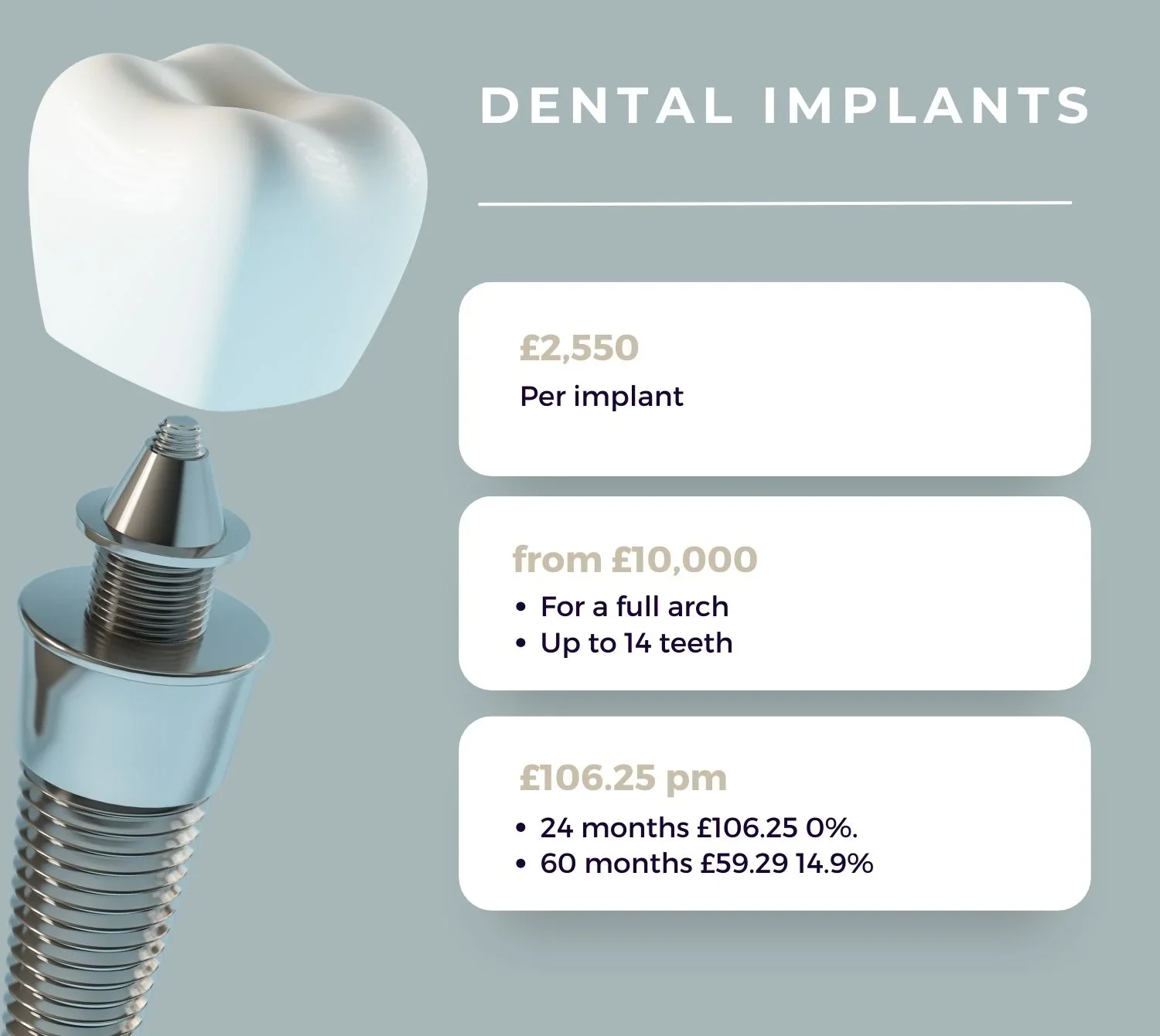
Typical private dental implant cost UK can range from £2,000 to £2,500 per implant. This includes the cost of the implant itself, surgical placement, abutment (the connector between the implant and crown), and the crown. In contrast, the NHS Band 3 charge is significantly lower, but as previously mentioned, it’s challenging to qualify for NHS-funded implants.
What You Get for Each: Materials, Aftercare, and Guarantees
The higher private dental implant cost UK often reflects the use of premium materials, advanced technology, and more comprehensive aftercare. Private clinics may offer:
- A wider choice of implant brands and materials (e.g., titanium or zirconia implants).
- More advanced surgical techniques, such as guided implant placement.
- Extended aftercare and follow-up appointments.
- Guarantees or warranties on the implant and crown.
While NHS implants are of good quality, the range of options and level of aftercare may be more limited.
Why Private is the Only Option for Most People
For the vast majority of people in the UK, pursuing private dental implants is the only realistic option. Due to the strict eligibility criteria and limited availability of NHS-funded implants, most patients will need to seek treatment from a private dental clinic to restore their missing teeth with implants. However, dental tourism in Albania can help reduce the cost.
How Do You Apply for Dental Implants on the NHS?
Cluster keyword: how to apply for NHS dental treatment
If you believe you qualify for dental implants on NHS, understanding how to apply for NHS dental treatment is essential. The process involves several key steps.
Steps to Take If You Think You Qualify
If you are wondering “can NHS pay for my dental implants?” Here’s the steps to take if you think you qualify:
- Consult Your General Dentist: Discuss your situation with your NHS dentist and ask for their opinion on whether you meet the criteria for NHS-funded implants.
- Gather Documentation: Collect any relevant medical records, dental history, and evidence to support your case.
- Prepare a Statement: Write a personal statement explaining the impact of tooth loss on your life and why you believe dental implants are necessary.
Referral Process Via NHS Dentist
The next step is the referral process. The dental implant procedure may be fully covered with a dental tourism plan. The NHS dentist will need to refer you to a specialist oral surgeon or a consultant in restorative dentistry. The specialist will assess your case and determine if you meet the NHS criteria for dental implants.
Waiting Times and Assessment Panels
Be prepared for potentially long waiting times for NHS dental implant treatment. If the specialist oral surgeon or consultant in restorative dentistry thinks you may be a candidate for NHS dental implant treatment, your application will be presented to the NHS assessment panels, who will carefully consider each application for dental implant treatment based on their specific criteria and the NHS’ available financial resources.
Alternatives to Implants on the NHS
Cluster keyword: alternatives to dental implants NHS, dental bridges NHS
Given the limited availability of implants on the NHS, it’s important to be aware of alternatives to dental implants NHS, such as dental bridges NHS and dentures.
Dental Bridges
A dental bridge NHS is a fixed restoration that spans the gap created by one or more missing teeth. It consists of a false tooth (pontic) anchored to two adjacent teeth (abutments) that have been crowned. Bridges can be a suitable alternative to implants, but they do require altering the adjacent teeth.
Dentures
Dentures are removable appliances that replace missing teeth. They can be either full dentures (replacing all teeth in an arch) or partial dentures (replacing some teeth). Dentures are a more affordable option than implants, but they can be less stable and require more maintenance.
Comparative Cost and Suitability
The cost of alternatives to dental implants NHS is generally lower, with dentures being the most affordable option. However, implants offer superior stability, longevity, and aesthetics compared to bridges and dentures. The suitability of each option depends on individual factors such as:
- The number of missing teeth.
- The condition of adjacent teeth.
- The patient’s bone density.
- Their budget and preferences.
Common Questions About NHS Cost of Dental Implants
Cluster keyword: how much do dental implants cost UK, are dental implants available on NHS, dental implant procedure NHS
This section addresses some frequently asked questions related to the NHS cost of dental implants, including the dental implant procedure NHS and whether are dental implants available on NHS.
Are dental implants available on the NHS?
As mentioned earlier, dental implants are not routinely available on the NHS. They are typically only provided in cases of significant medical need, such as trauma or reconstructive surgery following cancer treatment.
Who qualifies for NHS dental implants?
Those who have experienced significant facial trauma resulting in tooth loss, individuals born with congenital dental abnormalities, and cancer patients requiring reconstructive surgery after tumor removal may be eligible for dental implants on the NHS.
How much is the typical NHS cost of a dental implant?
If approved for NHS dental implants, you will usually pay the Band 3 charge, which is £319.10 as of 2024 in England. However, this may not include all associated costs.
What are the private dental implant costs in the UK?
The private dental implant cost UK typically ranges from £2,000 to £2,500 per implant, including the implant, abutment, and crown. To offset costs, you can consider dental implants in Albania.
Why are dental implants rarely provided by the NHS?
Dental implants are rarely provided by the NHS due to the high cost of the procedure and the NHS’s limited budget, which prioritizes essential dental care for a wider population.
Can I pay privately to “top up” my NHS dental treatment and get implants?
Generally, topping up NHS dental treatment with private payments for implants is not permitted. You usually need to pursue private treatment entirely outside the NHS system.
How long is the wait for NHS dental implants if eligible?
Waiting times for NHS dental implants can be significant, often lasting several months or even years, depending on the availability of specialist services and funding in your area.
Are there cheaper alternatives to implants provided by the NHS?
Yes, cheaper alternatives such as dental bridges and dentures are available on the NHS. These options are more readily accessible and fall under lower cost bands.
Does the NHS cover aftercare or follow-up appointments for dental implants?
The NHS typically covers standard aftercare and follow-up appointments related to NHS-funded dental implants. However, any additional or specialized aftercare may not be included.
What documentation do I need for an NHS dental implant referral?
You will need detailed documentation about your dental history, medical conditions, evidence (X-rays and photographs) to support your case, and the impact of tooth loss on your life for an NHS dental implant referral.
Conclusion
Navigating the NHS cost of dental implants can be complex. While NHS-funded implants are an option for a select few, the strict eligibility criteria and long waiting times mean that most people in the UK will need to consider private treatment. Understanding the costs, alternatives, and application process is essential for making an informed decision. Consider the cost effective and high quality option of affordable dental implants in Albania with Albania Dental Implants.
Ready to explore your dental implant options? Contact Albania Dental Implants today for a free consultation and discover how we can help you achieve a confident, healthy smile!





