



Yes, food can get under All-on-4 implants, and understanding why this happens, the potential risks, and how to manage it is crucial for maintaining optimal oral health and the longevity of your investment. This comprehensive guide from Albania Dental Implants will explore these issues in detail and provide you with actionable steps to keep your All-on-4 implants clean, healthy, and comfortable. If you are considering all on 4 dental implants in Albania, understanding their maintenance is also important.
All-on-4 dental implants: How they work
To fully grasp the issue of food getting trapped, it’s essential to understand how All-on-4 dental implants function. The All-on-4 technique is a revolutionary approach to full-arch teeth replacement, using just four strategically placed dental implants to support a complete set of prosthetic teeth. This provides a stable, functional, and aesthetically pleasing alternative to traditional dentures.
What are All-on-4 dental implants?
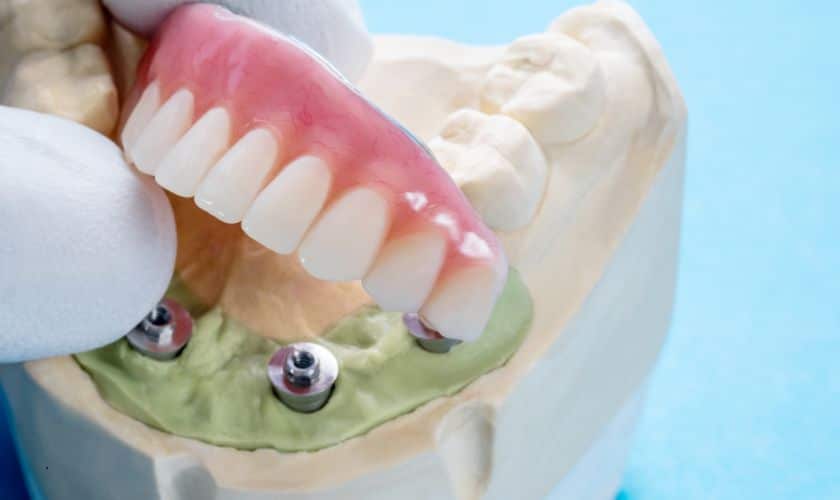
All-on-4 dental implants involve the placement of four titanium implants in the jawbone. These implants act as anchors for a full arch of replacement teeth. The back implants are typically angled to maximize contact with the available bone, which is especially beneficial for patients who have experienced bone loss. The prosthetic teeth are then attached to these implants, creating a fixed and permanent solution. Albania Dental Implants Services provides comprehensive solutions for patients seeking these type of dental procedures.
Benefits of All-on-4 implants
- Improved Stability: All-on-4 implants offer superior stability compared to traditional dentures, eliminating the slipping and discomfort often associated with removable appliances.
- Enhanced Chewing Function: With All-on-4 implants, you can enjoy a wider variety of foods without worrying about denture slippage or discomfort. Can I eat normally with All-on-4 dental implants? Absolutely!
- Natural Appearance: All-on-4 implants are designed to look and feel like natural teeth, restoring your smile and confidence.
- Bone Preservation: The implants stimulate the jawbone, preventing further bone loss and maintaining facial structure.
- Cost-Effective: In many cases, All-on-4 implants are a more cost-effective solution than replacing each individual tooth with an implant. The cost of dental implants in Albania makes it more economical.
Common concerns about All-on-4
While All-on-4 implants offer numerous advantages, some common concerns include the potential for food trapping, the need for meticulous oral hygiene, and the importance of regular professional maintenance. Addressing these concerns proactively can help ensure the long-term success of your All-on-4 implants.
Can food get under All-on-4 implants?
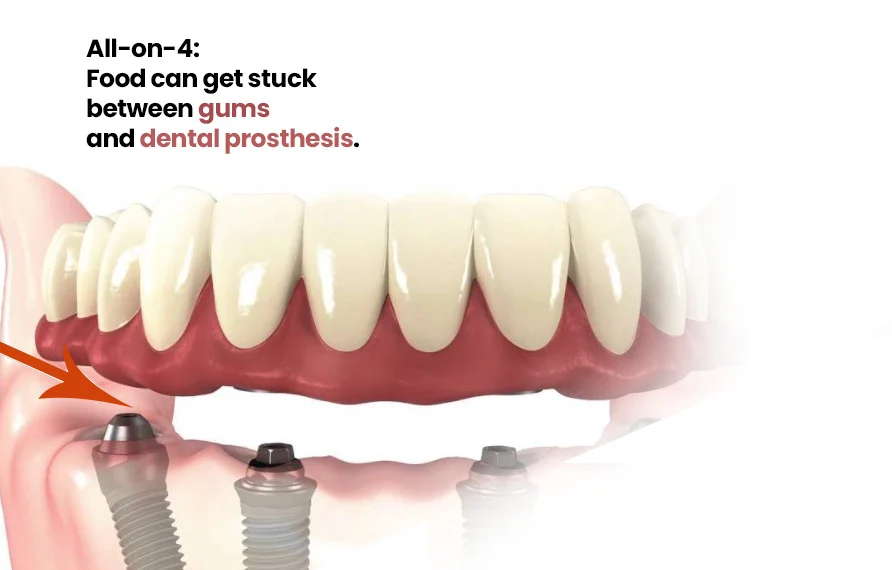
Yes, food can indeed get under All-on-4 implants. While the All-on-4 bridge is designed to fit snugly against the gums, small gaps can exist, especially where the bridge connects to the implants or along the gum line. This is a common issue with any type of dental bridge, including traditional dental bridges. The accumulation of food particles in these areas can lead to discomfort, bad breath, and potentially more serious complications if not addressed properly.
Why does food get trapped under full arch implants?
Several factors contribute to food getting trapped under full arch implants:
- Gaps and Spaces: Minor gaps can exist between the All-on-4 bridge and the gums, allowing food particles to enter.
- Bridge Design: The design of the bridge itself can create areas where food can easily become trapped, especially around the connection points to the implants.
- Gum Recession: Over time, gum recession can occur around the implants, creating larger spaces where food can accumulate.
- Improper Fit: If the All-on-4 bridge is not fitted precisely, it can lead to gaps and increased food trapping.
Typical scenarios where food gets trapped
Food trapping is more likely to occur after eating certain types of foods, such as:
- Small seeds (sesame, poppy)
- Stringy foods (celery, meat)
- Crumbly foods (crackers, biscuits)
Clinical explanation
From a clinical perspective, the area between the implant and the gum is known as the “emergence profile.” Maintaining a healthy emergence profile is crucial for preventing food impaction. The shape and fit of the All-on-4 bridge in this area directly impact the likelihood of food getting trapped. Regular check-ups with your dentist are essential to ensure the bridge is properly fitted and the emergence profile is well-maintained.
FAQ: Can food get under All-on-4 implants? Why does this happen?
Yes, food can get under All-on-4 implants. This occurs due to small gaps between the bridge and the gums, the design of the bridge, gum recession, or an improper fit. Regular oral hygiene practices and professional maintenance are necessary to address this issue.
Is food under All-on-4 implants dangerous?
Yes, food trapped under All-on-4 implants can be dangerous if left unaddressed. The accumulation of food particles creates an environment where bacteria can thrive, leading to several potential complications. Peri-implantitis prevention is critical for long-term success.
Associated risks of food impaction
- Gum Disease (Peri-implant mucositis and Peri-implantitis): Trapped food can lead to inflammation of the gums around the implants (peri-implant mucositis). If left untreated, this can progress to peri-implantitis, a more serious condition that involves bone loss around the implants.
- Infection: The presence of bacteria can cause infections in the surrounding tissues, leading to pain, swelling, and potential implant failure.
- Inflammation: Chronic inflammation can damage the tissues and bone supporting the implants, compromising their stability.
- Bad Breath (Halitosis): The decomposition of trapped food particles can cause persistent bad breath, which can be embarrassing and affect your social life. Can trapped food lead to bad breath or infection with All-on-4? Yes, trapped food can lead to bad breath and infection.
Long-term issues
If food impaction is not managed properly, it can lead to long-term issues such as:
- Bone Loss: Peri-implantitis can cause significant bone loss around the implants, potentially leading to their loosening and eventual failure.
- Implant Failure: In severe cases, the implants may become unstable and require removal.
- Systemic Health Problems: Chronic inflammation from peri-implant disease has been linked to systemic health problems, such as cardiovascular disease and diabetes.
FAQ: Is food under All-on-4 implants dangerous? What are symptoms of trapped food?
Yes, food under All-on-4 implants can be dangerous, leading to gum disease, infection, and bone loss. Symptoms of trapped food include persistent bad breath, gum inflammation, discomfort, and a foul taste in the mouth.
Cleaning All-on-4 implants: Best practices
Proper oral hygiene is essential for maintaining the health and longevity of your All-on-4 implants. Cleaning All-on-4 implants needs to be a daily priority. A consistent and thorough cleaning routine will help prevent food trapping, reduce the risk of infection, and keep your implants functioning optimally. All-on-4 maintenance is key to the success of the procedure.
Step-by-step guide to cleaning All-on-4 implants
Here’s a step-by-step guide to effectively clean your All-on-4 implants:
- Brush After Every Meal: Use a soft-bristled toothbrush and a low-abrasive toothpaste to gently brush around the implants and along the gum line. Pay special attention to the areas where the bridge connects to the implants. What is the best toothpaste for All-on-4 implants? A low-abrasive, fluoride toothpaste is recommended.
- Use Interdental Brushes: Interdental brushes are small, cone-shaped brushes that can reach into the tight spaces between the bridge and the gums. Gently insert the brush and move it back and forth to remove trapped food particles and plaque.
- Incorporate an Oral Irrigator (Water Flosser): An oral irrigator, also known as a water flosser, uses a stream of pulsating water to flush out food particles and bacteria from under the All-on-4 bridge. Aim the water stream at the gum line and gently move it along the entire arch.
- Use a Proxy Brush: A proxy brush has a small head and is great for cleaning hard-to-reach areas around the implants.
- Rinse with an Antibacterial Mouthwash: After brushing and flossing, rinse your mouth with an antibacterial mouthwash to kill any remaining bacteria and freshen your breath.
Recommended oral hygiene products for All-on-4 implants
- Soft-Bristled Toothbrush: Essential for gentle yet effective cleaning.
- Low-Abrasive Toothpaste: Prevents scratching the surface of the bridge.
- Interdental Brushes: Reach into tight spaces for thorough cleaning.
- Oral Irrigator (Water Flosser): Flushes out food particles and bacteria.
- Antibacterial Mouthwash: Kills bacteria and freshens breath.
Best practices for oral hygiene with implants include using the right tools.
FAQ: How do you clean under All-on-4 dental implants? What happens if not cleaned properly? Bad breath/infection?
To clean under All-on-4 implants, brush after every meal, use interdental brushes, incorporate an oral irrigator, and rinse with an antibacterial mouthwash. If not cleaned properly, trapped food can lead to bad breath, gum disease, infection, bone loss, and implant failure.
Professional maintenance and when to see a dentist
In addition to a diligent at-home oral hygiene routine, regular professional maintenance is crucial for the long-term success of your All-on-4 implants. Professional cleaning for All-on-4 is a must. These visits allow your dentist and hygienist to assess the health of your implants, identify any potential problems early on, and provide specialized cleaning to remove plaque and tartar buildup that you may not be able to reach at home. All-on-4 aftercare tips always recommend regular professional check-ups.
Frequency of dental visits
The recommended frequency of professional cleanings for All-on-4 implants is typically every 3-6 months, depending on your individual needs and oral health status. Your dentist will advise you on the optimal schedule for your specific situation.
What hygienists do during professional cleanings
During a professional cleaning, your dental hygienist will:
- Assess Your Implants: Check the stability of your implants and evaluate the health of the surrounding tissues.
- Remove Plaque and Tartar: Use specialized instruments to remove plaque and tartar buildup from around the implants and under the bridge.
- Clean Under the Bridge: Use special tools to clean under the All-on-4 bridge, removing any trapped food particles and bacteria.
- Polish Your Teeth: Polish the surface of your prosthetic teeth to remove stains and keep them looking their best.
- Provide Oral Hygiene Instructions: Offer personalized advice and guidance on how to improve your at-home oral hygiene routine.
When to see a dentist
It’s important to see your dentist promptly if you experience any of the following symptoms:
- Persistent bad breath
- Gum inflammation or bleeding
- Discomfort or pain around the implants
- Loose implants
- Changes in your bite
FAQ: How often should All-on-4 be professionally cleaned? When to see a dentist?
All-on-4 implants should be professionally cleaned every 3-6 months. See your dentist if you experience persistent bad breath, gum inflammation, discomfort, loose implants, or changes in your bite. When should you see your dentist if you suspect food is stuck? Schedule an appointment as soon as possible.
Common All-on-4 food trap problems and solutions
Even with diligent oral hygiene and regular professional maintenance, some individuals may still experience persistent food trapping under their All-on-4 implants. Common problems with All-on-4 often include food getting stuck. In these cases, it’s important to explore potential solutions with your dentist.
Troubleshooting bridge fit and adjustments
One of the most common causes of food trapping is an ill-fitting All-on-4 bridge. If the bridge doesn’t fit snugly against the gums, it can create gaps where food particles can easily accumulate. In these cases, your dentist may recommend adjustments to the bridge to improve its fit. Can the fit of the All-on-4 bridge be adjusted to reduce food trapping? Yes, the fit of the All-on-4 bridge can often be adjusted to minimize food trapping.
Repair options
Over time, the All-on-4 bridge can become damaged or worn, which can also contribute to food trapping. Cracks, chips, or loose connections can create areas where food particles can easily enter. In these cases, your dentist may recommend repairing or replacing the bridge. Full mouth reconstruction in Albania is a good option for patients with severe wear and tear or failing dental work.
Comparison to other restorations
Compared to traditional dentures, All-on-4 implants generally offer better stability and reduced food trapping. However, All-on-4 vs traditional dentures food issues is a key consideration. Regular dentures rely on suction and adhesives to stay in place, which can lead to movement and increased food accumulation under the appliance. Compared to individual dental crowns, All-on-4 implants may have a slightly higher risk of food trapping due to the bridge design. How does All-on-4 compare to regular dentures or crowns for food trapping? All-on-4 generally has less food trapping than dentures but may have slightly more than individual crowns.
Foods to avoid
To minimize food trapping, it’s advisable to avoid or limit certain types of foods, such as:
- Sticky foods (caramel, taffy)
- Chewy foods (gummy candies, tough meats)
- Small, hard foods (nuts, seeds)
Are there foods you should avoid with All-on-4 implants? Yes, sticky, chewy, and small, hard foods should be avoided.
FAQ: Can All-on-4 problems be fixed without removal? How do All-on-4 compare to dentures/crowns? Are there foods to avoid?
Minor All-on-4 problems can sometimes be fixed without removing the bridge through adjustments or repairs. All-on-4 generally has less food trapping than dentures but may have slightly more than individual crowns. Sticky, chewy, and small, hard foods should be avoided.
Summary: Keeping your All-on-4 healthy and comfortable
Maintaining the health and comfort of your All-on-4 implants requires a combination of diligent at-home oral hygiene, regular professional maintenance, and proactive problem-solving. By following these best practices, you can enjoy the long-term benefits of your All-on-4 implants and maintain a healthy, confident smile.
Action list for All-on-4 care
- Brush after every meal with a soft-bristled toothbrush and low-abrasive toothpaste.
- Use interdental brushes to clean between the bridge and gums.
- Incorporate an oral irrigator (water flosser) into your daily routine.
- Rinse with an antibacterial mouthwash.
- Schedule professional cleanings every 3-6 months.
- See your dentist promptly if you experience any problems.
- Avoid sticky, chewy, and small, hard foods.
Choosing Albania Dental Implants means investing in your long-term oral health. Our skilled professionals and commitment to patient care ensure a comfortable and successful experience with your All-on-4 implants. Contact Albania Dental Implants today to schedule a consultation and discover how we can help you achieve the smile you’ve always dreamed of! Remember to visit our clinic in Albania for zirconia implants in Albania and experience top-notch dental care.





