


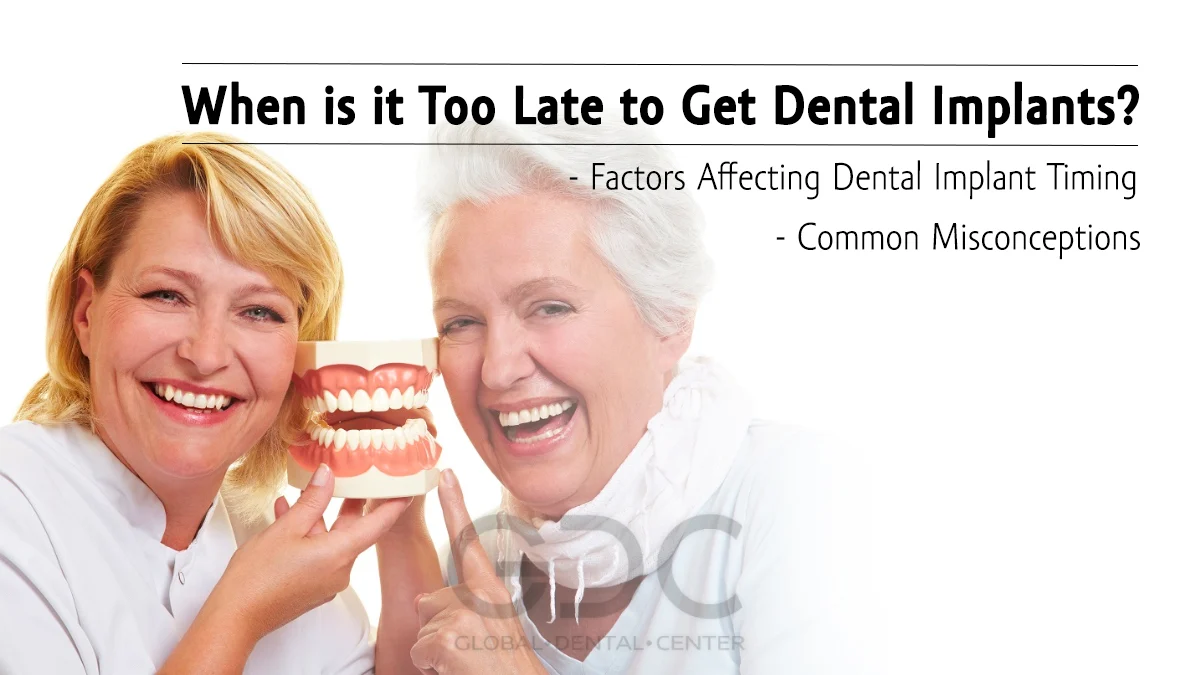

Can it be too late for dental implants? Many individuals wonder whether there is an age or health limit for getting dental implants, especially after long-term tooth loss, bone loss, or advancing age. At Albania Dental Implants, we believe that a healthy, functional smile is achievable for most, and we’re here to address those concerns, explore the factors that determine candidacy, and outline potential solutions for restoring your oral health. Whether you’re in your senior years or have faced challenges like bone loss, this guide will provide you with the information needed to make informed decisions about dental implants in Albania and explore our dental tourism in Albania options.
Age Limits and Dental Implants
When considering age limit for dental implants and the possibility of dental implants for older adults, it’s essential to debunk common misconceptions. There is generally no upper age limit for dental implants. The primary factor determining candidacy is overall health, not chronological age. At Albania Dental Implants, we focus on assessing individual health conditions and tailoring treatment plans accordingly. With quality services for Albania Dental Implants.
How Common are Implants for Seniors?
Dental implants are increasingly common among seniors. As dental technology advances, more older adults are benefiting from this long-lasting tooth replacement option. A study published in the Journal of Oral Implantology found that implant success rates in healthy older adults are comparable to those in younger patients. The key is a thorough evaluation to ensure the patient’s overall health is suitable for surgery and healing. At our dental clinic in Albania, we regularly treat patients of all ages, providing personalized care to ensure the best possible outcomes.
Health Considerations Versus Chronological Age
While age itself isn’t a barrier, certain health conditions more prevalent in older adults can affect implant eligibility. These include diabetes, osteoporosis, and cardiovascular diseases. However, these conditions don’t automatically disqualify someone from getting implants. With proper management and control, many individuals with these health issues can still be excellent candidates. Our team in Albania Dental Implants Services works closely with patients to assess and manage these factors. We conduct comprehensive medical history reviews and may collaborate with your primary care physician to ensure your safety and success.
It’s also important to consider lifestyle factors such as smoking, which can significantly impact healing and implant success. We encourage patients to quit smoking before and after implant placement to maximize their chances of a positive outcome. Overall, the decision to proceed with dental implants is based on a holistic assessment of your health profile, rather than simply your age.
The Role of Bone Loss and Timing
Bone loss and dental implants are interconnected, and the timing of treatment plays a crucial role in the success of the procedure. Delayed dental implant treatment can lead to increased bone resorption, making implant placement more challenging. At Albania Dental Implants, we emphasize the importance of addressing tooth loss promptly to preserve bone density and improve implant candidacy.
How Bone Loss Affects Implant Candidacy
When a tooth is lost, the surrounding bone no longer receives stimulation, leading to gradual bone loss. This can compromise the stability and support required for dental implants. If significant bone loss has occurred, the jawbone may not be thick or dense enough to properly anchor the implant. Fortunately, advancements in dental technology have provided solutions for patients with bone loss.
Options for Patients with Significant Bone Loss
For individuals with insufficient bone volume, procedures like bone grafting in Albania and sinus lifts can help restore the necessary support for implants. Bone grafting involves transplanting bone tissue to the jawbone to increase its density and volume. A sinus lift is a surgical procedure that elevates the sinus membrane to create space for bone grafting in the upper jaw. At Albania Dental Implants, we offer both bone grafting and sinus lift in Albania to improve implant success rates in patients with bone loss.
Why Acting Sooner is Sometimes Better
While bone grafting and sinus lifts are effective solutions, acting sooner rather than later is generally recommended. The longer you wait after tooth loss, the more bone loss you may experience, potentially requiring more extensive and costly procedures. Additionally, prolonged tooth loss can affect the alignment of adjacent teeth and lead to bite problems. By addressing tooth loss promptly, you can minimize bone loss, simplify the implant process, and maintain optimal oral health.
If you’ve experienced tooth loss and are concerned about bone loss, we encourage you to schedule a consultation with our team in Albania. We can assess your bone density, discuss treatment options, and develop a personalized plan to restore your smile and oral function.
Health Factors and Implant Suitability
When evaluating candidacy for dental implants, health requirements for dental implants are paramount. While age is not the primary determinant, certain medical conditions can significantly affect implant success rates by age. At Albania Dental Implants, we prioritize patient safety and carefully assess each individual’s health status to ensure the best possible outcome.
Medical Conditions That Affect Implant Eligibility
Several medical conditions can impact implant eligibility and success. Diabetes, if poorly controlled, can impair healing and increase the risk of infection. Osteoporosis, a condition characterized by weakened bones, can affect the jawbone’s ability to support implants. Cardiovascular diseases, such as heart disease and high blood pressure, may require special precautions during surgery. Autoimmune diseases like rheumatoid arthritis and lupus can also affect healing and implant integration. Furthermore, patients taking bisphosphonates, medications used to treat osteoporosis, may have an increased risk of jawbone complications. It’s essential to disclose your complete medical history and any medications you’re taking to our team in Albania. We’ll work closely with your physician to manage any potential risks and optimize your health for implant surgery.
Why Overall Health is More Important Than Age
While age can sometimes correlate with an increased risk of certain health conditions, overall health is a more accurate predictor of implant success. A healthy 70-year-old with well-managed medical conditions may be a better candidate than a less healthy 50-year-old. At Albania Dental Implants, we focus on optimizing your health before proceeding with implant treatment. This may involve managing diabetes, improving bone density, or adjusting medications.
Medication and Healing Concerns
Certain medications can interfere with healing and implant integration. Blood thinners, for example, can increase the risk of bleeding during and after surgery. Immunosuppressants, used to treat autoimmune diseases, can impair the body’s ability to heal and fight infection. It’s crucial to inform our team about all medications you’re taking, including over-the-counter drugs and supplements. We may need to adjust your medication regimen or take additional precautions to ensure proper healing and implant success. Our priority is your safety and well-being throughout the entire implant process. We’ll provide detailed instructions on pre- and post-operative care, including medication management and wound care, to minimize the risk of complications.
Alternative Solutions if Implants Aren’t Feasible
Even if dental implants aren’t the right choice, there are still excellent alternatives to dental implants for restoring your smile and oral function. At Albania Dental Implants, we offer a range of options to meet your individual needs and preferences. Our goal is to help you achieve a confident, healthy smile, regardless of your candidacy for implants.
What if You Are Not a Candidate?
If you’re not a candidate for dental implants due to health reasons, bone loss, or other factors, don’t despair. Several effective alternatives can provide a functional and aesthetic solution. These include dentures, bridges, and mini-implants. Each option has its own advantages and disadvantages, and the best choice for you will depend on your specific circumstances.
Dentures
Dentures are removable appliances that replace missing teeth and surrounding tissues. They can be either full (replacing all teeth in an arch) or partial (replacing some teeth). Dentures are a more affordable alternative to dental implants and can be fabricated relatively quickly. However, they can be less stable than implants and may require adjustments over time. At Albania Dental Implants, we offer custom-made dentures that are designed for optimal comfort, fit, and aesthetics. We’ll work with you to create a denture that looks natural and functions well.
Bridges
Dental bridges are fixed appliances that span the gap created by one or more missing teeth. A traditional bridge consists of a false tooth (pontic) anchored to adjacent teeth (abutments) that have been crowned. Bridges are a more stable alternative to dentures but require altering the adjacent teeth. At Albania Dental Implants, we offer various types of bridges, including traditional bridges, cantilever bridges, and resin-bonded bridges. We’ll assess your individual needs and recommend the most appropriate type of bridge for your situation.
Mini-Implants
Mini dental implants are narrower than traditional dental implants and are often used to stabilize dentures. They are less invasive than traditional implants and can be placed with minimal surgery. While mini-implants are not suitable for replacing individual teeth, they can provide excellent support for dentures, improving their stability and function. At Albania Dental Implants, we can evaluate whether mini-implants are a viable option for stabilizing your dentures. We have vast experience in cosmetic dentistry in Albania.
Pros and Cons of Alternatives
- Dentures:
- Pros: Affordable, non-surgical, can replace multiple teeth
- Cons: Less stable than implants, may require adjustments, can affect taste and speech
- Bridges:
- Pros: More stable than dentures, fixed appliance, natural-looking
- Cons: Requires altering adjacent teeth, may not be suitable for large gaps, can be more expensive than dentures
- Mini-Implants:
- Pros: Less invasive than traditional implants, can stabilize dentures, relatively affordable
- Cons: Not suitable for replacing individual teeth, may not be as stable as traditional implants
Frequently Asked Questions
Here we address some frequently asked questions to provide you with a clearer understanding of dental implants and their suitability for various situations. We provide services for Albania Dental Implants Services.
Is there an age when you are too old for dental implants?
No, there is generally no upper age limit for dental implants. The decision to proceed with implants is based on overall health, not chronological age. As long as you are healthy enough to undergo a routine dental procedure, you may be a candidate for implants. At Albania Dental Implants, we evaluate each patient individually to determine their suitability for implant treatment. The question how long do dental implants last?, can be answered easily. They can last a lifetime with proper care.
Can you get dental implants if you’ve had missing teeth for years?
Yes, you can still get dental implants even if you’ve had missing teeth for years. However, prolonged tooth loss can lead to bone loss in the jaw, which may require bone grafting before implant placement. Our team at Albania Dental Implants can assess your bone density and recommend appropriate treatment options to restore your smile and oral function.
What happens if you wait too long for dental implants?
Waiting too long for dental implants can lead to several consequences, including bone loss, shifting of adjacent teeth, bite problems, and decreased self-confidence. While bone grafting can address bone loss, acting sooner rather than later is generally recommended to minimize complications and improve implant success rates. Our recommendation is for patients to get in touch to contact Albania Dental Implants for futher advice.
How do doctors decide if you’re suitable for implants?
Doctors assess implant suitability based on a thorough evaluation of your medical history, oral health, and bone density. This may involve a physical examination, X-rays, CT scans, and a review of your medications. Factors such as diabetes, osteoporosis, smoking, and certain medications can affect implant eligibility and success. At Albania Dental Implants, we conduct comprehensive evaluations to ensure patient safety and optimize implant outcomes.
Are dental implants as successful in older adults as in younger people?
Yes, dental implants can be just as successful in older adults as in younger people, provided they are in good overall health. Studies have shown that implant success rates in healthy older adults are comparable to those in younger patients. However, certain age-related health conditions may require special precautions and management. At Albania Dental Implants, we tailor treatment plans to meet the unique needs of each patient, regardless of age.
Does bone grafting always work for elderly patients?
Bone grafting can be successful in elderly patients, but the outcome depends on several factors, including the patient’s overall health, the extent of bone loss, and the type of bone graft used. While bone grafting can significantly improve implant candidacy, it’s not always successful in every case. We perform bone grafting in Albania on a regular basis.
Are there health risks with dental implants in older age?
While dental implants are generally safe, there are potential health risks associated with any surgical procedure, particularly in older adults. These risks may include infection, bleeding, nerve damage, and complications related to underlying health conditions. However, with proper planning, precautions, and post-operative care, these risks can be minimized. At Albania Dental Implants, we prioritize patient safety and take every measure to ensure a smooth and successful implant experience.
What are my options if implants are not possible?
If dental implants are not possible due to health reasons, bone loss, or other factors, there are alternative options for restoring your smile and oral function. These may include dentures, bridges, and mini-implants. Our team at Albania Dental Implants can discuss these alternatives with you and help you choose the best option for your individual needs and preferences. What is the best alternative to dental implants?, varies depending on the situation.
Next Steps: How to Find Out if You’re a Candidate
The best way to determine if you’re a candidate for dental implants is to schedule a consultation with a qualified dental professional. At Albania Dental Implants, we offer comprehensive consultations to assess your oral health, discuss your goals, and develop a personalized treatment plan.
What to Expect at a Dental Implant Consultation
During your consultation, our team will conduct a thorough examination of your teeth, gums, and jawbone. We’ll review your medical history, discuss any health conditions or medications that may affect implant eligibility, and answer any questions you may have. We’ll also take X-rays and/or CT scans to assess your bone density and identify any potential issues. Based on this information, we’ll determine if you’re a good candidate for dental implants and recommend the most appropriate treatment options.
What Tests or Imaging are Involved
The tests and imaging involved in a dental implant consultation may include:
- X-rays: To assess the health of your teeth, gums, and jawbone.
- CT scans: To provide a detailed 3D view of your jawbone and identify any potential issues, such as nerve location or sinus proximity.
- Dental impressions: To create a model of your teeth for planning purposes.
- Photographs: To document your smile and facial features for aesthetic planning.
Questions to Ask Your Dentist or Specialist
Here are some questions you may want to ask your dentist or specialist during your dental implant consultation:
- Am I a good candidate for dental implants?
- What are the benefits and risks of dental implants?
- What type of implants do you recommend for me?
- Will I need bone grafting or any other preliminary procedures?
- How long will the implant process take?
- What is the cost of dental implants?
- What are my payment options?
- What is the success rate of dental implants in your practice?
- What type of follow-up care will I need?
At Albania Dental Implants, we’re committed to providing you with the information and support you need to make informed decisions about your oral health. Schedule a consultation today to discover how dental implants can transform your smile and improve your quality of life. By choosing us, you are opting for a quality service, for example a full mouth reconstruction in Albania