



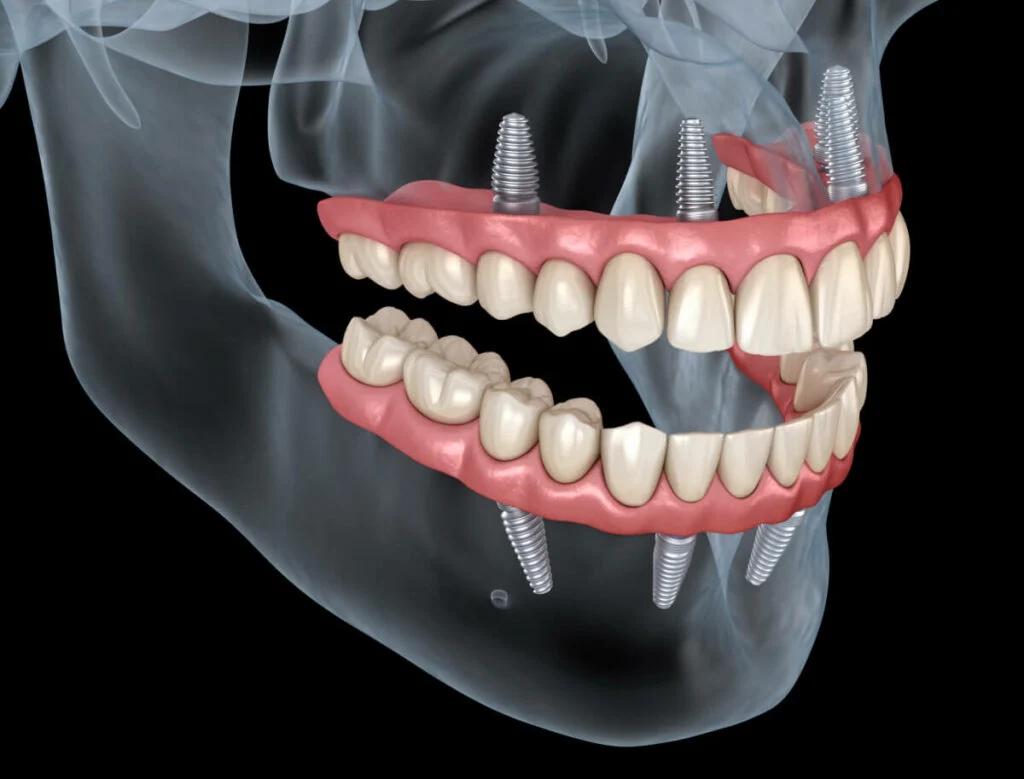

Can you chew gum with All-on-4 implants? This is a common question among individuals who have chosen this innovative dental restoration solution. Understanding the guidelines around chewing gum, especially chewing gum after All-on-4 surgery, is crucial for ensuring the longevity and success of your implants. This comprehensive guide will explore the safety, risks, and recommendations associated with chewing gum while having All-on-4 implants, helping you make informed decisions about your oral health and enjoy life after All-on-4 dental implants.
What Are All-on-4 Implants?
All-on-4 dental implants represent a revolutionary approach to full arch implants, offering a fixed and stable alternative to traditional dentures. This innovative technique involves placing four dental implants in the jawbone to support a full set of teeth. Unlike traditional methods that might require six or more implants, the All-on-4 system maximizes the use of available bone, often eliminating the need for bone grafting in Albania. This can be particularly beneficial for patients who have experienced bone loss over time. The result is a functional, aesthetically pleasing smile that closely mimics the look and feel of natural teeth.
How All-on-4 Works
The All-on-4 procedure begins with a thorough evaluation of the patient’s oral health, including X-rays and CT scans to assess bone density and structure. The implants are strategically placed – two vertically in the front and two angled in the back – to provide maximum support and stability for the prosthetic arch. This angled placement is key to avoiding anatomical structures like sinuses and nerves, often negating the necessity of more invasive procedures like sinus lift in Albania. Once the implants are in place, a temporary set of teeth is attached, allowing the patient to immediately enjoy improved function and aesthetics. After a healing period of a few months, the permanent prosthetic arch is securely fastened to the implants, providing a long-lasting and reliable solution.
Advantages Over Traditional Dentures
Compared to traditional dentures, All-on-4 implants offer numerous advantages. They provide superior stability, eliminating the slipping and discomfort often associated with dentures. All-on-4 implants also stimulate bone growth, preventing further bone loss and maintaining facial structure. Patients with All-on-4 implants experience improved chewing ability, allowing them to enjoy a wider variety of foods. Furthermore, All-on-4 implants are easier to maintain than dentures, requiring only regular brushing and flossing, similar to natural teeth. Many patients also find that the chewing experience with implants versus traditional dentures is much more comfortable and natural. Albania Dental Implants Services offer state-of-the-art All-on-4 procedures, ensuring you receive the best possible care and results.
Eating and Chewing with All-on-4 Implants
One of the most significant benefits of All-on-4 implants is the restoration of chewing ability. With All-on-4, you can eat many foods. Unlike dentures, which can limit dietary choices, All-on-4 implants provide a stable and secure foundation for biting and chewing, allowing patients to enjoy a wider variety of foods. However, it’s essential to follow certain dietary guidelines, especially during the initial healing period, to ensure the long-term success of the implants. This includes eating restrictions with dental implants and knowing the best foods for All-on-4 implants.
All-on-4 Chewing Ability
All-on-4 implants are designed to closely mimic the function of natural teeth. The implants fuse with the jawbone through a process called osseointegration, providing a strong and stable base for chewing. This stability allows patients to bite with greater force and confidence compared to wearing dentures. The improved chewing ability not only enhances the enjoyment of food but also aids in digestion and overall nutrition.
Foods You Can Eat with Implants
After the initial healing period, patients with All-on-4 implants can typically enjoy most foods. However, it’s advisable to gradually reintroduce harder or chewier foods to allow the implants to fully integrate with the bone. Some recommended foods include:
- Soft foods like yogurt, mashed potatoes, and soup during the initial healing phase
- Cooked vegetables and fruits
- Lean proteins such as fish and chicken
- Pasta and rice
It’s important to cut food into smaller pieces and chew carefully, especially when first transitioning back to a regular diet.
Best Foods for New Implant Wearers
During the first few weeks after All-on-4 implant surgery, it’s crucial to stick to a soft diet to avoid putting excessive pressure on the implants. Some of the best foods for new implant wearers include:
- Smoothies and protein shakes
- Applesauce and pureed fruits
- Soft cheeses and puddings
- Broths and creamy soups
These foods require minimal chewing and are gentle on the gums and implants, promoting optimal healing. Remember to avoid extremely hot or cold foods, as they can cause sensitivity.
Can You Chew Gum with All-on-4 Implants?
The question of whether you can chew gum with All-on-4 implants is a complex one. While it might seem like a harmless habit, chewing gum after All-on-4 can pose certain risks, especially during the initial healing phase. Dentist recommendations often vary, and it’s crucial to understand the potential implications before indulging. The answer depends on several factors, including how long to wait after surgery and the types of gum are (not) safe.
Chewing Gum After All-on-4: Is It Safe?
In the immediate aftermath of All-on-4 implant surgery, chewing gum is generally discouraged. The implants need time to integrate with the jawbone, and excessive chewing can put undue stress on the healing tissues. The safety of chewing gum largely depends on the stage of healing and the type of gum. While some dentists may eventually approve sugar-free gum, sticky gum is almost always a no-go due to the risks involved.
What Types of Gum Are (Not) Safe?
If your dentist gives the green light to chew gum, opt for sugar-free options to protect your implants from decay. Sugar-free gum helps stimulate saliva production, which can neutralize acids and prevent bacterial buildup. However, even sugar-free gum isn’t entirely risk-free. Avoid sticky gum, as it can adhere to the implants and prosthesis, potentially causing damage or loosening. Additionally, be mindful of ingredients to avoid with dental implants, such as artificial sweeteners or additives that may cause irritation. Choosing the right type of gum is an important part of dental implant aftercare.
When Is It Safe to Start Chewing Gum Again?
The healing timeline after All-on-4 implant surgery varies from person to person, but it generally takes several months for the implants to fully integrate with the bone. Most dentists recommend waiting at least three months before considering chewing gum. However, it’s crucial to get your dentist’s guidelines and individual assessment before resuming this habit. Signs of readiness may include complete healing of the gums, no pain or discomfort when chewing, and a stable, well-integrated prosthesis.
Risks of Chewing Gum with Implants
Chewing gum can pose several risks to All-on-4 implants. Potential damage to prosthesis or abutments is a significant concern, as excessive chewing can cause wear and tear or even fracture the prosthetic arch. Loosening of the implants is another risk, as the constant pressure can compromise the osseointegration process. Oral hygiene concerns also arise, as gum residue can accumulate around the implants, promoting bacterial growth and inflammation. It’s important to understand how chewing gum affect oral hygiene with All-on-4.
Foods and Habits to Avoid with All-on-4
To ensure the longevity and success of your All-on-4 implants, it’s important to be mindful of foods to avoid and habits to avoid. Certain foods and habits can put undue stress on the implants, potentially leading to damage or failure. Being proactive about protecting your implants can significantly extend their lifespan and maintain your oral health. This includes knowing what not to eat with All-on-4 implants and being aware of the risks of chewing sticky or hard foods with implants.
List of Foods to Avoid
While All-on-4 implants provide excellent chewing ability, some foods are best avoided to prevent damage or complications. These include:
- Hard candies and nuts: These can put excessive pressure on the implants and prosthesis, potentially causing fractures or loosening.
- Sticky and chewy foods: Taffy, caramel, and similar foods can adhere to the implants and prosthesis, making them difficult to clean and increasing the risk of bacterial growth.
- Crunchy snacks: Popcorn, chips, and similar snacks can get lodged between the implants and gums, leading to inflammation and infection.
- Tough meats: Steak, jerky, and other tough meats require significant chewing force, which can strain the implants and prosthesis.
Chewing Ice and Using Teeth as Tools
In addition to avoiding certain foods, it’s important to break habits that can put stress on your All-on-4 implants. Chewing ice can cause fractures or cracks in the prosthesis, while using teeth as tools (e.g., opening bottles or tearing packages) can lead to loosening or damage. Being mindful of these habits and avoiding them can help protect your implants and ensure their long-term success.
Oral Hygiene Tips for All-on-4 Implant Patients
Maintaining excellent oral hygiene is crucial for the health and longevity of All-on-4 implants. Keeping implants clean helps prevent bacterial buildup, inflammation, and infection, which can compromise the stability and function of the implants. A consistent and thorough oral hygiene routine is essential for preserving your investment and enjoying a healthy, confident smile. Oral hygiene for All-on-4 is slightly different than natural teeth, so it’s important to understand the best practices. It also involves cleaning gum residue and going to regular dental check-ups.
Why Oral Hygiene Matters
Proper oral hygiene is the cornerstone of successful All-on-4 implants. Bacteria and plaque can accumulate around the implants, leading to inflammation of the gums (peri-implant mucositis) and, if left untreated, bone loss around the implants (peri-implantitis). Peri-implantitis is a serious condition that can ultimately lead to implant failure. Regular brushing, flossing, and professional cleanings are essential for preventing these complications and maintaining the health of your implants.
Cleaning Gum Residue
Food particles and gum residue can easily get trapped around All-on-4 implants, especially in hard-to-reach areas. It’s important to use specialized tools and techniques to effectively remove this debris. Some recommended methods include:
- Using a soft-bristled toothbrush to gently clean around the implants and prosthesis
- Flossing with interdental brushes or floss threaders to reach between the implants and under the prosthetic arch
- Using an oral irrigator (water flosser) to flush out debris and bacteria
Be sure to follow your dentist’s specific recommendations for cleaning your All-on-4 implants.
Dental Check-Ups
Regular dental check-ups are an essential part of maintaining All-on-4 implants. Your dentist can assess the health of your implants, identify any potential problems early on, and provide professional cleaning to remove stubborn plaque and tartar. During these appointments, your dentist may also adjust your prosthesis or recommend modifications to your oral hygiene routine to optimize the health of your implants. Albania Dental Implants provides comprehensive follow-up care and support to ensure the long-term success of your All-on-4 implants.
Dentist Recommendations and Best Practices
To ensure the best possible outcome with your All-on-4 implants, it’s crucial to follow dentist recommendations and best practices. These guidelines are based on clinical evidence and years of experience, and they can significantly impact the longevity and success of your implants. Seeking pro advice, finding alternative snacks, managing cravings for gum and reading patient testimonials can greatly help you in your All-on-4 implant journey.
Pro Advice
Your dentist is your best resource for personalized advice on caring for your All-on-4 implants. They can assess your individual needs and provide tailored recommendations on diet, oral hygiene, and lifestyle habits. Be sure to communicate openly with your dentist and ask any questions you may have about your implants. They can also offer guidance on alternative snacks if you’re struggling to manage cravings for gum.
Alternative Snacks
If you find yourself craving the sensation of chewing gum, consider alternative snacks that can satisfy your oral fixation without posing a risk to your All-on-4 implants. Some options include:
- Sugar-free mints or lozenges
- Small pieces of fruit or vegetables
- Chewing on a sugar-free ice pop
These alternatives can provide a similar sensory experience without the potential for damage or complications.
Managing Cravings for Gum
For some people, chewing gum is a deeply ingrained habit that can be difficult to break. If you’re struggling to manage cravings for gum, try these strategies:
- Identify the triggers that make you want to chew gum (e.g., stress, boredom, after meals)
- Find alternative ways to cope with these triggers (e.g., exercise, meditation, deep breathing)
- Keep healthy snacks or sugar-free mints on hand to satisfy oral cravings
- Seek support from friends, family, or a therapist
Patient Testimonials
Reading patient testimonials can provide valuable insights into the experience of living with All-on-4 implants. These stories can offer encouragement, practical tips, and a realistic perspective on the challenges and rewards of this treatment. Hearing from others who have successfully navigated the All-on-4 journey can help you feel more confident and prepared.
All-on-4 Implants vs. Dentures: Chewing Experience
One of the key factors to consider when choosing between All-on-4 implants and dentures is the chewing experience. While both options can restore the ability to eat, they offer significantly different levels of function and comfort. Comparing chewing with implants versus traditional dentures, dietary freedom and the overall experience can greatly influence your decision.
Comparison of Chewing with Implants Versus Traditional Dentures
All-on-4 implants provide a superior chewing experience compared to traditional dentures. The implants are anchored to the jawbone, providing a stable and secure base for biting and chewing. This stability allows patients to bite with greater force and confidence, enabling them to enjoy a wider variety of foods. Dentures, on the other hand, rest on the gums and can shift or slip during chewing, limiting dietary choices and causing discomfort.
Dietary Freedom
With All-on-4 implants, patients can typically enjoy most foods without restriction. They can bite into apples, chew steak, and eat crunchy snacks with confidence. Denture wearers, however, often need to avoid hard, sticky, or chewy foods to prevent dislodging or damaging their dentures. This dietary freedom can significantly improve the quality of life for All-on-4 implant patients.
Frequently Asked Questions
Here are answers to some frequently asked questions about chewing gum and All-on-4 implants:
Can you chew gum with All-on-4 implants?
Chewing gum is generally not recommended immediately after All-on-4 implant surgery. After the initial healing period and with your dentist’s approval, sugar-free gum may be permissible in moderation, but sticky gum should always be avoided.
Is it safe to chew gum after All-on-4 implant surgery?
The safety of chewing gum depends on the stage of healing and the type of gum. It’s best to wait until the implants have fully integrated with the bone and to choose sugar-free, non-sticky options.
How long should you wait before chewing gum with All-on-4?
Most dentists recommend waiting at least three months after surgery before considering chewing gum, but it’s important to get your dentist’s individual assessment.
What types of gum are safe for All-on-4 dental implants?
Sugar-free, non-sticky gum is the safest option, as it stimulates saliva production without posing a risk to the implants or prosthesis.
Does chewing gum damage All-on-4 implants or prosthesis?
Excessive or aggressive chewing can damage the implants or prosthesis, leading to fractures, loosening, or other complications.
What foods should you avoid with All-on-4 implants?
Avoid hard, sticky, chewy, and crunchy foods that can put excessive pressure on the implants or get lodged between the implants and gums.
What are the risks of chewing sticky or hard foods with implants?
Chewing sticky or hard foods can lead to fractures, loosening, inflammation, and infection around the implants.
How does chewing gum affect oral hygiene with All-on-4?
Gum residue can accumulate around the implants, promoting bacterial growth and inflammation if not properly cleaned.
Can chewing gum help or harm implant success?
Chewing gum can potentially harm implant success if it’s done too soon, too aggressively, or with the wrong type of gum. However, sugar-free gum in moderation may stimulate saliva production, which can be beneficial.
What do dentists recommend regarding chewing gum and dental implants?
Dentists generally recommend avoiding chewing gum immediately after surgery and waiting until the implants have fully integrated before considering it. They also advise choosing sugar-free, non-sticky options and chewing in moderation.
Summary: Is Chewing Gum with All-on-4 Implants Advisable?
In conclusion, whether chewing gum with All-on-4 implants is advisable depends on several factors. While it’s generally discouraged immediately after surgery, sugar-free, non-sticky gum may be permissible in moderation once the implants have fully integrated and with your dentist’s approval. It’s crucial to weigh the potential risks and benefits, follow your dentist’s recommendations, and prioritize excellent oral hygiene to ensure the long-term success of your All-on-4 implants.
If you’re considering All-on-4 dental implants, contact Albania dental implants reviews to learn more about our services and how we can help you achieve a healthy, confident smile. Our experienced team of dental professionals provides personalized care and state-of-the-art solutions to restore your oral health and improve your quality of life. Schedule a consultation today and take the first step toward a brighter, healthier future. Don’t hesitate to contact Albania dental implants for more information and to book your appointment.





