



The question “Can you chew gum with full mouth dental implants?” is a common concern for individuals exploring or living with dental implants. Full mouth dental implants are an increasingly popular solution for restoring smiles, but they also raise questions about food and lifestyle adjustments, with chewing gum being one of the most asked-about habits.
Understanding Full Mouth Dental Implants
Let’s explore what full mouth dental implants are, the types available, the dental implant restoration process, and how they differ from traditional dentures. Having a clear understanding of these aspects is crucial before considering lifestyle adjustments like chewing gum.
What are Full Mouth Dental Implants?
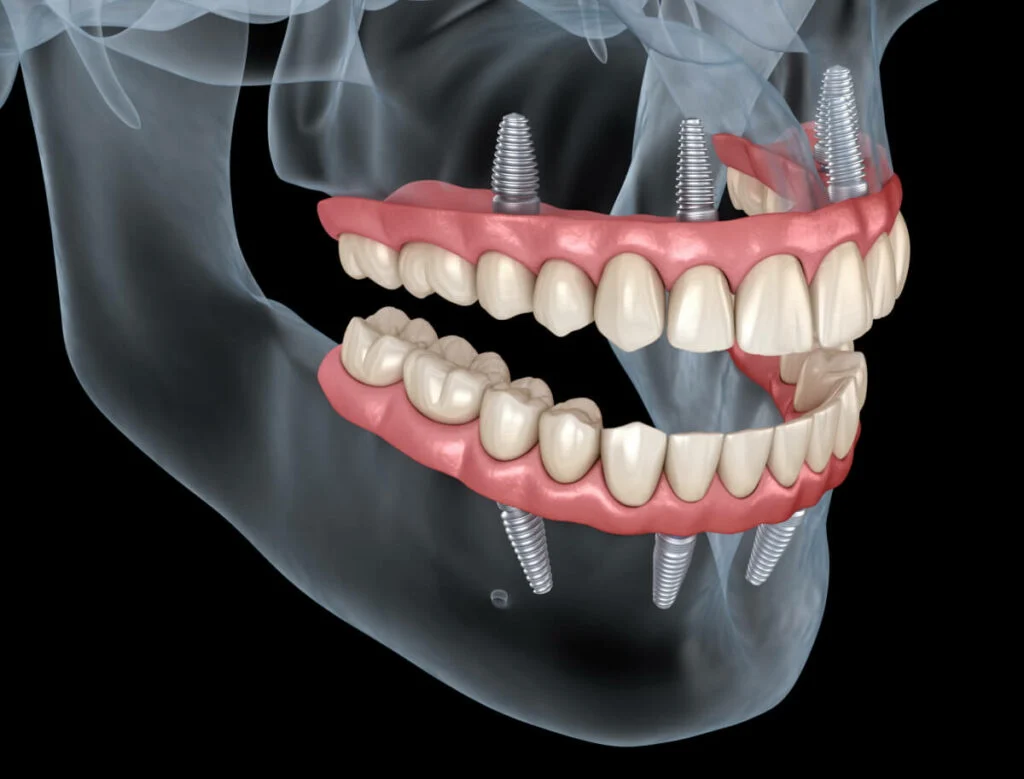
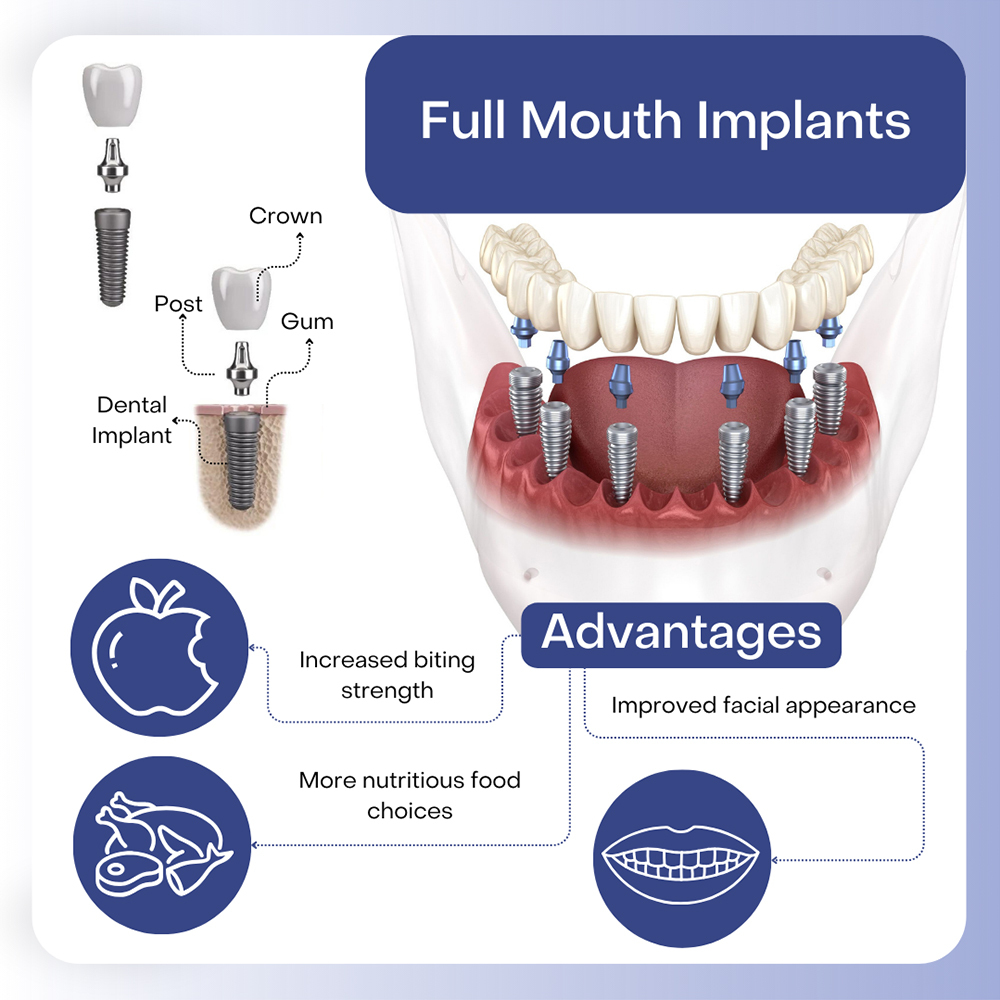
Full mouth dental implants, also known as full arch implants, are a comprehensive solution for replacing an entire set of teeth in either the upper or lower jaw, or both. Unlike traditional dentures, which rest on the gums, implants are surgically anchored into the jawbone, providing a stable and permanent foundation for replacement teeth. This involves placing multiple dental implants strategically along the jawbone, which then fuse with the bone over time through a process called osseointegration.
At Albania Dental Implants, we specialize in providing high-quality full mouth dental implant solutions tailored to each patient’s unique needs, including options for dental tourism in Albania.
Types of Dental Implants Used in Full Mouth Restorations
Several types of dental implants can be used for full mouth restorations, including:
- Traditional Implants: These are individual implants placed at various points along the jawbone.
- All-on-4 Implants: This technique uses just four implants to support an entire arch of teeth. The rear implants are strategically angled to maximize bone contact and stability, often avoiding the need for bone grafting.
- All-on-6 Implants: Similar to All-on-4, but uses six implants for added support and stability. This can be beneficial for patients with lower bone density or those who require a more robust restoration.
- Zirconia Implants: Made from a metal-free ceramic material, zirconia implants offer an aesthetic alternative to titanium implants. They are biocompatible and may be preferred by patients with metal sensitivities or those seeking a more natural-looking result.
Full Mouth Dental Implants vs. Traditional Dentures
Traditional dentures are removable appliances that rest on the gums. While they are a more affordable option initially, they come with several limitations compared to full mouth dental implants:
- Stability: Dentures can be unstable and may slip or move when speaking or eating, causing discomfort and embarrassment. Implants, on the other hand, are firmly anchored in the jawbone, providing excellent stability and support.
- Bone Loss: Dentures can accelerate bone loss in the jaw, as they do not stimulate the bone like implants do. Implants help to preserve bone density and prevent jawbone resorption.
- Dietary Restrictions: Denture wearers often have to avoid certain foods that are hard, sticky, or require significant chewing, limiting their dietary options. Implants restore the ability to eat a wider range of foods with confidence.
- Maintenance: Dentures require daily removal, cleaning, and soaking, which can be inconvenient. Implants are cared for like natural teeth with regular brushing, flossing, and dental check-ups.
The team at Albania Dental Implants will provide you with all the information you need about cost of dental implants in albania.
Chewing Habits with Dental Implants: What’s Safe and What’s Risky?
Let’s address common concerns about chewing with implants, including dental implant aftercare, safe foods, and food restrictions. Adjusting your chewing habits can significantly impact the longevity of your dental implants.
Typical Concerns About Chewing with Implants
After receiving dental implants, it’s natural to have concerns about chewing. Many patients worry about damaging their implants, experiencing discomfort, or dislodging the replacement teeth. Some common questions include:
- “Will I be able to eat my favorite foods again?”
- “How long will it take to get used to chewing with implants?”
- “Are there any foods I should avoid completely?”
Safe Foods for Dental Implant Patients
During the initial healing phase after implant placement (typically a few weeks to a few months), it’s essential to stick to a soft diet to avoid putting excessive pressure on the implants. Safe food choices include:
- Soups and broths
- Yogurt and smoothies
- Mashed potatoes
- Soft-cooked vegetables
- Scrambled eggs
- Fish
Foods to Avoid After Dental Implant Surgery
Certain foods and habits can be risky for dental implants, especially during the healing period. These include:
- Hard Foods: Nuts, hard candies, and ice can damage or fracture the replacement teeth.
- Sticky Foods: Taffy, caramel, and chewing gum can stick to the implants and be difficult to remove, increasing the risk of bacterial buildup.
- Chewy Foods: Tough meats, bagels, and certain breads can put excessive pressure on the implants, hindering osseointegration.
- Excessive Chewing: Habits like chewing on pencils or fingernails can also damage implants over time.
Is Chewing Gum Safe with Full Mouth Dental Implants?
Now, let’s directly address the main question: Can you chew gum with full mouth dental implants? We’ll explore the risks, expert opinions, and recommendations regarding gum and sticky foods.
Chewing Gum and Dental Implants: The Verdict
The general consensus among dentists is that chewing gum is not recommended for individuals with full mouth dental implants, especially during the initial healing phase. While fully integrated implants are strong, chewing gum introduces risks that can compromise their long-term stability.
Risks Associated with Chewing Gum
Several risks are associated with chewing gum when you have dental implants:
- Increased Pressure: The repetitive chewing motion can put excessive pressure on the implants and the surrounding bone, potentially leading to implant failure over time.
- Sticky Residue: Gum, especially regular gum, can leave a sticky residue that attracts bacteria and plaque, increasing the risk of peri-implantitis (inflammation around the implant).
- Potential for Loosening: The constant chewing action can, in rare cases, contribute to the loosening of the implant screws or the cement holding the replacement teeth in place.
- Jaw Muscle Strain: Excessive gum chewing can strain the jaw muscles, leading to discomfort or temporomandibular joint (TMJ) issues.
Sugar-Free vs. Regular Gum: Is There a Difference?
While sugar-free gum is generally better for oral health than regular gum (as it doesn’t contribute to tooth decay), it still poses risks for implant patients. The stickiness and chewing action remain the primary concerns, regardless of sugar content. Sugar free gum and implants, should be discussed with your dentist.
Impact on Oral Health and Implant Longevity
Let’s explain how gum chewing might affect oral hygiene and implant health, and provide guidance on best oral hygiene practices for implant patients. Following these practices is crucial for protecting your implants from damage.
Chewing Gum and Oral Hygiene
While some people believe that chewing gum can help freshen breath and remove food particles, it is not a substitute for proper oral hygiene practices. In fact, chewing gum can potentially hinder oral hygiene for implant patients. The sticky residue can trap bacteria and plaque, making it harder to keep the implants clean. Oral hygiene with dental implants is a must.
Best Oral Hygiene Practices for Implant Patients
Maintaining excellent oral hygiene is crucial for the long-term success and longevity of dental implants. Key practices include:
- Brushing: Brush your teeth at least twice a day with a soft-bristled toothbrush and fluoride toothpaste. Be gentle around the implant sites.
- Flossing: Floss daily to remove plaque and debris from between the teeth and around the implants. Use floss threaders or interdental brushes to reach difficult areas.
- Antimicrobial Mouthwash: Rinse with an antimicrobial mouthwash to kill bacteria and reduce inflammation.
- Regular Check-ups: Visit your dentist regularly for check-ups and professional cleanings. Your dentist can monitor the health of your implants and address any potential issues early on.
- Water Flosser: Consider using a water flosser to gently remove plaque and debris from around the implants and along the gumline.
Dental Implant Complications and Gum Chewing
Chewing gum can potentially contribute to dental implant complications, such as peri-implantitis. This condition, characterized by inflammation and bone loss around the implant, is a leading cause of implant failure. By avoiding gum chewing and maintaining excellent oral hygiene, you can significantly reduce the risk of such complications.
Frequently Asked Questions (FAQs) About Chewing Gum and Dental Implants
Here are detailed answers to some frequently asked questions about chewing gum and dental implants.
Is it safe to chew gum with full mouth dental implants?
Generally, it’s not recommended. While fully integrated implants are strong, the repetitive chewing motion and potential for sticky residue can increase the risk of complications. Is it safe to chew gum with full mouth dental implants, probably not.
What type of gum is best or safest if you have implants?
If you must chew gum, sugar-free gum is a better option than regular gum. However, it still carries risks. Consult your dentist for personalized recommendations. What type of gum is best or safest if you have implants, is best discussed with your dentist.
Can chewing gum damage or interfere with dental implants?
Yes, chewing gum can potentially damage or interfere with dental implants by putting excessive pressure on them, trapping bacteria, and potentially loosening the implant screws or cement. Can chewing gum damage or interfere with dental implants, yes it can.
How long after implant surgery can I resume chewing gum?
It’s best to avoid chewing gum altogether, especially during the initial healing phase. Even after full integration, it’s advisable to refrain from gum chewing. How long after implant surgery can I resume chewing gum, it is best to avoid it all together.
What are the oral hygiene considerations if I chew gum?
If you choose to chew gum, be extra diligent with your oral hygiene routine. Brush and floss thoroughly after chewing, and consider using an antimicrobial mouthwash. What are the oral hygiene considerations if I chew gum, increased brushing and antimicrobial mouthwash.
Are there better alternatives to gum for implant patients?
Yes, there are several better alternatives to gum for freshening breath and satisfying the urge to chew. Consider sugar-free mints, breath strips, or chewing on sugar-free xylitol candies. Are there better alternatives to gum for implant patients, consider sugar-free mints, breath strips, or chewing on sugar-free xylitol candies.
What should I do if chewing gum causes pain or implant movement?
If you experience any pain, discomfort, or implant movement while chewing gum, stop immediately and contact your dentist for an evaluation. What should I do if chewing gum causes pain or implant movement, stop immediately and contact your dentist.
Do implant specialists recommend chewing gum at all?
Most implant specialists do not recommend chewing gum for patients with dental implants, due to the potential risks and lack of oral health benefits. Do implant specialists recommend chewing gum at all, no they don’t.
Are sugar-free gums better for dental implants?
Yes, if you must chew gum, sugar-free options are better but still not ideal due to the pressure and stickiness factors. Are sugar-free gums better for dental implants, yes they are but it is still not ideal.
Alternatives to Chewing Gum with Full Mouth Dental Implants
Let’s suggest safe alternatives for freshening breath and satisfying the urge to chew, tailored for those with implants. Here’s a look at some options beyond chewing gum.
Safe Alternatives for Fresh Breath
Several implant-safe options can help you maintain fresh breath without compromising your implant health:
- Sugar-Free Mints: Mints can freshen your breath without the stickiness or chewing action of gum.
- Breath Strips: These dissolve quickly on the tongue, providing instant fresh breath without any residue.
- Antimicrobial Mouthwash: Rinsing with an antimicrobial mouthwash can kill bacteria and freshen breath.
- Tongue Scrapers: Using a tongue scraper can remove bacteria and debris from the surface of the tongue, reducing bad breath.
Satisfying the Urge to Chew
If you enjoy the sensation of chewing, consider these alternatives:
- Sugar-Free Xylitol Candies: Xylitol can help prevent tooth decay and freshen breath.
- Crunchy Fruits and Vegetables: Eating crisp apples, carrots, or celery can provide a satisfying chewing experience while also promoting oral health.
- Chewing on a Clean, Soft Cloth: This can provide a mild chewing sensation without the risks associated with gum.
If you are not sure about which one of these alternatives best fits your personal oral health needs, contact albania dental implants.
Professional Recommendations and Best Practices
Here’s a summary of leading expert/dental association guidance and actionable tips for patients. Following dentist advice dental implants is a must!
Leading Expert Guidance on Chewing Gum
The American Dental Association (ADA) generally recommends avoiding chewing gum with dental implants, especially during the initial healing phase. Most dentists and implant specialists echo this recommendation, citing the potential risks to implant stability and oral hygiene.
Actionable Tips for Patients with Dental Implants
Here are some actionable tips to help you maintain your dental implants and enjoy a healthy, confident smile:
- Follow your dentist’s post-operative instructions carefully.
- Maintain excellent oral hygiene practices.
- Avoid hard, sticky, and chewy foods.
- Refrain from chewing gum.
- Visit your dentist regularly for check-ups and cleanings.
- Consider safe alternatives for freshening breath and satisfying the urge to chew.
What are some post-implant lifestyle tips I should follow?
Following a smooth recovery and ensuring the longevity of your dental implants requires adopting a few key lifestyle adjustments. Prioritize maintaining excellent oral hygiene by brushing twice daily with a soft-bristled toothbrush, flossing daily, and using an antimicrobial mouthwash as recommended by your dentist.
Adjust your diet to avoid hard, sticky, or chewy foods that could damage or strain the implants. Attend regular dental check-ups for professional cleanings and monitoring. Additionally, avoid smoking and excessive alcohol consumption, as these can impair healing and increase the risk of implant failure. Finally, manage habits such as teeth grinding or clenching by using a nightguard to protect your implants from undue stress.
If you are interested about travelling from UK to Albania, in order to receive dental tourism in albania, we can assist you by contacting us.
What should I do if chewing gum causes discomfort or issues with my implants?
If chewing gum causes discomfort or issues with your implants, it’s essential to take immediate action to prevent further complications. Stop chewing gum right away and assess any symptoms you are experiencing, such as pain, swelling, or implant movement. Thoroughly clean the area around the implant to remove any sticky residue and reduce potential bacterial buildup.
Contact your dentist or implant specialist promptly to schedule an evaluation and discuss your concerns. Follow their guidance, which may include avoiding gum altogether, adjusting your oral hygiene routine, or seeking treatment if any issues are detected. By addressing discomfort early, you can ensure the long-term health and stability of your dental implants.
Are there specific foods and habits I should avoid with full mouth implants?
Yes, there are specific foods and habits you should avoid with full mouth implants to ensure their longevity and stability. Refrain from consuming hard, sticky, or chewy foods that could damage or strain the implants, such as nuts, caramel, and tough meats. Avoid habits like chewing on ice, pencils, or fingernails, as these can also cause harm.
Additionally, limit sugary and acidic foods and beverages, which can contribute to plaque buildup and implant complications. Finally, avoid smoking and excessive alcohol consumption, as these can impair healing and increase the risk of implant failure. Consult with your dentist or implant specialist for personalized dietary and lifestyle recommendations to support the health of your full mouth implants.
How do I maintain oral hygiene if I chew gum regularly?
If you choose to chew gum regularly, maintaining strict oral hygiene practices is crucial to minimize potential risks. Brush your teeth thoroughly after each chewing session, paying special attention to the areas around the implants to remove any sticky residue and plaque buildup. Use interdental brushes or floss threaders to clean between the implants and along the gumline.
Rinse with an antimicrobial mouthwash to further reduce bacteria. Schedule regular dental check-ups for professional cleanings and monitoring. Communicate openly with your dentist about your gum-chewing habits so they can provide tailored advice and adjust your hygiene routine accordingly. Remember, consistent and meticulous oral care is essential for preserving the health and longevity of your dental implants.
Conclusion
In conclusion, while the allure of chewing gum might be strong, it’s generally best to avoid it with full mouth dental implants. By prioritizing your oral hygiene, following your dentist’s recommendations, and exploring safe alternatives, you can enjoy a healthy, confident smile for years to come.
Consult your implant dentist before changing your oral habits, especially if you have full mouth dental implants. Contact Albania Dental Implants today to schedule a consultation and discuss your implant care needs!





