




The cost of dental implants NHS is a significant concern for many individuals in the UK seeking a permanent and effective solution for missing teeth. Understanding the complexities of NHS coverage, eligibility criteria, and potential out-of-pocket expenses is crucial for making informed decisions about your dental health and exploring affordable options like Albania Dental Implants.
What is the Cost of Dental Implants on the NHS?
Understanding the dental implants UK cost can be confusing, especially when comparing NHS and private options. The availability of dental implants on the NHS is limited, and the cost structure differs significantly from private dental care.
NHS Dental Treatment Fees and Bands
The NHS operates on a banding system for dental charges, but it’s crucial to understand that dental implants are rarely covered under these bands unless there is a clear medical need. The NHS dental treatment fees are structured as follows:
- Band 1 (£26.80): This covers examinations, diagnosis, advice, and preventative care like scaling and polishing.
- Band 2 (£73.50): Includes everything in Band 1, plus treatments like fillings, root canal work, and extractions.
- Band 3 (£319.10): Covers everything in Bands 1 and 2, as well as more complex procedures such as crowns, dentures, and bridges.
Dental implants typically fall outside these standard bands. If you are eligible for NHS-funded implants, they would likely be covered under Band 3, but this is subject to individual assessment and approval.
Dental Implants UK Cost Breakdown (NHS vs Private)
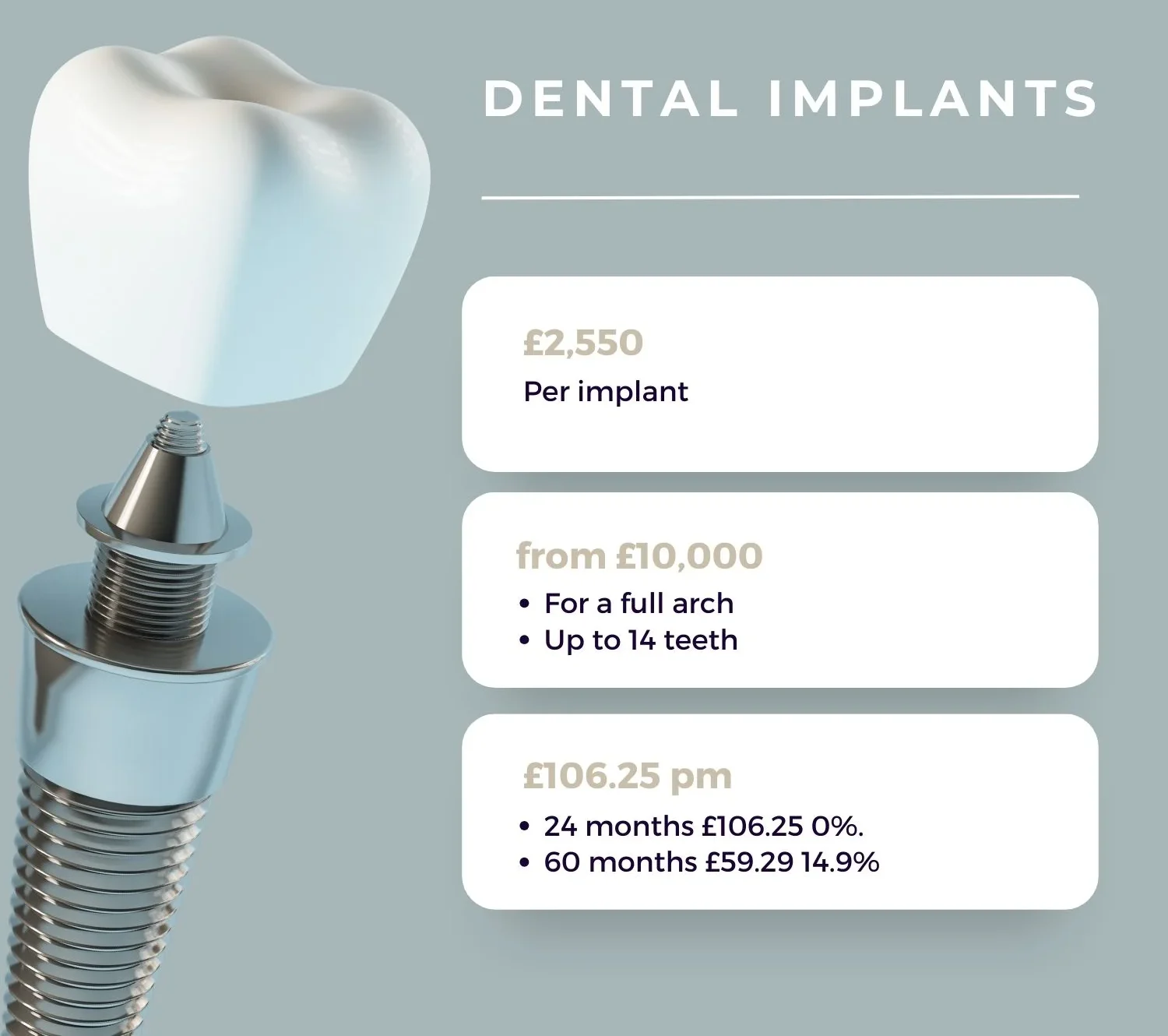
The cost of dental implants in the UK can vary dramatically depending on whether you opt for NHS or private treatment. While NHS implants are rare, private dental implant costs typically range from £2,000 to £3,000 per implant. This includes the implant fixture, abutment, and crown. The cost of dental implants in Albania, on the other hand, is significantly lower, often making it a more affordable option for those seeking high-quality treatment.
Key differences in cost:
- NHS: Limited availability, costs covered under Band 3 if eligible (around £319.10).
- Private UK: £2,000-£3,000 per implant.
Are Dental Implants Available on the NHS?
The availability of NHS dental implants is a critical question for many patients. While the NHS does provide dental care, access to dental implants is restricted to specific circumstances. It’s important to understand the eligibility criteria and alternative options offered by the NHS.
Eligibility for NHS Dental Implants
The NHS policy for dental implant procedures is quite strict. You are only likely to be considered for NHS dental implants if you meet one of the following criteria:
- Medical Necessity: Your tooth loss is a direct result of a medical condition, such as cancer treatment or a congenital defect.
- Trauma: Your teeth were lost due to a severe accident or injury.
- Severe Functional Problems: You have significant difficulty eating or speaking due to missing teeth, and other treatments are unsuitable.
Even if you meet these criteria, approval is not guaranteed and is subject to assessment by a consultant. Cosmetic reasons for wanting dental implants are not covered by the NHS.
NHS Policy for Dental Implant Procedures
The NHS prioritizes treatments that restore essential function and health. Therefore, dental implants are viewed as a secondary option compared to dentures or bridges. The decision to provide implants is made on a case-by-case basis, considering the following factors:
- Overall Health: You must be in good general health to undergo the surgical procedure.
- Oral Hygiene: You must demonstrate excellent oral hygiene and a commitment to long-term maintenance.
- Suitability: Implants must be the most appropriate treatment option for your specific condition.
Alternatives Offered When Implants Aren’t Available
If you are not eligible for NHS dental implants, the NHS will typically offer alternative tooth replacement options, such as:
- Dentures: Removable appliances that replace missing teeth.
- Bridges: Fixed appliances that attach to adjacent teeth to fill the gap.
While these options are more affordable, they may not provide the same level of stability, comfort, or long-term benefits as dental implants. For a more permanent and aesthetically pleasing solution, consider the benefits of dental implants in Albania, where you can receive high-quality care at a fraction of the cost.
How Do NHS Dental Implant Procedures Work?
Understanding how the dental implant procedure NHS works can help you navigate the process more effectively. The journey to potentially receiving NHS dental implants involves several steps, including assessment, referral, and treatment.
Dental Implant Procedure Overview (Under NHS)
If you believe you meet the eligibility criteria for NHS dental implants, the process generally involves these steps:
- Initial Assessment: Your general dentist will assess your oral health and determine if a referral for implants is appropriate.
- Referral to a Specialist: If deemed suitable, you’ll be referred to a consultant or specialist within the NHS who has expertise in implant dentistry.
- Consultation and Evaluation: The specialist will conduct a thorough examination, including X-rays and scans, to evaluate your bone structure and determine if implants are feasible.
- Treatment Planning: If implants are viable, a detailed treatment plan will be created, outlining the procedure, risks, and expected outcomes.
- Implant Placement: The implant fixture (a titanium screw) is surgically placed into your jawbone.
- Osseointegration: A healing period of several months is required to allow the implant to fuse with the bone.
- Abutment and Crown Placement: Once osseointegration is complete, an abutment (connector) is attached to the implant, and a custom-made crown is placed on top.
It’s important to note that the entire process can take several months to over a year due to waiting lists and healing times.
NHS Dental Waiting Lists and Referral Process
NHS dental waiting lists can be a significant challenge for those seeking implant treatment. Due to high demand and limited resources, waiting times for specialist appointments and implant procedures can be lengthy. The referral process typically involves:
- GP Dentist Assessment: Initial evaluation by your general dentist.
- Referral to a Specialist: If eligible, your dentist will refer you to a specialist within the NHS.
- Consultant Appointment: You may have to wait several months for an appointment with the specialist.
- Treatment Approval: Even after assessment, treatment is not guaranteed and is subject to approval based on medical necessity and funding availability.
Given the potential waiting times and strict eligibility criteria, many patients consider private dental care or options like dental tourism in Albania to expedite the process and access more affordable treatment.
Comparing Private vs NHS Dental Implants
When considering dental implants, understanding the differences between private vs NHS dental implants is essential. Factors such as cost, eligibility, treatment options, and waiting times vary significantly between the two.
Private Dental Implant Costs UK vs NHS Charges
The most significant difference between private and NHS dental implants is the cost. As previously mentioned, NHS implants are rarely provided, and when they are, the cost is subsidized under Band 3 charges (around £319.10). In contrast, private dental implant costs in the UK typically range from £2,000 to £3,000 per implant.
Private dental implant costs can vary based on:
- Location: Prices tend to be higher in London and other major cities.
- Dentist’s Experience: More experienced dentists may charge higher fees.
- Type of Implant: The brand and material of the implant can affect the cost.
- Additional Procedures: Bone grafts or sinus lifts may be necessary, adding to the overall expense.
The appeal of affordable dental implants often leads patients to explore options like Albania Dental Implants, where high-quality treatment is available at a much lower cost than in the UK.
Pros & Cons: NHS vs Private Treatment (Cost, Eligibility, Outcomes)
To help you make an informed decision, here’s a comparison of the pros and cons of NHS and private dental implants:
NHS Dental Implants
- Pros: Subsidized cost if eligible, treatment provided by qualified specialists.
- Cons: Limited availability, strict eligibility criteria, long waiting lists, limited treatment options.
Private Dental Implants
- Pros: Wider availability, shorter waiting times, more treatment options, advanced technology, personalized care.
- Cons: Higher costs, can be difficult to find a trustworthy provider.
For those who do not qualify for NHS implants or prefer more personalized care and faster treatment, private dental implants are a viable option. If the cost of private treatment in the UK is a concern, consider affordable alternatives like dental tourism in Albania.
Frequently Asked Questions About NHS Dental Implants
Navigating the world of dental implants can be confusing, especially when considering NHS options. Here are some frequently asked questions to help clarify the process and your options.
Are dental implants covered by the NHS?
In most cases, dental implants are not routinely covered by the NHS. NHS funding is typically reserved for situations where there is a clear medical need, such as tooth loss due to cancer treatment or a severe accident. Cosmetic reasons are not covered. However, options such as our clinic in Albania could give you better rates.
How much do dental implants cost on the NHS and privately in the UK?
If you qualify for NHS dental implants, the cost would likely fall under Band 3, which is approximately £319.10. In contrast, private dental implants in the UK typically range from £2,000 to £3,000 per implant, including the fixture, abutment, and crown. That would be expensive, contact Albania Dental Implants so that we can offer you the best price.
Who is eligible for NHS dental implants?
Eligibility for NHS dental implants is limited to individuals who meet specific criteria, such as:
- Tooth loss as a direct result of a medical condition (e.g., cancer treatment).
- Tooth loss due to a severe accident or injury.
- Significant functional problems (difficulty eating or speaking) due to missing teeth.
Even if you meet these criteria, approval is not guaranteed and is subject to assessment by a consultant.
What alternatives to dental implants does the NHS offer?
If you are not eligible for NHS dental implants, the NHS will typically offer alternative tooth replacement options, including:
- Dentures (removable appliances).
- Bridges (fixed appliances).
What’s the process for getting dental implants through the NHS?
The process for getting dental implants through the NHS involves several steps:
- Initial assessment by your general dentist.
- Referral to a specialist within the NHS.
- Consultation and evaluation by the specialist.
- Treatment planning (if implants are viable).
- Implant placement surgery.
- Osseointegration (healing period).
- Abutment and crown placement.
How long is the waiting list for NHS dental implants?
NHS dental waiting lists can be extensive, with potential waiting times of several months to over a year for specialist appointments and implant procedures. This is due to high demand and limited resources.
Why doesn’t the NHS routinely offer dental implants?
The NHS prioritizes treatments that restore essential function and health, and the NHS dental implants are often considered a secondary option compared to dentures or bridges. Funding is limited, and resources are allocated based on medical necessity and cost-effectiveness.
Can you get funding or support for dental implants on the NHS?
In most cases, you cannot get specific funding or support for dental implants on the NHS beyond the standard Band 3 charge if you are eligible for treatment. However, there may be exceptions for individuals with severe medical conditions or disabilities.
What should you do if you can’t afford private dental implants?
If you can’t afford private dental implants in the UK, consider these options:
- Explore affordable alternatives like dentures or bridges.
- Consider dental tourism in Albania or other countries with lower treatment costs.
- Look for dental schools offering discounted treatment.
- Inquire about payment plans or financing options with private dental clinics.
Does the NHS provide any discounts or subsidies for dental implant patients?
The NHS provides limited discounts or subsidies for dental implant patients. If you are eligible for NHS treatment, the cost is subsidized under the standard NHS dental charges. However, full funding is rare.
Considering Affordable Alternatives: Albania Dental Implants
If you find that NHS dental implants are not an option for you, or if the cost of private treatment in the UK is prohibitive, consider the affordable and high-quality services offered by Albania Dental Implants. Dental tourism in Albania can provide significant cost savings without compromising on the quality of care.
We invite you to contact us today to schedule a consultation and learn more about our comprehensive dental implant services. Restore your smile, confidence, and quality of life with Albania Dental Implants.





