



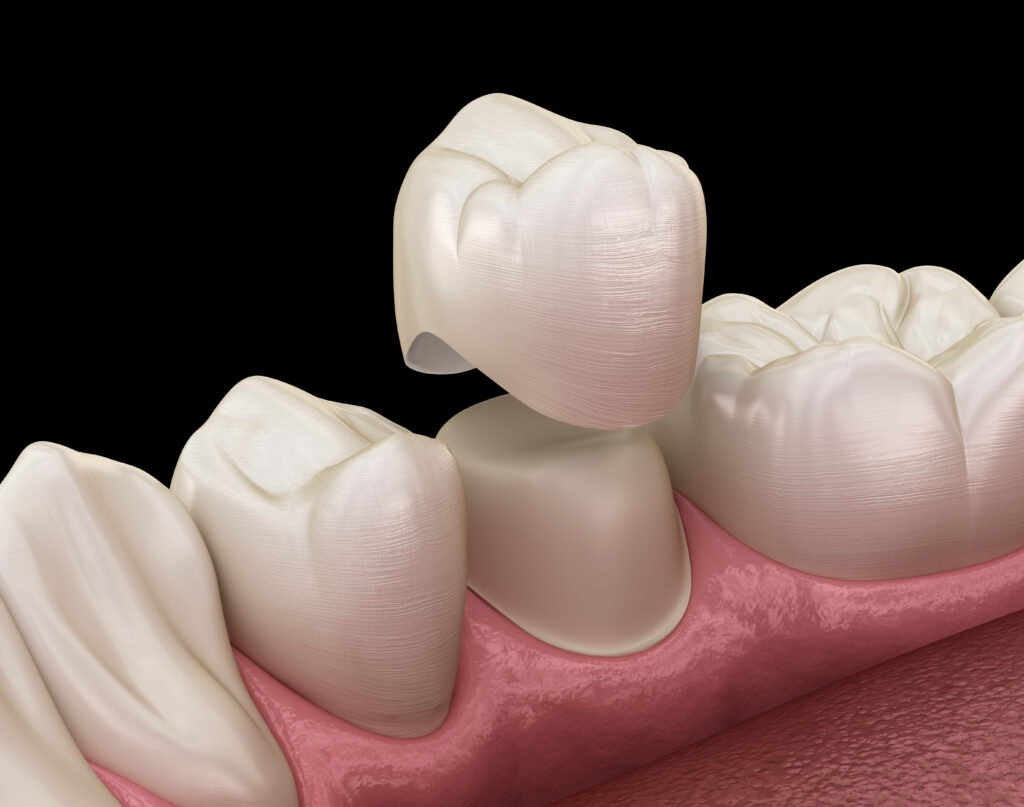

Dental Crown: Everything You Need to Know
A dental crown, often referred to as a tooth cap, is a versatile and essential dental restoration used to protect, strengthen, and improve the appearance of a damaged tooth, offering a durable solution for a variety of dental issues. At Albania Dental Implants, we specialise in providing high-quality dental crowns as part of our comprehensive Albania Dental Implants Services, ensuring our patients receive the best possible care and achieve lasting oral health.
What is a Dental Crown?
A dental crown, sometimes called a “tooth cap”, or even “cosmetic dental crown” is a custom-made covering that fits over a damaged, weakened, or misshapen tooth. It acts as a protective shell, restoring the tooth’s original size, shape, strength, and appearance.
Definition and Purpose of a Dental Crown
Dental crowns are designed to encase the entire visible portion of a tooth, providing support and protection. They are typically made from materials like porcelain, zirconia, metal, or composite resin, each offering different aesthetic and functional benefits.
The primary purpose of a dental crown is to restore a tooth that is:
- Weakened by decay
- Cracked or fractured
- Heavily filled
- Root canal treated
- Misshapen or discoloured
In addition to these functional benefits, dental crowns can also enhance the aesthetic appearance of a tooth, improving its shape, size, colour, and alignment.
When is a Dental Crown Needed?
Dental crowns are recommended in a variety of situations, including:
- Protecting a weak tooth: Crowns can safeguard teeth that are prone to fracture or have extensive decay.
- Restoring a broken or cracked tooth: Crowns provide structural support and prevent further damage.
- Covering a heavily filled tooth: When a filling is too large to adequately support a tooth, a crown can provide the necessary reinforcement.
- Covering a tooth after root canal treatment: Root canal treatment can weaken a tooth, making it susceptible to fracture. A crown helps protect the tooth and restore its function.
- Improving the appearance of a tooth: Crowns can correct misshapen, discoloured, or misaligned teeth, enhancing the overall aesthetics of your smile.
- Anchoring a dental bridge: Crowns are used to anchor dental bridges, replacing one or more missing teeth.
- Covering a dental implant: Crowns are placed on dental implants to provide a natural-looking and functional replacement for missing teeth.
Brief Overview of Common Crown Candidates
Common candidates for dental crowns include individuals with:
- Extensive tooth decay: When decay has significantly weakened a tooth, a crown can provide the necessary support and protection.
- Cracked or fractured teeth: Crowns can prevent further damage and restore the tooth’s structural integrity.
- Teeth with large fillings: If a filling is too large to adequately support a tooth, a crown can provide the necessary reinforcement.
- Root canal-treated teeth: Crowns help protect these teeth from fracture and restore their function.
- Cosmetic concerns: Crowns can improve the appearance of misshapen, discoloured, or misaligned teeth.
Dental Crown Procedure: Step-by-Step
The “dental crown procedure” is a multi-step process designed to ensure a precise fit and optimal function of the new crown. The procedure may require a “temporary dental crown” while the permanent one is being crafted. In some cases, “same day dental crown” options are available for faster results.
Preparation Process
The first step in the dental crown procedure is a comprehensive examination of the tooth. This may include X-rays to assess the tooth’s roots and surrounding bone.
Tooth Reduction and Impression
To make space for the crown, the dentist will carefully reduce the size of the tooth. The amount of reduction depends on the type of crown being used.
After the tooth is prepared, an impression is taken using a putty-like material or a digital scanner. This impression is sent to a dental laboratory, where the custom crown is fabricated.
Temporary Crowns
While the permanent crown is being made, a temporary crown is placed to protect the prepared tooth. Temporary crowns are typically made of acrylic or composite resin and are cemented with temporary cement.
Fitting of Permanent Crown
Once the permanent crown is ready, the temporary crown is removed, and the permanent crown is fitted. The dentist will check the fit, shape, and colour of the crown, making any necessary adjustments.
Once the fit is satisfactory, the crown is permanently cemented onto the prepared tooth using a strong dental adhesive.
Recovery and Timeline
Recovery after the dental crown procedure is generally quick and straightforward. Most patients experience minimal discomfort, which can be managed with over-the-counter pain medication.
The entire process, from the initial examination to the final fitting of the permanent crown, typically takes two dental visits. However, with advancements in technology, same-day dental crowns are now available, which can be completed in a single visit using CAD/CAM technology.
How long does it take to get a dental crown?
The timeline for getting a dental crown typically involves two appointments. The first appointment includes examination, tooth preparation, and taking impressions, while the second appointment focuses on fitting and cementing the permanent crown. However, with advancements like same-day crown technology, it is possible to get a dental crown in just one visit.
Types of Dental Crowns and Their Materials
There are various “types of dental crowns” available, each with its own set of advantages and disadvantages. Some popular materials include “porcelain crown,” “zirconia crown,” metal dental crown”, and “ceramic crown”.
Porcelain
Porcelain crowns are a popular choice for their natural appearance. They can be matched to the colour of your existing teeth, making them virtually indistinguishable from your natural teeth.
Benefits of porcelain crowns:
- Excellent aesthetics
- Biocompatible
- Durable
Zirconia
Zirconia crowns are known for their exceptional strength and durability. They are made from a type of ceramic that is highly resistant to fracture.
Benefits of zirconia crowns:
- Exceptional strength and durability
- Excellent aesthetics
- Biocompatible
We at Albania Dental Implants, also offer Zirconia Implants.
Metal (Gold, Alloys)
Metal crowns, such as gold or alloy crowns, are known for their strength and durability. They are an excellent choice for back teeth, where chewing forces are high.
Benefits of metal crowns:
- Exceptional strength and durability
- Long-lasting
- Resistant to chipping and fracture
Ceramic
Ceramic crowns are made from a type of porcelain that is both strong and aesthetically pleasing. They are a good choice for front teeth, where aesthetics are a primary concern.
Benefits of ceramic crowns:
- Good aesthetics
- Durable
- Biocompatible
Composite Resin
Composite resin crowns are a more affordable option. However, they are not as strong or durable as other types of crowns.
Benefits of composite resin crowns:
- Affordable
- Good aesthetics
Comparison and Indication by Tooth Location
The choice of crown material depends on several factors, including the location of the tooth, aesthetic concerns, and budget.
Here is a comparison of different crown materials and their indications:
- Porcelain: Best for front teeth, where aesthetics are a primary concern.
- Zirconia: Best for back teeth, where strength and durability are essential.
- Metal: Best for back teeth, where chewing forces are high.
- Ceramic: Good for both front and back teeth, offering a balance of aesthetics and durability.
- Composite resin: Suitable for temporary crowns or for patients on a limited budget.
What types of dental crowns are available?
There are several types of dental crowns available, including porcelain, zirconia, metal (gold or alloys), ceramic, and composite resin. The choice of material depends on factors like aesthetics, strength requirements, and budget.
Dental Crown Cost & Value
“Dental crown cost” is a significant consideration for many patients. Understanding the difference between “private dental crown” options and those available on the “NHS dental crown UK” can help in making an informed decision.
Breakdown of Costs: Private vs NHS
The cost of a dental crown in the UK can vary widely depending on whether you choose private or NHS treatment.
Private Dental Crowns:
- Typically more expensive, ranging from £500 to £1200 per crown.
- Offer a wider range of materials, including high-quality porcelain and zirconia.
- May have shorter waiting times and more flexible appointment scheduling.
NHS Dental Crowns:
- More affordable, with costs depending on the NHS band charge (typically £282.80 for a Band 3 treatment, which includes crowns).
- May have limited material options, often using more basic materials like metal or porcelain-fused-to-metal.
- May have longer waiting times and less flexible appointment scheduling.
Factors That Affect Price
Several factors can influence the cost of a dental crown, including:
- Material: Porcelain and zirconia crowns are generally more expensive than metal or composite resin crowns.
- Location: Dental practices in London and other major cities may charge higher prices than those in smaller towns.
- Dentist’s experience: Highly experienced dentists may charge more for their services.
- Technology: Practices that use advanced technology, such as CAD/CAM systems, may have higher fees.
- Complexity: Complex cases that require additional procedures, such as root canal treatment or gum surgery, will increase the overall cost.
Insurance and Payment Options
Many dental insurance plans cover a portion of the cost of dental crowns. Check with your insurance provider to determine your coverage.
Other payment options include:
- Payment plans: Some dental practices offer payment plans, allowing you to spread the cost of treatment over several months.
- Dental loans: Dental loans are available from various financial institutions, providing a way to finance your treatment.
- CareCredit: CareCredit is a credit card specifically for healthcare expenses, offering low-interest financing options.
For more affordable options, consider dental tourism. At Albania Dental Implants, we provide high-quality dental crowns at a fraction of the cost compared to the UK. Our dental tourism packages include travel, accommodation, and treatment, making it an attractive option for many patients. Contact contact Albania Dental Implants today.
How much does a dental crown cost in the UK? Is it covered by NHS?
The cost of a dental crown in the UK varies, with private treatments ranging from £500 to £1200. NHS crowns are more affordable, typically costing £282.80 as part of Band 3 treatment. NHS coverage is limited, and patients may explore options like dental tourism in Albania for more cost-effective solutions.
Dental Crown Lifespan & Aftercare
Understanding “dental crown lifespan” and proper “dental crown aftercare” is crucial for ensuring the longevity and success of your dental restoration. “Caring for dental crowns” involves adopting good oral hygiene habits and avoiding certain behaviours.
How Long Dental Crowns Last
Dental crowns typically last between 5 and 15 years, depending on several factors, including:
- Oral hygiene: Proper brushing and flossing can significantly extend the lifespan of a crown.
- Diet: Avoiding hard and sticky foods can prevent damage to the crown.
- Habits: Grinding or clenching your teeth can shorten the lifespan of a crown.
- Material: Some crown materials, such as zirconia and metal, are more durable than others.
Maintenance Tips
To prolong the life of your dental crown, follow these maintenance tips:
- Brush your teeth twice a day: Use a soft-bristled toothbrush and fluoride toothpaste.
- Floss daily: Pay close attention to the area around the crown, where plaque and bacteria can accumulate.
- Use an antimicrobial mouthwash: This can help reduce bacteria and prevent gum disease.
- Visit your dentist regularly: Regular check-ups and professional cleanings can help detect and address any issues early.
Habits That Affect Longevity
Certain habits can negatively affect the lifespan of your dental crown, including:
- Grinding or clenching your teeth: This can put excessive pressure on the crown, leading to cracks or fractures.
- Chewing on hard objects: Avoid chewing on ice, hard candies, or other hard objects that can damage the crown.
- Using your teeth as tools: Don’t use your teeth to open bottles or tear packages.
- Consuming sticky foods: Sticky foods can pull on the crown, potentially loosening it or causing it to come off.
When Does a Dental Crown Need Repair or Replacement?
A dental crown may need repair or replacement if you experience any of the following:
- Pain or sensitivity: This could indicate decay under the crown or damage to the tooth’s nerve.
- A loose crown: A loose crown can allow bacteria to enter, leading to decay and infection.
- A cracked or fractured crown: This can compromise the crown’s ability to protect the tooth.
- Gum inflammation or bleeding: This could be a sign of gum disease or an improperly fitted crown.
- A change in the crown’s appearance: If the crown becomes discoloured or worn, it may need replacement.
How long does a dental crown last?
A dental crown can last anywhere from 5 to 15 years, depending on factors such as oral hygiene, diet, and habits like teeth grinding. Regular dental check-ups and proper maintenance can extend the lifespan of your crown.
Dental Crown Problems and Solutions
Despite their durability, “dental crown problems” can occur. Common issues include “dental crown pain,” “loose dental crown”, and “broken dental crown”.
Most Common Issues (Pain, Loosening, Breaking)
Some of the most common problems associated with dental crowns include:
- Pain or sensitivity: This can be caused by decay under the crown, gum disease, or nerve damage.
- Loosening: Crowns can become loose due to decay, improper fit, or damage to the cement.
- Breaking or chipping: Crowns can break or chip due to excessive force, trauma, or wear and tear.
- Gum recession: This can expose the edge of the crown, leading to aesthetic concerns and sensitivity.
- Allergic reactions: In rare cases, patients may experience an allergic reaction to the crown material.
How to Address Problems
The solution to a dental crown problem depends on the specific issue:
- Pain or sensitivity: Your dentist may recommend a root canal treatment or prescribe antibiotics to treat an infection.
- Loosening: Your dentist may be able to re-cement the crown or, if decay is present, may need to replace the crown.
- Breaking or chipping: Minor chips can be repaired with composite resin. More significant damage may require a new crown.
- Gum recession: Your dentist may recommend gum grafting to cover the exposed edge of the crown.
- Allergic reactions: Your dentist may recommend replacing the crown with a biocompatible material, such as zirconia.
When to Contact a Dentist
Contact your dentist immediately if you experience any of the following:
- Severe pain or swelling: This could indicate a serious infection.
- A loose or dislodged crown: This can leave the tooth vulnerable to decay and damage.
- A broken or cracked crown: This can compromise the crown’s ability to protect the tooth.
- Persistent gum inflammation or bleeding: This could be a sign of gum disease or an improperly fitted crown.
What should I do if my dental crown falls out or breaks?
If your dental crown falls out or breaks, contact your dentist immediately. They can assess the situation and determine the best course of action, which may involve re-cementing the crown or creating a new one.
Dental Crown vs Filling: Which Is Right For You?
The decision between a “dental crown vs filling” depends on the extent of damage to the tooth. Understanding the “benefits of dental crown” compared to fillings, as well as “alternative tooth restorations”, is crucial for making an informed choice.
Key Differences and Decision Factors
Dental crowns and fillings are both used to restore damaged teeth, but they differ in several key aspects:
- Coverage: Crowns cover the entire visible portion of the tooth, while fillings only fill a small cavity.
- Strength: Crowns provide more structural support and protection than fillings.
- Durability: Crowns are generally more durable than fillings, lasting longer with proper care.
- Aesthetics: Crowns can improve the appearance of a tooth more effectively than fillings.
The decision between a crown and a filling depends on the extent of damage to the tooth:
- Fillings: Suitable for small cavities or minor damage.
- Crowns: Recommended for teeth with extensive decay, cracks, fractures, or large fillings.
What is the difference between a dental crown and a filling?
A dental crown covers the entire visible portion of the tooth, providing strength and protection. In contrast, a filling only fills a small cavity, making crowns more suitable for extensively damaged teeth.
When should I choose dental implants instead of crowns
A dental crown can protect a weakend and/or damaged tooth, however, if the tooth has severely damaged to the point that it is no longer able to be salvaged, the dentists will suggest removing the existing tooth and replacing it with a dental implant. Visit dental implants in albania for further information.
Frequently Asked Questions
What is a dental crown and why might I need one?
A dental crown is a custom-made cap that covers a damaged tooth, restoring its shape, size, strength, and appearance. You might need one if you have extensive decay, a cracked tooth, a large filling, or after root canal treatment.
Are dental crowns painful?
The dental crown procedure is typically not painful. Your dentist will use local anaesthesia to numb the area, ensuring your comfort during the preparation and fitting of the crown.
Can you eat normally with a dental crown?
Yes, once the crown is fitted and you’ve adjusted to it, you can eat normally. However, it’s best to avoid hard or sticky foods that could damage the crown.
How do I care for a dental crown?
Care for a dental crown by brushing twice a day, flossing daily, and using an antimicrobial mouthwash. Regular dental check-ups and professional cleanings are also essential.
Are there cosmetic options for dental crowns?
Yes, cosmetic options for dental crowns include porcelain and zirconia crowns, which offer excellent aesthetics and can be matched to the colour of your natural teeth.
Is it possible to get a same day dental crown?
Yes, same-day dental crowns are possible using CAD/CAM technology, allowing you to get a custom-fitted crown in just one visit.
Can dental crowns cause any problems or side effects?
While rare, dental crowns can cause problems such as pain, loosening, breaking, gum recession, or allergic reactions. Contact your dentist if you experience any of these issues.
Conclusion
Dental crowns are a versatile and effective solution for restoring damaged, weakened, or aesthetically compromised teeth. By understanding the different types of crowns, the procedure involved, and the importance of proper aftercare, you can make an informed decision about whether a dental crown is right for you.
At Albania Dental Implants, we are committed to providing high-quality dental crown treatments that meet your individual needs and enhance your oral health. We combine expertise, advanced technology, and a patient-centred approach to ensure you receive the best possible care.
Ready to Restore Your Smile? Contact Us Today!
Don’t let damaged or weakened teeth compromise your smile and confidence. Contact Albania Dental Implants today to schedule a consultation and learn more about our dental crown options and how we can help you achieve a healthy, beautiful smile. Discover the possibilities of dental tourism in Albania and experience top-tier dental care at an affordable price.





