



Dental Implants NHS Price – What You Need to Know
Dental implants NHS price is a topic of concern for many UK patients seeking affordable solutions for missing teeth. This article breaks down the reality of accessing dental implants through the National Health Service, exploring eligibility, costs, and alternatives to help you make informed decisions about restoring your smile and oral health. If NHS options are limited, we’ll also discuss alternative solutions, like seeking treatment abroad with Albania Dental Implants.
What Are Dental Implants and How do They Work?
To understand the dental implants NHS price, it’s crucial to know what dental implants are and how they function. Dental implants are a long-term solution for missing teeth, offering stability and a natural look and feel.
Definition and Benefits
Dental implants are artificial tooth roots, typically made of titanium, that are surgically placed into the jawbone to support a replacement tooth or bridge. Unlike dentures or bridges, implants don’t rely on adjacent teeth for support.
The benefits of dental implants include:
- Improved appearance: Dental implants look and feel like your own teeth.
- Enhanced comfort: Because they become a part of you, implants eliminate the discomfort of removable dentures.
- Better speech: With poor-fitting dentures, teeth can slip, causing you to mumble or slur your words. Dental implants allow you to speak without the worry that teeth might slip.
- Easier eating: Dental implants function like your own teeth, allowing you to eat your favorite foods with confidence and without pain.
- Increased self-esteem: Dental implants can give you back your smile and help you feel better about yourself.
- Long-term durability: With good care, many implants last a lifetime. According to a 2023 study in the Journal of Oral Implantology, the 10-year survival rate for dental implants is over 95%.
- Improved oral health: Dental implants don’t require reducing other teeth, as a tooth-supported bridge does. Because nearby teeth are not altered to support the implant, more of your own teeth are left intact, improving long-term oral health. Individual implants also allow easier access between teeth, improving oral hygiene.
Types of Dental Implants Used in the UK
While the basic principle remains the same, different types of dental implants are used in the UK depending on individual needs and bone structure:
- Endosteal implants: These are the most common type, placed directly into the jawbone. They are suitable for most patients with a healthy jawbone.
- Subperiosteal implants: These are placed on top of the jawbone but under the gum. They are used when there is not enough healthy jawbone to support endosteal implants.
- All-on-4 implants: A cost-effective solution for replacing an entire arch of teeth using only four implants. This can be a great option if you’re looking at all on 4 dental implants in Albania.
- Mini dental implants: Smaller in diameter than traditional implants, these are often used to stabilize dentures.
Can You Get Dental Implants on the NHS?
Many patients wonder about NHS dental implant eligibility and whether they can get dental implants on the NHS. Generally, dental implants are not routinely available on the NHS.
Who Qualifies for NHS Dental Implants?
The NHS primarily provides dental implants only when there’s a medical need, such as:
- Trauma: If you’ve lost teeth due to an accident or injury.
- Congenital conditions: If you were born with missing teeth (hypodontia).
- Cancer treatment: If tooth loss is a direct result of cancer treatment.
Even if you meet these criteria, approval isn’t guaranteed. Each case is assessed individually, and funding depends on the availability of resources within your local NHS trust.
NHS Policy on Dental Implants
The NHS generally prioritizes essential dental care, such as fillings, extractions, and dentures. Dental implants NHS are considered a cosmetic procedure in most cases. As resources are limited, funding is typically reserved for situations where tooth loss significantly impacts a patient’s health and well-being. According to the British Dental Association, NHS funding for dental implants is “very limited” and subject to strict criteria.
Medical Conditions and Special Cases
Certain medical conditions might increase your chances of getting NHS-funded dental implants, such as:
- Ectodermal dysplasia: A genetic disorder causing abnormal development of teeth, skin, hair, and nails.
- Severe osteoporosis: In rare cases, if dentures are impossible due to bone loss.
However, each case is reviewed on its own merits, and having a medical condition doesn’t automatically qualify you for NHS implants.
Can I get full implants on NHS?
The possibility of getting full implants on NHS is very limited, and usually, NHS covers implants only when there’s a medical need. So, can I get full mouth dental implants on NHS? The reality is that accessing full mouth dental implants through the National Health Service (NHS) can be challenging.
Dental Implants NHS Price Breakdown
Understanding the NHS dental implants cost involves navigating the NHS dental treatment bands and understanding what’s included. Even if you qualify for NHS implants, you’ll likely face some out-of-pocket costs.
Standard NHS Dental Implant Charges (Including Treatment Bands)
NHS dental charges are divided into three treatment bands:
- Band 1 (£26.80): Includes examinations, diagnosis, and preventative care.
- Band 2 (£73.50): Covers everything in Band 1, plus fillings, root canal treatment, and extractions.
- Band 3 (£319.10): Includes everything in Bands 1 and 2, plus crowns, dentures, and bridges.
Dental implants typically fall under Band 3, but this only covers the cost of the implant procedure itself, if it’s approved. It doesn’t include the cost of the implant, abutment, or crown, which you’ll likely have to pay separately. Remember, these costs refer to NHS dental implants.
What’s Included in NHS Fees?
The NHS fee covers the dentist’s time, materials, and laboratory costs associated with the treatment. If you qualify for NHS implants, the fee typically includes:
- Initial assessment and planning.
- Surgical placement of the implant.
- Follow-up appointments.
However, it usually doesn’t include:
- The cost of the implant itself.
- The abutment (the connector between the implant and the crown).
- The crown (the artificial tooth).
- Bone grafting (if needed).
Typical Out-of-Pocket Costs
Even with NHS funding, you might need to pay for certain components of the implant treatment. These costs can vary depending on the complexity of your case and the materials used.
Here’s a rough estimate of potential out-of-pocket costs:
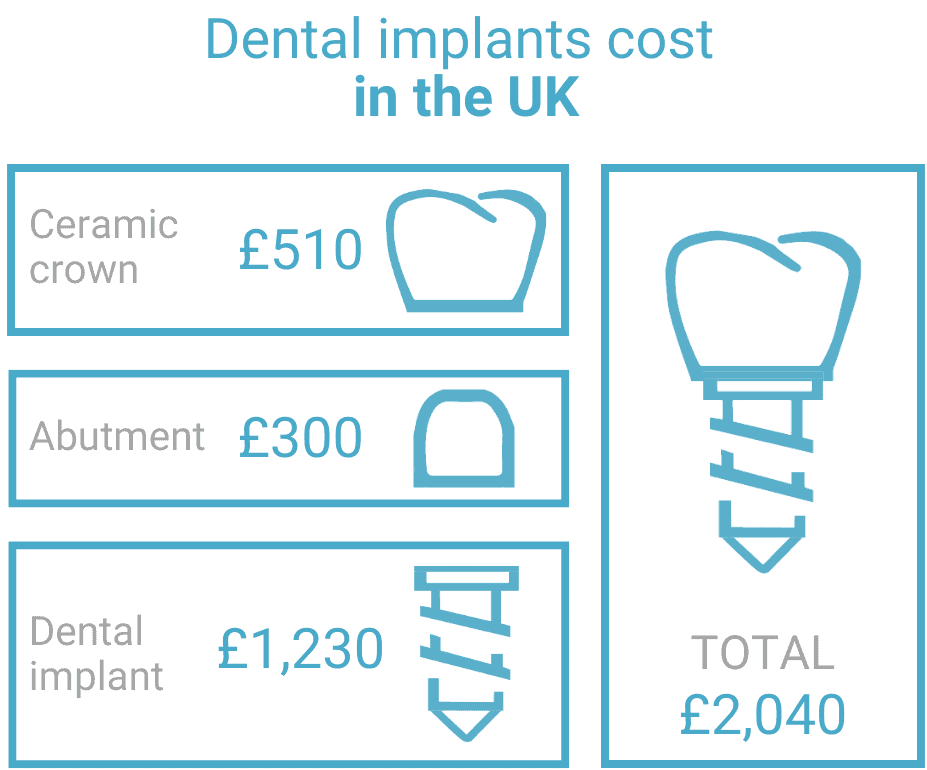
- Implant: £800 – £2,000 per implant.
- Abutment: £200 – £500.
- Crown: £500 – £1,200.
- Bone grafting: £500 – £3,000 (if required).
Therefore, even with NHS support, you could still end up paying a significant amount for dental implants. If these costs are prohibitive, considering options like cost of dental implants in Albania might be worthwhile.
Private vs NHS Dental Implant Price Comparison
When considering dental implants, it’s essential to compare private dental implant cost UK with the potential dental implants NHS price. While NHS implants may seem cheaper initially, the overall cost and eligibility requirements can make private treatment a more viable option for many.
Average Private Dental Implant Costs in the UK
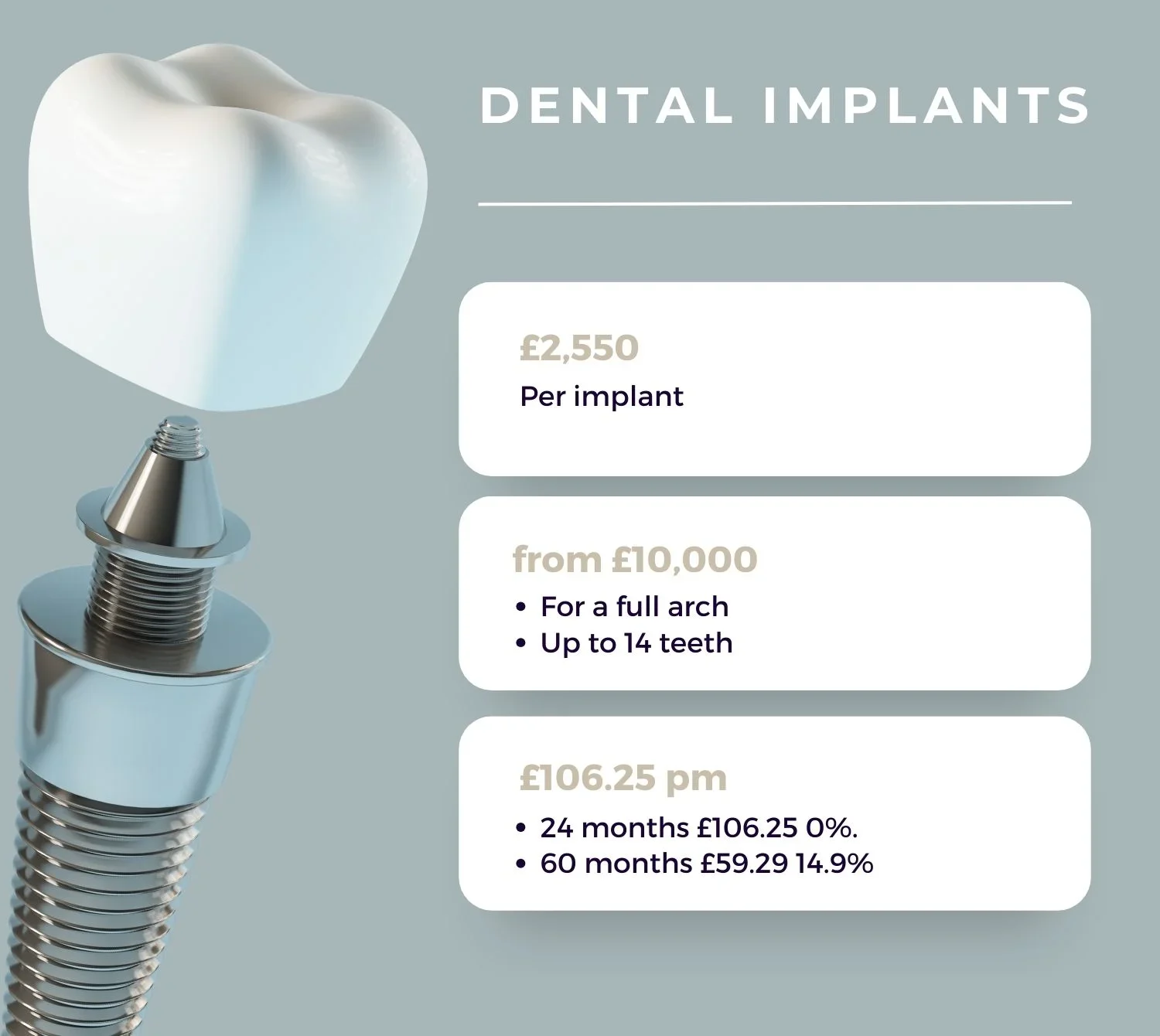
The average cost of a single dental implant in the UK privately ranges from £2,500 to £4,000. This typically includes the implant, abutment, and crown. Prices can vary depending on:
- Location: London and the South East tend to be more expensive.
- Dentist’s experience: Highly experienced implantologists may charge more.
- Materials used: Zirconia implants, for example, are typically more expensive than titanium implants.
- Complexity of the case: If bone grafting or sinus lifts are required, the cost will increase.
Full-mouth dental implants can cost anywhere from £10,000 to £30,000 or more privately. However, exploring options like dental tourism in Albania can significantly reduce these costs.
What’s Covered Privately vs NHS?
Private dental implant treatment usually covers all aspects of the procedure, including:
- Comprehensive consultation and planning.
- Implant placement.
- Abutment and crown.
- Follow-up appointments.
- Aftercare.
In contrast, NHS funding may only cover the surgical placement of the implant, leaving you to pay for the implant itself, abutment, and crown separately.
Factors Affecting the Final Price
Several factors can influence the final price of dental implants, both privately and on the NHS:
- Number of implants needed: The more implants you require, the higher the cost.
- Bone density: If you have insufficient bone density, you may need bone grafting, which adds to the cost.
- Sinus lift: If you need a sinus lift to create space for the implant, this will also increase the price.
- Type of implant: Different implant brands and materials have varying costs.
- Complexity of the case: More complex cases require more time and expertise, leading to higher fees.
When comparing NHS and private options, consider all these factors to get an accurate estimate of the total cost.
Alternatives to NHS Dental Implants
If you don’t qualify for NHS dental implants or find the costs too high, several NHS dental implant alternatives are available. These include dentures and bridges, which are often more readily available on the NHS.
Dentures and Bridges on the NHS
Dentures and bridges are more commonly provided on the NHS than dental implants.
- Dentures: Removable appliances that replace missing teeth. They can be full dentures (replacing all teeth in an arch) or partial dentures (replacing some teeth).
- Bridges: Fixed appliances that bridge the gap between missing teeth. They are typically supported by adjacent teeth.
The cost of dentures and bridges on the NHS falls under Band 3 (£319.10), which covers the appliance itself. However, you may still need to pay for examinations and other necessary treatments.
Advantages and Disadvantages Compared to Implants
While dentures and bridges are more affordable and accessible than dental implants, they have several disadvantages:
Dentures:
- Advantages: More affordable, readily available on the NHS, non-invasive.
- Disadvantages: Can be uncomfortable, may affect speech and eating, require regular adjustments, don’t prevent bone loss.
Bridges:
- Advantages: More stable than dentures, fixed in place, relatively affordable.
- Disadvantages: Require altering adjacent teeth, don’t prevent bone loss, may not last as long as implants.
Dental implants offer superior stability, longevity, and bone preservation compared to dentures and bridges. However, they are more expensive and invasive.
Funding, Grants, and Payment Options
If you’re struggling to afford dental implants, exploring dental implant grants UK, NHS dental help, and payment plans can make treatment more accessible.
Charitable Grants and Schemes
Several charities and schemes offer financial assistance for dental treatment:
- The Oral Health Foundation: Provides information and support for patients seeking dental treatment.
- Dentaid: Offers mobile dental services and support for vulnerable communities.
- The British Dental Health Foundation: Provides advice and resources for maintaining good oral health.
Some charities may offer grants or subsidies for dental implants in specific circumstances, such as for patients with disabilities or low incomes. However, funding is limited and highly competitive. You can also get to know how to how to get free dental implants UK.
Spreading the Cost Privately
Many private dental clinics offer payment plans to help patients spread the cost of dental implants:
- Dental finance: Specialized lenders offer loans for dental treatment, often with low-interest rates and flexible repayment terms.
- In-house payment plans: Some clinics offer their own payment plans, allowing you to pay for treatment in installments.
- Credit cards: Using a credit card can be a convenient way to pay for dental implants, but be mindful of interest charges.
Before committing to a payment plan, carefully review the terms and conditions, including interest rates, fees, and repayment schedules.
Frequently Asked Questions about Dental Implants NHS Price
Here, we address some frequently asked questions about the cost and availability of dental implants on the NHS.
Are dental implants free on the NHS?
Dental implants are rarely free on the NHS. They are typically only funded in cases of medical necessity, such as trauma, congenital conditions, or cancer treatment. Even then, you may need to pay for certain components of the treatment.
Who is eligible for dental implants under the NHS?
Eligibility for dental implants under the NHS is limited to patients with specific medical conditions or those who have experienced tooth loss due to trauma or cancer treatment. Each case is assessed individually, and funding depends on the availability of resources within your local NHS trust.
How much do dental implants cost privately versus on the NHS?
Private dental implants in the UK typically cost between £2,500 and £4,000 per implant, including the implant, abutment, and crown. On the NHS, you may only pay the Band 3 charge (£319.10) for the surgical placement of the implant, but you’ll likely need to pay separately for the implant itself, abutment, and crown, potentially costing upwards of £1,500-£3,000.
What alternatives exist if I do not qualify for NHS implants?
If you don’t qualify for NHS implants, alternatives include dentures, bridges, and exploring affordable options like dental tourism in Albania.
Is there financial help available for dental implants in the UK?
Financial help for dental implants in the UK may be available through charitable grants, dental finance options, or in-house payment plans offered by private clinics. However, completely free dental implants are rare. You can also find out how can I fix my teeth if I don’t have money.
What is the waiting time for dental implants on the NHS?
The waiting time for dental implants on the NHS can be significant, often several months or even years, depending on the availability of funding and resources in your local area. Private treatment typically has shorter waiting times.
What’s included in the NHS price for dental implants?
The NHS price typically covers the surgical placement of the implant, initial assessment, and follow-up appointments. It usually doesn’t include the cost of the implant itself, the abutment, the crown, or bone grafting.
Are there hidden costs for dental implants on the NHS?
Yes, there can be hidden costs for dental implants on the NHS, such as the cost of the implant, abutment, crown, bone grafting, and any necessary pre-implant treatments. Always clarify the total cost with your dentist before proceeding.
Do NHS dental implant prices vary by location?
While the NHS treatment band charges are standard across the UK, the availability of NHS-funded dental implants and the out-of-pocket costs for components not covered by the NHS can vary depending on your location and local NHS trust.
Dental implants offer a life-changing solution for missing teeth, but navigating the NHS system and understanding the costs involved can be challenging. Weigh your options carefully, explore all available funding sources, and consider alternative treatment options, such as dental tourism with Albania Dental Implants, to achieve a confident, healthy smile within your budget.
Ready to take the next step towards a confident smile? Contact Albania Dental Implants today for a free consultation and discover affordable, high-quality dental implant solutions.





