



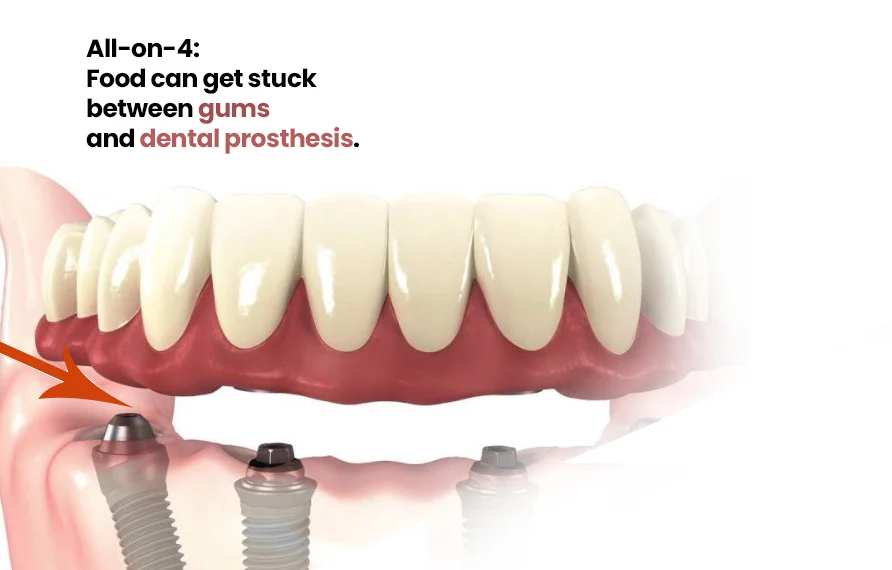
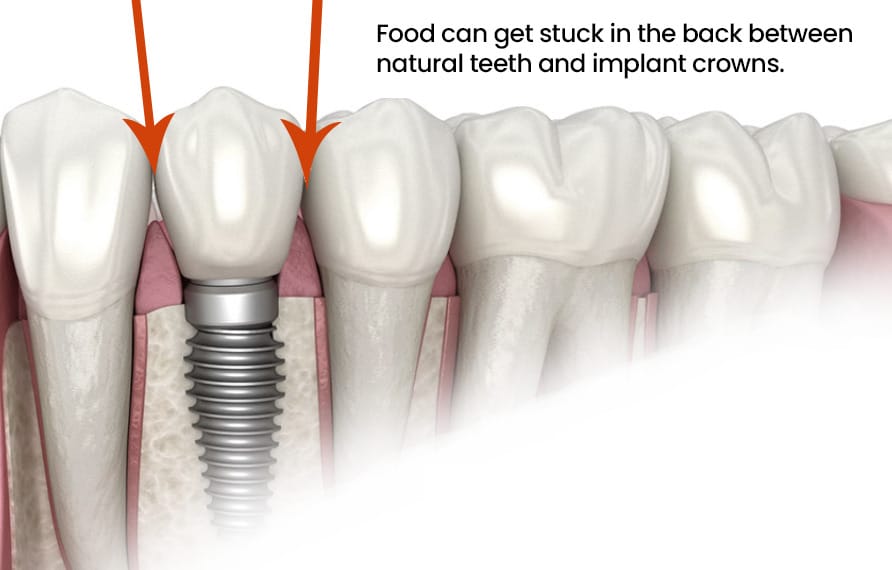
Food can get stuck under all on four dental implants, but this is a common and manageable issue that dental patients can prevent and address with proper care. Understanding the causes, implementing preventive measures, and knowing how to properly clean and maintain your implants will help you enjoy the full benefits of this life-changing dental solution. At Albania Dental Implants, we want to ensure you are confident and informed about every aspect of your dental health.
Why does food get stuck under all on four dental implants?
Understanding why food gets trapped under your all on four dental implants is the first step in preventing it. This issue, commonly referred to as “all on four implants food trap”, can occur for a variety of reasons.
All on four implants food trap: causes and frequency
While all on four dental implants offer numerous advantages, the design and placement can sometimes create spaces where food particles accumulate. The frequency with which this occurs varies from person to person, depending on factors like diet, oral hygiene habits, and the precise fit of the implant-supported prosthesis. Some studies suggest that up to 60% of patients with fixed dental prostheses experience some degree of food impaction.
One of the most common reasons for food getting trapped is the anatomical differences vs natural teeth. Natural teeth are surrounded by gum tissue that tightly seals around each tooth, preventing food from easily getting trapped. In contrast, all-on-4 implants involve a prosthesis that sits on the gum line, potentially leaving small gaps, especially if the gum tissue shrinks or recedes over time.
Anatomical differences vs natural teeth
The way your all-on-4 implants are structured differs significantly from natural teeth, which can lead to food impaction. Natural teeth have a tight seal with the gums, preventing food from easily getting trapped. However, all-on-4 implants are supported by a framework attached to four implants, creating spaces where food can become lodged. These anatomical differences can be a primary reason for experiencing food traps.
Role of implant position and gum shape
The precise position of the implants and the shape of your gums play a crucial role in whether food gets stuck. If the implants are not perfectly aligned or if the gum tissue does not snugly fit around the prosthesis, small gaps can form. These gaps act as traps, especially for certain types of food. Additionally, changes in gum shape over time can also contribute to this issue. At Albania Dental Implants, our expert team ensures meticulous implant placement to minimise these risks.
Are food traps under All-on-4 normal?
It’s natural to wonder if food traps are a common occurrence with All-on-4 dental implants. Understanding the expectations around food getting stuck helps manage the situation effectively.
Is it common for food to get stuck?
Yes, it is relatively common for food to get stuck under All-on-4 implants. However, it’s not something to be alarmed about if you take the right steps to manage it. Many patients experience this issue to some degree. The key is to have a proactive cleaning routine and understand which foods are more likely to cause problems.
Types of foods most likely to cause problems
Certain foods are more likely to get lodged under All-on-4 implants than others. Sticky, chewy, or fibrous foods tend to be the biggest culprits. Examples include:
- Chewy candies
- Fibrous vegetables like celery
- Popcorn
- Nuts and seeds
- Tough meats
Being mindful of these foods and taking extra care when consuming them can help minimize the chances of food getting stuck. If you are considering travelling to Albania for implants, think about the types of food you will want to eat while on your dental tourism in Albania trip.
How often should you expect food to get caught?
The frequency varies greatly. Some patients may only experience food impaction occasionally, while others might find it happening after every meal. Factors such as the fit of your prosthesis, the density of your jawbone, and your oral hygiene practices all play a role. Regular check-ups and adjustments can help reduce the frequency. If you’re finding food gets stuck very often, it’s time to consult your dentist.
How can you prevent food getting stuck under all on four implants?
Prevention is key when it comes to managing food impaction with All-on-4 implants. Establishing a consistent and thorough oral hygiene routine will significantly reduce the likelihood of food getting trapped.
Cleaning all on four implants: tools and routines
Proper cleaning is essential for preventing food from accumulating under your All-on-4 implants. The right tools and a consistent routine are your best defense. The cleaning all on four implants process may feel different to what you are used to.
Here’s a recommended routine:
- Brush after every meal: Use a soft-bristled toothbrush and a non-abrasive toothpaste.
- Interdental brushes: These small brushes are designed to clean between the implants and the prosthesis.
- Water flosser: A water flosser can help dislodge food particles from hard-to-reach areas.
- Mouthwash: An antibacterial mouthwash can help reduce bacteria and keep your mouth fresh.
Best dental hygiene practices
Beyond the basics, incorporating specific dental hygiene practices can further enhance your cleaning efforts. Make sure you follow these best dental hygiene practices to maintain the health and cleanliness of your implants:
- Use a Proxabrush: These small, specialized brushes are perfect for cleaning around the implants.
- Be gentle: Avoid aggressive brushing that could damage the gum tissue.
- Focus on the gumline: Pay extra attention to cleaning along the gumline where the prosthesis meets the gums.
- Rinse thoroughly: After brushing and flossing, rinse your mouth thoroughly to remove any remaining debris.
Special brushes and water flossers
Investing in special brushes and a water flosser can make a significant difference in your daily oral hygiene routine. Here’s how these tools can help:
- Special Brushes:
- End-tufted brushes: These have a small, compact head ideal for cleaning around individual implants.
- Interdental brushes: Perfect for reaching between implants and under the prosthesis.
- Water Flossers:
- Effectively remove debris: Water flossers use a stream of pressurized water to dislodge food particles.
- Gentle on gums: They are gentle on gum tissue, reducing the risk of irritation.
- Reach difficult areas: Water flossers can access areas that regular floss might miss.
Regular maintenance and dental checkups
No matter how diligent you are with your at-home care, regular maintenance and dental checkups are crucial. Your dentist can identify potential issues early and provide professional cleaning to remove stubborn plaque and tartar. Schedule checkups at least twice a year, or as recommended by your dentist, to keep your implants in top condition.
What should you do if food gets stuck under your implants?
Despite your best efforts, food may still occasionally get stuck under your implants. Knowing how to handle this situation properly can prevent complications and maintain your oral health.
Step-by-step removal methods
When you feel food trapped under your implants, follow these steps for safe and effective removal:
- Rinse vigorously: Start by rinsing your mouth vigorously with water to dislodge any loose particles.
- Use a water flosser: Direct the stream of water under the prosthesis to flush out the trapped food.
- Try an interdental brush: Gently insert an interdental brush between the implant and prosthesis to remove debris.
- Be gentle: Avoid using sharp objects or excessive force, which can damage the implants or irritate your gums.
Signs of gum irritation or infection
Pay close attention to your gums for any signs of irritation or infection. Early detection can prevent more serious problems. The key signs to look out for are:
- Redness
- Swelling
- Tenderness
- Bleeding
- Persistent bad breath
- Pus or discharge
If you notice any of these symptoms, it’s important to contact your dental provider promptly.
When to contact your dental provider
Knowing when to seek professional help is crucial for maintaining the health of your implants. Contact your dental provider if:
- You experience persistent gum irritation or infection.
- You can’t remove the trapped food despite your best efforts.
- You notice any changes in the fit or stability of your prosthesis.
- You have any concerns or questions about your implants.
Can food under implants cause complications?
Leaving food trapped under your implants can lead to several complications if not addressed promptly. Understanding the potential risks can motivate you to maintain a diligent oral hygiene routine.
Food under implants and gum health
When food particles remain trapped, they can promote bacterial growth, leading to inflammation and irritation of the gum tissue. This can manifest as redness, swelling, and bleeding around the implants. Over time, chronic inflammation can contribute to more serious issues.
Risk of infections or peri-implantitis
One of the most significant risks of leaving food under implants is the development of peri-implantitis, a condition similar to periodontitis that affects the tissues surrounding dental implants. Peri-implantitis can lead to bone loss around the implant, potentially causing it to loosen or even fail. Early signs include red, swollen gums that bleed easily. If left untreated, it can compromise the long-term success of your implants.
Signs of improper fit or prosthesis issues
Sometimes, persistent food impaction can be a sign of an improper fit or other issues with your prosthesis. If you consistently find food getting trapped in the same areas, or if your prosthesis feels loose or unstable, it’s essential to have it checked by your dentist. Adjustments or repairs may be necessary to ensure a proper fit and prevent further complications.
How do All-on-4 compare with other dental solutions for food trapping?
When considering All-on-4 implants, it’s helpful to compare them with other dental solutions in terms of food trapping. Each option has its own set of advantages and disadvantages.
All on four vs single implants
Single implants, which replace individual teeth, generally have less surface area for food to get trapped compared to All-on-4 implants. However, All-on-4 implants offer a more comprehensive solution for those missing an entire arch of teeth. While single implants may have fewer food trapping issues, they are not suitable for everyone. The all on 6 dental implants in Albania could be an appropriate alternative.
All on four vs natural teeth
Natural teeth have a tight seal with the gums, making them less prone to food impaction than All-on-4 implants. However, natural teeth are susceptible to decay and gum disease, which can lead to tooth loss and the need for replacement options. All-on-4 implants, while potentially trapping more food, offer a stable and long-term solution for those who have lost most or all of their teeth.
All on four vs removable dentures
Removable dentures, while often more affordable, can also trap food. Additionally, they may not fit as securely as All-on-4 implants, leading to discomfort and difficulty eating certain foods. All-on-4 implants offer a fixed and stable alternative, providing better functionality and comfort. While food can get trapped, it is often easier to manage compared to the movement and instability associated with removable dentures.
Patient experiences and expert recommendations
Real patient experiences and expert recommendations provide valuable insights into living with All-on-4 implants and managing food impaction.
What real patients say
Many patients report that while food can occasionally get stuck under their All-on-4 implants, it is a manageable issue with the right cleaning techniques. Some patients recommend using a water flosser after every meal, while others find that interdental brushes are particularly effective. Overall, patients emphasize the importance of consistency and diligence in their oral hygiene routine.
Dentist advice for daily care
Dentists recommend a comprehensive approach to daily care, including brushing, flossing, and using a water flosser. They also advise patients to be mindful of their diet, avoiding excessively sticky or hard foods that can easily get trapped. Regular check-ups and professional cleanings are essential for maintaining the health and longevity of All-on-4 implants. If you are considering dental implants in Albania be sure to ask your dentists for cleaning recommendations.
How maintenance affects long-term outcomes
Proper maintenance plays a critical role in the long-term success of All-on-4 implants. Neglecting oral hygiene can lead to gum inflammation, infection, and even implant failure. By following a consistent cleaning routine and attending regular dental check-ups, patients can significantly improve the lifespan and functionality of their implants. Investing in the maintenance of your implants is an investment in your long-term oral health and quality of life.
Conclusion: Living confidently with All-on-4 implants
While the possibility of food getting stuck under All-on-4 dental implants is a reality, it’s a manageable issue with the right knowledge and habits. By understanding the causes, implementing preventive measures, and knowing how to properly clean and maintain your implants, you can enjoy the full benefits of this life-changing dental solution.
Summary of solutions
To recap, the key solutions for managing food impaction with All-on-4 implants include:
- Maintaining a diligent oral hygiene routine with proper tools
- Being mindful of your diet and avoiding sticky or hard foods
- Attending regular dental check-ups and professional cleanings
- Promptly addressing any signs of gum irritation or infection
Encouragement for proactive hygiene
Embrace a proactive approach to your oral hygiene. Consistency is key, and a few minutes each day can make a significant difference in the health and longevity of your implants. Remember, your implants are an investment in your quality of life, and taking care of them is essential for enjoying their benefits for years to come.
When to seek professional help
Don’t hesitate to seek professional help if you have any concerns or questions about your All-on-4 implants. Your dentist is your partner in maintaining your oral health, and they can provide valuable guidance and support. Contact contact Albania Dental Implants if you experience persistent issues or have any doubts about your implant care. With the right care and attention, you can live confidently with your All-on-4 implants and enjoy a healthy, functional smile. Our services Albania Dental Implants Services are designed to help you maintain the health of your implants.
Frequently Asked Questions (FAQs)
Here are some frequently asked questions about food and All-on-4 dental implants:
Does food get stuck under all on four dental implants?
Yes, food can get stuck under All-on-4 dental implants. This is due to the design and fit of the prosthesis, which may create small gaps where food particles can accumulate. Regular cleaning and maintenance are essential to manage this issue.
How do you clean under All-on-4 dental implants?
To clean under All-on-4 dental implants, use a soft-bristled toothbrush, interdental brushes, and a water flosser. Rinse thoroughly after each meal and maintain regular dental check-ups for professional cleaning.
What happens if you leave food under your All-on-4?
Leaving food under your All-on-4 implants can lead to gum irritation, inflammation, and potentially peri-implantitis, a condition that can cause bone loss around the implant. Prompt removal of trapped food is essential.
Can improper cleaning cause implant failure?
Yes, improper cleaning can contribute to implant failure. Neglecting oral hygiene can lead to bacterial growth, inflammation, and ultimately, peri-implantitis, which can compromise the stability of the implant.
Are some foods more likely to get stuck with All-on-4 than others?
Yes, sticky, chewy, or fibrous foods like chewy candies, celery, popcorn, nuts, seeds, and tough meats are more likely to get stuck under All-on-4 implants.
How do All on four compare with regular dentures in terms of food getting trapped?
All-on-4 implants offer a more stable and secure fit compared to regular dentures. While food can get trapped under both, All-on-4 implants generally provide better functionality and comfort.
What are the signs you need to see your dentist about trapped food or gum irritation?
Signs that you need to see your dentist include persistent gum irritation, redness, swelling, bleeding, bad breath, or any changes in the fit or stability of your prosthesis.
Are there long-term health risks if food continues to get stuck?
Yes, long-term health risks include chronic gum inflammation, peri-implantitis, bone loss around the implant, and potential implant failure if food continues to get trapped and is not properly managed.
Can implant design or placement impact the risk for food getting stuck?
Yes, implant design and placement significantly impact the risk of food getting stuck. Precise implant placement and a well-fitted prosthesis can minimize gaps and reduce the likelihood of food impaction. Our expert team at Albania Dental Implants ensures meticulous planning and execution to optimize the fit and function of your implants.





