




How long does it take to recover from dental implant surgery? This is a common question for individuals considering dental implants as a solution for missing teeth. Dental implant surgery is a prevalent and effective procedure, and understanding the recovery timeline is essential for planning and managing expectations. Knowing what to expect during each stage of healing can ease anxiety and allow for a smoother, more comfortable experience. At Albania Dental Implants, we provide comprehensive dental implant services, and our team is dedicated to supporting you throughout your journey, from the initial consultation to post-operative care. We offer dental tourism in Albania so you can get affordable, high-quality dental implants.
What are the stages of dental implant recovery?
The recovery process following dental implant surgery involves several distinct stages, each with its own set of milestones and considerations. Understanding the stages of dental implant healing, from dental implant placement to osseointegration, gum healing, and bone integration, is crucial for a successful outcome.
Immediate Post-Surgery (First 24–48 Hours)
The immediate period following dental implant surgery is marked by some swelling, bleeding, and discomfort. Swelling is a natural response to the surgical trauma and can be managed with ice packs applied to the affected area for 15-20 minutes at a time. Minor bleeding is also normal and can be controlled by applying gentle pressure with gauze pads. Pain management typically involves prescription pain medication or over-the-counter analgesics, as recommended by your dentist.
- Apply ice packs to reduce swelling.
- Use gauze pads to control bleeding.
- Take prescribed pain medication as directed.
During this initial phase, it’s essential to rest and avoid strenuous activities. Eating soft foods and staying hydrated are also important for promoting healing and preventing complications.
Short-Term Healing (First 1–2 Weeks)
The short-term healing phase focuses on reducing discomfort and monitoring the surgical site for any signs of infection. Suture removal is typically scheduled within the first 1–2 weeks. By this point, discomfort should be significantly reduced, and any residual swelling should begin to subside. Maintaining good oral hygiene is crucial during this period, but it’s important to be gentle around the surgical site. A saltwater rinse can help keep the area clean and prevent infection.
- Attend your follow-up appointment for suture removal.
- Continue gentle oral hygiene practices.
- Use saltwater rinses to keep the area clean.
Avoid smoking and consuming alcohol, as these can impair healing. Sticking to a soft food diet will also help prevent irritation and promote faster recovery.
Long-Term Healing (3–6 Months)
The long-term healing phase is primarily focused on osseointegration, which is the process of bone growing around and fusing with the dental implant. This process typically takes 3–6 months and is crucial for the long-term stability and success of the implant. Gum adaptation also occurs during this phase, as the surrounding tissues adjust to the presence of the implant.
The restoration phase begins once osseointegration is complete. This involves placing an abutment (a connector piece) on the implant and attaching a custom-made crown. Regular check-ups with your dentist are essential during this phase to monitor the healing process and ensure proper integration.
Patients often ask, “How long does pain last after dental implant surgery?”. While discomfort varies, most patients experience minimal pain after the first few days, which is manageable with over-the-counter pain relievers.
Factors affecting dental implant recovery time
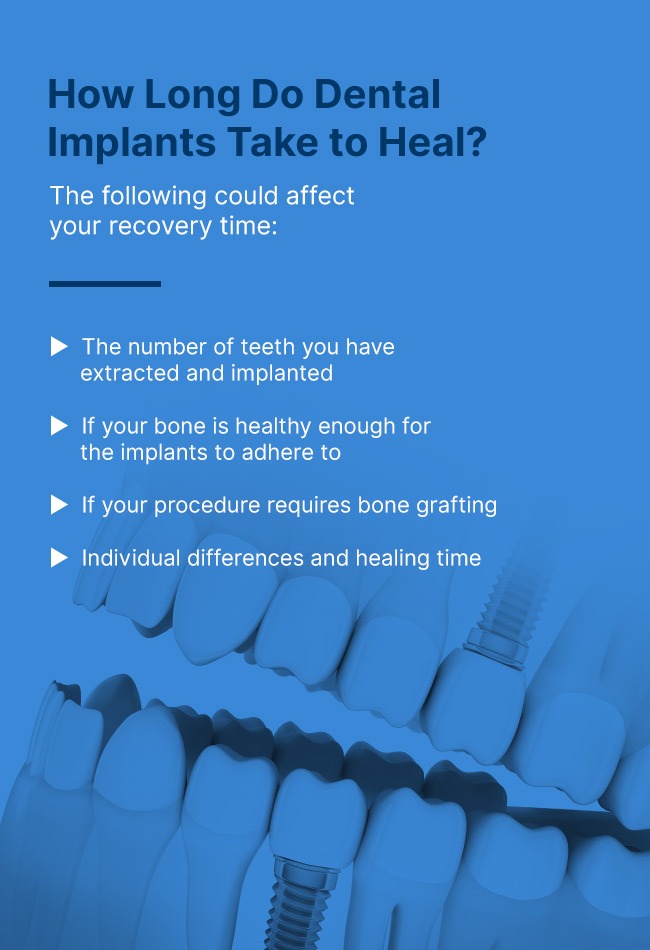
Several factors can influence the dental implant recovery time, affecting how quickly and smoothly the healing process progresses. Understanding these factors—including patient health, bone quality, smoking, oral hygiene, and the implant site—can help manage expectations and optimise recovery.
Patient Health Conditions
Underlying health conditions, such as diabetes and immune status, can significantly impact the healing process. Diabetes, if poorly controlled, can impair blood flow and slow down healing. Autoimmune disorders or compromised immune systems can also affect the body’s ability to heal and increase the risk of infection. It’s crucial to inform your dentist about any pre-existing health conditions to ensure a tailored recovery plan.
Smoking and Its Negative Impact
Smoking has a well-documented negative impact on dental implant recovery. Nicotine restricts blood flow, which is essential for healing and bone integration. Smokers are at a higher risk of implant failure and infection. Quitting smoking before and after surgery can significantly improve the chances of a successful outcome. According to a study published in the “Journal of Oral and Maxillofacial Surgery,” smokers have a failure rate of up to 11% compared to non-smokers.
Gum and Bone Quality
The quality of your gum and bone tissue plays a critical role in how well the implant integrates. Insufficient bone density may require bone grafting procedures to create a stable foundation for the implant. Healthy gum tissue is also essential for protecting the implant and preventing infection. Your dentist will assess your gum and bone quality during the initial consultation to determine the best course of action. If there are issues about your gums it may be best to consult first cosmetic dentistry in albania
Site of the Implant
The location of the implant in your mouth can also affect recovery time. Implants in the lower jaw (mandible) tend to heal faster than those in the upper jaw (maxilla) due to better blood supply. Similarly, implants placed in the front of the mouth typically heal more quickly than those placed in the molar region. The surgical complexity can also differ depending on whether the implant is single tooth implants in albania or is part of multiple implants with bridges in albania
Surgical Complexity
The complexity of the surgical procedure can also influence recovery time. Procedures that require bone grafts or sinus lifts will typically involve a longer healing period. Sinus lift in albania procedures, for example, add additional steps to the surgery, requiring more time for the bone to heal and integrate. The need for such additional procedures is determined by an initial exam and you might need oral surgery in albania to accomplish it.
Addressing the query, “Who should not get dental implants?”, individuals with uncontrolled diabetes, heavy smokers, or those with compromised immune systems may not be ideal candidates due to the increased risk of complications and implant failure.
What can speed up or delay recovery from dental implant surgery?
Several factors can influence the speed and success of your dental implant recovery. Understanding tips for quick recovery and being aware of potential complications, post-surgery care, and infection risk can help you achieve optimal results.
Recommended Aftercare
Following your dentist’s aftercare instructions is crucial for a smooth recovery. Good oral hygiene practices, including gentle brushing and flossing around the implant site, are essential for preventing infection. Using an antibacterial mouthwash can also help keep the area clean. Maintaining proper oral hygiene can prevent needing periodontics in albania later on.
- Brush gently around the implant site.
- Use antibacterial mouthwash as directed.
- Avoid using tobacco products.
Your diet also plays a significant role. Stick to soft foods that require minimal chewing to avoid putting stress on the implant site. Adequate rest is also essential for promoting healing.
Warning Signs and Potential Complications
Being aware of potential complications and warning signs can help you seek timely treatment and prevent further issues. Signs of infection include increased pain, swelling, redness, and pus around the implant site. Implant rejection, although rare, can occur and may require additional intervention. Prolonged pain that doesn’t subside with medication should also be reported to your dentist.
Common Mistakes That Slow Healing
Certain common mistakes can significantly slow down the healing process. Neglecting oral hygiene, smoking, consuming hard or sticky foods, and skipping follow-up appointments can all impede recovery. Following your dentist’s instructions and avoiding these pitfalls can help ensure a successful outcome.
Regarding the types of food you can eat, many people wonder “What foods can I eat after dental implant surgery?”. A soft diet consisting of soups, yogurt, mashed potatoes, and smoothies is recommended for the first few weeks to minimize stress on the implant site and promote healing.
When can you return to work and normal activities after dental implant surgery?
Returning to work and normal activities after dental implant surgery depends on several factors, including the nature of your job and the extent of the procedure. Following guidelines on resuming exercise or strenuous activities, understanding exercise restrictions, and knowing when you can manage driving and daily routines are important considerations.
General Advice: Desk Jobs vs Physical Labour
If your job involves primarily desk work, you may be able to return to work within a day or two after surgery. However, if your job involves physical labour, it’s advisable to take at least a week off to allow for adequate healing. Strenuous activities can increase swelling and discomfort, potentially delaying the recovery process.
Guidelines on Resuming Exercise or Strenuous Activities
It’s generally recommended to avoid strenuous exercise for at least one to two weeks after dental implant surgery. Light activities, such as walking, are usually safe to resume after a few days. However, activities that increase your heart rate and blood pressure should be avoided to prevent complications.
- Avoid strenuous exercise for 1-2 weeks.
- Resume light activities after a few days.
- Listen to your body and avoid overexertion.
Driving and Daily Routines
Driving is generally safe to resume 24 hours after surgery, provided you are not taking prescription pain medication that can impair your judgment. Daily routines can be gradually resumed as you feel comfortable. It’s important to listen to your body and avoid activities that cause pain or discomfort.
Patients often want to know, “When can you return to work and normal activities after dental implant surgery?”. For most individuals, a return to work is possible within a few days, while strenuous activities should be avoided for 1-2 weeks to ensure proper healing.
Dental implant recovery timeline: What to expect day by day and week by week
The dental implant recovery timeline varies from person to person, but understanding the typical milestones can help you prepare for each stage. Following is a breakdown of what to expect after dental implant day by day and week by week, including the dental implant recovery process.
Day 1–2: Rest and Acute Management
The first 24-48 hours after dental implant surgery are crucial for initial healing. During this time, focus on resting and managing acute symptoms. Swelling, pain, and minor bleeding are common. Apply ice packs to the affected area to reduce swelling and take pain medication as prescribed by your dentist. Avoid strenuous activities and stick to a soft food diet. Maintaining contact albania dental implants will allow for further assistance.
- Rest and avoid strenuous activities.
- Apply ice packs to reduce swelling.
- Take prescribed pain medication.
- Eat soft foods and stay hydrated.
Week 1: Suture Check/Removal, Reduced Pain/Swelling
During the first week, attend your follow-up appointment for a suture check or removal. By this time, pain and swelling should begin to subside. Continue to maintain good oral hygiene and follow your dentist’s instructions. A gentle saltwater rinse can help keep the surgical site clean and prevent infection.
If your x-rays show there isn’t enough bone structure it might be necessary to go through bone grafting in albania procedure which may extend the recovery process.
Weeks 2–4: Food Progression, Minimal Discomfort
In weeks 2-4, you can gradually progress to a more normal diet. Start by introducing slightly harder foods and slowly work your way back to your regular eating habits. By this point, discomfort should be minimal. Continue to maintain good oral hygiene and attend any follow-up appointments as scheduled. During your recovery, be certain that you can get invisalign aligners in albania
Months 2–6: Full Bone Healing, Ready for Restoration
The period from months 2-6 is primarily focused on osseointegration, the process of bone fusing with the dental implant. This typically takes 3-6 months. Once osseointegration is complete, you will be ready for the restoration phase. This involves placing an abutment (a connector piece) on the implant and attaching a custom-made crown that replicates the appearance of a real tooth in order to get dental crowns in albania
Addressing the frequently asked question, “How can I tell if my dental implant is healing properly?”, signs of proper healing include reduced pain and swelling, no signs of infection, and gradual bone integration as confirmed by follow-up appointments with your dentist.
Frequently Asked Questions (FAQs)
This section provides answers to some common questions about dental implant recovery.
How long does pain last after dental implant surgery?
The amount of pain experienced after dental implant surgery can vary from person to person. However, most patients find that the most intense pain lasts for only the first 24 to 48 hours following the procedure. After this initial period, the pain typically subsides significantly and can be managed with over-the-counter pain relievers or prescription medication, as directed by your dentist.
What foods can I eat after dental implant surgery?
Following dental implant surgery, it is essential to stick to a soft diet to protect the implant site and promote healing. Some recommended food choices include:
- Soups (lukewarm and not too hot)
- Yogurt and soft cheeses
- Mashed potatoes
- Smoothies
- Applesauce
- Puddings
- Cooked cereals
Avoid hard, crunchy, or sticky foods that could irritate the surgical area or dislodge any sutures.
How can I tell if my dental implant is healing properly?
Proper healing after a dental implant procedure is essential for its long-term success. You can tell if your dental implant is healing properly by observing several signs. First, the pain and swelling should gradually decrease over the first few days. There should be no signs of infection, such as increased redness, pus, or a persistent foul taste. Also, your dentist will monitor the bone integration through follow-up appointments and X-rays.
What are the signs of infection after dental implant surgery?
Recognizing the signs of infection after dental implant surgery is crucial for prompt treatment. Some common symptoms include:
- Increased pain and throbbing at the implant site
- Swelling and redness around the gums
- Pus or discharge from the implant area
- Fever
- Persistent bad taste in the mouth
If you experience any of these symptoms, contact your dentist immediately.
Is dental implant recovery painful?
While some discomfort is expected, most patients find dental implant recovery manageable. During the procedure, local anaesthesia is used to numb the area, preventing any pain. Post-operative discomfort can typically be controlled with over-the-counter or prescription pain medication. At Albania Dental Implants our goal is to provide comfort and great experience.
Can I smoke after dental implant surgery, and how will it affect recovery?
It is strongly advised to avoid smoking after dental implant surgery. Smoking can significantly impair the healing process due to the chemicals restricting blood flow to the gums and bone. This can increase the risk of implant failure, infection, and delayed healing. It’s best to quit smoking before the procedure.
How long before I can get my dental crown placed?
The timing for dental crown placement after implant surgery varies, but it usually takes place once osseointegration is complete. This process can take anywhere from 3 to 6 months, depending on individual healing factors and bone density. Your dentist will evaluate the stability of the implant before proceeding with the crown placement.
What should I avoid after dental implant surgery?
After dental implant surgery, avoid certain habits and substances to ensure a smooth and successful recovery:
- Smoking
- Alcohol
- Hard, crunchy, or sticky foods
- Strenuous physical activity
- Touching or probing the surgical site
Adhering to these guidelines can promote proper healing and minimize complications. When considering your options for missing teeth you can use immediate loading dental implants in albania





