




How much does a dental bridge cost in the UK? This is a common question for individuals considering replacing missing teeth and restoring their smile’s functionality and aesthetics. Understanding the costs associated with dental bridges, the different types available, and how they compare to other options like dental implants is essential for making an informed decision. This guide provides a comprehensive overview of dental bridge costs in the UK, including factors that influence pricing, NHS versus private options, and alternatives to consider, with the goal of helping you choose the best solution for your needs and budget. At Albania Dental Implants, we aim to equip you with all the necessary information so you can make the best choice for your oral health.
What Is a Dental Bridge?
A dental bridge is a fixed prosthetic device used to replace one or more missing teeth. It fills the gap created by the missing tooth (or teeth) and is anchored to the adjacent teeth, restoring your smile and preventing shifting of the remaining teeth. Understanding the dental bridge meaning and dental bridge procedure is crucial for anyone considering this treatment.
Types of Dental Bridges
There are several types of dental bridges, each with its own advantages and suitability for different situations:
- Traditional Bridges: These are the most common type, consisting of a pontic (artificial tooth) held in place by crowns cemented to the abutment teeth (adjacent teeth).
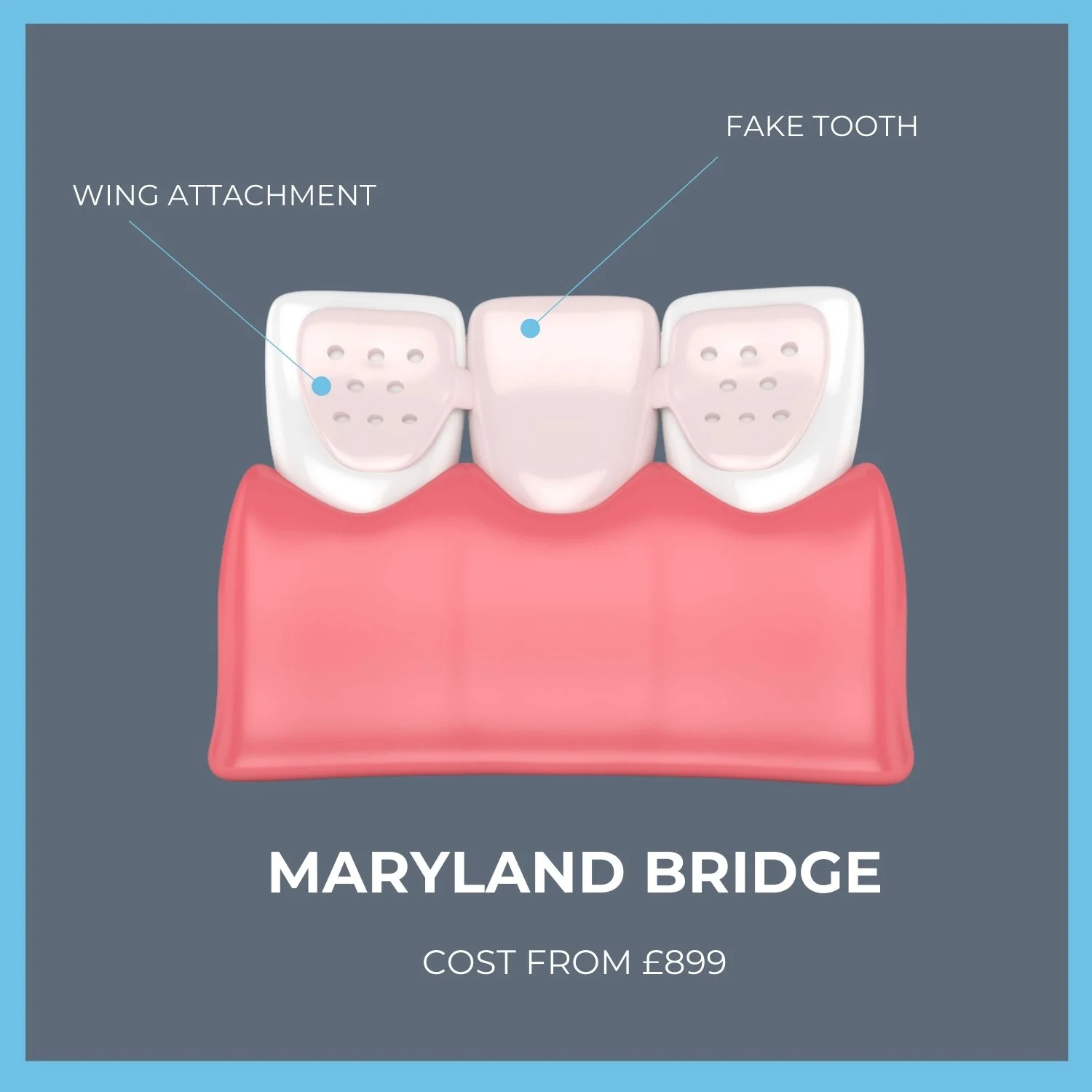
- Maryland Bridges (Resin-Bonded Bridges): These bridges use a metal or porcelain framework that is bonded to the back of the abutment teeth. They are less invasive as they require minimal alteration to the adjacent teeth.
- Cantilever Bridges: These are used when there is only one abutment tooth adjacent to the missing tooth. They are not as strong as traditional bridges and are not recommended for areas with high bite pressure.
- Implant-Supported Bridges: As the name suggests, these bridges are supported by dental implants rather than natural teeth. They are a more stable and long-lasting solution, especially when multiple teeth are missing.
Factors That Affect the Cost of Dental Bridges in the UK
The cost of a dental bridge in the UK can vary significantly depending on several factors. These include dental bridge materials, the number of missing teeth, the location of the dental practice, whether you choose private or NHS dental treatment, and the complexity of the case. Understanding these factors can help you estimate the potential cost of your treatment.
Dental Bridge Materials
The material used for the bridge can significantly impact the cost. Common materials include:
- Porcelain-fused-to-metal (PFM): A cost-effective option that provides good strength and aesthetics.
- All-ceramic or all-porcelain: Offers the most natural appearance and is ideal for front teeth.
- Zirconia: A strong and durable ceramic material that offers excellent aesthetics.
- Gold alloys: A durable and biocompatible option, often used for back teeth where strength is more important than appearance.
Number of Missing Teeth
The more teeth that need to be replaced, the higher the cost of the bridge. Each additional pontic adds to the overall expense.
Location (London vs. Rest of UK)
Dental treatment costs tend to be higher in London and other major cities compared to rural areas. This is due to higher overhead costs for dental practices in these locations.
Private vs. NHS Dental Treatment
Private dental care typically offers a wider range of treatment options and materials, but it is more expensive than NHS dental care. NHS dental treatment is more affordable but may have limitations in terms of available materials and cosmetic options.
Complexity
Complex cases that require additional procedures, such as root canal treatment on the abutment teeth or bone grafting, will increase the overall cost of the bridge.
Average Costs: How Much Does a Dental Bridge Cost in the UK?
Determining the average costs for a dental bridge can be tricky, as prices vary widely. However, understanding the dental bridge price UK, comparing options, and knowing the difference between private dental bridge cost and dental bridge NHS cost is essential for budgeting. In the UK, the price of a dental bridge depends on whether you opt for private treatment or NHS care.
Private Dental Bridge Costs
In private clinics, the cost of a dental bridge can range from £350 to £1,500+ per tooth for a traditional bridge. Implant-supported bridges are significantly more expensive, often starting at £2,000+ per tooth. Resin-bonded bridges (Maryland bridges) typically cost between £350 and £1,200 per tooth. These prices reflect the use of advanced materials, specialized expertise, and personalized care.
NHS Dental Bridge Costs
The NHS offers dental bridges under Band 3, which currently costs £306.80. However, this price covers the entire course of treatment, including examinations, X-rays, and the bridge itself. NHS options may be more limited in terms of material choices and cosmetic considerations.
Regional Cost Differences
It’s important to note that even within the private sector, dental costs can vary significantly by region. London and the South East generally have higher prices compared to the North of England or Wales. Researching local clinics and comparing quotes is essential to find the best price in your area.
| Type of Bridge | Cost Range (Private, UK) | Cost on NHS |
|---|---|---|
| Traditional bridge | £350–£1,500+ per tooth | Band 3 (£306.80) |
| Implant-supported | £2,000+ per tooth | Not covered |
| Resin-bonded/Maryland | £350–£1,200 per tooth | Band 3 |
What’s Included in the Price?
When considering the cost of a dental bridge, it’s important to understand what’s included in the price. Typically, the overall cost covers several aspects of the treatment, but it’s crucial to clarify this with your dentist beforehand. Knowing what the consultation fee covers, what impressions will cost, what dental lab work is involved, and what bridge fitting includes will help you avoid surprises.
Commonly Included Procedures
- Consultation Fee: This usually covers the initial examination, assessment of your oral health, and discussion of treatment options.
- Impressions: The dentist will take impressions of your teeth to create a model for the bridge.
- Dental Lab Work: The cost of fabricating the bridge in a dental laboratory, including the materials and labor involved.
- Bridge Fitting: This includes the placement and adjustment of the bridge to ensure a comfortable and secure fit.
Potential Additional Costs
- X-rays: If X-rays are needed to assess the health of the abutment teeth or surrounding bone, these may be an additional cost.
- Root Canal Treatment: If the abutment teeth require root canal treatment before the bridge can be placed, this will add to the overall expense.
- Temporary Bridge: A temporary bridge may be needed while the permanent bridge is being fabricated, which could incur an extra charge.
- Aftercare: While basic aftercare advice is usually included, any additional treatments or products recommended for maintaining the bridge may cost extra.
NHS vs Private: Dental Bridge Costs Compared
Choosing between NHS and private dental care for a dental bridge involves weighing the costs against the benefits. Understanding NHS dental band charges, NHS eligibility, and the differences between private vs NHS dental care is crucial for making an informed decision.
Cost Comparison
As mentioned earlier, the NHS offers dental bridges under Band 3, which costs £306.80. This is significantly cheaper than private treatment, where costs can range from £350 to £1,500+ per tooth. However, the NHS may have limitations in terms of material choices and cosmetic options.
Eligibility and Access
To be eligible for NHS dental treatment, you must be a UK resident. NHS dental services are widely available, but waiting times for appointments can sometimes be longer compared to private practices.
Benefits and Drawbacks
- NHS Benefits: Affordability, standardized pricing, and basic dental care coverage.
- NHS Drawbacks: Limited material choices, longer waiting times, and less personalized care.
- Private Benefits: Wider range of treatment options, advanced materials, shorter waiting times, and personalized care.
- Private Drawbacks: Higher costs, potentially variable pricing, and the need for dental insurance or self-funding.
Dental Insurance
Some dental insurance policies may cover part or all of the cost of a dental bridge, whether you choose NHS or private treatment. It’s important to check the terms of your policy to understand what is covered and what is not. If you are considering dental implants as an alternative, it is worth noting that NHS funding for dental implants is rare.
Alternatives to Dental Bridges and Their Costs
While dental bridges are a common solution for replacing missing teeth, there are alternative options to consider. These include dental implants, dentures, and dental crowns. Briefly describing these alternatives, along with price comparisons, can help you make the right choice for your specific situation.
Dental Implants
Dental implants are a long-term solution for missing teeth that involves surgically placing a titanium post into the jawbone to support a replacement tooth. They offer excellent stability and aesthetics but are more expensive than dental bridges. The cost of dental implants in the UK typically starts at £2,500 per tooth. For a more budget-friendly option, you might consider dental tourism in Albania, where high-quality implants are available at a fraction of the cost.
Dentures
Dentures are removable appliances that can replace multiple missing teeth. They are a more affordable option than dental bridges or implants but may not be as stable or comfortable. The cost of dentures in the UK can range from £300 to £800 for a full set, depending on the materials used.
Dental Crowns
Dental crowns are used to cover and protect damaged or weakened teeth. While they are not a direct alternative to dental bridges, they may be used in conjunction with a bridge to support the abutment teeth. The cost of a dental crown in the UK typically ranges from £600 to £1,000 per tooth.
FAQ: Dental Bridge Costs in the UK
Here, we address some frequently asked questions regarding dental bridge costs in the UK. This will cover topics such as finding a cheap dental bridge UK, the longevity of bridges, NHS availability, dental insurance coverage, and more.
What is the cheapest dental bridge option in the UK?
The cheapest dental bridge option in the UK is typically an NHS dental bridge, available under Band 3 for £306.80. However, the material choices may be limited. If you are looking for a private option, a resin-bonded (Maryland) bridge is often less expensive than a traditional bridge.
How long do dental bridges last and is the investment worth it?
Dental bridges can last anywhere from 5 to 15 years, or even longer, with proper care and maintenance. Regular brushing, flossing, and dental check-ups are essential for prolonging the lifespan of a bridge. Whether the investment is worth it depends on your individual needs and priorities. Bridges restore your smile, improve chewing function, and prevent shifting of the remaining teeth. If properly cared for, dental bridges can last for many years, making them a worthwhile investment for many people.
Are dental bridges available on the NHS and who qualifies?
Yes, dental bridges are available on the NHS under Band 3. To qualify for NHS dental treatment, you must be a UK resident. However, the availability of specific treatments, including bridges, may vary depending on the individual dentist and their NHS contract.
Do dental insurance policies cover dental bridges?
Many dental insurance policies cover part or all of the cost of dental bridges. However, the level of coverage can vary depending on the policy. It’s important to check the terms of your policy to understand what is covered and what is not. Some policies may have waiting periods or limitations on the types of bridges covered.
Is it cheaper to get a dental bridge abroad?
Yes, it can be significantly cheaper to get a dental bridge abroad, particularly in countries like Albania or Turkey. These countries offer high-quality dental treatment at a fraction of the cost compared to the UK. However, it’s important to research the dental practice thoroughly and ensure they meet international standards of care. Be aware that you may need to factor in travel and accommodation costs.
What happens if my dental bridge breaks—will I have to pay the full cost again?
If your dental bridge breaks, the cost of repair or replacement will depend on the extent of the damage and the terms of your dental warranty. Some dental practices offer warranties on their work, which may cover part or all of the cost of repairs or replacements. If the bridge is not covered by a warranty, you will likely have to pay for the repair or replacement out-of-pocket. It’s recommended to ask about warranty options before getting a dental bridge.
If you’re considering a dental bridge or exploring alternative solutions like dental implants, contact Albania Dental Implants today. We can help you achieve a healthy, confident smile at an affordable price. With high-quality materials and a dedication to patient care, we are committed to helping you regain your smile’s beauty and function.