




How painful are root canals is a common concern for anyone facing this dental procedure. Many people associate root canals with intense discomfort, but advancements in modern dentistry have significantly changed the experience. This article explores the realities of root canal pain, the procedure itself, and how Albania Dental Implants can provide you with a comfortable and effective treatment.
Root Canal Pain: Myths vs. Reality
The phrase “root canal” often conjures images of excruciating pain, but this perception is largely based on outdated information. Understanding the difference between root canal myths and the reality of modern root canal treatment can significantly ease anxiety.
Why Root Canals Have a Reputation for Pain
Historically, root canals were indeed painful procedures. This reputation stemmed from older techniques, less effective anaesthesia, and the fact that patients often sought treatment only when the infection and inflammation were already severe. Before modern endodontic practices, managing infection and numbing the area effectively was a challenge, leading to a less pleasant experience for the patient.
How Modern Techniques Have Changed Patient Experience
Today, root canals are performed with advanced techniques and technologies that prioritize patient comfort. Digital imaging provides a detailed view of the tooth, allowing for precise treatment. Rotary instruments make the cleaning and shaping of the root canal system more efficient and less invasive. Most importantly, modern local anaesthesia ensures that patients experience little to no pain during the procedure.
What Happens During a Root Canal Procedure?
Knowing what to expect during a root canal procedure can also help alleviate anxiety. Understanding each step of the process can demystify the treatment and make it less intimidating. At Albania Dental Implants, our priority is to ensure you are fully informed and comfortable throughout your treatment.
Detailed Step-by-Step Overview
- Diagnosis: The dentist will examine the tooth and take X-rays to determine the extent of the damage or infection.
- Anaesthesia: Local anaesthesia is administered to numb the tooth and surrounding tissues.
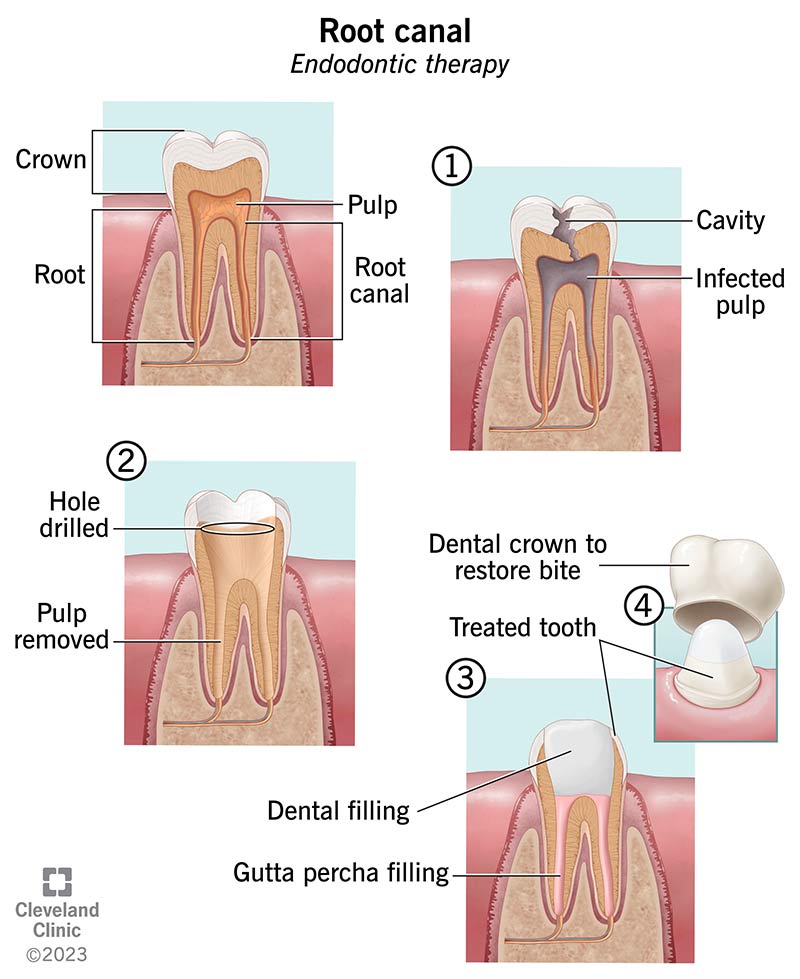
- Access: A small opening is created in the crown of the tooth to access the pulp chamber.
- Cleaning and Shaping: Special instruments are used to remove the infected or damaged pulp, and the root canals are cleaned and shaped.
- Disinfection: The canals are disinfected to eliminate any remaining bacteria.
- Filling: The root canals are filled with a biocompatible material, usually gutta-percha, to prevent future infection.
- Sealing: A temporary filling is placed to seal the access opening.
- Restoration: A dental crown is typically placed over the tooth to protect and restore its function.
Use of Local Anaesthesia
Local anaesthesia is a cornerstone of modern root canal treatment. It ensures that the patient feels minimal discomfort during the procedure. The dentist will carefully numb the area around the affected tooth, blocking pain signals.
Patient Comfort Measures
Beyond anaesthesia, dentists employ various patient comfort measures. These can include:
- Offering headphones to listen to music
- Providing blankets
- Using relaxation techniques.
Sedation dentistry is available for patients with significant dental anxiety, allowing them to feel relaxed and at ease during the procedure.
Expected Sensations During Treatment
With effective anaesthesia, you should feel little to no pain during the root canal. You may experience pressure or vibrations, but these sensations should not be painful. If you do feel any discomfort, it’s essential to inform your dentist, who can adjust the anaesthesia as needed. At Albania Dental Implants, we are committed to ensuring your comfort is a priority.
Does a Root Canal Hurt?
Many people are concerned about root canal pain. However, with modern techniques and anaesthesia, a root canal should not be a painful experience. Understanding the role of anaesthesia and what sensations to expect can help ease your worries. The key phrase root canal pain comes up frequently.
Pain During the Procedure: What You Actually Feel
With proper local anaesthesia, you should not feel any sharp pain during the root canal. Some patients report feeling pressure or vibration as the dentist works on the tooth, but these sensations are typically mild. The focus is on ensuring you are comfortable throughout the process.
Role of Anaesthesia and Sedation
Anaesthesia is crucial for pain management during a root canal. Local anaesthesia is typically sufficient to numb the tooth and surrounding tissues. For patients with dental anxiety, sedation options are available. Sedation can range from mild (nitrous oxide) to moderate (oral sedation) to deep (IV sedation), depending on the patient’s needs and preferences. With our dental tourism in Albania, we offer all inclusive options for overseas patients requiring extensive treatment.
Comparisons with Other Dental Procedures (e.g., Fillings, Extraction)
Many patients find that a root canal is no more painful than getting a filling. In some cases, it may even be less painful than a tooth extraction, especially if the tooth is infected and inflamed. The anaesthesia ensures that you are comfortable, and the dentist takes steps to minimize any discomfort.
Pain After a Root Canal: What to Expect
While the procedure itself is generally painless, some discomfort after a root canal is normal. Understanding what to expect during root canal recovery and how to manage any post-procedure pain can help you have a smoother recovery.
Typical Post-Procedure Discomfort
After a root canal, it’s common to experience some tenderness or soreness in the treated area. This discomfort is usually mild and can be managed with over-the-counter pain medication. Some people may also experience sensitivity to pressure or temperature for a few days.
Duration and Severity of Pain
Post-procedure pain typically lasts for a few days to a week. The severity of the pain varies from person to person, but it’s usually manageable with medication. If you experience severe or prolonged pain, it’s important to contact your dentist.
Pain Management Strategies
Effective pain management strategies include:
- Taking over-the-counter pain relievers such as ibuprofen or paracetamol.
- Applying a cold compress to the affected area.
- Avoiding chewing on the treated side of the mouth.
- Following your dentist’s post-operative instructions carefully.
Signs of Unusual Pain or Complications
While some discomfort is normal, certain signs may indicate a complication. Contact your dentist if you experience:
- Severe or increasing pain.
- Swelling in the mouth or jaw.
- A fever.
- An allergic reaction to medication.
Root Canal vs. Extraction: Which Is More Painful?
When faced with a severely damaged or infected tooth, you might wonder whether a root canal or extraction is the better option. Comparing root canal vs. extraction pain can be a key factor in making this decision.
Comparative Pain and Recovery Experiences
Generally, a root canal is aimed at saving your natural tooth, thus it’s considered less traumatic than an extraction. Extractions often involve more post-operative pain and a longer recovery period. While both procedures are performed under anaesthesia, the recovery from an extraction may involve more discomfort as the bone and surrounding tissues heal. After an extraction, it is not too late to seek a dental implant as a permanent replacement.
Benefits and Drawbacks of Each Treatment
- Root Canal:
- Benefits: Preserves natural tooth, maintains bite alignment, prevents shifting of adjacent teeth.
- Drawbacks: Requires multiple appointments, may need a crown, potential for re-infection (rare).
- Extraction:
- Benefits: Eliminates infection, can be quicker than a root canal.
- Drawbacks: Loss of natural tooth, potential for shifting of adjacent teeth, may require a bridge or implant to replace the missing tooth.
Alternatives to Root Canal and Their Impact on Pain
While a root canal is often the best option for saving a damaged tooth, there are alternatives to root canal. Understanding these alternatives and their potential impact on pain can help you make an informed decision.
When Alternatives Are Considered
Alternatives to a root canal are typically considered when the tooth is too severely damaged to be saved, or when the patient has other medical conditions that make a root canal inadvisable. In cases where finances are limited, exploring the cheapest way to replace a missing tooth UK might be a viable path. When dental decay becomes too severe, the only option may be to consider tooth extraction and a cheaper alternative to dental implants.
Potential Pain and Outcomes for Each Option
- Extraction: As mentioned earlier, extraction involves removing the tooth. Post-operative pain can be moderate and may require prescription pain medication. It can lead to bone loss and shifting of adjacent teeth.
- Dental Implant: This involves replacing the missing tooth with an artificial tooth root. While the initial surgery can cause some discomfort, dental implants offer a long-term, stable solution. A long term solution can be acheived with Full Mouth Reconstruction in Albania.
- Bridge: A bridge involves placing a false tooth supported by adjacent teeth. While less invasive than an implant, it requires altering the adjacent teeth and may not be as long-lasting.
- Dentures: Removable dentures are another option for replacing missing teeth. While they are less invasive, they can be uncomfortable and may not provide the same level of function as natural teeth or implants.
Managing Dental Anxiety About Root Canals
Dental anxiety is a common concern, and it can be especially pronounced when considering a root canal. Managing dental anxiety about root canals is essential for a positive experience.
Tips for Calming Nerves
- Communicate with your dentist: Talk about your fears and concerns.
- Use relaxation techniques: Practice deep breathing or meditation.
- Bring a distraction: Listen to music or a podcast during the procedure.
- Consider sedation: Discuss sedation options with your dentist.
Questions to Ask Your Dentist
Asking questions can help alleviate anxiety and ensure you are fully informed. Consider asking:
- What type of anaesthesia will be used?
- How long will the procedure take?
- What can I expect during recovery?
- What are the potential risks and complications?
Sedation Options
Sedation options can help you feel relaxed and at ease during the root canal. These options include:
- Nitrous oxide (laughing gas): A mild sedative that helps you relax.
- Oral sedation: A pill that makes you drowsy.
- IV sedation: A deeper form of sedation administered through an IV.
How painful are root canals compared to a tooth extraction?
While both root canals and tooth extractions are performed under anaesthesia, making them relatively painless during the procedure, the recovery experiences can differ. Generally, patients find the recovery from a root canal less painful than that of a tooth extraction. Root canals aim to preserve the natural tooth, minimizing trauma to the surrounding tissues. Tooth extractions, on the other hand, involve removing the tooth, which can lead to more significant post-operative discomfort as the bone and gums heal.
Will I feel pain during a root canal with anaesthesia?
With modern local anaesthesia, you should not feel pain during a root canal. The anaesthetic numbs the tooth and surrounding tissues, blocking pain signals. Some patients report feeling pressure or vibration, but these sensations are typically mild and not painful. If you do experience any discomfort, it is crucial to inform your dentist, who can adjust the anaesthesia as needed to ensure your comfort.
How long does pain last after a root canal?
Post-procedure discomfort after a root canal typically lasts for a few days to a week. The pain is usually mild and manageable with over-the-counter pain relievers such as ibuprofen or paracetamol. Some patients may experience sensitivity to pressure or temperature during this time. If the pain persists or worsens after a week, it is important to contact your dentist to rule out any complications.
What should I do if my root canal hurts more than expected?
If your root canal hurts more than expected, the first step is to contact your dentist. Severe or prolonged pain could indicate a complication such as an infection or inflammation. Your dentist can evaluate the situation, take X-rays if necessary, and provide appropriate treatment, which may include prescribing stronger pain medication or antibiotics.
Can I avoid a root canal procedure if I am afraid of pain?
While it’s natural to be concerned about pain, avoiding a root canal altogether may not be the best option. If the tooth is severely damaged or infected, the infection can spread and cause more serious health problems. Discuss your fears with your dentist, who can explain pain management strategies and sedation options to make the procedure more comfortable. In some cases, there may be alternative treatments, but these should be discussed thoroughly with your dentist to understand their potential impact on pain and long-term oral health.
How can I best prepare for my root canal to minimise discomfort?
To prepare for a root canal and minimise discomfort, follow these steps:
- Discuss your concerns with your dentist.
- Follow any pre-operative instructions provided by your dentist.
- Ensure you have a ride home if you are undergoing sedation.
- Stock up on soft foods and pain relievers.
- Get a good night’s sleep before the procedure.
Are root canals more painful for children or adults?
The perception of pain during a root canal is generally similar for children and adults, provided that effective anaesthesia is used. Children may have more anxiety about the procedure, so it’s essential to communicate with them and provide reassurance. Dentists often use child-friendly language and techniques to ease their fears. However, the actual pain experienced during and after the procedure should not differ significantly between children and adults when properly managed.
What can I expect during my recovery from a root canal?
During your recovery from a root canal, expect some tenderness or soreness in the treated area for a few days to a week. Manage discomfort with over-the-counter pain relievers, apply a cold compress, and avoid chewing on the treated side. Follow your dentist’s post-operative instructions carefully and contact them if you experience severe pain, swelling, or other unusual symptoms.
Do root canals cause pain years after the procedure?
Root canals are designed to provide a long-term solution for a damaged or infected tooth. In most cases, they do not cause pain years after the procedure. However, in rare instances, complications such as re-infection or fracture of the treated tooth can occur, leading to pain. If you experience pain in a tooth that had a root canal years ago, it’s important to consult your dentist for evaluation and treatment.
Is there pain if I opt for sedation dentistry?
Sedation dentistry aims to minimise or eliminate pain and anxiety during dental procedures, including root canals. The level of sedation varies depending on the patient’s needs, ranging from mild sedation (nitrous oxide) to moderate sedation (oral sedation) to deep sedation (IV sedation). With appropriate sedation, you should feel little to no pain during the procedure. Even with deep sedation, where you may be mostly or completely unconscious, local anaesthesia is still typically used to manage any potential discomfort.
Conclusion
While the thought of a root canal might be daunting, modern techniques have made the procedure significantly less painful than its reputation suggests. Understanding the process, knowing what to expect, and communicating with your dentist are key to a positive experience. At Albania Dental Implants, we are committed to providing comfortable and effective root canal treatment. Contact us today to learn more about how we can help you maintain your oral health with a pain-free experience.