


How painful is a dental implant? This is a common and valid concern for anyone considering this long-term solution for missing teeth. Understanding the potential for dental implant pain, what to expect during the procedure, and how to manage any discomfort afterwards is key to making an informed decision. At Albania Dental Implants, we prioritise your comfort and aim to provide a pain-free experience using the latest techniques and technology.
What to expect during dental implant surgery
When considering dental implants, understanding what happens during the surgery and how dental implant anaesthesia works can ease any anxieties. The goal is to ensure a comfortable and pain-free experience. At Albania Dental Implants, we use a range of anaesthesia options tailored to your specific needs and preferences, ensuring you feel relaxed and at ease throughout the entire procedure. This commitment to patient comfort is a cornerstone of our approach to dental implants in Albania.
Types of anaesthesia used for dental implants
Several types of anaesthesia are available for dental implant surgery, each with varying levels of sedation:
- Local Anaesthesia: This is the most common type, numbing only the specific area where the implant will be placed. You remain fully conscious but feel no pain.
- Sedation (Oral or IV): For patients with anxiety, oral or intravenous (IV) sedation can help you relax. Oral sedation involves taking a pill, while IV sedation is administered directly into your bloodstream. You will be awake but less aware of the procedure.
- General Anaesthesia: In rare cases, general anaesthesia may be used, particularly for extensive procedures or patients with severe anxiety. You will be completely unconscious during the surgery.
The choice of anaesthesia depends on factors such as the complexity of the surgery, your anxiety level, and your medical history. Your dentist will discuss the options with you to determine the best approach.
Is the dental implant procedure itself painful?
Thanks to modern anaesthesia, the dental implant procedure itself should not be painful. You may feel some pressure or vibration during the surgery, but the anaesthetic will prevent you from experiencing any sharp pain.
Many patients report that the placement of a single tooth implants in Albania is less uncomfortable than a tooth extraction. Post-operative discomfort is generally well-managed with pain medication. Our experienced team at Albania Dental Implants takes every precaution to minimize any potential discomfort during and after your procedure.
Pain after dental implant surgery: What is normal?
Pain after dental implant surgery is a common concern. Understanding what level of pain is normal, how long it lasts, and what measures can be taken to manage it is crucial for a smooth dental implant recovery. Pain after dental implant surgery is typically manageable and varies from person to person, but is usually well controlled with over-the-counter or prescribed medications. At Albania Dental Implants, we provide detailed post-operative instructions and support to ensure your comfort and facilitate a speedy recovery.
Typical pain levels
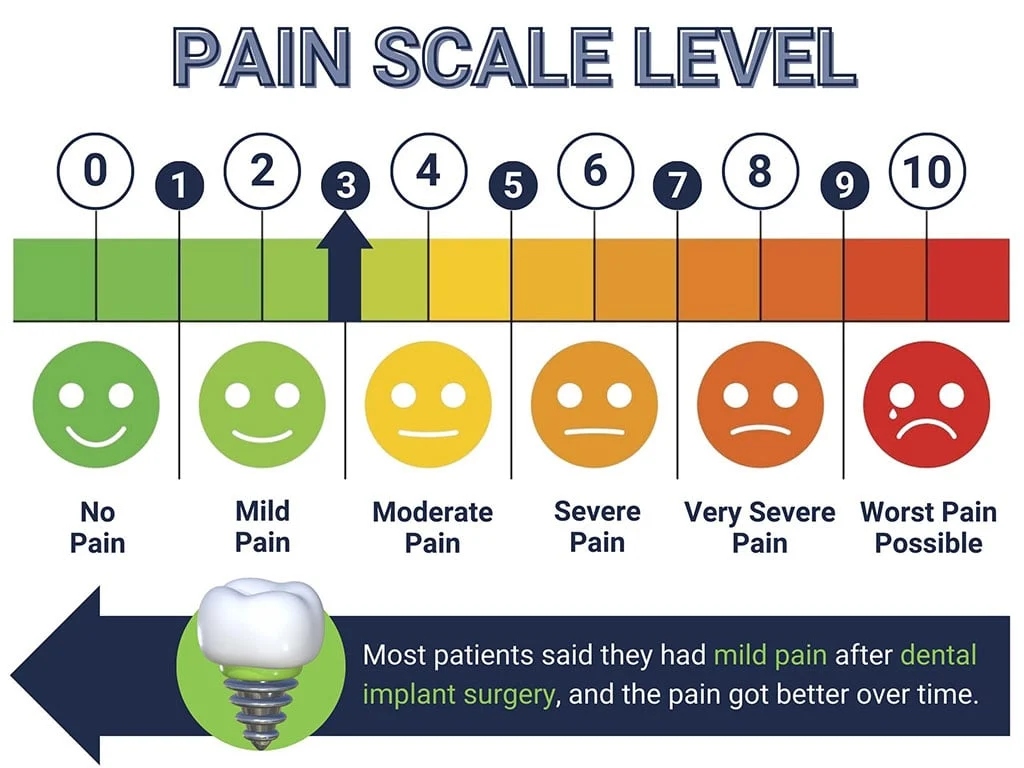
Most patients experience mild to moderate pain after dental implant surgery. The intensity of the pain depends on several factors, including:
- The extent of the surgery: Multiple implants or additional procedures like bone grafting can increase pain levels.
- Individual pain tolerance: Everyone experiences pain differently.
- The location of the implant: Implants in certain areas of the mouth may be more sensitive.
Generally, the pain is most noticeable in the first few days after surgery and gradually decreases over time.
How long does pain last after dental implants?
How long does pain last after dental implants? The duration of pain after dental implants varies. Typically, the most intense pain occurs in the first 24-72 hours following the procedure. After this initial period, the pain should gradually subside. Most patients find that discomfort is significantly reduced within a week. However, some mild soreness or sensitivity may persist for up to two weeks. If you experience persistent or worsening pain, it’s essential to contact your dentist.
Swelling and discomfort: What is expected?
Swelling after dental implants and discomfort are normal side effects of the surgery. Swelling typically peaks around 48-72 hours after the procedure and then gradually decreases. Discomfort can include soreness, throbbing, and general sensitivity in the area. Bruising may also occur, which can extend to the cheek or neck. These symptoms are temporary and usually resolve within a week to ten days.
Dental implant recovery timeline and pain intensity
Understanding the dental implant recovery timeline and pain intensity can help you prepare for what to expect after your procedure. Proper post-operative care is essential for minimizing pain and ensuring successful integration of the implant. Pain management dental implants is a top priority at Albania Dental Implants; we will guide you through each stage of the recovery process. Our team provides comprehensive support, from detailed instructions to personalized follow-up care, to ensure you experience a comfortable and successful recovery.
Days 1-3 after surgery
The first three days after surgery are usually the most uncomfortable. Here’s what you can expect:
- Pain: Expect moderate pain, which can be managed with prescribed or over-the-counter pain medication.
- Swelling: Swelling will likely increase during this time, peaking around day 2 or 3.
- Bleeding: Some oozing or bleeding from the surgical site is normal.
- Diet: Stick to a soft or liquid diet to avoid irritating the area.
Follow your dentist’s instructions carefully, including taking pain medication as prescribed, applying ice packs to reduce swelling, and getting plenty of rest.
Days 4-7: Reduction in pain
By days 4-7, you should notice a significant reduction in pain and swelling. Here’s what to expect:
- Pain: Pain should be decreasing, and you may be able to reduce your reliance on pain medication.
- Swelling: Swelling should start to subside.
- Diet: You can gradually introduce more solid foods into your diet as tolerated.
- Oral hygiene: Gently brush your teeth, avoiding the surgical site. Use an antibacterial mouthwash as directed by your dentist.
Beyond a week: When to seek help
After a week, most of the initial discomfort should be gone. However, it’s important to be aware of potential complications. Seek help from your dentist if you experience:
- Severe or worsening pain: This could indicate an infection or other problem.
- Excessive swelling or bleeding: This could also be a sign of infection or a blood clotting issue.
- Fever: This is a common sign of infection.
- Numbness or tingling: This could indicate nerve damage.
- Implant mobility: If the implant feels loose, contact your dentist immediately.
Managing pain and discomfort after implants
Effective pain management dental implants involves a combination of medication, home care, and following your dentist’s instructions. Taking proactive steps can significantly reduce pain and discomfort and promote healing. At Albania Dental Implants, we provide comprehensive post-operative care instructions and are always available to answer any questions or concerns you may have during your recovery.
Over-the-counter pain relief
Over-the-counter pain relievers like ibuprofen (Nurofen) or paracetamol (Panadol) can be effective for managing mild to moderate pain. Follow the dosage instructions on the label and consult your dentist if you have any concerns about taking these medications. It’s typically best to take pain medication before the anaesthesia wears off to manage pain effectively.
Prescribed medications
Your dentist may prescribe stronger pain medication, such as codeine or tramadol, for more severe pain. Take these medications exactly as prescribed and be aware of potential side effects like drowsiness or constipation. Antibiotics may also be prescribed to prevent infection.
Home care tips to reduce pain and swelling
In addition to medication, several home care tips can help reduce pain and swelling:
- Apply ice packs: Apply ice packs to the outside of your face for 20 minutes at a time, several times a day, especially in the first 48 hours.
- Rest: Get plenty of rest to allow your body to heal.
- Elevate your head: Sleep with your head elevated on a pillow to reduce swelling.
- Eat soft foods: Avoid hard, crunchy, or chewy foods that could irritate the surgical site.
- Stay hydrated: Drink plenty of fluids to promote healing.
- Avoid smoking and alcohol: These can interfere with healing and increase the risk of complications.
- Gentle mouth rinse: Rinse gently with warm salt water (1/2 teaspoon of salt in a cup of warm water) several times a day to keep the area clean. Avoid vigorous rinsing, which can dislodge blood clots and delay healing.
How does the pain of dental implants compare to tooth extraction or other procedures?
When considering dental implants, it’s natural to wonder how the pain compares to other dental procedures, such as a tooth extraction. Dental implant vs tooth extraction pain is a frequent question. Patient experience dental implant procedures varies, but generally, many find the discomfort levels similar. At Albania Dental Implants, we prioritize patient comfort, offering comprehensive pain management strategies and support throughout your dental implant journey.
Patient experiences
Patient experiences vary, but many report that the pain associated with dental implants is comparable to that of a tooth extraction. Some even find it less painful. However, it’s important to note that individual pain tolerance and the complexity of the procedure can influence the experience.
Is a dental implant more or less painful than other dental procedures?
Overall, dental implant surgery is generally considered to be less painful than more invasive procedures, such as root canals or extensive oral surgery. The use of anaesthesia ensures that you feel no pain during the procedure, and post-operative discomfort is typically manageable with pain medication and home care. Compared to tooth extraction, some may experience similar pain levels, while others report less discomfort with dental implants.
Red flags: When is pain not normal after dental implants?
While some pain and discomfort are expected after dental implant surgery, it’s crucial to recognize when pain is not normal and could indicate a complication. Persistent pain after dental implant or unusual symptoms should be promptly addressed. Dental implant complications, such as infection, can cause significant discomfort and jeopardize the success of the implant. At Albania Dental Implants, we emphasize the importance of close monitoring and encourage patients to contact us immediately if they experience any concerning symptoms.
Signs of infection
Signs of infection after dental implant surgery include:
- Severe or worsening pain: Pain that doesn’t improve with medication or gets progressively worse.
- Excessive swelling or redness: Swelling that increases after the first few days or significant redness around the implant site.
- Pus or discharge: Any pus or discharge from the surgical site is a clear sign of infection.
- Fever: A fever of 38°C (100.4°F) or higher.
- Bad taste or odour: A persistent bad taste or odour in your mouth.
When to contact your dentist
Contact your dentist immediately if you experience any of the red flags mentioned above. Early detection and treatment of complications can prevent more serious problems and ensure the success of your dental implant. Don’t hesitate to reach out to Albania Dental Implants with any concerns or questions about your recovery. We offer comprehensive follow-up care to address any potential issues promptly and effectively.
Frequently Asked Questions on Dental Implant Pain
Understanding the process and potential discomforts of dental implants can alleviate anxiety and ensure a smoother experience. Here are some frequently asked questions about dental implant pain, answered in detail to address your concerns.
How painful is a dental implant procedure with anaesthesia?
With modern dental implant anaesthesia, the dental implant procedure itself is generally not painful. Local anaesthesia, sedation, or general anaesthesia is used to numb the area or induce a state of relaxation or unconsciousness. You may feel some pressure or vibration, but you should not experience any sharp pain during the surgery.
How long should pain last after a dental implant?
Typically, the most intense pain lasts for the first 24-72 hours after the dental implant procedure. After this period, the pain should gradually subside. Most patients find that discomfort is significantly reduced within a week. However, some mild soreness or sensitivity may persist for up to two weeks.
Is it normal to have swelling after dental implants?
Yes, swelling after dental implants is a normal side effect of the surgery. Swelling typically peaks around 48-72 hours after the procedure and then gradually decreases. Applying ice packs and elevating your head can help reduce swelling.
What can I do for pain after dental implant surgery?
You can manage pain after dental implant surgery with over-the-counter pain relievers like ibuprofen or paracetamol, or with prescribed pain medication from your dentist. Home care tips, such as applying ice packs, resting, eating soft foods, and rinsing with warm salt water, can also help reduce pain and swelling.
Is dental implant pain worse than a tooth extraction?
Patient experiences vary, but many report that the pain associated with dental implants is comparable to that of a tooth extraction. Some even find it less painful. The use of anaesthesia and post-operative pain management strategies contribute to minimizing discomfort.
When should I be worried about pain after an implant?
You should be worried about pain after an implant if you experience severe or worsening pain, excessive swelling or bleeding, fever, pus or discharge from the surgical site, numbness or tingling, or implant mobility. These could be signs of infection or other complications.
Can dental implant pain indicate an infection?
Yes, dental implant pain can indicate an infection, especially if it is accompanied by other symptoms such as severe or worsening pain, excessive swelling or redness, pus or discharge, fever, and a bad taste or odour in your mouth. Contact your dentist immediately if you suspect an infection.
Dental implant pain: Patient stories and expert advice
Hearing from others who have undergone dental implant treatment can provide valuable insights and reassurance. Patient experience dental implant procedures can vary widely, but understanding common themes can help you prepare for your own journey. Seeking tips from dental professionals can also ensure a more comfortable and successful outcome.
Testimonials and case studies
Real-life testimonials and case studies often highlight the manageable nature of pain associated with dental implants. Many patients report that their initial anxieties were unfounded and that the procedure was much less uncomfortable than they anticipated. These stories can provide encouragement and a realistic perspective on what to expect. At Albania Dental Implants Reviews, we are proud of the positive feedback we receive from our satisfied clients.
Tips from dental professionals
Dental professionals emphasize the importance of following post-operative instructions carefully to minimize pain and promote healing. These tips often include taking pain medication as prescribed, applying ice packs, maintaining good oral hygiene, and avoiding smoking and alcohol. Additionally, open communication with your dentist is crucial for addressing any concerns or unusual symptoms promptly.
Conclusion & next steps
Undergoing dental implant surgery is an investment in your oral health and overall well-being. While the question “how painful is a dental implant?” is a common concern, understanding the process, available pain management strategies, and potential complications can help you approach the procedure with confidence. At Albania Dental Implants, we are committed to providing a pain-free and successful experience, ensuring you regain a healthy and beautiful smile.
When to seek professional help
If you’re considering dental implants and have concerns about pain or discomfort, it’s essential to seek professional help. A qualified dentist can assess your individual needs, discuss your options, and develop a personalized treatment plan that prioritizes your comfort and well-being. Don’t hesitate to address any anxieties or questions you may have.
How to choose a clinic for pain-free dental implant experience
Choosing the right clinic for a pain-free dental implant experience involves considering several factors:
- Experience and expertise: Look for a clinic with experienced dentists who specialize in dental implants and have a track record of successful outcomes.
- Technology and techniques: Ensure the clinic uses advanced technology and techniques to minimize pain and improve precision.
- Anaesthesia options: Inquire about the range of anaesthesia options available to ensure a comfortable and pain-free procedure.
- Patient reviews and testimonials: Read patient reviews and testimonials to get a sense of the clinic’s reputation and patient satisfaction.
- Comprehensive care: Choose a clinic that provides comprehensive care, including detailed pre-operative instructions, post-operative support, and follow-up appointments.
At Albania Dental Implants, we prioritize patient comfort and satisfaction, offering state-of-the-art facilities, experienced professionals, and personalized care to ensure a pain-free dental implant experience. Contact Albania Dental Implants today to book your consultation and take the first step towards a confident, healthy smile. Discover the possibilities of transforming your smile through dental tourism in Albania.