



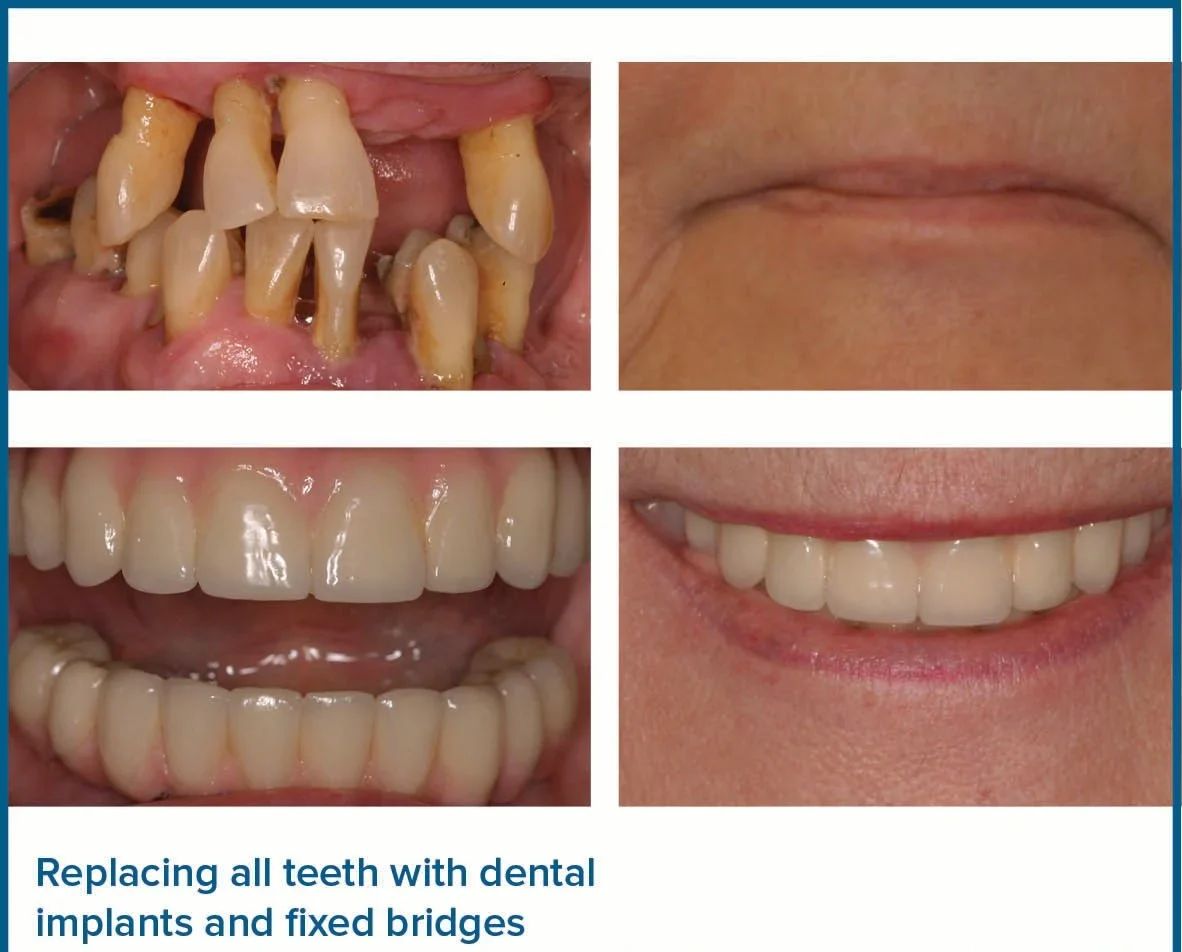

If you are considering full-mouth dental replacement, “I want all my teeth removed and replaced UK” is a solution increasingly sought after by UK patients dealing with extensive dental issues. Many individuals in the UK face the prospect of losing all their teeth due to various dental problems and explore options for complete dental restoration.
Who Needs Full Mouth Dental Replacement?
Full mouth dental replacement becomes necessary when extensive dental problems compromise the health and functionality of most or all teeth. This can significantly impact a person’s quality of life, affecting their ability to eat, speak, and smile confidently. Recognizing the underlying causes and available solutions is the first step toward reclaiming a healthy and functional smile.
Who may require all teeth removed?
Several factors can lead to the need for all teeth to be removed. Severe tooth decay, advanced gum disease (periodontitis), and dental injuries are common culprits. In some cases, genetic conditions or systemic illnesses can also contribute to widespread tooth loss. Patients undergoing chemotherapy or radiation therapy may also experience significant dental damage, necessitating full extraction.
Common dental health problems leading to full extraction
Understanding the specific dental health problems that can lead to full extraction is essential for preventative care and early intervention. Some of the most common issues include:
- Severe Tooth Decay: Untreated cavities can progress to the point where teeth are irreparable.
- Advanced Gum Disease (Periodontitis): This infection can destroy the bone and tissues supporting the teeth, leading to tooth loss.
- Dental Injuries: Trauma from accidents or sports can result in irreparable tooth damage.
- Failed Dental Restorations: Repeated failures of fillings, crowns, or other restorations can weaken teeth and necessitate extraction.
- Systemic Illnesses: Conditions like diabetes or autoimmune diseases can increase the risk of dental problems and tooth loss.
Individuals with these conditions should seek prompt dental care to prevent the need for extensive extractions and replacements. Regular check-ups and good oral hygiene practices are crucial for maintaining dental health.
NHS vs private patients: eligibility and waiting times
Access to full mouth dental replacement options varies between NHS and private patients. On the NHS, eligibility for dental implants is limited and typically reserved for cases of medical necessity, such as cancer treatment or significant trauma. Waiting times for NHS dental treatment can also be substantial, often stretching several months or even years.
Private patients, on the other hand, have more immediate access to a wider range of treatment options, including various types of dental implants, dentures, and bridges. While private treatment involves higher costs, it offers greater flexibility in choosing treatment options and scheduling appointments. For those seeking immediate and comprehensive dental solutions, private care is often the preferred choice.
Options for Replacing All Teeth
When facing the prospect of losing all teeth, understanding the various replacement options is crucial. Modern dentistry offers several effective solutions, each with its own advantages and disadvantages. Implants, dentures, and bridges are the primary choices, each catering to different needs and preferences.
Overview: implants, dentures, bridges
Each option for replacing all teeth offers unique benefits and considerations:
- Dental Implants: These are surgically placed into the jawbone to act as artificial tooth roots. They provide a stable and long-lasting foundation for replacement teeth, such as crowns, bridges, or dentures.
- Dentures: These are removable appliances that replace all teeth in either the upper or lower jaw (or both). They are a more affordable option but can be less stable and comfortable than implants.
- Bridges: Traditionally, bridges replace one or more missing teeth by anchoring to adjacent teeth. However, for full mouth replacement, implant-supported bridges are a more viable option, offering greater stability and support.
The best option depends on individual factors such as budget, bone density, and overall health.
Pros & cons of All-on-4 implants
All-on-4 dental implants are a revolutionary solution for replacing an entire arch of teeth with just four implants. This technique offers several advantages, including reduced treatment time, lower costs compared to traditional implants, and improved stability compared to dentures.
However, All-on-4 implants also have some potential drawbacks. Not everyone is a suitable candidate, as sufficient bone density is required in specific areas of the jaw. Additionally, while the initial cost is lower than traditional implants, the long-term maintenance and potential for complications should be considered. Individuals considering All-on-4 implants should consult with a qualified implant dentist to determine if they are a good fit for this procedure.
For UK residents looking for a cost-effective option, travelling abroad for dental work, like getting all on 4 dental implants in Albania, can significantly reduce expenses. Albania Dental Implants offers comprehensive services for full mouth reconstruction at a fraction of the cost compared to the UK.
Modern denture solutions
Modern denture solutions have come a long way from the traditional, often ill-fitting appliances of the past. Today’s dentures are made from advanced materials that offer improved comfort, aesthetics, and functionality. Some of the latest advancements in denture technology include:
- Implant-Supported Dentures: These dentures are anchored to dental implants, providing greater stability and retention.
- Flexible Dentures: Made from a flexible, nylon-based material, these dentures are more comfortable and less likely to cause irritation.
- CAD/CAM Dentures: These dentures are designed and manufactured using computer-aided design and manufacturing technology, ensuring a precise fit and optimal aesthetics.
These modern denture solutions offer patients a more comfortable and confident tooth replacement option.
The Removal Process
Undergoing full-mouth extractions can be a daunting prospect. Understanding the process, timeline, and pain management strategies can help alleviate anxiety and prepare patients for this significant step toward dental restoration.
How full-mouth extractions are performed
Full-mouth extractions typically involve removing all remaining teeth in a single procedure. The process usually involves the following steps:
- Anesthesia: Local anesthesia is administered to numb the mouth, and sedation options may be available to help patients relax.
- Tooth Extraction: The dentist or oral surgeon carefully extracts each tooth, taking care to minimize trauma to the surrounding bone and tissues.
- Socket Preservation: In some cases, bone grafting materials may be placed in the empty sockets to preserve bone volume for future implant placement.
- Wound Closure: The gums are sutured to promote healing and protect the underlying bone.
The procedure is typically performed in a dental office or oral surgery clinic.
Timeline and pain management
The timeline for full-mouth extractions can vary depending on the complexity of the case, but it generally takes about 2 to 3 hours. Pain management is a key consideration, and dentists employ various strategies to ensure patient comfort:
- Local Anesthesia: This numbs the mouth during the procedure.
- Sedation: Options such as nitrous oxide (laughing gas), oral sedatives, or intravenous (IV) sedation can help patients relax and reduce anxiety.
- Post-operative Pain Medication: Pain relievers, such as ibuprofen or prescription opioids, can help manage discomfort after the procedure.
Patients should follow their dentist’s instructions carefully to minimize pain and promote healing.
If you are seeking affordable options, consider Albania Dental Implants. They offer competitive prices compared to cost of dental implants in Albania, making it a financially viable choice.
Risks & aftercare
As with any surgical procedure, full-mouth extractions carry some risks. These may include:
- Infection: This can be minimized with proper oral hygiene and antibiotics if necessary.
- Dry Socket: This painful condition occurs when the blood clot in the extraction site is dislodged.
- Nerve Damage: This is rare but can cause temporary or permanent numbness in the lips, tongue, or chin.
- Bleeding: Some bleeding is normal after the procedure, but excessive bleeding should be reported to the dentist.
Proper aftercare is essential for minimizing risks and promoting healing. Patients should follow their dentist’s instructions carefully, including:
- Taking prescribed medications as directed.
- Applying ice packs to reduce swelling.
- Eating soft foods.
- Avoiding smoking and alcohol.
- Practicing gentle oral hygiene.
Replacement Procedure and Recovery
The replacement procedure and recovery phase are crucial for achieving a functional and aesthetically pleasing outcome after full-mouth extractions. Understanding what to expect during this period can help patients prepare and manage their expectations.
What happens after extraction
After full-mouth extractions, the gums will need time to heal before replacement teeth can be placed. During this healing period, several things will happen:
- Initial Healing: The gums will begin to heal within the first few days, and swelling and discomfort will gradually subside.
- Bone Remodeling: The jawbone will undergo remodeling as it adapts to the absence of teeth.
- Temporary Dentures: In many cases, temporary dentures will be placed to provide immediate aesthetics and function.
The healing process typically takes several weeks to months, depending on individual factors.
Implant placement and integration
If dental implants are chosen as the replacement option, the next step is implant placement. This involves surgically inserting titanium posts into the jawbone. The implants then undergo a process called osseointegration, where they fuse with the surrounding bone to provide a stable foundation for replacement teeth.
The implant placement procedure typically involves the following steps:
- Anesthesia: Local anesthesia is administered to numb the mouth, and sedation options may be available.
- Incision: The gums are incised to expose the jawbone.
- Implant Placement: The implants are carefully placed into the bone at precise locations and angles.
- Wound Closure: The gums are sutured to cover the implants.
After implant placement, it typically takes several months for osseointegration to complete.
For those looking to save money, Albania Dental Implants offers high-quality implant services at affordable prices.
Typical recovery times and support
Recovery times after implant placement can vary depending on individual factors, but generally, patients can expect the following:
- Initial Healing: The first few days after surgery may involve some swelling, discomfort, and bruising. Pain medication can help manage discomfort.
- Osseointegration: This process takes several months, during which the implants fuse with the bone. Patients may need to follow a soft food diet during this time.
- Final Restoration: Once osseointegration is complete, the final replacement teeth (crowns, bridges, or dentures) are attached to the implants.
Throughout the recovery process, patients will receive support from their dental team, including regular check-ups, oral hygiene instructions, and dietary guidance.
Cost and Financing
Understanding the cost of full mouth dental replacement and exploring financing options is a key consideration for many patients. The overall cost can vary depending on the chosen treatment, materials, and location of the dental practice.
Cost of removal and replacement in the UK
The cost of full mouth removal and replacement in the UK can vary significantly. Factors influencing the price include:
- Type of Replacement: Dental implants are generally more expensive than dentures. All-on-4 implants may be more cost-effective than individual implants for a full arch.
- Materials Used: The type of materials used for the replacement teeth (e.g., porcelain, zirconia) can affect the cost.
- Complexity of the Case: Cases requiring bone grafting or other additional procedures will be more expensive.
- Location of the Dental Practice: Prices can vary between different regions of the UK.
As a general estimate, full mouth dental implants in the UK can range from £15,000 to £30,000 or more per arch. Dentures are typically less expensive, ranging from £800 to £4,000 per arch.
NHS coverage vs private costs
NHS coverage for full mouth dental replacement is limited. Dental implants are rarely covered unless there is a medical necessity, such as cancer treatment or significant trauma. Dentures may be available on the NHS, but the quality and aesthetics may not be comparable to private options.
Private dental treatment offers a wider range of options and higher-quality materials, but it comes at a higher cost. Patients should carefully weigh the benefits of each option and choose the one that best meets their needs and budget.
Financing options and insurance
Given the significant cost of full mouth dental replacement, many patients explore financing options. Some common options include:
- Dental Insurance: Some dental insurance plans may cover a portion of the cost of implants or dentures.
- Payment Plans: Many dental practices offer in-house payment plans, allowing patients to spread the cost over several months or years.
- Medical Loans: These loans are specifically designed for medical procedures and may offer competitive interest rates.
- Personal Loans: Patients can also consider taking out a personal loan to finance their dental treatment.
Patients should carefully research and compare different financing options to find the one that best suits their financial situation.
Another great option to consider, is medical tourism to Albania. At Albania Dental Implants you can have your dental tourism in Albania experience.
Choosing a Dentist
Selecting the right dentist or dental clinic is crucial for ensuring a successful and satisfactory outcome with full mouth dental replacement. Experience, expertise, and patient reviews are all important factors to consider.
Specialist clinics in the UK
When considering full mouth dental replacement, it’s beneficial to seek out specialist clinics in the UK. These clinics often have experienced teams dedicated to complex restorative cases. Look for clinics that specialize in:
- Implant Dentistry: Clinics with experienced implant dentists and oral surgeons.
- Prosthodontics: Specialists in the restoration and replacement of teeth.
- Cosmetic Dentistry: Clinics that focus on aesthetics and natural-looking results.
These specialist clinics are more likely to offer a comprehensive range of treatment options and have the expertise to handle complex cases.
What to look for in a provider
When choosing a dentist or dental clinic for full mouth dental replacement, consider the following factors:
- Experience and Expertise: Look for a dentist with extensive experience in full mouth reconstruction and dental implant procedures.
- Qualifications and Credentials: Verify that the dentist is registered with the General Dental Council (GDC) and has relevant postgraduate qualifications.
- Technology and Equipment: Choose a clinic that utilizes advanced technology, such as 3D imaging and CAD/CAM systems.
- Patient Reviews and Testimonials: Read online reviews and testimonials to get an idea of other patients’ experiences.
- Before-and-After Photos: Ask to see before-and-after photos of previous full mouth reconstruction cases.
By carefully evaluating these factors, you can increase your chances of finding a qualified and reputable provider.
Consultation process
The consultation process is an essential step in choosing a dentist and planning your full mouth dental replacement. During the consultation, you should expect the following:
- Comprehensive Examination: The dentist will conduct a thorough examination of your mouth, including X-rays and 3D scans.
- Treatment Planning: The dentist will discuss your treatment options and develop a personalized treatment plan based on your needs and goals.
- Cost Estimate: The dentist will provide a detailed cost estimate for the proposed treatment.
- Question and Answer Session: You will have the opportunity to ask questions and address any concerns you may have.
Use the consultation as an opportunity to assess the dentist’s communication skills, bedside manner, and overall approach to patient care. A good dentist will take the time to listen to your concerns, explain your options clearly, and make you feel comfortable and confident in their care.
Frequently Asked Questions (FAQ)
Navigating the world of full mouth dental replacement can be overwhelming, with many questions arising along the way. Addressing these frequently asked questions can help patients make informed decisions and feel more confident about their treatment journey.
Can I have all my teeth removed and replaced in one go?
Yes, it is possible to have all your teeth removed and replaced in one go. This approach, known as immediate full mouth replacement, involves extracting all remaining teeth and placing temporary replacement teeth (such as dentures or an implant-supported bridge) in the same appointment. While not suitable for everyone, this option can minimize the time spent without teeth and provide immediate aesthetic and functional benefits.
Is it painful to have all teeth extracted?
Having all teeth extracted can be uncomfortable, but dentists employ various pain management strategies to minimize discomfort. Local anesthesia is used to numb the mouth during the procedure, and sedation options are available to help patients relax. Post-operative pain medication can also help manage discomfort after the procedure. While some pain and swelling are normal, they can be effectively managed with proper care and medication.
How much does it cost to replace all teeth in the UK?
The cost to replace all teeth in the UK varies depending on the chosen treatment option. Full mouth dental implants typically range from £15,000 to £30,000 or more per arch, while dentures range from £800 to £4,000 per arch. All-on-4 implants can be a more cost-effective implant solution compared to individual implants.
Will NHS pay for full-mouth implants or dentures?
NHS coverage for full-mouth implants is rare and typically reserved for cases of medical necessity. Dentures may be available on the NHS, but the quality and aesthetics may not be comparable to private options. Patients should check with their local NHS dental provider to determine their eligibility for coverage.
How long does it take to recover after full extraction?
Recovery after full extraction typically takes several weeks to months. The initial healing phase, involving gum closure and reduction of swelling, usually lasts a few weeks. Bone remodeling and complete healing can take several months. Patients should follow their dentist’s instructions carefully to promote healing and minimize complications.
What are the risks and possible complications?
Risks and possible complications associated with full extraction include infection, dry socket, nerve damage, and bleeding. These risks can be minimized with proper oral hygiene, antibiotics (if necessary), and careful adherence to the dentist’s instructions. Patients should report any unusual symptoms or concerns to their dentist promptly.
How do All-on-4 implant systems work?
All-on-4 implant systems involve placing four dental implants in strategic locations in the jaw to support a full arch of replacement teeth. The implants are typically placed at an angle to maximize bone contact and stability. This technique can be a more cost-effective and less invasive alternative to traditional implants.
Are there age or health restrictions?
There are some age and health restrictions for full mouth dental replacement. While there is no upper age limit, patients should be in good general health to undergo surgery. Certain medical conditions, such as uncontrolled diabetes or severe cardiovascular disease, may increase the risk of complications. A thorough medical evaluation is necessary to determine suitability for the procedure.
Do I need temporary dentures?
Temporary dentures are often recommended after full extraction to provide immediate aesthetics and function during the healing period. These dentures can help maintain facial structure, improve speech, and allow patients to eat more comfortably. Temporary dentures are typically replaced with permanent dentures or implant-supported teeth once the gums have fully healed.
How durable are dental implants compared to dentures?
Dental implants are generally more durable and long-lasting than dentures. With proper care and maintenance, dental implants can last a lifetime. Dentures, on the other hand, typically need to be replaced every 5 to 10 years. Implants also offer greater stability, comfort, and functionality compared to dentures.
Take the Next Step Towards a Confident Smile
If you’re considering full mouth dental replacement, Albania Dental Implants can help you achieve a confident and functional smile. With our affordable prices, experienced team, and comprehensive services, we can provide you with a high-quality dental restoration experience.
Contact us today to schedule a consultation and learn more about your options for full mouth dental replacement. Let us help you reclaim your smile and improve your quality of life.
Considering general dentistry in Albania? Contact us today!





