




Is getting a crown painful? This is a common concern for many individuals considering this dental procedure. While the idea of dental work can be daunting, modern techniques and anaesthetics aim to make the process as comfortable as possible. At Albania Dental Implants, we understand your concerns and strive to provide a pain-free and pleasant experience for all our patients.
What Does the Dental Crown Procedure Involve?
Understanding what the dental crown pain will be is paramount for patients considering this restorative option. The process generally involves several steps, each designed to prepare your tooth for the final crown.
Step-by-Step Overview of the Dental Crown Process
- Initial Consultation: A thorough examination to assess the tooth’s condition and determine if a crown is necessary.
- Tooth Preparation: The dentist will reshape the tooth to create space for the crown. This may involve removing some of the tooth’s outer layer.
- Impressions: An impression of the prepared tooth is taken and sent to a dental laboratory where the crown will be custom-made.
- Temporary Crown: A temporary crown is placed to protect the prepared tooth while the permanent crown is being fabricated.
- Permanent Crown Placement: Once the permanent crown is ready, the temporary crown is removed, and the permanent crown is cemented into place.
When and How Anesthetic is Used
During the tooth preparation stage, local anaesthetic is administered to numb the area, ensuring that you don’t experience any tooth crown procedure discomfort. The anaesthetic effectively blocks pain signals, allowing the dentist to work without causing you any distress.
Sensations Typically Experienced During the Procedure
While you shouldn’t feel any sharp pain during the procedure, you might experience some sensations like pressure or vibration. These sensations are normal and are simply the result of the dentist working on your tooth. If you do feel any discomfort, let your dentist know, and they can adjust the anaesthetic accordingly.
Likelihood of Pain During Tooth Preparation
Thanks to modern anaesthetics, the likelihood of experiencing pain during tooth preparation is very low. The anaesthetic ensures that the area is completely numb, allowing the dentist to work efficiently and comfortably. It’s more common to experience dental crown pain after the procedure, but this can usually be managed with over-the-counter pain relief.
Will I Feel Pain When Getting a Crown?
The question of whether you will experience anesthetic for crowns is a primary concern. The use of local anaesthesia plays a crucial role in ensuring a comfortable and pain-free experience during the procedure.
Role and Effectiveness of Local Anesthesia
Local anaesthesia is highly effective in numbing the tooth and surrounding tissues, preventing you from feeling any pain during the crown preparation and placement. The dentist will carefully administer the anaesthetic to ensure that the area is completely numb before starting the procedure. This makes the entire process much more bearable and reduces the risk of any tooth crown procedure discomfort. If you’re concerned about the anaesthetic, discuss it with your dentist; they can explain the process and address any worries you might have.
Comparison of Discomfort During vs. After Procedure
Most patients report minimal discomfort during the procedure itself, thanks to the anaesthetic. However, it’s not uncommon to experience some discomfort or tooth sensitivity after crown once the anaesthetic wears off. This discomfort is usually mild and can be managed with over-the-counter pain relievers like ibuprofen or paracetamol. If the pain is severe or persistent, it’s important to contact your dentist.
Risks of Pain If Anesthesia Wears Off Too Soon
In rare cases, the anaesthetic may wear off too soon during the procedure. If this happens, it’s important to let your dentist know immediately. They can administer more anaesthetic to ensure that you remain comfortable throughout the process. Don’t hesitate to speak up if you start to feel any discomfort or pain.
Patient Experiences and Expectations
Generally, patients report a positive crown fitting experience, with minimal pain during the procedure. It’s important to have realistic expectations and understand that some discomfort after the procedure is normal. By following your dentist’s aftercare instructions and taking pain relief as needed, you can manage any discomfort and ensure a smooth recovery.
Common Causes of Pain After a Dental Crown
Experiencing tooth sensitivity after crown placement is not uncommon. Understanding the potential causes can help you manage the discomfort and know when to seek professional advice.
Normal Post-Procedure Sensitivity
It’s perfectly normal to experience some sensitivity after getting a crown. This is because the tooth has been worked on, and the surrounding tissues may be slightly inflamed. The sensitivity usually subsides within a few days to a couple of weeks. During this time, you might find that hot, cold, or sweet foods trigger some discomfort. Using toothpaste designed for sensitive teeth can help alleviate this.
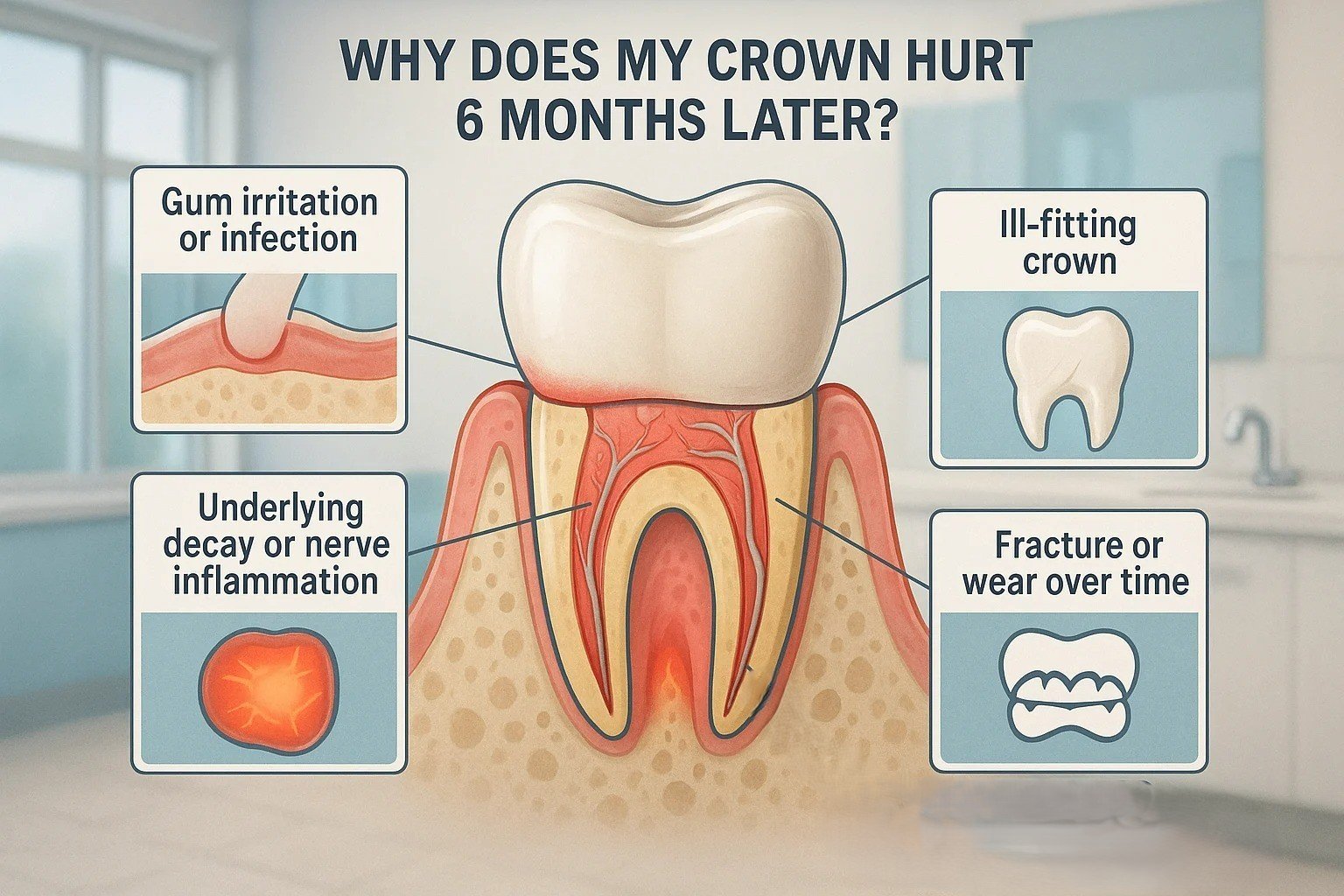
Causes: High Crown, Gum Irritation, Residual Infection
Several factors can contribute to pain after a dental crown:
- High Crown: If the crown is slightly too high, it can put extra pressure on the tooth when you bite down, leading to discomfort.
- Gum Irritation: The gums around the crown may become irritated, causing soreness and inflammation.
- Residual Infection: In some cases, a pre-existing infection may not have been completely resolved before the crown was placed, leading to ongoing pain.
Temporary Crown vs. Permanent Crown Pain Differences
A temporary dental crown pain is generally different from pain associated with a permanent crown. Temporary crowns are often made of less durable materials and may not fit as precisely as permanent crowns. This can lead to increased sensitivity and discomfort. Permanent crowns are custom-made to fit your tooth perfectly, which typically results in less pain and sensitivity.
Warning Signs of Abnormal Pain
While some post-procedure discomfort is normal, certain signs indicate that the pain is not normal and requires professional attention:
- Severe, Throbbing Pain: This could indicate an infection or nerve damage.
- Persistent Pain: Pain that doesn’t subside after a few weeks.
- Swelling or Redness: These are signs of infection.
- Pain When Biting Down: This could mean the crown is too high or there is an issue with the bite.
If you experience any of these warning signs, contact Albania Dental Implants promptly. Our experienced dentists can assess the situation and provide appropriate treatment.
How to Manage Pain and Speed Up Recovery
Following the placement of a dental crown, managing any discomfort and ensuring a smooth recovery is key. Effective pain relief after dental crown placement can make the process much more comfortable.
Over-the-Counter Pain Relief
For most patients, over-the-counter pain relievers are sufficient to manage any discomfort after getting a crown. Ibuprofen (such as Nurofen) and paracetamol (such as Panadol) are both effective options. Follow the dosage instructions on the label, and don’t hesitate to take them as needed. If you have any underlying health conditions or are taking other medications, consult with your dentist or pharmacist before taking any new pain relievers.
Home Remedies for Discomfort
In addition to medication, several home remedies can help ease discomfort and promote healing:
- Saltwater Rinse: Rinse your mouth with warm salt water (1/2 teaspoon of salt in a cup of warm water) several times a day. This can help reduce inflammation and prevent infection.
- Soft Foods: Stick to soft foods like yoghurt, soup, and mashed potatoes for the first few days. This will minimize pressure on the crown and allow the area to heal.
- Avoid Extreme Temperatures: Avoid very hot or cold foods and drinks, as these can trigger sensitivity.
- Good Oral Hygiene: Gently brush and floss around the crown to keep the area clean and prevent infection.
When to Contact Your Dentist
While most post-crown pain is manageable, there are situations when you should contact your dentist:
- Severe Pain: Pain that doesn’t respond to over-the-counter pain relievers.
- Swelling or Redness: Signs of infection.
- Fever: A fever could indicate a more serious infection.
- Crown Feels Loose: A loose crown needs to be addressed promptly.
- Allergic Reaction: Signs of an allergic reaction, such as rash, itching, or difficulty breathing.
Avoiding Problems Through Aftercare
Proper aftercare is essential for preventing problems and ensuring the longevity of your crown:
- Maintain Good Oral Hygiene: Brush and floss regularly, paying special attention to the area around the crown.
- Avoid Hard or Sticky Foods: These can damage or dislodge the crown.
- Regular Dental Check-ups: Visit your dentist for regular check-ups and cleanings to monitor the health of your crown and surrounding teeth.
At Albania Dental Implants, we provide detailed aftercare instructions to all our patients. We also offer ongoing support and are always available to answer any questions or concerns you may have about your crown pain treatment.
Frequently Asked Questions
Is getting a crown painful without anesthesia?
Getting a crown without anaesthesia would likely be painful, particularly during the tooth preparation stage. The process involves reshaping the tooth, which can be uncomfortable without numbing the area. Local anaesthesia is typically used to ensure a pain-free experience.
How long does pain last after a dental crown?
The duration of dental crown pain varies from person to person. Typically, any discomfort should subside within a few days to a couple of weeks. Over-the-counter pain relievers can help manage the pain during this time. If the pain persists or worsens, it’s important to consult your dentist.
What is normal discomfort after the procedure?
Normal discomfort after a dental crown procedure includes mild sensitivity to hot, cold, or sweet foods, as well as some soreness in the gums around the crown. This discomfort is usually manageable with over-the-counter pain relief and should gradually improve over time.
Can you have pain under a crown months later?
Yes, it’s possible to experience pain under a crown months later. This could be due to several factors, such as decay under the crown, a cracked crown, or gum disease. If you experience persistent pain under a crown, it’s essential to see your dentist for an evaluation.
What are warning signs that pain is not normal?
Warning signs that the pain is not normal include severe, throbbing pain, persistent pain that doesn’t subside, swelling or redness around the crown, fever, and pain when biting down. These symptoms could indicate an infection, nerve damage, or other serious issues that require professional attention.
What should I do if my crown hurts?
If your crown hurts, start by taking over-the-counter pain relievers and practicing good oral hygiene. If the pain is severe or doesn’t improve after a few days, contact your dentist for an evaluation. They can determine the cause of the pain and recommend appropriate treatment.
Can the procedure be done painlessly?
Yes, with the use of local anaesthesia, the procedure can be done virtually painlessly. The anaesthetic numbs the area, preventing you from feeling any pain during the crown preparation and placement. Some discomfort after the procedure is normal, but this can usually be managed with pain relief.
Is pain more common with temporary crowns?
Yes, temporary dental crown pain is often more common than with permanent crowns. Temporary crowns are made of less durable materials and may not fit as precisely, which can lead to increased sensitivity and discomfort. Proper care of your temporary crown is essential to minimize pain.
Do root canals make crown placement less painful?
If a tooth requires a root canal before crown placement, the root canal can actually make the crown placement less painful. A root canal removes the nerve from the tooth, eliminating sensitivity. However, some discomfort after the crown placement is still possible, but it’s usually less severe than if the root canal wasn’t performed.
Comparing Competitor Information
To ensure we provide the most comprehensive and helpful information, we’ve analyzed several competitor articles, including those from NHS.uk, Bupa Dental Care UK, Colgate UK, My Dentist UK, and Simplyhealth UK. Our aim is to outperform these articles by offering more detailed explanations, actionable advice, and a focus on the comfort and experience of our patients at Albania Dental Implants. We also highlight the advantages of receiving dental care in Albania, such as cost savings and access to highly skilled dentists.
Many UK patients travel to Albania for affordable dental crowns in albania.
Why Choose Albania Dental Implants for Your Dental Crown?
At Albania Dental Implants, we understand that getting a crown can be a daunting experience. That’s why we prioritize your comfort and well-being every step of the way. Here are just a few reasons to choose us for your dental crown procedure:
- Experienced Dentists: Our team of highly skilled dentists has years of experience in performing crown procedures.
- State-of-the-Art Technology: We use the latest technology and techniques to ensure the best possible results.
- Pain-Free Guarantee: We are committed to providing a pain-free experience, using local anaesthesia and other pain management techniques.
- Affordable Prices: We offer competitive prices without compromising on quality.
- Dental Tourism Packages: We provide comprehensive dental tourism in albania packages that include flights, accommodation, and treatment.
Conclusion
While the thought of getting a crown might cause some anxiety, it’s important to remember that modern dentistry aims to make the procedure as comfortable as possible. With the use of local anaesthesia and proper aftercare, you can expect minimal pain and a smooth recovery. If you’re considering getting a crown and have any concerns about pain or discomfort, don’t hesitate to contact Albania Dental Implants. We’re here to answer your questions, address your worries, and provide you with a pain-free and positive dental experience. Book a consultation today and take the first step towards restoring your smile and confidence!
Contact Albania Dental Implants today!