



Is it hard to eat with dental implants? Many patients worry about how dental implants will affect their eating habits. Fortunately, with proper planning and care, eating with dental implants can become a comfortable and enjoyable experience. At Albania Dental Implants, we ensure our patients are well-informed and supported throughout their dental implant journey, including guidance on post-operative eating.
Eating after dental implants — What to expect
Eating after dental implants involves a transition period. Immediately following the procedure, local anesthesia will cause numbness in the mouth, making it difficult to feel what you’re eating. Initial discomfort is normal as the surgical sites heal. It’s crucial to avoid putting too much pressure on the implant area during this time. We focus on providing detailed aftercare instructions so the patients can enjoy dental tourism in Albania safely and comfortably.
How soon after dental implant surgery can I eat?
You’ll likely be advised to wait until the anesthesia wears off before attempting to eat. This prevents accidental biting of your cheek or tongue. Start with clear liquids like broth or juice, gradually progressing to soft foods as tolerated.
- Numbness from anesthesia makes chewing difficult initially.
- Discomfort is expected as surgical sites heal.
- Gentle care is essential to protect the implants.
Dental implant recovery time and eating timeline
Understanding the dental implant recovery time is key to knowing when you can expect to return to a normal diet. Recovery typically involves several phases. Immediately after surgery, the focus is on healing the gum tissue. Over the next few months, the implant fuses with the jawbone in a process called osseointegration. Full recovery and the ability to chew normally can take anywhere from 3 to 6 months, depending on individual healing rates and the complexity of the case.
What can you eat after dental implants?
What can you eat after dental implants depends on the stage of your recovery. Here’s a general timeline:
- Days 1-3: Clear liquids (broth, juice, water), followed by very soft foods (applesauce, yogurt, smoothies).
- Week 1-2: Progress to slightly more substantial soft foods like mashed potatoes, scrambled eggs, and well-cooked pasta.
- Week 3-6: Gradually introduce tender, easy-to-chew foods.
- After 6 weeks: If healing is progressing well, you can slowly return to your normal diet, but continue to avoid very hard or sticky foods that could damage the implants.
Our team at dental clinic in Albania provides personalized dietary plans to support healing.
Chewing with dental implants — How does it feel?
Chewing with dental implants should feel comfortable and natural once the healing process is complete. Implants are anchored directly into the jawbone, providing stability and strength similar to natural teeth. Unlike dentures, which can sometimes slip or feel bulky, dental implants offer a secure and confident chewing experience. Many patients report that they can enjoy their favorite foods again without worry. Our Albania Dental Implants Services are designed to improve chewing function and overall oral health.
Will dental implants feel like natural teeth when eating?
While it takes some time to adjust, dental implants are designed to mimic the feel and function of natural teeth. The osseointegration process allows the implant to become a permanent part of your jaw, providing a stable base for chewing. Most patients find that they can eat a wide variety of foods with confidence once fully healed.
Food restrictions and dietary tips for dental implant patients
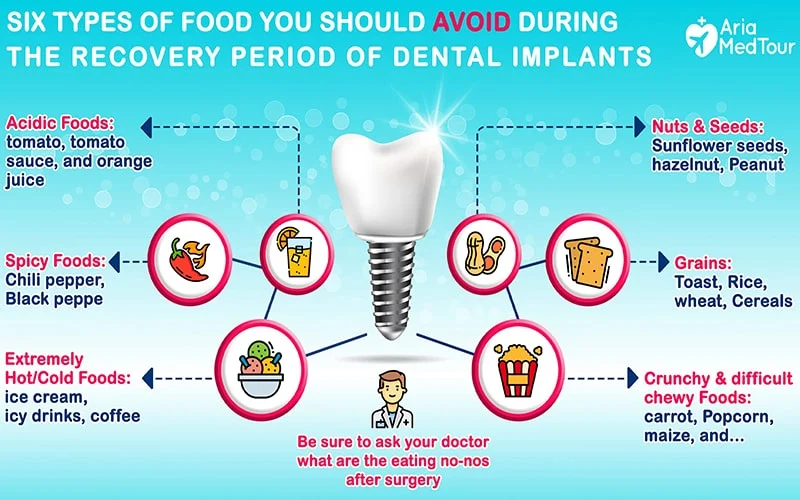
Food restrictions dental implants are necessary to protect your investment and ensure proper healing. In the short term, avoid hard, crunchy, or sticky foods that could irritate the surgical site. Long-term, while dental implants are strong, excessively hard or sticky foods can potentially damage the implant or crown over time. Professional recommendations include cutting food into smaller pieces and chewing carefully.
Best foods for dental implant patients
The best foods for dental implant patients during the healing phase are those that are soft, nutritious, and easy to chew. Here are some suggestions:
- Smoothies: Packed with fruits, vegetables, and protein.
- Yogurt: Provides calcium and probiotics.
- Mashed potatoes: A comforting and easily digestible option.
- Scrambled eggs: A good source of protein.
- Soups and broths: Hydrating and full of nutrients.
- Cooked cereals: Oatmeal, cream of wheat, or rice porridge.
- Soft fruits: Bananas, peaches, and pears (without the skin).
Difficulty eating with dental implants vs dentures
Difficulty eating dental implants vs dentures is a significant consideration for many patients. Dental implants offer a superior eating experience compared to conventional dentures. Dentures rest on top of the gums and can sometimes feel unstable, making it difficult to chew certain foods. They may also affect your sense of taste and require messy adhesives. Dental implants, on the other hand, are anchored in the jawbone, providing a stable and secure base for chewing, similar to natural teeth. Patients with implants generally experience fewer food restrictions and greater overall satisfaction.
Why is chewing easier with implants compared to dentures?
Implants offer a much stronger and more stable foundation for chewing compared to dentures. Dentures can slip or move around, making it difficult to bite and chew effectively. Implants, being anchored to the bone, provide a secure base that allows for greater chewing force and a more natural eating experience.
Tips for eating with dental implants
Here are some practical tips for eating with dental implants during recovery and after full healing:
- Start slow: Introduce new foods gradually.
- Cut food into small pieces: This reduces the amount of chewing required.
- Chew on both sides of your mouth: This helps distribute pressure evenly.
- Avoid very hard or sticky foods: These can damage the implant or crown.
- Maintain good oral hygiene: Brush and floss regularly to prevent infection.
- Visit your dentist for regular check-ups: Professional cleanings and check-ups are essential for long-term implant health.
At about Albania Dental Implants, we are always happy to provide such assistance to the patients.
Frequently Asked Questions about eating with dental implants
Is it hard to eat with dental implants right after surgery?
Yes, it can be difficult to eat with dental implants immediately following surgery due to numbness, discomfort, and swelling. Sticking to a liquid or very soft food diet is crucial during the initial healing phase.
When can I eat normally after dental implant placement?
Most patients can gradually return to a normal diet within 3 to 6 months after dental implant placement, once the implant has fully integrated with the jawbone. However, it’s important to introduce new foods slowly and follow your dentist’s recommendations.
Are there foods I should permanently avoid with dental implants?
While dental implants are strong, it’s best to avoid excessively hard, sticky, or chewy foods long-term. These can potentially damage the implant or crown and shorten their lifespan. Examples include hard candies, nuts, ice, and very chewy caramels.
Why is chewing easier with implants compared to dentures?
Chewing is easier with implants because they are anchored directly into the jawbone, providing a stable and secure base similar to natural teeth. Dentures, on the other hand, rest on top of the gums and can slip or move around, making it difficult to chew effectively.
Will dental implants feel like natural teeth when eating?
With time and adjustment, dental implants can feel very similar to natural teeth when eating. The stability and secure fit of implants allow for a more natural chewing experience compared to dentures.
What if I still have difficulty chewing after the healing period?
If you continue to experience difficulty chewing after the healing period, it’s important to consult with your dentist. They can assess the implant, bite alignment, and other factors to determine the cause and recommend appropriate treatment.
Can dental implants break or loosen while eating hard foods?
While dental implants are strong, they can potentially break or loosen if subjected to excessive force, such as biting down on very hard foods. It’s best to avoid these types of foods to protect your implants.
How long do I need to stick to soft foods after dental implant surgery?
You’ll typically need to stick to a soft food diet for several weeks after dental implant surgery, gradually introducing more solid foods as healing progresses. Your dentist will provide specific instructions based on your individual case.
Are there special eating utensils or techniques recommended?
While special utensils are not typically required, it can be helpful to use smaller utensils and cut food into smaller pieces during the initial healing phase. Chewing slowly and carefully is also recommended.
Will my sense of taste be affected by dental implants?
Dental implants typically do not affect your sense of taste. However, dentures can sometimes cover parts of the palate, which may slightly alter taste perception.
Conclusion
While there may be a period of adjustment, eating with dental implants should become a comfortable and natural experience. By following your dentist’s recommendations and taking proper care of your implants, you can enjoy a wide variety of foods with confidence. If you’re considering dental implants, contact Albania Dental Implants today for a consultation and personalized treatment plan. We also offer cosmetic dentistry in Albania, cost of dental implants in Albania are really affordable.





