


Is there a cheaper alternative to dental implants? For many seeking to restore their smile and oral function, the cost of dental implants can be a significant barrier. While dental implants are a durable and long-lasting solution, exploring more affordable options is a common and valid concern.
Why do people seek alternatives to dental implants?
Many individuals explore dental implant alternatives due to the cost of dental implants, which can be a considerable financial burden, especially when multiple teeth are involved. While dental implants offer a permanent solution, their upfront cost may not be feasible for everyone. Here’s a closer look at the factors driving the search for cheaper alternatives.
Dental implant cost in the UK
The cost of dental implants in the UK can vary significantly. Several factors can influence the final price, including the type of implant used, the complexity of the procedure, and the location of the dental practice. Generally, a single dental implant can range from £2,000 to £4,000 or more. For a full mouth restoration with dental implants, the cost can easily exceed £10,000 or even £20,000. Many people consider traveling abroad to save money, such as Albania Dental Implants which offers high-quality services at lower prices.
- Type of Implant: Different materials and designs affect the price.
- Procedure Complexity: Additional procedures like bone grafting can increase costs.
- Location: Prices vary between dental practices and regions.
Because of these costs, many patients consider dental tourism in Albania. You can contact Albania Dental Implants to learn more about high-quality services at lower prices.
Reasons for seeking a cheaper or more accessible option
Besides cost, other reasons drive the search for dental implant alternatives. Some individuals may not be ideal candidates for implants due to underlying health conditions, bone density issues, or lifestyle factors. The invasive nature of the implant procedure can also deter some people, leading them to seek less invasive options.
- Medical conditions: Some health issues can make implants risky.
- Bone density: Insufficient bone may require additional procedures.
- Personal preferences: Some prefer non-surgical solutions.
Exploring affordable tooth replacement options ensures that more people can restore their smiles and maintain their oral health, regardless of their financial situation or medical history. Luckily, dental tourism in Albania provides excellent alternatives for people who cannot afford high prices in the UK. The main goal is always affordable tooth replacement options.
What are the most common dental implant alternatives?
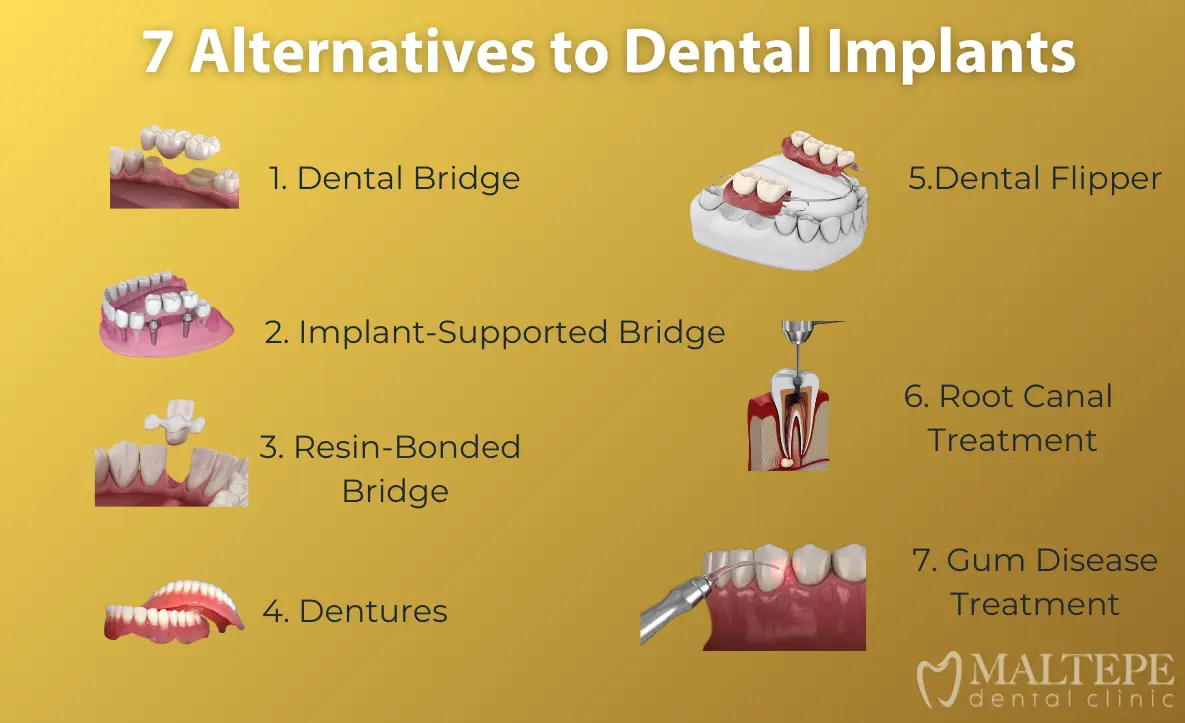
When exploring dental implant alternatives, several options offer different levels of functionality, aesthetics, and affordability. These alternatives, including dentures, dental bridges, removable partial dentures, and snap-on dentures, provide viable solutions for individuals seeking to restore their smiles without the higher cost of dental implants. Here’s a detailed overview of each alternative.
Dentures: Removable and Affordable
Dentures are among the most traditional and affordable dental implant alternatives available. These removable appliances replace missing teeth and surrounding tissues, restoring a natural appearance and improving chewing ability. There are two main types of dentures: complete dentures and removable dentures.
Pros and cons of dentures
Dentures offer several advantages, including their lower cost compared to dental implants and their non-invasive nature. They can significantly improve a person’s smile and facial structure, boosting confidence and self-esteem. However, dentures also have their drawbacks. They can be less stable than implants, potentially slipping or shifting during eating or speaking. This can affect speech and chewing efficiency. Proper fit and maintenance are crucial for comfort and function.
- Pros: Lower cost, non-invasive, improves smile appearance.
- Cons: Less stable, can affect speech, requires regular maintenance.
The level of comfort experienced with dentures can vary. Some people adapt quickly, while others may find them uncomfortable or bulky. Regular adjustments by a dentist are often necessary to ensure a proper fit and address any discomfort.
Cost comparison: dentures vs implants
Compared to dental implants, dentures are significantly more affordable. In the UK, a complete set of dentures can range from £600 to £2,000 per arch (upper or lower jaw), while a single dental implant can cost between £2,000 and £4,000. This cost difference makes dentures an attractive option for those on a budget. It is important to consider the longevity of dentures vs implants, as implants can last a lifetime, making them cost-effective in the long run. However, you can always get affordable dental implants in Albania. cost of dental implants in Albania are lower than the costs in UK.
Dental Bridges: Fixed Alternatives
Dental bridges are fixed alternatives to dental implants, offering a more permanent solution than dentures but at a lower cost than implants. A dental bridge fills the gap created by one or more missing teeth, using adjacent teeth as anchors.
How bridges work
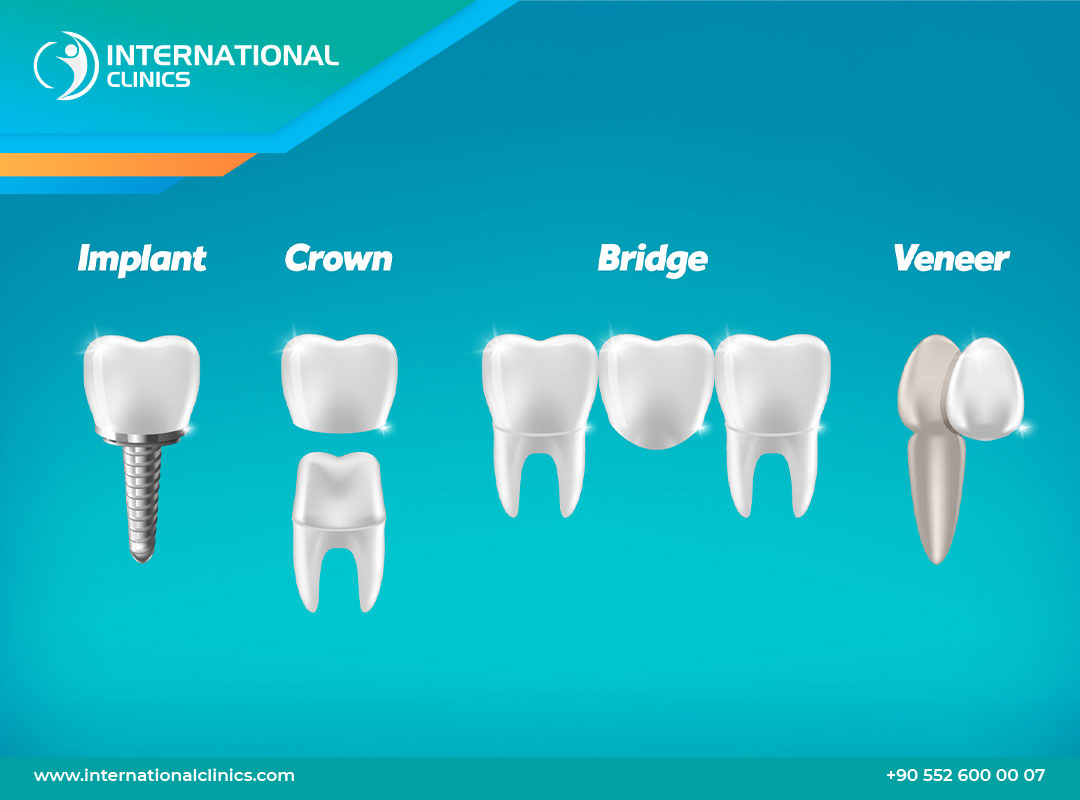
A dental bridge consists of a false tooth (pontic) held in place by two or more crowns (abutments) that are cemented onto the adjacent teeth. The abutment teeth must be strong enough to support the bridge, and they are prepared by reshaping them to accommodate the crowns. Bridges can be made from various materials, including porcelain, metal, or a combination of both. Fixed bridges provide stability and restore the natural appearance of teeth, making them a popular choice for many people.
- False tooth (pontic) replaces the missing tooth.
- Crowns (abutments) attach to adjacent teeth for support.
- Material options: porcelain, metal, or a combination.
While dental bridges offer a stable and aesthetically pleasing solution, they do require altering the adjacent teeth, which can be a drawback for some individuals. Bridges are usually a good choice to fix missing teeth without implants. If this is something that interests you, dental clinic in Albania can provide you with this treatment.
Price comparison with dental implants
Dental bridges are generally less expensive than dental implants, although the exact cost depends on the materials used and the number of teeth involved. In the UK, a dental bridge typically costs between £700 and £1,500 per unit (pontic and abutment crown), making it a more affordable option compared to the £2,000 to £4,000 cost of a single dental implant. Despite the lower cost of bridges, you should note that they usually need to be replaced every 10 to 15 years, unlike implants, which can last a lifetime with proper care.
- Bridges: £700 – £1,500 per unit
- Implants: £2,000 – £4,000 per implant
Removable Partial Dentures
Removable partial dentures are another alternative for replacing missing teeth, particularly when several teeth are missing but not all. Unlike complete dentures, partial dentures are designed to fill gaps while utilizing the remaining natural teeth for support.
When partial dentures are suitable
Removable partial dentures are suitable for individuals who have some natural teeth remaining in their mouth. They consist of a metal or acrylic framework that supports the artificial teeth and clasps that attach to the adjacent natural teeth. Partial dentures are custom-made to fit snugly and blend in with the existing teeth, restoring functionality and appearance. A partial dentures cost UK can vary depending on the materials used and the complexity of the design.
- Designed for those with some natural teeth remaining.
- Metal or acrylic framework with artificial teeth.
- Clasps attach to adjacent teeth for support.
Partial dentures offer a flexible and relatively affordable solution, allowing people to maintain their oral function and smile without the need for more invasive procedures.
How they compare in longevity and price
Removable partial dentures are generally less expensive than dental implants and fixed bridges. In the UK, a partial denture can cost between £400 and £1,000, depending on the materials and complexity. The longevity of partial dentures varies; with proper care, they can last for several years, but they typically need to be replaced every 5 to 10 years. In comparison, dental implants can last a lifetime with good oral hygiene, making them a more durable but also more costly solution.
- Partial Dentures: £400 – £1,000, lifespan of 5-10 years.
- Dental Implants: £2,000 – £4,000, can last a lifetime.
Snap-on Dentures (Overdentures)
Snap-on dentures, also known as overdentures, represent a hybrid approach to tooth replacement, combining the affordability of dentures with the stability of dental implants. These dentures are designed to “snap” onto dental implants, providing a more secure and comfortable fit compared to traditional dentures. Snap-on dentures are an affordable tooth replacement option for many people.
How overdentures work
Overdentures typically require the placement of two or more dental implants in the jawbone. These implants act as anchors for the denture, providing increased stability and retention. The denture has special attachments that connect to the implants, allowing it to snap securely into place. This design minimizes slipping and movement, enhancing chewing ability and speech clarity. Overdentures offer a significant improvement in comfort and function compared to traditional dentures, while still being less expensive than a full set of dental implants.
- Require two or more dental implants for support.
- Denture snaps onto implants for secure fit.
- Improved stability and chewing ability.
This type of denture helps improve oral health and allows you to live a comfortable life.
When they’re most cost-effective
Snap-on dentures are most cost-effective for individuals who want improved stability and function without the higher cost of a full set of dental implants. In the UK, the cost of snap-on dentures can range from £1,500 to £5,000 per arch, depending on the number of implants required and the type of denture used. While this is more expensive than traditional dentures, it is still considerably less than the cost of individual dental implants for each missing tooth. This makes snap-on dentures a practical and affordable option for many people seeking a balance between cost and performance.
- Traditional Dentures: £600 – £2,000 per arch.
- Snap-on Dentures: £1,500 – £5,000 per arch.
- Full Dental Implants: £2,000 – £4,000 per implant.
If you are looking for the best option for you, you can always about Albania Dental Implants and learn more about the treatments we offer.
How much do dental implant alternatives cost in the UK?
Understanding the teeth replacement cost of dental implant alternatives in the UK is crucial for anyone seeking affordable solutions for missing teeth. These alternatives vary widely in price, and NHS tooth replacement options may also be available. Here’s an overview of the costs associated with each major alternative.
Typical costs for each major alternative
The cost of dental implant alternatives in the UK varies depending on the type of restoration chosen and the complexity of the treatment. Here’s a breakdown of the typical costs for each major alternative:
- Dentures: A complete set of dentures typically costs between £600 and £2,000 per arch. The exact price depends on the materials used (acrylic or porcelain) and the complexity of the fitting.
- Dental Bridges: A dental bridge typically costs between £700 and £1,500 per unit, which includes the pontic (false tooth) and the abutment crowns that attach to the adjacent teeth.
- Removable Partial Dentures: Partial dentures range from £400 to £1,000, depending on the materials (metal or acrylic) and the design complexity.
- Snap-on Dentures (Overdentures): Snap-on dentures, which attach to dental implants, range from £1,500 to £5,000 per arch, depending on the number of implants required and the type of denture attachment.
These prices provide a general guideline, and it’s essential to consult with a dentist for an accurate estimate based on your specific needs.
NHS options and eligibility
The NHS provides some tooth replacement options, but access to dental implants is limited and typically reserved for medically necessary cases. For more common tooth loss situations, the NHS may offer dentures or bridges at a reduced cost. Eligibility for NHS dental treatment depends on individual circumstances and financial assessments. The NHS charges for dental treatments are divided into three bands:
- Band 1: £26.80 This covers examinations, diagnosis, and preventative care, such as scaling and polishing.
- Band 2: £73.50 This covers everything in Band 1, plus additional treatments such as fillings, root canals, and extractions.
- Band 3: £319.10 This covers everything in Bands 1 and 2, plus more complex procedures such as crowns, dentures, and bridges.
While these costs are significantly lower than private dental care, the availability of certain treatments, like dental implants, is restricted. Many people are looking for the cheapest way to replace a missing tooth. You may have the right to a government grant for implants. You should always ask your dentist these questions.
Factors influencing overall cost
Several factors can influence the overall cost of dental implant alternatives in the UK. These include:
- Materials Used: The type of materials used in the restoration (acrylic, porcelain, metal) can significantly affect the price.
- Complexity of Treatment: More complex cases that require additional procedures, such as extractions or bone grafting, will increase the overall cost.
- Dental Practice Location: Dental practices in urban areas or affluent neighborhoods may charge higher fees compared to those in rural areas.
- Dentist’s Experience: More experienced dentists may charge higher fees for their services.
- Aftercare and Maintenance: Costs associated with aftercare, such as adjustments, repairs, and cleaning solutions, should also be considered.
If you need oral surgery in Albania, contact our clinic, oral surgery in Albania to receive the highest quality service.
Are alternatives as effective as dental implants?
While dental implant alternatives offer more affordable solutions for missing teeth, it’s essential to evaluate whether they are as effective as dental implants in the long run. Considerations such as durability, impact on oral health, aesthetics, comfort, and maintenance play a significant role in determining the best option for each individual. Do affordable alternatives damage surrounding teeth? It is important to know if you are making the right choice.
Durability and oral health impacts
Dental implants are known for their durability and long-term success. With proper care, they can last a lifetime, providing a stable and permanent solution for missing teeth. Alternatives like dentures and bridges have a shorter lifespan and may require replacement or repair every 5 to 15 years. Additionally, dental implants help maintain bone density in the jaw, preventing bone loss that can occur with missing teeth. Alternatives do not offer this benefit.
- Dental Implants: Can last a lifetime with proper care, preserve bone density.
- Dentures and Bridges: Shorter lifespan, require replacement, do not prevent bone loss.
Maintaining oral health with dental implants is relatively straightforward, as they can be brushed and flossed like natural teeth. Dentures, on the other hand, require special cleaning and maintenance to prevent bacterial buildup and gum irritation. Bridges require careful cleaning around the abutment teeth to prevent decay and gum disease.
Aesthetics, comfort, and maintenance
Dental implants provide a natural-looking and feeling solution for missing teeth. They are designed to blend seamlessly with the surrounding teeth, restoring a confident smile. Alternatives like dentures and bridges can also offer good aesthetics, but they may not always match the natural appearance and feel of implants. The comfort level also varies. Implants are fixed in place and feel like natural teeth, while dentures can sometimes feel bulky or uncomfortable, especially when new. Bridges are fixed but can place additional stress on the adjacent teeth.
- Dental Implants: Natural look and feel, high comfort level.
- Dentures: Can look natural but may feel bulky, require adjustment.
- Bridges: Good aesthetics but can stress adjacent teeth.
Maintenance is another critical factor. Dental implants require regular brushing and flossing, just like natural teeth. Dentures need to be removed and cleaned daily, and bridges require careful cleaning around the abutment teeth to prevent decay. If aesthetics are important to you, you can always consider hollywood smile in Albania to achieve the smile of your dreams.
How to choose the right tooth replacement for you
Choosing the best alternative to dental implants for tooth replacement requires careful consideration of several factors, including clinical considerations, lifestyle, budget, and oral health implications. Consulting with your dentist is crucial to determining the most suitable option for your specific needs. What is the best alternative to dental implants? Let’s explore the key considerations.
Clinical considerations (bone health, missing teeth location)
Clinical considerations play a vital role in determining the right tooth replacement option. Bone health is a primary factor, as dental implants require sufficient bone density in the jaw to provide stable support. Individuals with significant bone loss may need bone grafting before getting implants, which adds to the cost and complexity of the procedure. Alternatives like dentures and bridges do not rely on bone support and may be more suitable in cases of bone loss. The location of the missing teeth also influences the choice of replacement. Implants are ideal for replacing single or multiple teeth throughout the mouth. Bridges are best suited for replacing one or two adjacent teeth, while dentures are more appropriate for replacing multiple teeth or a full arch. If you have lost bone mass, you should get a bone grafting in Albania.
- Bone health: Implants require sufficient bone density.
- Missing teeth location: Influences the choice between implants, bridges, and dentures.
- Overall oral health: Impacts the success of different tooth replacement options.
Overall oral health, including the condition of the remaining teeth and gums, is another essential consideration. Implants require healthy gums and good oral hygiene to prevent peri-implantitis (gum disease around the implant). Bridges rely on the health of the abutment teeth, so any existing decay or gum disease must be addressed before placing a bridge. Dentures require a healthy soft tissue foundation for proper fit and comfort.
Lifestyle, budget, and oral health implications
Lifestyle, budget, and oral health implications are crucial considerations when choosing a tooth replacement option. Your lifestyle habits, such as smoking or poor oral hygiene, can affect the success and longevity of different treatments. Smoking increases the risk of implant failure and gum disease, making alternatives like dentures or bridges more suitable for smokers. Your budget is also a significant factor, as dental implants are more expensive than dentures and bridges. Consider the upfront cost and the long-term maintenance expenses when evaluating your options.
- Smoking: Affects the success of dental implants.
- Budget: Consider upfront costs and long-term maintenance.
- Oral hygiene: Impacts the success of all tooth replacement options.
The implications for your oral health should also be considered. Implants help preserve bone density and prevent shifting of adjacent teeth. Dentures and bridges do not offer these benefits and may require adjustments or replacements over time. If you are looking for a long term solution, you should always consider dental implants.
Consultation process with your dentist
The consultation process with your dentist is an essential step in choosing the right tooth replacement for you. During the consultation, your dentist will conduct a thorough examination of your mouth, including evaluating your bone health, gum condition, and the location of the missing teeth. They will discuss your medical history, lifestyle habits, and budget to determine the most suitable treatment option. Your dentist will also explain the pros and cons of each alternative and answer any questions you may have.
- Thorough examination of your mouth.
- Discussion of your medical history, lifestyle, and budget.
- Explanation of the pros and cons of each alternative.
The consultation process allows you to make an informed decision based on your specific needs and circumstances. It’s crucial to communicate openly with your dentist and express any concerns or preferences you may have. It may also be a good idea to get a second opinion.
FAQ: Cheaper Alternatives to Dental Implants
What is the cheapest alternative to dental implants?
The cheapest alternative to dental implants is generally traditional removable dentures. Complete dentures, which replace an entire arch of teeth, or partial dentures, which replace a few missing teeth, are significantly less expensive than dental implants. However, it’s important to consider that while dentures have a lower upfront cost, they may require more maintenance and replacement over time compared to dental implants, which can last a lifetime with proper care. For the least expensive way to fix teeth, you can always visit our clinic in Albania.
Can dentures look as natural as implants?
While modern dentures have improved significantly in terms of aesthetics, they may not always look as natural as dental implants. Dentures can provide a good aesthetic appearance, but they may not perfectly replicate the look and feel of natural teeth. Dental implants, on the other hand, are designed to blend seamlessly with the surrounding teeth, providing a more natural-looking and confident smile. Implants also offer better stability and functionality compared to dentures.
How long do bridges or dentures last compared to implants?
Dental implants are known for their durability and longevity, often lasting a lifetime with proper care. Bridges and dentures, however, typically have a shorter lifespan. Dental bridges may last between 10 to 15 years, while dentures may need to be replaced every 5 to 10 years due to wear and tear or changes in the mouth. Therefore, while implants have a higher initial cost, their long-term durability can make them a cost-effective solution.
Can I get tooth replacement on the NHS?
Yes, you can get tooth replacement on the NHS, but the options may be limited. The NHS typically offers dentures and bridges as tooth replacement options, but dental implants are less commonly available and are usually reserved for medically necessary cases. Eligibility for NHS dental treatment depends on individual circumstances and financial assessments.
Are removable dentures uncomfortable or unstable?
Removable dentures can sometimes feel uncomfortable or unstable, especially when first fitted. Dentures may take some time to get used to, and they can sometimes slip or move during eating or speaking. However, modern dentures are designed to fit more securely and comfortably, and regular adjustments by a dentist can help improve their fit. Snap-on dentures, which attach to dental implants, offer improved stability compared to traditional removable dentures.
What are the hidden costs with alternatives to dental implants?
While alternatives to dental implants may have a lower upfront cost, there can be hidden costs to consider. Dentures and bridges may require more frequent maintenance, repairs, or replacements compared to dental implants. Dentures may need relining or rebasing to maintain a proper fit, and bridges may require replacement if the abutment teeth develop decay or gum disease. These additional costs can add up over time.
Do affordable alternatives damage surrounding teeth?
Some affordable alternatives to dental implants can potentially damage surrounding teeth if not properly fitted or maintained. Dental bridges, for example, require altering the adjacent teeth to support the bridge, which can increase the risk of decay or gum disease in those teeth. Removable partial dentures can also place stress on the remaining teeth, potentially leading to damage or loosening over time. It’s essential to maintain good oral hygiene and have regular dental check-ups to minimize the risk of damage to surrounding teeth.
How quickly can I get a cheaper tooth replacement fitted?
The timeframe for getting a cheaper tooth replacement fitted can vary depending on the type of restoration. Dentures and bridges can typically be fitted within a few weeks, while dental implants require several months for the healing process. If you need a quick and affordable solution, dentures or bridges may be a better option. At Albania Dental Implants, we understand the importance of your smile and we can assist you every step of the way. Our clinic offers immediate loading dental implants in Albania.
Conclusion: Weighing your options for affordable tooth replacement
Choosing the right tooth replacement option is a personal decision that requires careful consideration of various factors, including cost, clinical considerations, lifestyle, and oral health implications. Dental implants offer a durable and long-lasting solution, but they may not be feasible for everyone due to the higher cost. Alternatives like dentures, bridges, and snap-on dentures provide more affordable options, each with its own set of pros and cons.
- Dentures: Affordable, non-invasive, but less stable and require maintenance.
- Bridges: Fixed, good aesthetics, but require altering adjacent teeth.
- Snap-on Dentures: Improved stability, but require dental implants for support.
If you are considering affordable tooth replacement, it’s essential to consult with your dentist to determine the most suitable option for your specific needs and circumstances. Your dentist can evaluate your oral health, discuss your lifestyle and budget, and explain the pros and cons of each alternative. At Albania Dental Implants, we offer various services to help you achieve a healthy and confident smile, including dental implants, dentures, bridges, and cosmetic dentistry.
Don’t let the cost of dental implants prevent you from restoring your smile and oral health. Contact us today to schedule a consultation and explore your affordable tooth replacement options. Our experienced team can help you find the best solution for your needs and budget. Visit our website or call us to learn more about our services and schedule an appointment.