


The question “Should I get dentures or implants?” is one of the most common concerns for anyone facing tooth loss and considering long-term dental solutions. Navigating the world of tooth replacement can feel overwhelming, with various options to consider. This guide will provide a detailed comparison of dentures and dental implants, exploring their pros, cons, costs, and suitability, so you can make an informed decision for your oral health and confidence. At Albania Dental Implants, we believe everyone deserves a healthy and beautiful smile, and we’re here to help you find the best solution.
What are Dentures and Dental Implants?
Understanding the basics of dentures vs implants is crucial before delving into their specific advantages and disadvantages. Both serve the same primary purpose – to replace missing teeth – but they achieve this in very different ways.
Dentures Explained
Dentures are removable appliances that replace missing teeth and surrounding tissues. They are custom-made to fit your mouth and can be either full or partial, depending on the extent of tooth loss. Full dentures replace all teeth in an arch, while partial dentures fill in gaps when some natural teeth remain. Dentures are a non-invasive option and can significantly improve chewing ability, speech, and aesthetics.
Types of Dentures
Several types of dentures exist to cater to different needs:
- Full dentures: Replace all teeth in either the upper or lower jaw, or both.
- Partial dentures: Fill in gaps when some natural teeth remain, often held in place by clasps that attach to adjacent teeth.
- Immediate dentures: Placed immediately after tooth extraction, providing an instant solution while your gums heal. These may require adjustments later as the bone reshapes.
- Overdentures: Fit over a small number of remaining teeth or dental implants, providing added stability and support. Implant overdentures in Albania, in particular, offer superior retention and chewing force.
Dental Implants Explained
Dental implants are a more permanent solution for tooth loss. They involve surgically placing a titanium post into the jawbone, which acts as an artificial tooth root. After the bone has fused with the implant (osseointegration), a crown (artificial tooth) is attached to the post. Implants can be used to replace a single tooth, multiple teeth with bridges, or even a full arch of teeth using techniques like All-on-4.
Types of Dental Implants
There are primarily two types of dental implants:
- Endosteal implants: The most common type, placed directly into the jawbone.
- Subperiosteal implants: Placed under the gum but on top of the jawbone, used when there is insufficient bone depth for endosteal implants.
- Single Tooth Implants: Are suitable for replacing single missing teeth. Visit Single Tooth Implants in Albania for more information.
- Multiple Tooth Implants: Designed to replace multiple missing teeth.
Pros and Cons of Dentures
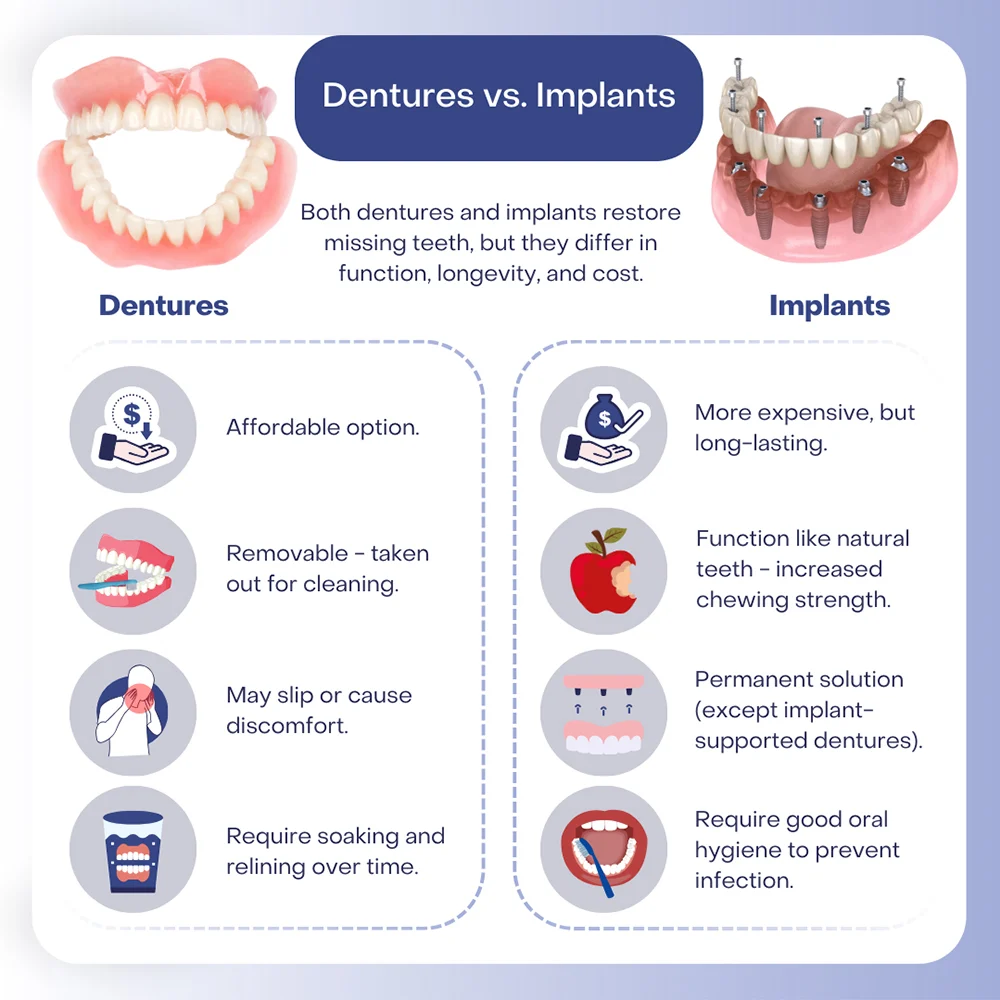
When considering dentures vs implants, carefully weighing the pros and cons of each option is essential. Dentures offer several advantages, but they also come with certain limitations.
Affordability of Dentures
One of the main advantages of dentures is their affordability. Compared to dental implants, dentures are significantly less expensive upfront. This makes them an accessible option for individuals on a limited budget or those without dental insurance that covers more costly procedures. For those concerned about affordability, it’s important to explore all available options, and for those seeking cost-effective solutions abroad, consider exploring the benefits of dental tourism in Albania.
Non-Invasive Nature
Dentures are a non-surgical, non-invasive treatment option. The process of getting dentures primarily involves taking impressions of your mouth and creating a custom-fitted appliance. This eliminates the need for surgery, reducing the risks and recovery time associated with invasive procedures.
Adaptation Period
One of the drawbacks of dentures is the adaptation period. New denture wearers often experience some initial discomfort, including soreness, increased saliva flow, and difficulty speaking and eating. It takes time to adjust to wearing dentures and learning how to use them effectively.
Impact on Eating and Speaking
Dentures can affect eating and speaking, especially in the beginning. Some people find it challenging to chew certain foods with dentures, and they may need to adjust their diet accordingly. Similarly, speaking clearly may require some practice as you get used to wearing the appliance.
Maintenance and Hygiene Needs
Dentures require regular maintenance and hygiene to keep them clean and prevent oral health problems. This involves removing the dentures nightly, cleaning them thoroughly with a denture brush and cleaner, and soaking them in a denture solution.
Potential for Slipping or Discomfort
Dentures can sometimes slip or feel uncomfortable, especially if they are not fitted properly or if the underlying bone structure changes over time. This can lead to irritation, soreness, and difficulty chewing. Regular adjustments and relining of the dentures may be necessary to ensure a comfortable and secure fit.
Pros and Cons of Dental Implants
Dental implants offer a more permanent and stable solution for tooth loss, but they also have their own set of advantages and disadvantages. Considering the pros and cons of dental implants is crucial for making an informed decision.
Durability and Longevity of Dental Implants
One of the most significant advantages of dental implants is their durability and longevity. With proper care, dental implants can last for many years, even a lifetime. They are made of biocompatible materials that fuse with the jawbone, providing a strong and stable foundation for replacement teeth. You can ensure your dental implants stay in tip-top condition by following our dental maintenance tips at Albania Dental Implants.
Cosmetic or Natural Look
Dental implants offer a highly aesthetic and natural-looking solution for tooth loss. The replacement teeth are custom-made to match the color, shape, and size of your existing teeth, creating a seamless and natural-looking smile. This can significantly improve your confidence and self-esteem. For those seeking a complete smile makeover, consider exploring options for a Hollywood smile in Albania.
Surgical Procedure and Healing
Dental implants involve a surgical procedure, which can be a deterrent for some people. The process typically involves multiple stages, including implant placement, healing, and crown attachment. The healing period can take several months, and there is a risk of complications, such as infection or implant failure.
Suitability: Jawbone Health, Age, and Medical Conditions
Dental implant suitability depends on various factors, including jawbone health, age, and medical conditions. Adequate bone density is essential for successful implant placement, and certain medical conditions, such as uncontrolled diabetes or autoimmune diseases, can increase the risk of complications.
Maintenance of Dental Implants
Dental implants require regular maintenance, similar to natural teeth. This includes brushing, flossing, and regular dental check-ups to ensure the implants and surrounding tissues remain healthy. While implants are resistant to decay, gum disease can still affect the surrounding tissues, leading to complications.
Higher Upfront Cost
Dental implants have a higher upfront cost compared to dentures. The cost of dental implants can vary depending on the number of implants needed, the complexity of the procedure, and the location of the dental practice. However, many people view dental implants as a worthwhile investment due to their long-term benefits and durability. If you’re looking for more affordable options, you may want to consider the cost of dental implants in Albania.
Cost Comparison: Dentures vs Implants
Understanding the cost comparison dentures and implants is crucial for making an informed decision that aligns with your budget and dental needs. Both options have varying price ranges in the UK, influenced by different factors.
Typical Price Ranges in the UK
The cost of dentures in the UK typically ranges from £500 to £2,000 per arch (upper or lower), depending on the type and materials used. Partial dentures tend to be less expensive than full dentures. Dental implants, on the other hand, generally range from £2,000 to £3,500 per implant, including the abutment and crown. The total cost of implant treatment can vary significantly depending on the number of implants needed and any additional procedures required.
Factors Affecting Cost: Number of Teeth, Complexity, and Additional Procedures
Several factors can influence the cost of both dentures and implants:
- Number of teeth: Replacing more teeth will generally increase the cost of both dentures and implants.
- Complexity: More complex cases that require additional procedures, such as bone grafting or sinus lifts, will typically be more expensive.
- Materials: The type of materials used for dentures or implant crowns can affect the cost.
NHS or Private Coverage and Financing Options
In the UK, the NHS may cover some of the cost of dentures, particularly for essential treatments. However, coverage for dental implants is generally limited to specific medical circumstances. Private dental insurance plans may offer coverage for both dentures and implants, but the extent of coverage can vary. Many dental practices also offer financing options to help patients manage the cost of treatment, such as payment plans or loans.
Are Dental Implants Suitable for Everyone?
Dental implant suitability is a crucial consideration when deciding between implants and dentures. While dental implants offer numerous benefits, they are not suitable for everyone.
Who Can (and Can’t) Get Implants
Generally, good candidates for dental implants are those with:
- Adequate bone density in the jaw.
- Good overall health.
- Healthy gums.
- A commitment to maintaining good oral hygiene.
Individuals who may not be suitable candidates include those with:
- Significant bone loss in the jaw.
- Uncontrolled medical conditions, such as diabetes.
- Active gum disease.
- A history of smoking.
Medical and Anatomical Requirements
Successful dental implant placement requires sufficient bone density and healthy gum tissue. If there is significant bone loss, a bone grafting procedure may be necessary to create a stable foundation for the implant. Similarly, gum disease must be treated before implant placement to prevent infection and implant failure.
Smoking, Bone Density, and Age Considerations
Smoking can significantly increase the risk of dental implant failure, as it impairs blood flow and hinders the healing process. Low bone density can also compromise implant stability, requiring bone grafting. While there is no upper age limit for dental implants, older individuals may have underlying health conditions that need to be carefully considered.
Risks and Potential Complications
As with any surgical procedure, dental implants carry some risks and potential complications, including:
- Infection at the implant site.
- Nerve damage.
- Sinus problems.
- Implant failure.
However, with proper planning and execution, these risks can be minimised. If you’re looking to travel abroad for more affordable treatment options, it’s important to research dental implants in Albania, focusing on reputable clinics.
Lifestyle, Comfort, and Appearance Considerations
When considering dentures or implants, natural look and comfort are crucial aspects of the decision-making process. Both options offer different levels of lifestyle integration, comfort, and aesthetic appeal.
Eating and Speaking
Dental implants generally provide a more natural eating and speaking experience compared to dentures. Implants are anchored in the jawbone, providing stability and allowing you to chew a wide range of foods without discomfort. Dentures, on the other hand, can sometimes slip or move around, making it challenging to eat certain foods or speak clearly.
Comfort and Bite Force
Implants offer superior comfort and bite force compared to dentures. Because implants are fused with the jawbone, they feel more like natural teeth and can withstand greater chewing forces. Dentures, however, can feel bulky or uncomfortable, and they may not provide the same level of bite force as natural teeth or implants.
Impact on Face Shape and Jaw Preservation
Dental implants help preserve jawbone density, preventing the bone loss that can occur after tooth extraction. This helps maintain your natural face shape and prevents the sunken-in appearance that can sometimes result from wearing dentures. Dentures, on the other hand, do not stimulate the jawbone, which can lead to bone loss over time.
Aesthetics: Appearance and Confidence
Both dentures and implants can significantly improve your appearance and confidence. However, dental implants tend to offer a more natural-looking and seamless result. The replacement teeth are custom-made to match your existing teeth, creating a smile that looks and feels natural. This can have a positive impact on your self-esteem and social interactions. For those seeking a full transformation, Albania Dental Implants offers various cosmetic dentistry in Albania options.
Maintenance and Aftercare
Proper maintenance of dentures and implants is essential for ensuring their longevity and preventing oral health problems. Cleaning and ongoing care differ for each option.
Cleaning and Ongoing Care for Dentures
Dentures require daily cleaning to remove plaque, food debris, and stains. This involves:
- Removing the dentures nightly.
- Brushing them thoroughly with a denture brush and cleaner.
- Soaking them in a denture solution to keep them moist and prevent warping.
Cleaning and Ongoing Care for Dental Implants
Dental implants require similar care to natural teeth, including:
- Brushing and flossing daily.
- Using a soft-bristled toothbrush and non-abrasive toothpaste.
- Attending regular dental check-ups and professional cleanings.
Check-Ups and Potential Repairs or Replacements
Both dentures and implants require regular check-ups to ensure they are functioning properly and that there are no signs of problems. Dentures may need to be relined or adjusted periodically to ensure a comfortable fit. Implants may require occasional maintenance to tighten screws or replace worn-out components.
Dentures or Implants: Which is the Best Choice for You?
Deciding between dentures or implants requires careful consideration of your individual needs, preferences, and circumstances. There isn’t a one-size-fits-all answer, as the best choice depends on various factors.
Decision Matrix or Checklist
To help you make an informed decision, consider the following factors:
- Budget: Dentures are generally more affordable upfront than implants.
- Jawbone Health: Implants require sufficient bone density in the jaw.
- Overall Health: Certain medical conditions can affect implant suitability.
- Lifestyle: Implants offer greater stability and comfort for eating and speaking.
- Aesthetics: Implants provide a more natural-looking smile.
- Long-Term Goals: Implants are a more durable and long-lasting solution.
Tailoring Choice to Your Health, Lifestyle, Budget, and Preferences
Consider your individual health, lifestyle, budget, and preferences when making your decision. If you are on a limited budget and have good jawbone health, dentures may be a suitable option. If you are looking for a long-term solution that offers greater stability, comfort, and aesthetics, implants may be the better choice. Remember to also account for Albania Dental Implants, as well as other cost-effective solutions.
When to Consult a Dental Professional
It is always best to consult with a dental professional to discuss your options and determine the best course of action for your specific needs. A dentist can evaluate your oral health, assess your suitability for implants, and provide personalised recommendations based on your individual circumstances. Contact Albania Dental Implants today for a consultation.
Frequently Asked Questions (FAQ)
Here are some frequently asked questions that address common concerns about dentures and dental implants.
What are the main differences between dentures and implants?
The main differences between dentures and implants lie in their stability, permanence, and impact on the jawbone. Dentures are removable appliances that sit on top of the gums, while implants are surgically placed into the jawbone, providing a permanent and stable foundation for replacement teeth. Implants also help preserve jawbone density, while dentures do not.
Are dental implants permanent?
Yes, dental implants are considered a permanent solution for tooth loss. With proper care and maintenance, they can last for many years, even a lifetime. However, the crown (artificial tooth) attached to the implant may need to be replaced periodically due to wear and tear.
How long do dentures and implants last?
Dentures typically last for 5 to 10 years, depending on the materials used and how well they are cared for. Implants, on the other hand, can last for many years, even a lifetime, with proper care and maintenance.
Is the procedure for dental implants painful?
The procedure for dental implants is typically performed under local anaesthesia, so you should not feel any pain during the surgery. Some discomfort is normal after the procedure, but this can be managed with pain medication.
Can I get dental implants if I have bone loss?
If you have significant bone loss in the jaw, you may still be able to get dental implants, but you may need a bone grafting procedure first. Bone grafting involves adding bone to the jaw to create a stable foundation for the implant.
What are the risks of dental implants vs dentures?
The risks of dental implants include infection, nerve damage, sinus problems, and implant failure. The risks of dentures include discomfort, slipping, difficulty eating and speaking, and bone loss.
How do costs compare in the UK?
Dentures are generally more affordable upfront than implants in the UK. The cost of dentures typically ranges from £500 to £2,000 per arch, while the cost of implants ranges from £2,000 to £3,500 per implant.
Can dentures or implants be done on the NHS?
The NHS may cover some of the cost of dentures, particularly for essential treatments. However, coverage for implants is generally limited to specific medical circumstances.
Which feels more natural: dentures or implants?
Implants generally feel more natural than dentures because they are anchored in the jawbone and function more like natural teeth.
Who should not get dental implants?
Individuals with significant bone loss, uncontrolled medical conditions, active gum disease, or a history of smoking may not be suitable candidates for dental implants.
How do I care for dentures vs implants?
Dentures require daily cleaning with a denture brush and cleaner, while implants require similar care to natural teeth, including brushing and flossing.
Are there age restrictions for either treatment?
There is no upper age limit for either treatment, but younger individuals may need to wait until their jawbone has fully developed before getting implants.
What if I smoke or have other health conditions?
Smoking can increase the risk of implant failure, and certain health conditions may affect implant suitability. It’s important to discuss any health concerns with your dentist to determine the best course of action. You can also consider oral surgery in Albania for affordable and quality care.
Choosing between dentures and dental implants is a significant decision that requires careful consideration. At Albania Dental Implants, we are committed to providing you with the information and support you need to make the best choice for your oral health and well-being. Contact us today to schedule a consultation and learn more about how we can help you achieve a healthy, confident smile.