



Tooth Implant Process: Your Comprehensive Guide to a Confident Smile
The tooth implant process is a life-changing solution for missing teeth, offering a permanent and natural-looking way to restore your smile and confidence. If you’re considering dental implants, this guide will provide you with a comprehensive overview of the procedure, benefits, and what to expect every step of the way, and how Albania Dental Implants in Albania can provide the best solution
What Is the Tooth Implant Process and Who Is It For?
Losing a tooth can be a traumatic experience, impacting your self-esteem, ability to eat comfortably, and even your speech. Fortunately, modern dentistry offers effective tooth replacement options, with dental implants standing out as the gold standard. The dental implant procedure provides a long-lasting solution that looks, feels, and functions like a natural tooth. Dental implants are suitable for anyone who wants a permanent tooth replacement option with various implant dentistry services, including:
- Individuals missing one or more teeth due to decay, injury, or gum disease.
- Those who are unhappy with dentures or bridges and seek a more stable and comfortable alternative.
- People who have sufficient bone density in their jaw to support an implant.
At Albania Dental Implants, we offer a streamlined and affordable dental tourism experience, allowing you to receive high-quality dental implant treatment in Albania while enjoying a relaxing getaway.
Dental Implants Explained: An Overview of the Stages
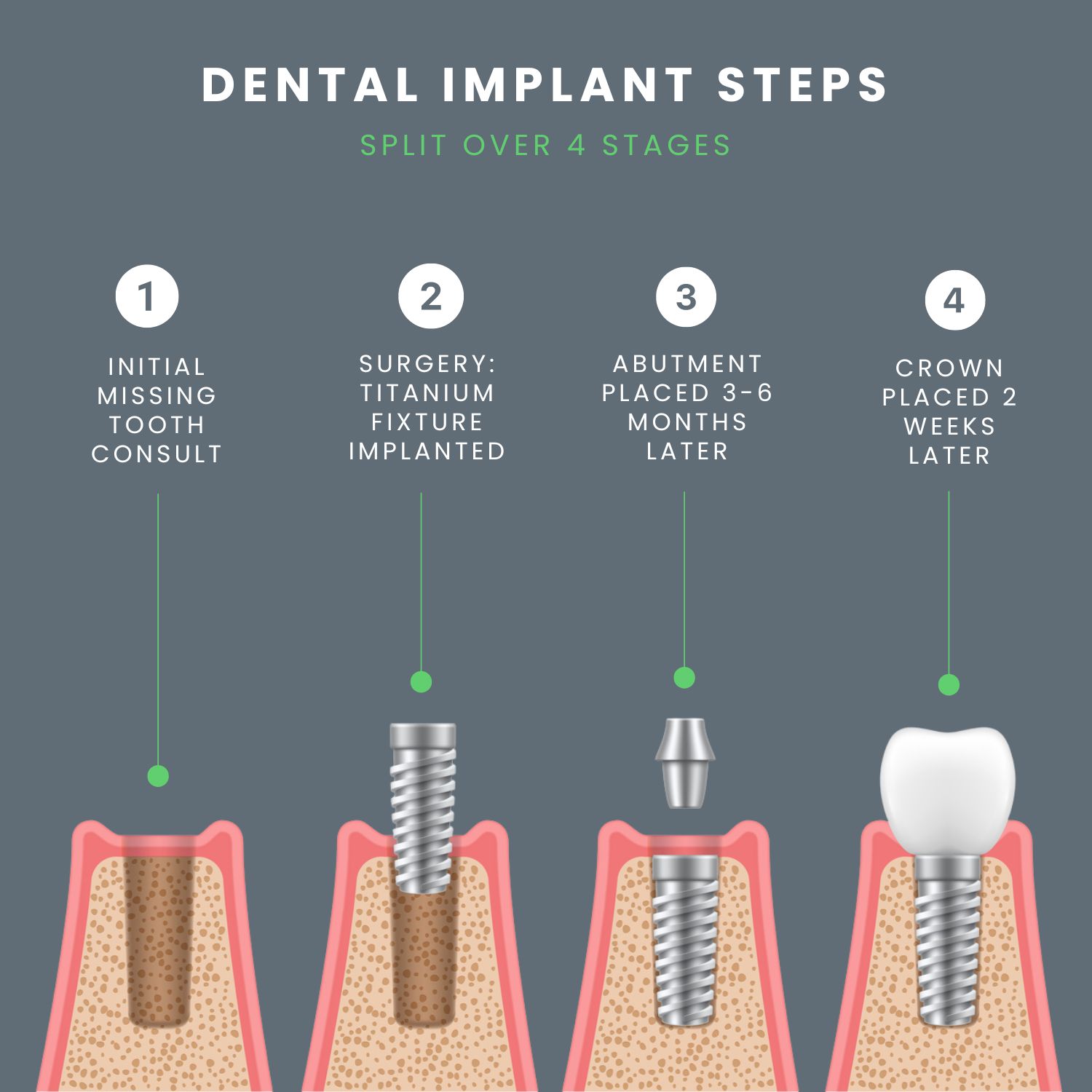
The tooth implant process involves several stages, each crucial for a successful outcome:
- Initial Consultation and Assessment: A thorough examination to determine your suitability for implants.
- Treatment Planning: Creating a personalized plan based on your specific needs and oral health.
- Tooth Extraction (if needed): Removing any damaged teeth that need replacement.
- Implant Placement Surgery: Surgically inserting the titanium implant into your jawbone.
- Healing and Osseointegration: Allowing the implant to fuse with your jawbone.
- Abutment and Crown Placement: Attaching the connecting piece (abutment) and the artificial tooth (crown) to the implant.
- Aftercare and Maintenance: Maintaining proper oral hygiene to ensure the longevity of your implant.
Why Choose Dental Implants for Missing Teeth?
While dentures and bridges are viable tooth replacement options, dental implants offer distinct advantages. Unlike dentures, dental implants are firmly anchored in your jawbone, preventing slipping and discomfort. Bridges require altering adjacent teeth, while implants stand alone without affecting surrounding teeth. Consider these advantages of implants:
- Durability: Dental implants can last a lifetime with proper care, making them a cost-effective long-term solution.
- Natural Look and Feel: Implants look and function like natural teeth, restoring your confidence and smile.
- Improved Oral Health: Implants do not rely on adjacent teeth for support, promoting better oral hygiene.
- Enhanced Chewing Ability: Implants provide a stable base for chewing, allowing you to enjoy your favorite foods without discomfort.
- Bone Preservation: Implants stimulate bone growth in the jaw, preventing bone loss that can occur with missing teeth.
Initial Consultation and Assessment: Is the Tooth Implant Process Right for You?
The initial consultation and assessment is a crucial step in determining your suitability for the tooth implant process. This comprehensive evaluation helps your dentist understand your oral health, assess your bone density, and identify any potential risk factors.
Why is an Initial Assessment Important?
A thorough assessment is essential for several reasons:
- To determine if you are a suitable candidate for dental implants. Not everyone is an ideal candidate, and certain medical conditions or lifestyle factors may affect your eligibility.
- To evaluate your bone density. Sufficient bone density in your jaw is crucial for supporting the implant. If your bone density is inadequate, bone grafting may be necessary.
- To identify any underlying oral health issues. Conditions like gum disease or tooth decay need to be addressed before implant placement.
- To create a personalized treatment plan. The assessment allows your dentist to develop a plan tailored to your specific needs and oral health.
What Does the Consultation Involve?
During the consultation, your dentist will typically:
- Review your medical history: This includes any medical conditions, medications, and allergies you may have.
- Conduct a thorough oral examination: This involves assessing your teeth, gums, and jawbone.
- Take dental X-rays: X-rays help visualize the bone structure and identify any hidden issues. In some cases, a CT scan may be required for a more detailed assessment.
- Discuss your goals and expectations: This allows your dentist to understand what you hope to achieve with dental implants.
Who is an Ideal Candidate for the Tooth Implant Process?
An ideal candidate for the tooth implant process generally:
- Has good overall health
- Has sufficient bone density in their jaw
- Has healthy gums
- Is a non-smoker or willing to quit smoking
- Is committed to maintaining good oral hygiene
Treatment Planning: Charting Your Course to a New Smile
Once your initial assessment is complete, your dentist will develop a personalized treatment plan outlining the steps involved in your tooth implant process. This plan will take into account your individual needs, oral health, and desired outcomes.
How is an Implant Treatment Plan Created?
Creating a successful implant treatment plan involves:
- Analyzing diagnostic information: Your dentist will carefully review your X-rays, CT scans, and oral examination findings.
- Determining the number and location of implants: The number of implants needed will depend on the number of missing teeth and the quality of your bone.
- Selecting the appropriate type of implant: There are various types of dental implants, and your dentist will choose the one best suited for your needs.
- Considering any necessary pre-implant procedures: Bone grafting or sinus lifts may be required if you have insufficient bone density.
What Diagnostics are Required?
The diagnostics required for treatment planning typically include:
- Dental X-rays: Provide a basic overview of your teeth and jawbone.
- CT scans: Offer a detailed 3D view of your bone structure, allowing for precise implant placement planning.
- Digital impressions: Create accurate models of your teeth and gums for fabricating custom-made crowns. Digital scanning provides the best in personalised dental implants.
Timeline and Costs Discussion
During the treatment planning phase, your dentist will discuss:
- The estimated timeline for the entire process: This includes the duration of each stage, from tooth extraction to final crown placement.
- The cost of the procedure: You will receive a detailed breakdown of all expenses involved, including implant placement, abutment and crown fabrication, and any additional procedures. This step can involve personalised dental implants.
- Financing options: Your dentist may offer payment plans or financing options to make the treatment more affordable.
Tooth Extraction (If Needed): Preparing the Site for Implantation
In some cases, tooth extraction may be necessary before implant placement. This is typically required if the existing tooth is severely damaged, decayed, or infected. Often, extraction before implants is unavoidable in the long run.
When is Extraction Necessary?
Extraction may be recommended if:
- The tooth is beyond repair due to extensive decay or damage.
- The tooth is infected and cannot be saved with root canal treatment.
- The tooth is severely mobile due to gum disease.
Healing Period Before Implant Placement
After extraction, a healing period is necessary to allow the bone to heal and prepare the site for implant placement. This healing period typically lasts for several weeks to several months. In some cases, your dentist may recommend a bone graft to augment the bone volume and ensure adequate support for the implant.
The amount of bone available can impact whether a bone grafts is needed for the process.
Implant Placement Surgery: Anchoring Your New Tooth
The implant placement surgery is a crucial step in the tooth implant process. This surgical procedure involves carefully inserting the titanium implant into your jawbone. Don’t fear the surgical phase of the procedure as the dentist will make it as comfortable as possible.
What Happens During the Surgical Phase?
During the surgery:
- You will receive local anaesthetic to numb the area. In some cases, sedation may be used to help you relax.
- Your dentist will make a small incision in your gum tissue to expose the jawbone.
- A pilot hole is created in the bone, and the implant is carefully placed into the hole.
- The gum tissue is then stitched back into place.
How Long Does It Take?
The duration of the implant surgery typically ranges from 1 to 2 hours, depending on the complexity of the case. Pain during implant is normal, but manageable. Your dentist will prescribe pain medication to help you manage any discomfort after the surgery.
Pain Control and Anesthesia
Your comfort is a top priority during the implant placement surgery. Local anaesthesia is used to numb the area, ensuring that you do not feel any pain during the procedure. If you are anxious about the surgery, your dentist may offer sedation options to help you relax.
Healing and Osseointegration: The Foundation of a Successful Implant
Following implant placement, the healing and osseointegration phase begins. This is a critical period during which the implant fuses with your jawbone, creating a strong and stable foundation for your new tooth.
How Does the Implant Fuse With the Jawbone?
Osseointegration is the process by which the bone cells grow around the titanium implant, creating a direct connection between the implant and the bone. This fusion provides the implant with exceptional stability and allows it to withstand the forces of chewing.
Healing Timeframes
The healing timeline for osseointegration varies from person to person but typically ranges from 3 to 6 months. During this time, it is essential to follow your dentist’s aftercare instructions carefully to ensure proper healing.
Aftercare Advice
To promote healing and osseointegration, your dentist may recommend the following aftercare tips:
- Take any prescribed medications, such as antibiotics or pain relievers, as directed.
- Apply ice packs to the surgical area to reduce swelling.
- Eat soft foods to avoid putting too much pressure on the implant.
- Practice gentle oral hygiene, avoiding the surgical area.
- Avoid smoking, as it can impair healing.
- Attend follow-up appointments with your dentist to monitor the healing process.
Abutment and Crown Placement: Completing Your Smile
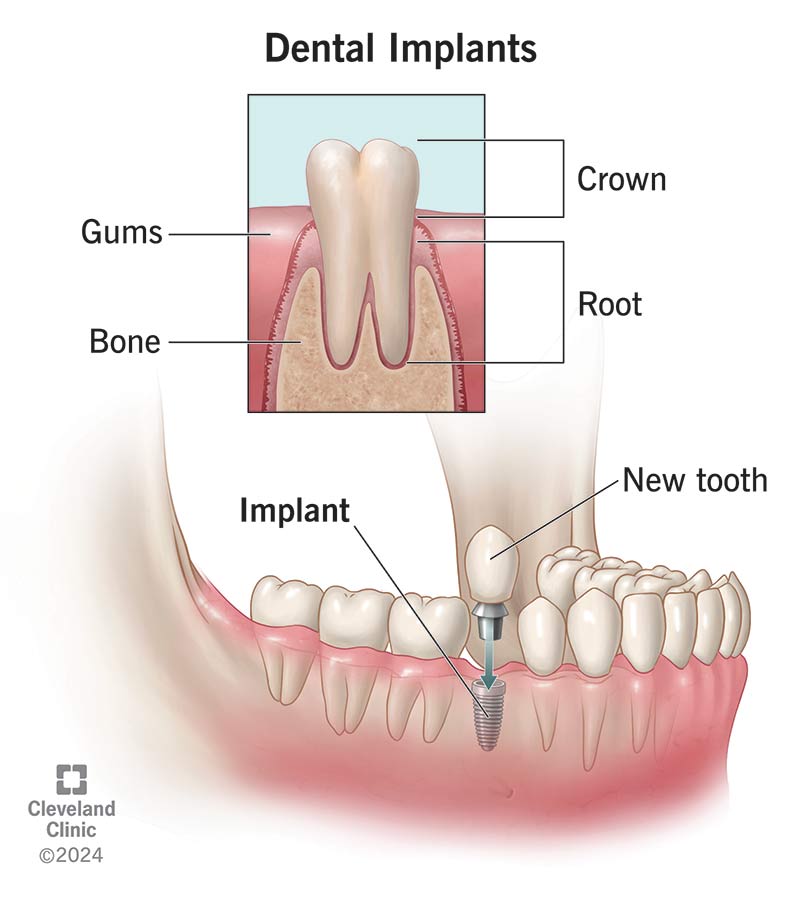
Once the osseointegration process is complete, the abutment and crown placement stage begins. This involves attaching the connecting piece (abutment) and the artificial tooth (crown) to the implant.
What is the Abutment Stage?
The abutment is a small connector post that is attached to the implant. It serves as a base for the crown and provides a secure connection between the implant and the artificial tooth. A dental abutment is custom-made to fit your specific implant and tooth.
How is the Tooth-Shaped Crown Made and Fitted?
The tooth-shaped crown is custom-made to match the color, shape, and size of your natural teeth. It is typically made of porcelain or ceramic material, providing a natural-looking and durable restoration. The process of how a crown is fitted can take place over multiple appointments. To create the crown:
- Your dentist will take impressions of your teeth to create a model of your mouth.
- The model is sent to a dental laboratory, where the crown is fabricated.
- Once the crown is ready, your dentist will attach it to the abutment, ensuring a proper fit and bite.
Final Adjustments for Comfort and Function
After the crown is placed, your dentist will make any necessary adjustments to ensure your comfort and function. This may involve fine-tuning the bite or making minor adjustments to the crown’s shape. Aesthetics are important, so your dentist will work to ensure you’re happy with the result.
Aftercare and Maintenance: Ensuring Long-Term Success
Proper aftercare and maintenance are essential for ensuring the long-term success of your dental implants. By following these guidelines, you can help your implants last a lifetime. Good implant care habits are essential for implant longevity.
How to Care for Dental Implants
Caring for dental implants is similar to caring for natural teeth. This means:
- Brushing your teeth twice a day with a soft-bristled toothbrush.
- Flossing daily to remove plaque and debris from around the implant.
- Using an interdental brush to clean hard-to-reach areas.
- Rinsing with an antibacterial mouthwash.
Signs of Problems and When to See a Dentist
While dental implants are highly durable, problems can sometimes arise. See your dentist if you experience any of the following signs of problems:
- Pain or discomfort around the implant.
- Swelling or redness of the gums.
- Loose or wobbly implant.
- Difficulty chewing.
- Receding gums around the implant.
Longevity and Durability of Implants
With proper care and maintenance, dental implants can last a lifetime. Factors that can affect the longevity of implants include oral hygiene, smoking, and certain medical conditions. A check-ups ensures that the implant is functioning properly.
Risks, Complications, and Solutions: Addressing Potential Challenges
While the tooth implant process is generally safe and predictable, like any surgical procedure, there are potential risks and complications. Understanding these risks and knowing how to address them is essential for a successful outcome.
Common Risks and How Often They Occur
Common risks associated with dental implants include:
- Infection: Peri-implantitis is an infection of the tissues surrounding the implant.
- Nerve damage: Can cause numbness or tingling in the lips, tongue, or chin.
- Sinus problems: Can occur if implants are placed in the upper jaw.
- Implant failure: The implant may not fuse properly with the bone.
What to Do If Something Goes Wrong
If you experience any complications after implant placement, contact your dentist immediately. Early intervention can often prevent minor problems from becoming major issues. There are solutions to the common complications that can arise.
Alternatives Such as Bridges or Dentures
While dental implants are the gold standard for tooth replacement, alternatives such as bridges or dentures may be more suitable for some individuals. Your dentist can discuss these options with you and help you choose the best solution for your needs. What is the best alternative to dental implants? Some options include bridges and dentures.
Cost of Tooth Implant Process in the UK: What to Expect
The cost of the tooth implant process in the UK can vary depending on several factors, including the number of implants needed, the type of implant used, and the location of the clinic. Here’s what to know about tooth implant cost UK:
Typical Price Range
The cost of a single dental implant in the UK typically ranges from £2,000 to £4,000. This cost includes the implant placement surgery, abutment, and crown. A full set of implants can cost between £10,000 to £30,000.
NHS Coverage and Private Options
Dental implants are not typically covered by the NHS unless there is a medical necessity. Most patients opt for private dental care to receive dental implants. NHS vs private implants – private implants offer a wider range of materials and customisation options.
Payment Plans
Many dental clinics offer payment plans or financing options to make the cost of dental implants more affordable. These plans allow you to spread the cost of treatment over several months or years, making it easier to budget for your new smile.
FAQs About the Tooth Implant Process
Here are some frequently asked questions about the tooth implant process:
How painful is the tooth implant process?
The implant placement surgery is typically performed under local anaesthesia, so you should not feel any pain during the procedure. After the surgery, you may experience some mild discomfort, which can be managed with pain medication.
How long does a dental implant last?
With proper care and maintenance, dental implants can last a lifetime. Regular check-ups and good oral hygiene are essential for ensuring the longevity of your implants.
Who is eligible for dental implants?
Most adults in good overall health are eligible for dental implants. However, certain medical conditions or lifestyle factors, such as smoking or uncontrolled diabetes, may affect your eligibility. Your dentist can assess your individual situation and determine if dental implants are right for you.
Can a tooth implant be done in one day?
In some cases, a tooth implant can be done in one day. This is known as immediate loading dental implants and involves placing the implant and crown in a single visit. However, this option is not suitable for everyone, and your dentist will determine if it is right for you.
How do I care for my dental implant?
Caring for dental implants is similar to caring for natural teeth. This involves brushing twice a day, flossing daily, and attending regular dental check-ups.
What are the alternatives if I’m not suitable for implants?
If you are not a suitable candidate for dental implants, alternatives such as bridges or dentures may be more appropriate. Your dentist can discuss these options with you and help you choose the best solution for your needs.
How much do tooth implants cost in the UK?
The cost of tooth implants in the UK varies depending on several factors, but a single implant typically ranges from £2,000 to £4,000.
Are dental implants safe?
Dental implants are a safe and predictable treatment option with a high success rate. However, like any surgical procedure, there are potential risks and complications. Choosing an experienced and qualified dentist can minimize these risks.
What is the success rate?
Dental implants have a high success rate, with most studies reporting success rates of over 95%.
Will people notice my dental implant?
Dental implants are designed to look and function like natural teeth, so they should not be noticeable to others. Your dentist will carefully match the color, shape, and size of the crown to your existing teeth, ensuring a seamless and natural-looking result.
Considering Dental Implants? Choose Albania Dental Implants for Affordable, High-Quality Care
If you’re considering the tooth implant process, Albania Dental Implants offers a unique and affordable solution. We combine expert dental care with the benefits of dental tourism in Albania, providing you with a high-quality treatment experience at a fraction of the cost of UK prices. Here at Albania Dental Implants, we offer various solutions, including a full mouth reconstruction in albania, to cover the specific needs of our patients.
Contact Albania Dental Implants today to schedule a consultation and discover how we can help you achieve a confident and healthy smile.





