


Dental implants are a fantastic long-term solution for missing teeth, meticulously designed to function much like natural teeth. However, to protect their integrity and ensure successful long-term results, there are certain foods you should avoid. Understanding the right dietary choices is crucial for a smooth recovery and the longevity of your Albania Dental Implants.
Understanding Dental Implant Vulnerabilities
When considering a dental implant aftercare diet, it’s important to understand the vulnerabilities during the healing process. Food choices matter significantly, especially in the initial weeks following surgery. Chewing restrictions dental implants are typically most stringent in the early stages, gradually relaxing as the implant integrates with the jawbone.
The Healing Process and Its Impact on Food Choices
The dental implant procedure involves surgically placing a titanium post into your jawbone. This post acts as an artificial root, providing a stable base for a replacement tooth. After the implant is placed, a process called osseointegration begins, where the bone gradually fuses with the implant. This process can take several weeks to months, and it is during this period that the implant is most vulnerable to damage.
During the initial healing phase, the gums around the implant are tender and susceptible to irritation. Consuming hard, crunchy, or sticky foods can put excessive pressure on the implant site, potentially disrupting the healing process and leading to complications. Furthermore, certain foods can increase the risk of infection or inflammation, hindering proper osseointegration.
Why Food Choices Matter for Dental Implant Success
The success of your dental implant heavily relies on allowing the implant site to heal undisturbed. The right food choices can promote healing, minimise discomfort, and prevent complications. Conversely, poor food choices can lead to:
- Implant failure: Excessive pressure from hard foods can loosen the implant before it fully integrates with the bone.
- Infection: Irritation and inflammation from certain foods can create an environment conducive to bacterial growth.
- Delayed healing: Nutritional deficiencies resulting from a poor diet can slow down the healing process.
- Discomfort: Chewing hard or sticky foods can cause pain and sensitivity around the implant site.
When Do Most Dietary Restrictions Apply?
Dietary restrictions are generally most strict in the first few days to weeks following dental implant surgery. Your dentist will provide specific guidelines based on your individual case, but typically, you can expect to follow a soft food diet for at least one to two weeks. As the implant site heals and the gums become less sensitive, you can gradually reintroduce more solid foods. However, it is crucial to continue avoiding excessively hard, crunchy, or sticky foods for several months to ensure complete osseointegration.
What Foods Can You Not Eat with Dental Implants?
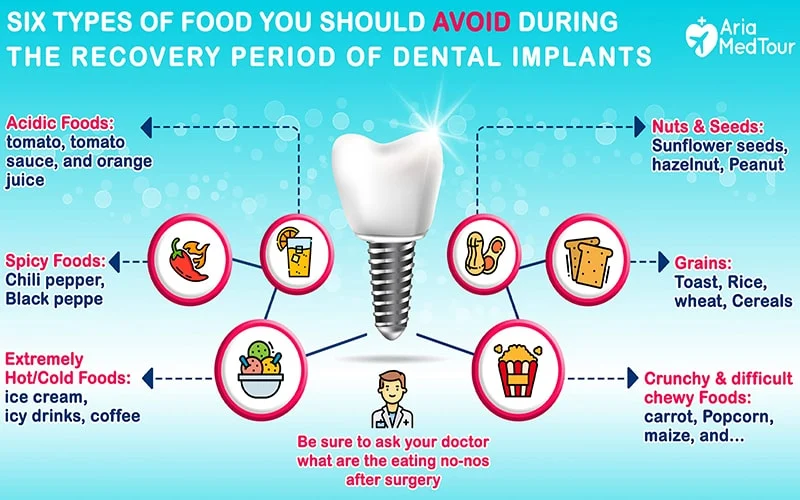
Following dental implant surgery, carefully managing your diet is paramount. Foods to avoid with dental implants fall into several categories: hard, sticky, crunchy, irritating, and staining. Understanding these categories helps ensure the longevity and success of your implant.
Hard Foods to Avoid
Hard foods and dental implants simply don’t mix, especially during the initial healing phases. Biting down on hard foods can put excessive pressure on the implant, potentially causing it to shift or even fail before it has fully integrated with the jawbone.
- Nuts: Avoid whole nuts of all kinds, including almonds, walnuts, and peanuts.
- Hard candies: Lollipops, boiled sweets, and other hard candies can exert significant force on the implant site.
- Ice: Chewing on ice can cause microscopic fractures in the implant or surrounding bone.
- Crusty bread: The hard crust of bread rolls, baguettes, and similar items can be difficult to chew and may irritate the gums.
Sticky or Chewy Foods to Avoid
Sticky foods and dental implants are also a bad combination. These foods can adhere to the implant and surrounding tissues, making them difficult to remove and increasing the risk of infection. Chewy foods, on the other hand, can put excessive strain on the implant as you chew.
- Caramel and toffee: These sugary treats are notorious for sticking to teeth and implants.
- Chewing gum: The repetitive chewing motion can put undue stress on the implant.
- Dried fruit: Dried fruit, such as raisins and apricots, can be very sticky and difficult to dislodge.
Crunchy Foods to Avoid
Crunchy foods, while seemingly harmless, can pose a risk to dental implants, particularly during the initial healing period. The sharp edges and hard textures of these foods can irritate the gums and put pressure on the implant.
- Popcorn: Unpopped kernels and the hulls of popcorn can get lodged around the implant and cause irritation.
- Chips: Potato chips, crisps, and similar snacks can be sharp and abrasive.
- Raw vegetables: Carrots, celery, and other raw vegetables can be hard to chew and may put excessive pressure on the implant.
Foods That Can Cause Infection or Irritation
Certain foods can increase the risk of infection or irritation around the implant site, hindering proper healing.
- Spicy foods: Spicy foods can irritate the gums and cause inflammation.
- Acidic foods: Citrus fruits, tomatoes, and other acidic foods can erode the enamel of natural teeth and irritate the gums around the implant.
- Seeds: Small seeds, such as those found in berries, can get trapped around the implant and cause irritation.
Foods That Stain or Damage Implants
While dental implants are resistant to staining, certain foods and drinks can discolour or damage them over time.
- Highly pigmented drinks: Red wine, cola, coffee, and tea can stain the implant material, particularly around the margins.
Recommended Foods After Dental Implant Surgery
Following dental implant surgery, focusing on best foods for dental implant healing is essential for a smooth and successful recovery. Implant safe foods are typically soft, nutritious, and easy to chew.
Soft Foods for Recovery
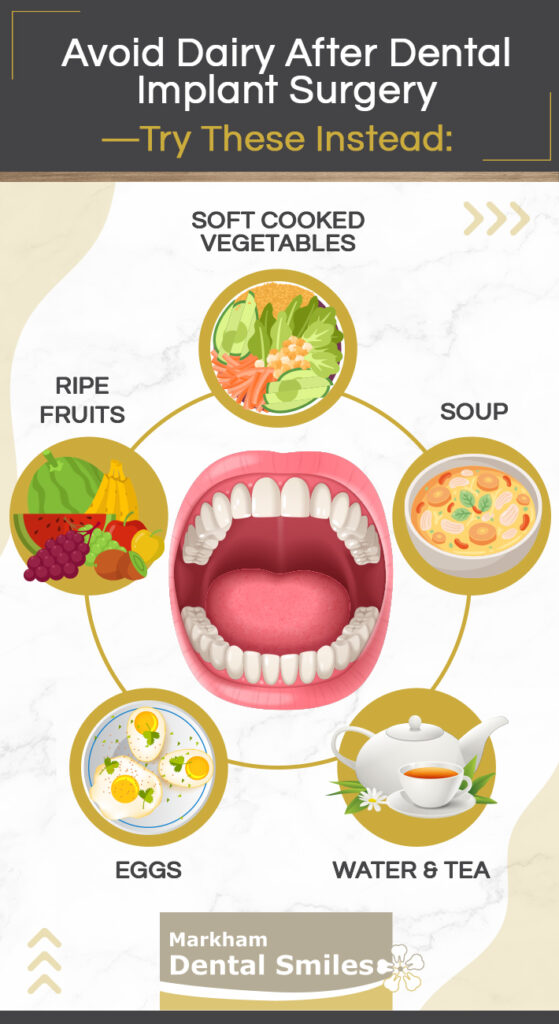
During the initial healing phase, a soft food diet is crucial to minimize pressure on the implant site and promote healing. Some excellent choices include:
- Yogurt: Provides protein and calcium, essential for bone healing.
- Mashed potatoes: Easy to swallow and provides carbohydrates for energy.
- Scrambled eggs: A good source of protein and easy to chew.
- Smoothies: Blend fruits, vegetables, and protein powder for a nutrient-rich meal.
- Soups: Opt for broth-based soups with soft vegetables or pureed soups.
- Cooked cereals: Oatmeal, porridge, and other cooked cereals are easy to digest and provide fibre.
Hydration and Nutrition Tips
Staying hydrated and maintaining a balanced diet is crucial for promoting healing and preventing complications after dental implant surgery. Be sure to drink plenty of water throughout the day to keep the implant site clean and hydrated.
- Avoid using straws: The sucking motion can dislodge blood clots and delay healing.
- Take multivitamins: Ensure you are getting all the essential vitamins and minerals your body needs.
- Consume protein-rich foods: Protein is essential for tissue repair and bone regeneration.
- Avoid alcohol and smoking: These habits can interfere with healing and increase the risk of complications.
Long-Term Dietary Recommendations
Even after the initial healing period, following certain long-term dietary recommendations is essential for preventing damage post-recovery and ensuring the longevity of your dental implants. This includes chewing carefully to preserve implants.
Preventing Damage Post-Recovery
Once your dental implant has fully integrated with the jawbone, you can gradually reintroduce a wider variety of foods into your diet. However, it’s still important to exercise caution and avoid excessively hard, crunchy, or sticky foods that could potentially damage the implant or surrounding tissues.
- Cut hard foods into smaller pieces: This reduces the amount of force required to chew them.
- Use caution when eating foods with bones or pits: Avoid biting down directly on these items.
- Avoid using your teeth as tools: Don’t use your teeth to open bottles or tear packages.
Chewing Carefully to Preserve Implants
Proper chewing technique can also help protect your dental implants and prevent premature wear and tear. Try to distribute the chewing force evenly across your mouth, rather than focusing on one side. Avoid clenching or grinding your teeth, as this can put excessive stress on the implants. If you have a habit of grinding your teeth, consider wearing a nightguard to protect your implants while you sleep.
By following these dietary recommendations and practicing good oral hygiene, you can ensure the long-term success of your dental implants in Albania and enjoy a healthy, functional smile for many years to come. And if you’re considering enhancing your smile, remember that cosmetic dentistry in Albania offers a range of options to suit your needs.
Frequently Asked Questions (FAQs)
Here are some frequently asked questions to guide you through the dietary changes needed before and after the implant procedure.
What foods should you avoid immediately after dental implant surgery?
Immediately after dental implant surgery, it’s crucial to stick to a very soft diet to protect the healing site. Avoid anything that requires significant chewing or could irritate the gums. Good options include:
- Liquids: Broth, clear soups, juice (avoiding citrus), and water.
- Pureed foods: Applesauce, pureed vegetables, and strained yogurt.
- Soft foods: Mashed potatoes, scrambled eggs, and well-cooked cereals.
Specifically avoid:
- Hard foods: Nuts, seeds, hard candies, and ice.
- Crunchy foods: Chips, popcorn, and raw vegetables.
- Sticky foods: Caramel, chewing gum, and dried fruit.
- Spicy foods: These can irritate the surgical site.
- Alcohol: Can interfere with healing and interact with medications.
Are nuts or seeds safe for dental implants in the long term?
In the long term, once the implant has fully integrated with the jawbone, nuts and seeds can be reintroduced into your diet, but with caution.
- Nuts: Choose softer nuts like cashews or shelled pistachios. Avoid very hard nuts like almonds or walnuts, or chop them finely.
- Seeds: Be aware that small seeds can get trapped around the implant. Rinse your mouth thoroughly after eating them.
If you experience any discomfort or irritation, reduce your consumption of nuts and seeds.
Can you eat steak, apples, or other hard foods with dental implants?
Eventually, you should be able to enjoy most foods, including steak and apples, with dental implants. However, it’s important to reintroduce these foods gradually and with care.
- Steak: Choose tender cuts of meat and slice them into small, manageable pieces. Chew slowly and carefully.
- Apples: Cut apples into slices instead of biting directly into them. This reduces the pressure on the implant.
If you find these foods difficult to chew, consider cooking them to soften them slightly.
How long should diet restrictions last after getting dental implants?
The duration of dietary restrictions varies depending on the individual and the complexity of the surgery. Generally, you can expect to follow a soft food diet for one to two weeks. After that, you can gradually reintroduce more solid foods, but it’s important to avoid excessively hard, crunchy, or sticky foods for at least three months to allow the implant to fully integrate with the bone.
Are there foods that can stain or damage dental implants?
While dental implants are resistant to staining, certain foods and drinks can discolour or damage them over time. Highly pigmented drinks like red wine, cola, coffee, and tea can stain the implant material, especially around the margins.
Acidic foods like citrus fruits and tomatoes can erode the enamel of natural teeth and may also affect the appearance of the implant over time.
What are the best foods to eat during dental implant healing?
The best foods to eat during dental implant healing are those that are soft, nutritious, and easy to chew.
- Protein-rich foods: Yogurt, scrambled eggs, cottage cheese, and tofu.
- Vitamin-rich foods: Smoothies with fruits and vegetables, pureed soups, and cooked cereals.
- Easy-to-digest foods: Mashed potatoes, cooked pasta, and soft bread.
Is chewing gum harmful if you have dental implants?
Chewing gum is generally not recommended, especially during the initial healing phase. The repetitive chewing motion can put undue stress on the implant and potentially interfere with osseointegration. Even after the implant has fully integrated, excessive gum chewing may cause wear and tear on the implant over time.
How does diet impact dental implant success or failure?
Diet plays a critical role in the success or failure of dental implants. A balanced and nutritious diet provides the essential building blocks for tissue repair and bone regeneration, promoting proper osseointegration and reducing the risk of infection. Conversely, a poor diet lacking in essential nutrients can delay healing, increase the risk of complications, and potentially lead to implant failure.
Considering Dental Implants?
If you’re considering dental implants as a solution for missing teeth, Albania Dental Implants offers a range of options tailored to your individual needs. Our skilled professionals provide high-quality Albania Dental Implants Services ensuring a successful and long-lasting outcome. Consider combining your dental treatment with Dental Tourism in Albania for a cost-effective solution.
Take the Next Step Towards a Confident Smile!
Don’t let dietary concerns hold you back from achieving the smile you deserve. Contact us today to schedule a consultation and learn more about how dental implants can transform your life.
Ready to restore your smile and confidence? Contact Albania Dental Implants now to begin your journey towards a healthy, functional, and beautiful smile!