


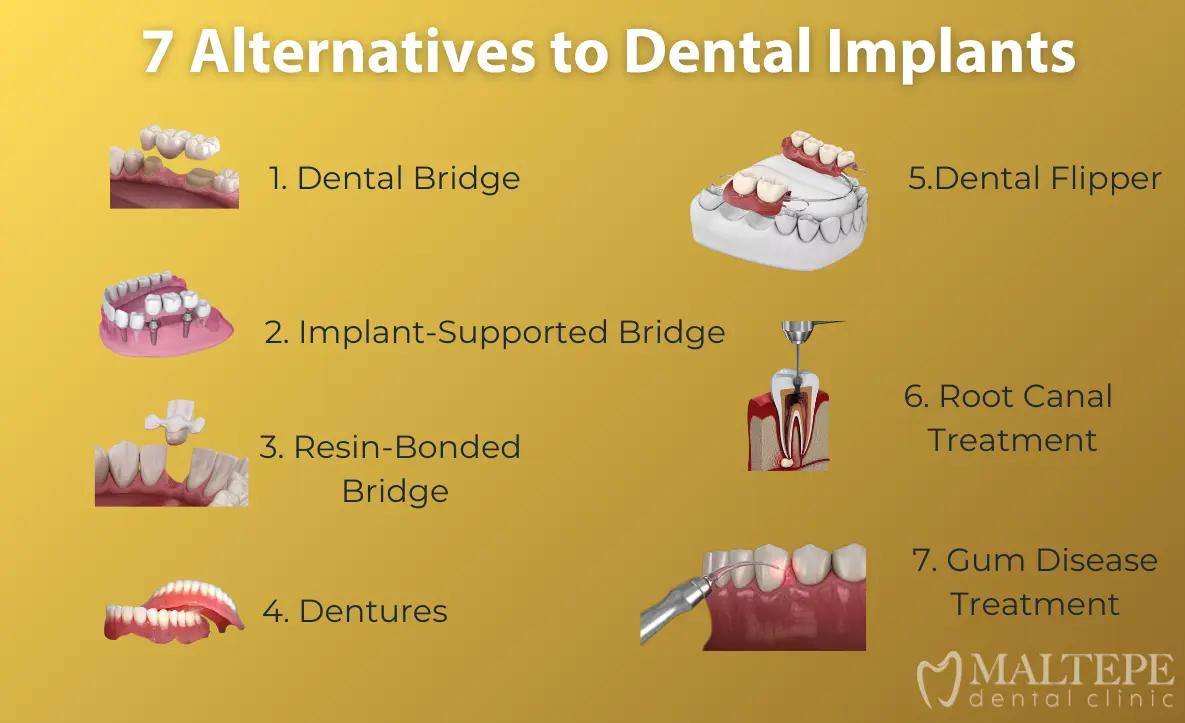

The best alternative to dental implants varies according to patients’ individual needs and circumstances, but common options include dental bridges and dentures. Finding the right solution depends on factors like your oral health, budget, and desired outcome.
Why Consider Alternatives to Dental Implants?
Exploring alternatives to dental implants is a common decision for many patients. While dental implants are often considered the gold standard for tooth replacement, they aren’t always the best or most feasible option. Several factors can influence this decision, including medical considerations, cost, and the invasiveness of the procedure. Understanding these factors can help you make an informed choice about the best tooth replacement solution for you.
Medical Reasons, Who Should Avoid Dental Implants and Non-Surgical Tooth Replacement
Certain medical conditions can make dental implants a less suitable option. For instance, individuals with uncontrolled diabetes, severe autoimmune diseases, or significant bone loss in the jaw may face higher risks of implant failure. Furthermore, patients undergoing certain cancer treatments, such as radiation therapy to the head and neck, might not be ideal candidates for dental implants. In these cases, alternatives like dental bridges or dentures offer viable non-surgical tooth replacement solutions that don’t require the same level of bone integration or healing capacity.
There are several reasons for considering alternatives to dental implants:
- Medical Conditions: Certain health issues, like uncontrolled diabetes or autoimmune diseases, can compromise the success of dental implants.
- Insufficient Bone Density: Implants require sufficient jawbone to fuse with. Those with significant bone loss may need bone grafting, adding to the cost and complexity. Alternatives bypass this requirement.
- Medications: Some medications, particularly bisphosphonates used to treat osteoporosis, can interfere with bone healing and are associated with implant failure.
- Lifestyle Factors: Heavy smokers or individuals with poor oral hygiene may face a higher risk of implant complications.
Cost and Invasiveness Factors
The cost of dental implants can be a significant barrier for some patients. In the UK, a single dental implant can range from £2,000 to £4,000 or more, depending on the complexity of the case and the location of the clinic. This cost doesn’t always include additional procedures like bone grafting or sinus lifts, which may be necessary to ensure a successful implant. Alternatives like dental bridges or dentures are typically more affordable upfront, making them attractive options for those on a budget.
Beyond cost, the invasiveness of the dental implant procedure can also be a deterrent. Dental implants require surgery to place the implant into the jawbone, followed by a healing period of several months before the final restoration can be attached. Some patients may prefer less invasive alternatives that don’t involve surgery, such as removable dentures or resin-bonded bridges.
Summary of Situations Requiring Alternatives
In summary, alternatives to dental implants are worth considering in situations where:
- Dental implants are medically contraindicated.
- The cost of implants is prohibitive.
- The patient prefers a less invasive treatment option.
- There is insufficient bone density to support implants without extensive grafting.
Ultimately, the best tooth replacement solution is the one that best meets your individual needs and circumstances. Discussing your options with a qualified dentist is essential to making an informed decision. Consider exploring the possibilities of Albania Dental Implants as a cost-effective option, where high-quality dental care is more accessible.
Overview of the Main Alternatives: Tooth Replacement Options, Missing Tooth Solutions, Dental Crowns Alternatives
When exploring tooth replacement options, it’s important to understand the array of choices available. Beyond dental implants, several effective alternatives can restore your smile and improve oral function. These alternatives include dental bridges, removable dentures, and resin-bonded bridges. Each option has its own set of advantages, disadvantages, and suitability for different situations. Let’s take a closer look at each of these main alternatives.
Dental Bridges: Dental Bridges vs Implants, Fixed Bridges
Dental bridges are a classic and reliable solution for replacing one or more missing teeth. A dental bridge fills the gap created by the missing tooth (or teeth) by anchoring a false tooth (pontic) to the adjacent teeth (abutments). This creates a “bridge” that spans the gap, restoring the appearance and function of your smile. Bridges are a type of fixed bridge, meaning they are cemented in place and cannot be removed by the patient.
How Dental Bridges Work
Traditional dental bridges involve preparing the abutment teeth by removing some of the enamel to make room for crowns that will support the pontic. The crowns are then cemented onto the abutment teeth, with the pontic fused between them, effectively filling the gap. The entire structure is custom-made to match the shape, size, and colour of your natural teeth, providing a seamless and natural-looking restoration.
Types of Dental Bridges
- Traditional Bridges: These are the most common type of dental bridge and are used when there are healthy teeth on both sides of the missing tooth.
- Cantilever Bridges: A cantilever bridge is used when there is only one adjacent tooth to support the pontic. This type of bridge is less stable than a traditional bridge and is typically used in areas of the mouth that are not subject to heavy chewing forces.
- Maryland/Resin-Bonded Bridges: These bridges consist of a pontic that is attached to metal or porcelain “wings” that are bonded to the back of the adjacent teeth. Maryland bridges are less invasive than traditional bridges because they require minimal preparation of the abutment teeth.
Pros, Cons, Cost, and Lifespan Compared to Implants
Compared to dental implants, dental bridges offer several advantages:
- Lower Cost: Bridges are generally more affordable than implants.
- Faster Treatment Time: The bridge procedure can be completed in a few weeks, whereas implants can take several months.
- Non-Invasive (for Maryland bridges): Maryland bridges require minimal alteration of the adjacent teeth.
However, bridges also have some disadvantages:
- Shorter Lifespan: Bridges typically last 5-15 years, while implants can last a lifetime with proper care.
- Requires Alteration of Adjacent Teeth: Traditional bridges require the removal of enamel from the abutment teeth, which can weaken them.
- Increased Risk of Decay: The area around the bridge can be more difficult to clean, increasing the risk of decay in the abutment teeth.
The cost of a dental bridge in the UK can range from £700 to £2,000, depending on the type of bridge and the materials used. Implants, on the other hand, typically cost between £2,000 and £4,000 per implant.
Best Candidates
Dental bridges are a good option for patients who:
- Are missing one or more teeth.
- Have healthy adjacent teeth to support the bridge.
- Are looking for a more affordable tooth replacement solution.
- Are not suitable candidates for dental implants due to medical reasons.
If you are considering a dental bridge, contact Albania Dental Implants to learn more about your options. We offer affordable and high-quality dental care to help you restore your smile and confidence.
Removable Dentures: Dentures as Implant Alternatives, Removable Partial Dentures
Removable dentures are another common alternative to dental implants, particularly for individuals who are missing multiple teeth or an entire arch of teeth. Dentures are prosthetic devices that replace missing teeth and surrounding tissues. They are designed to be removable, allowing patients to take them out for cleaning and maintenance. Dentures offer a cost-effective and non-invasive solution for restoring your smile and improving your ability to eat and speak.
Difference Between Full and Partial Dentures
There are two main types of removable dentures:
- Full Dentures: Full dentures are used when all of the teeth in an arch (upper or lower) are missing. They are typically made of acrylic and are designed to rest directly on the gums.
- Partial Dentures: Partial dentures are used when some natural teeth remain in the arch. They consist of replacement teeth attached to a plastic or metal framework that clasps onto the remaining natural teeth for support.
Materials, Comfort, Maintenance
Dentures can be made from a variety of materials, including acrylic, porcelain, and metal. Acrylic dentures are the most common type and are generally the most affordable. Porcelain dentures offer a more natural appearance but are also more brittle and prone to chipping. Metal frameworks are often used in partial dentures to provide added strength and stability.
The comfort of dentures can vary depending on the individual and the fit of the denture. New dentures may take some time to get used to, and patients may experience some initial soreness or irritation. Regular adjustments by a dentist are necessary to ensure a proper fit and to address any discomfort. Proper maintenance of dentures is essential for maintaining their appearance and preventing oral health problems. Dentures should be cleaned daily with a denture brush and a mild denture cleaner. They should also be soaked in a denture-soaking solution overnight to keep them moist and prevent them from warping.
Pros, Cons, and Cost vs Implants
Compared to dental implants, removable dentures offer several advantages:
- Lower Cost: Dentures are significantly more affordable than implants.
- Non-Invasive: Dentures do not require surgery.
- Faster Treatment Time: Dentures can be fabricated and fitted in a matter of weeks.
However, dentures also have some disadvantages:
- Less Stable: Dentures can be less stable than implants, particularly lower dentures.
- Reduced Chewing Efficiency: Dentures can reduce chewing efficiency compared to natural teeth or implants.
- Bone Loss: Dentures can accelerate bone loss in the jaw over time.
- Maintenance: Dentures require daily cleaning and soaking.
The cost of removable dentures in the UK can range from £500 to £2,000 per arch, depending on the materials used and the complexity of the case. As mentioned earlier, implants typically cost between £2,000 and £4,000 per implant.
Ideal Use Cases
Removable dentures are a good option for patients who:
- Are missing multiple teeth or an entire arch of teeth.
- Are looking for a more affordable tooth replacement solution.
- Are not suitable candidates for dental implants due to medical reasons or bone loss.
- Prefer a non-invasive treatment option.
Resin-Bonded (Maryland) Bridges
Resin-bonded bridges, also known as Maryland bridges, are a conservative and less invasive alternative to traditional dental bridges. They are often used to replace a single missing tooth, particularly in the front of the mouth. Unlike traditional bridges, Maryland bridges require minimal preparation of the adjacent teeth, making them a more tooth-friendly option.
How They Work
A Maryland bridge consists of a pontic (false tooth) that is attached to metal or porcelain “wings” that are bonded to the back of the adjacent teeth. The wings are typically made of a thin layer of metal or porcelain that is etched with a special acid to create a rough surface. This rough surface allows the bonding agent to adhere strongly to the tooth enamel. The pontic is then bonded to the wings, creating a stable and natural-looking restoration.
Indications and Limitations
Maryland bridges are best suited for replacing a single missing tooth in the front of the mouth, where chewing forces are relatively light. They are not as strong or durable as traditional bridges and are not recommended for replacing multiple teeth or for use in the back of the mouth where chewing forces are heavier. Maryland bridges are also not suitable for patients who have heavily filled or damaged adjacent teeth, as the bonding may not be strong enough to support the bridge.
Comparison to Other Methods
Compared to traditional dental bridges, Maryland bridges offer several advantages:
- Less Invasive: Maryland bridges require minimal preparation of the adjacent teeth, preserving more of the natural tooth structure.
- Faster Treatment Time: The Maryland bridge procedure can be completed in one or two appointments.
- Lower Cost: Maryland bridges are typically less expensive than traditional bridges.
However, Maryland bridges also have some disadvantages:
- Less Durable: Maryland bridges are not as strong or durable as traditional bridges and may be more prone to failure.
- Bonding Failure: The wings of the Maryland bridge can debond from the adjacent teeth, requiring the bridge to be re-bonded.
- Aesthetics: The metal wings of the Maryland bridge can sometimes be visible through the adjacent teeth, particularly if the teeth are thin or translucent.
The cost of a Maryland bridge in the UK can range from £500 to £1,500, depending on the materials used and the complexity of the case.
Mini Dental Implants & Other Surgical Variants
Mini dental implants (MDIs) offer a less invasive surgical approach compared to traditional dental implants. While still considered implants, they are significantly smaller in diameter, typically ranging from 1.8 to 3.0 millimetres. This smaller size allows for placement in areas with limited bone density, potentially avoiding the need for bone grafting in some cases. It’s important to note that while less invasive, MDIs still involve a surgical procedure and are not a true “non-surgical” alternative.
What They Are
Mini dental implants are typically made of titanium alloy and have a ball-shaped end that protrudes above the gum line. This ball-shaped end is designed to connect with a corresponding socket in a denture or other prosthetic device, providing stability and retention. MDIs are often used to stabilize lower dentures, which can be particularly challenging to keep in place with traditional dentures.
Indications/Select Cases Only
Mini dental implants are not suitable for all patients or all tooth replacement situations. They are typically used in cases where:
- There is insufficient bone density to support traditional implants.
- The patient is looking for a less invasive and less expensive implant option.
- The primary goal is to stabilize a lower denture.
MDIs are not recommended for replacing individual teeth or for supporting bridges, as they are not strong enough to withstand the chewing forces associated with these restorations.
Less Invasive Alternatives, But Still Implants
While mini dental implants are less invasive than traditional implants, they still involve a surgical procedure and require a healing period. Patients considering MDIs should be aware of the potential risks and complications associated with any surgical procedure, including infection, bleeding, and nerve damage. It is also important to note that MDIs are not a permanent solution and may need to be replaced over time. If you are considering dental work, be sure to explore the dental tourism in Albania to find the best affordable options.
How Do Alternatives Compare to Dental Implants? Pros and Cons of Implant Alternatives, Durability and Lifespan of Alternatives, Cost of Dental Implant Alternatives
Choosing the right tooth replacement option requires careful consideration of the pros and cons of each alternative, as well as their durability, lifespan, and cost. Dental implants are often considered the gold standard due to their longevity and stability, but they are not always the best choice for every patient. Let’s take a closer look at how the main alternatives – dental bridges and dentures – compare to dental implants in terms of these key factors.
Longevity and Maintenance
One of the primary advantages of dental implants is their longevity. With proper care, dental implants can last a lifetime. They are made of biocompatible materials that fuse with the jawbone, providing a stable and permanent foundation for the replacement tooth. In contrast, dental bridges and dentures typically have a shorter lifespan.
- Dental Bridges: Bridges typically last 5-15 years, depending on the type of bridge, the materials used, and the patient’s oral hygiene habits.
- Dentures: Dentures typically last 5-10 years, as the underlying bone gradually shrinks over time, leading to a loose fit.
Maintaining dental implants is similar to maintaining natural teeth. Regular brushing, flossing, and dental check-ups are essential for preventing gum disease and ensuring the long-term success of the implant. Dental bridges and dentures also require regular cleaning and maintenance. Bridges require special flossing techniques to clean under the pontic, while dentures need to be removed and cleaned daily with a denture brush and cleaner.
Aesthetics, Comfort, Chewing Efficiency
Dental implants offer the most natural-looking and feeling tooth replacement option. Because they are anchored to the jawbone, they provide excellent stability and chewing efficiency. Patients with dental implants can typically eat any foods they enjoy without worry.
- Dental Bridges: Bridges can provide a good aesthetic result, but they may not feel as natural as implants. Chewing efficiency can be slightly reduced compared to natural teeth.
- Dentures: Dentures can restore the appearance of a smile, but they can also feel bulky and uncomfortable, especially at first. Chewing efficiency is significantly reduced compared to natural teeth or implants.
The comfort of dental implants is generally very high, as they feel and function like natural teeth. Bridges can also be comfortable, but they may require some adjustment period. Dentures can take some time to get used to, and patients may experience some initial soreness or irritation.
Cost Breakdown (NHS/Private Where Relevant)
The cost of dental implants can be a significant factor for many patients. In the UK, dental implants are typically not available on the NHS, except in very limited circumstances. The cost of a single dental implant can range from £2,000 to £4,000 or more, depending on the complexity of the case and the location of the clinic.
- Dental Bridges: Bridges are generally more affordable than implants, with costs ranging from £700 to £2,000 per bridge.
- Dentures: Dentures are the most affordable tooth replacement option, with costs ranging from £500 to £2,000 per arch.
It’s important to note that these are just average costs, and the actual cost of treatment can vary depending on the individual case. If you’re seeking a cost-effective solution, be sure to investigate the affordable cost of dental implants in Albania.
Patient Satisfaction and Common Complaints
Patient satisfaction with dental implants is generally very high. Patients appreciate the stability, longevity, and natural appearance of implants. Common complaints associated with dental implants include the high cost and the length of treatment time.
- Dental Bridges: Patient satisfaction with bridges is generally good, but some patients may experience problems with decay in the abutment teeth or failure of the bridge.
- Dentures: Patient satisfaction with dentures can vary. Some patients are happy with the improved appearance and function of their smile, while others struggle with the comfort and stability of dentures. Common complaints include difficulty chewing, sore spots, and a feeling of looseness.
Who Should Consider Each Alternative?
Choosing the right tooth replacement solution depends on various factors, including medical, anatomical, and lifestyle considerations. Each alternative – dental implants, bridges, and dentures – has its own set of indications and contraindications. Let’s explore who should consider each option based on these factors.
Medical, Anatomical, and Lifestyle Factors
Certain medical conditions can influence the suitability of dental implants. As mentioned earlier, individuals with uncontrolled diabetes, severe autoimmune diseases, or significant bone loss in the jaw may face higher risks of implant failure. In these cases, alternatives like dental bridges or dentures may be more appropriate. Anatomical factors, such as the location of nerves or sinuses in the jaw, can also affect the feasibility of dental implants. In some cases, bone grafting or sinus lifts may be necessary to create enough space for the implant.
Lifestyle factors, such as smoking and oral hygiene habits, can also play a role. Smoking can impair bone healing and increase the risk of implant failure. Poor oral hygiene can lead to gum disease, which can also compromise the success of implants. Patients who smoke or have poor oral hygiene may be better suited for alternatives like dentures or bridges, which are less dependent on bone healing and gum health.
Age and Oral Health Considerations
Age is not necessarily a contraindication for dental implants, but younger patients may need to wait until their jawbone has fully developed before undergoing implant surgery. Older patients may be more likely to have underlying medical conditions that can affect the success of implants. Overall oral health is a critical consideration for any tooth replacement option. Patients with healthy gums and teeth are more likely to have successful outcomes with any treatment. Patients with gum disease or extensive tooth decay may need to address these issues before considering any tooth replacement option. In some cases, extracting damaged teeth and replacing them with dentures or a bridge may be the best solution.
When Each Method Is Recommended by Dentists
Dentists typically recommend dental implants for patients who:
- Are in good overall health.
- Have sufficient bone density in the jaw.
- Have healthy gums and teeth.
- Are committed to maintaining good oral hygiene.
- Are looking for a long-term tooth replacement solution.
Dentists may recommend dental bridges for patients who:
- Are missing one or more teeth.
- Have healthy adjacent teeth to support the bridge.
- Are looking for a more affordable tooth replacement solution.
- Are not suitable candidates for dental implants due to medical reasons or bone loss.
Dentists may recommend removable dentures for patients who:
- Are missing multiple teeth or an entire arch of teeth.
- Are looking for a more affordable tooth replacement solution.
- Are not suitable candidates for dental implants due to medical reasons or bone loss.
- Prefer a non-invasive treatment option.
Ultimately, the best tooth replacement solution is the one that best meets your individual needs and circumstances. Discussing your options with a qualified dentist is essential to making an informed decision. You might consider traveling to Albania for expert general dentistry in Albania to find the best treatment plan.
Choosing the Right Tooth Replacement Solution
Selecting the best tooth replacement solution is a significant decision that impacts your oral health, appearance, and overall quality of life. It’s essential to approach this decision with careful consideration and the guidance of a qualified dentist. Here are some tips for navigating the process and making an informed choice.
Tips for Discussing Options with Your Dentist
The first step in choosing the right tooth replacement solution is to schedule a consultation with your dentist. During this consultation, be prepared to discuss your medical history, your oral health goals, and any concerns you may have. Here are some tips for making the most of your consultation:
- Be Open and Honest: Share your complete medical history, including any medications you are taking and any underlying health conditions.
- Express Your Goals: Clearly communicate your desired outcome, whether it’s restoring your smile, improving your chewing ability, or achieving a more natural appearance.
- Ask Questions: Don’t hesitate to ask your dentist any questions you have about the different tooth replacement options.
- Take Notes: Jot down important information and recommendations from your dentist so you can refer back to them later.
Questions to Ask About Implants and Alternatives
Here are some key questions to ask your dentist about dental implants and their alternatives:
- What are the pros and cons of each option for my specific situation?
- What is the expected lifespan of each option?
- How much will each option cost, including any additional procedures or maintenance?
- What are the risks and complications associated with each option?
- How will each option affect my chewing ability and speech?
- How will each option look and feel?
- What is the maintenance required for each option?
Importance of Regular Dental Check-Ups Regardless of Solution Chosen
Regardless of which tooth replacement solution you choose, regular dental check-ups are essential for maintaining your oral health. Regular check-ups allow your dentist to monitor the health of your gums and teeth, detect any problems early, and provide preventive care to keep your smile healthy and bright. The frequency of your check-ups will depend on your individual needs and the recommendations of your dentist. However, most people should have a dental check-up at least once every six months. Even if you are looking for a Hollywood Smile in Albania, a quality dentist will stress the importance of preventative dental care.
Frequently Asked Questions: Dental Implant Alternatives
What is the least invasive alternative to dental implants?
The least invasive alternative to dental implants is generally considered to be a resin-bonded bridge (Maryland bridge). This option requires minimal preparation of the adjacent teeth, preserving more of the natural tooth structure compared to traditional bridges. However, it’s essential to note that Maryland bridges are not as strong or durable as other alternatives and are best suited for replacing a single missing tooth in the front of the mouth.
Are dental bridges as durable as implants?
No, dental bridges are generally not as durable as dental implants. Dental implants are designed to fuse with the jawbone, providing a stable and permanent foundation for the replacement tooth. Dental bridges, on the other hand, rely on the adjacent teeth for support and typically last 5-15 years, while implants can last a lifetime with proper care.
How much does it cost to replace a single tooth without an implant?
The cost to replace a single tooth without an implant varies depending on the chosen alternative. A dental bridge in the UK can range from £700 to £2,000, while a resin-bonded bridge can cost between £500 and £1,500. These costs are generally lower than the cost of a single dental implant, which can range from £2,000 to £4,000 or more.
Do dentures require special care compared to implants?
Yes, dentures require special care compared to dental implants. Dentures need to be removed and cleaned daily with a denture brush and cleaner. They also need to be soaked in a denture-soaking solution overnight to keep them moist and prevent them from warping. Dental implants, on the other hand, can be cared for like natural teeth with regular brushing, flossing, and dental check-ups.
Can I get a fixed alternative without surgery?
Yes, dental bridges are a fixed alternative to dental implants that do not require surgery. Traditional bridges involve preparing the adjacent teeth to support the bridge, while resin-bonded bridges are bonded to the back of the adjacent teeth without significant alteration. Both options provide a fixed tooth replacement without the need for surgical intervention.
Who should not get dental implants?
Individuals with certain medical conditions, such as uncontrolled diabetes, severe autoimmune diseases, or significant bone loss in the jaw, may not be suitable candidates for dental implants. Smokers and individuals with poor oral hygiene may also face a higher risk of implant failure. A thorough evaluation by a dentist is essential to determine if dental implants are the right choice for you.
What are mini dental implants, and are they an alternative?
Mini dental implants (MDIs) are smaller versions of traditional dental implants. While they are still implants, they are less invasive and can be used in areas with limited bone density. MDIs are often used to stabilize lower dentures, providing improved retention and stability. However, they are not a substitute for traditional implants in all cases and are not recommended for replacing individual teeth or supporting bridges.
Is it possible to avoid bone grafts with alternatives?
Yes, alternatives like dental bridges and dentures do not require bone grafting, as they do not rely on bone integration for support. These options can be particularly appealing for individuals with significant bone loss in the jaw who may not be suitable candidates for dental implants without extensive bone grafting.
Are alternatives to dental implants available on the NHS?
In the UK, dental bridges and dentures are generally available on the NHS, although the specific types of bridges and dentures offered may be limited. Dental implants are typically not available on the NHS, except in very limited circumstances where there is a medical need.
Which alternative looks the most natural?
The alternative that looks the most natural depends on the individual case and the quality of the materials used. Dental implants are often considered the most natural-looking option, as they closely mimic the appearance and function of natural teeth. However, well-crafted dental bridges and dentures can also provide excellent aesthetic results. Modern materials and techniques allow dentists to create restorations that blend seamlessly with the surrounding teeth.
Considering alternatives to dental implants? Schedule a consultation with Albania Dental Implants to discuss your options and find the best solution for your needs. Our experienced team offers affordable and high-quality dental care, helping you restore your smile and confidence. Albania Dental Implants Services are tailored to your needs, be sure to contact Albania Dental Implants for further assistance.