



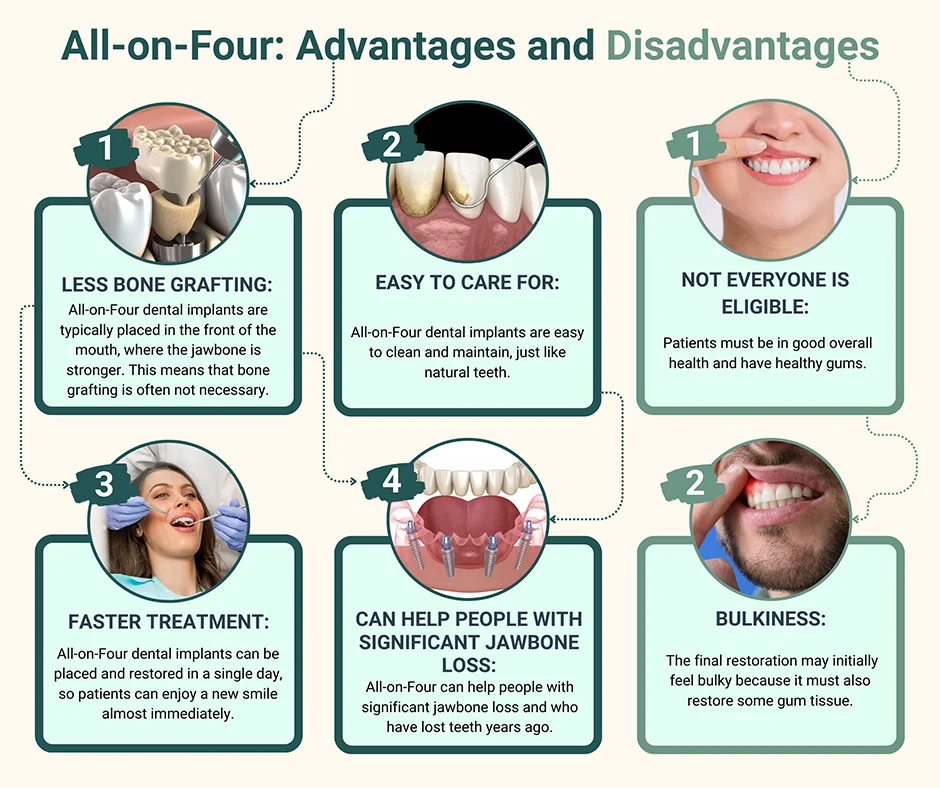

What is the downside of all on four dental implants? This is a crucial question for anyone considering this innovative tooth replacement option. While All-on-4 dental implants offer a fast and efficient way to restore a full arch of teeth, it’s essential to be aware of the potential drawbacks, including potential implant failure, bone loss risks, and the fact that they may not be suitable for everyone. At Albania Dental Implants, we believe in providing our patients with all the information they need to make informed decisions about their oral health. This comprehensive guide will explore the disadvantages of All-on-4 implants, comparing them to traditional implants and offering insights into longevity, maintenance, costs, and suitability. Discover how dental tourism in Albania can provide you with affordable and high-quality dental solutions.
Understanding All-on-4 Dental Implants
To properly consider the downsides, it’s important to have a solid All-on-4 dental implants overview. The All-on-4 technique is a revolutionary approach to full-arch dental restoration using only four dental implants to support a complete set of teeth. This method is particularly beneficial for patients who have experienced significant tooth loss or bone resorption, offering a quicker and less invasive alternative to traditional full-mouth dental implants.
What the Procedure Involves
The All-on-4 procedure typically involves a thorough evaluation, including X-rays and CT scans, to assess bone density and identify the optimal placement sites for the implants. Two implants are placed vertically in the front of the jaw, while the other two are strategically angled towards the back to maximize support and avoid the need for bone grafting in many cases. The angled placement is a key feature, allowing the use of longer implants, which increases stability and reduces the risk of implant failure. Once the implants are placed, a temporary set of teeth is attached, often on the same day, providing immediate functionality and aesthetics.
How it Differs from Other Implant Methods
The All-on-4 technique differs significantly from traditional implant methods, which often require six to eight implants per arch and may necessitate bone grafting procedures to ensure adequate support. This makes All-on-4 a less invasive and more cost-effective solution for many patients. Traditional implants usually involve a longer healing period, whereas All-on-4 often allows for immediate loading, meaning that the patient can receive a functional set of teeth on the same day as the implant placement. The All-on-4 approach also simplifies maintenance and cleaning compared to individual implants, as the prosthetic teeth are typically designed as a single unit that is easy to care for. Consider dental implants in Albania for high-quality and affordable care.
Common Downsides and Disadvantages of All-on-4
While the All-on-4 technique offers numerous advantages, it’s essential to consider the All-on-4 dental implants disadvantages. Like any medical procedure, All-on-4 implants come with potential risks and limitations. Understanding these downsides can help patients make informed decisions and prepare for potential challenges.
Potential Implant Failure
One of the most significant concerns is potential implant failure. Although All-on-4 has a high success rate, implants can fail due to factors such as infection, poor bone integration, or excessive stress on the implants. According to a study published in the Journal of Oral Implantology, the failure rate for All-on-4 implants can range from 5% to 10%, depending on patient-specific factors and the expertise of the dental professional. At Albania Dental Implants, our experienced team minimizes this risk through meticulous planning and precise surgical techniques. If an implant fails, additional surgery may be required to replace it, potentially increasing the overall cost and treatment time.
Bone Loss Risks
Bone loss with All-on-4 is another potential downside. While the All-on-4 technique aims to preserve bone by strategically angling the implants, bone loss can still occur around the implant sites over time. This can be caused by factors such as peri-implantitis (inflammation around the implant), poor oral hygiene, or systemic diseases. Bone loss can compromise the stability of the implants and, if severe, may lead to implant failure. Regular check-ups and meticulous oral hygiene are crucial for preventing bone loss and maintaining the long-term success of All-on-4 implants. In some cases, bone grafting may be necessary to restore lost bone and support the implants.
Not Suitable for Everyone
The All-on-4 technique is not suitable for everyone. Certain medical conditions and lifestyle factors can increase the risk of complications and implant failure. Individuals with uncontrolled diabetes, heavy smokers, and those with autoimmune diseases may not be ideal candidates for All-on-4 implants. A thorough medical evaluation is essential to determine suitability and identify potential risk factors. At Albania Dental Implants, we conduct comprehensive assessments to ensure that each patient is a good candidate for the procedure, maximizing the chances of a successful outcome. Discover who is not suitable for All-on-4.
Complications After Surgery
Like any surgical procedure, All-on-4 surgery can lead to complications after surgery. Common complications include pain, swelling, bruising, and infection. While these issues are usually manageable with medication and proper post-operative care, more severe complications, such as nerve damage or sinus perforation, can occur in rare cases. Choosing an experienced and qualified dental professional can minimize the risk of complications. Patients should follow all post-operative instructions carefully and attend regular follow-up appointments to ensure proper healing and early detection of any potential problems. Our team at Albania Dental Implants clinic in Albania provides comprehensive post-operative support to ensure a smooth and comfortable recovery.
Comparing All-on-4 to Traditional Dental Implants
Understanding the All-on-4 vs traditional implants differences is crucial for making an informed decision. Both All-on-4 and traditional dental implants aim to restore missing teeth, but they differ significantly in their approach, suitability, and outcomes. A careful comparison can help patients determine which option is best suited to their individual needs and circumstances.
Suitability for Different Patients
All-on-4 implants are particularly suitable for patients who have experienced significant bone loss or have limited bone density, as the angled placement of the implants maximizes support and avoids the need for bone grafting in many cases. This makes it an ideal option for older adults or those with medical conditions that may preclude more invasive procedures. Traditional implants, on the other hand, are often preferred for patients with sufficient bone density and who require the replacement of individual teeth or a small number of teeth. Patients with good overall health and a strong commitment to oral hygiene are typically good candidates for traditional implants. If you’re wondering about who should not get dental implants, consider consulting with our specialists at Albania Dental Implants.
Procedure Differences
The procedure for All-on-4 implants is typically quicker and less invasive than traditional implants. All-on-4 involves the placement of only four implants per arch, often with immediate loading, meaning that the patient can receive a functional set of teeth on the same day as the implant placement. Traditional implants, in contrast, often require multiple surgeries and a longer healing period, as each implant needs to integrate with the bone before the prosthetic teeth can be attached. Bone grafting may also be necessary, further extending the treatment time. The All-on-4 procedure offers a more streamlined and efficient approach, making it a popular choice for patients seeking a faster and less disruptive solution.
Risk and Longevity Comparison
In terms of risk and longevity comparison, both All-on-4 and traditional implants have high success rates, but potential complications and long-term outcomes can vary. All-on-4 implants may be more susceptible to failure if one of the four implants fails, as this can compromise the entire arch. Traditional implants, with their greater number of implants, may offer more redundancy and stability. However, with proper maintenance and oral hygiene, both All-on-4 and traditional implants can last for many years, providing a durable and functional solution for missing teeth. According to a study in the International Journal of Oral & Maxillofacial Implants, both techniques exhibit comparable long-term success rates when performed by experienced professionals and maintained with diligent oral care. For information on the longevity of All-on-4 implants, contact Albania Dental Implants.
Longevity, Maintenance, and Costs
When considering All-on-4 dental implants, it’s crucial to understand the longevity of All-on-4 implants, the required maintenance and care, and the overall cost of All-on-4 dental implants. These factors can significantly impact the long-term success and satisfaction with the procedure.
Expected Lifespan
The expected lifespan of All-on-4 implants can vary depending on individual factors such as oral hygiene, lifestyle, and overall health. With proper care and maintenance, All-on-4 implants can last for 10 years or more. Regular dental check-ups and professional cleanings are essential for monitoring the health of the implants and preventing complications. Patients should also avoid habits such as smoking and excessive alcohol consumption, which can compromise the longevity of the implants. A study in the Journal of Prosthodontics found that All-on-4 implants had a cumulative survival rate of over 90% after 5 years and over 80% after 10 years, highlighting their potential for long-term success. For more information on how long dental implants last, visit Albania Dental Implants resources.
Maintenance Needs
Maintenance and care for All-on-4 implants are relatively straightforward but require diligence. Patients should brush their teeth at least twice a day with a soft-bristled toothbrush and use interdental brushes or floss to clean around the implants. Regular rinsing with an antimicrobial mouthwash can also help prevent infection and inflammation. It’s important to avoid using abrasive toothpaste or whitening products, as these can damage the prosthetic teeth. Professional dental cleanings should be scheduled every 3 to 6 months to remove plaque and tartar buildup and ensure the health of the implants. Patients should also be aware of any signs of complications, such as pain, swelling, or bleeding, and seek prompt dental care if these occur.
Full-Cost Analysis, Including Hidden or Long-Term Expenses
A full-cost analysis, including hidden or long-term expenses, is essential for understanding the true cost of All-on-4 implants. While the initial cost may seem high, it’s important to consider the long-term benefits and potential cost savings compared to other tooth replacement options, such as dentures or bridges. The initial cost typically includes the surgical placement of the implants, the fabrication and attachment of the prosthetic teeth, and any necessary follow-up appointments. However, there may be additional expenses, such as the cost of bone grafting (if required), the replacement of prosthetic teeth (which may be necessary every 10 to 15 years), and the cost of professional dental cleanings. According to a survey by the American Academy of Implant Dentistry, the average cost of All-on-4 implants ranges from £7,000 to £25,000 per arch, depending on location and the complexity of the case. By choosing Albania Dental Implants for your dental needs, you can find the cheapest implants UK. Be aware that the cost of dental implants in the UK can be significant.
Who Should Avoid All-on-4 Dental Implants?
Determining who is not suitable for All-on-4 is crucial for ensuring the success of the procedure and avoiding potential complications. While All-on-4 implants offer a viable solution for many patients, certain medical and dental conditions can make individuals unsuitable candidates.
Medical and Dental Conditions
Medical and dental conditions that may preclude All-on-4 implants include uncontrolled diabetes, autoimmune diseases, and active infections. Individuals with uncontrolled diabetes are at higher risk of infection and poor wound healing, which can compromise the success of the implants. Autoimmune diseases, such as rheumatoid arthritis and lupus, can also interfere with bone integration and increase the risk of implant failure. Active infections, such as periodontitis or untreated cavities, must be addressed before considering All-on-4 implants. Patients with these conditions should consult with their dentist and physician to determine if All-on-4 is a safe and appropriate option. It’s always important to ask: when not to have a dental implant?
Risk Factors
Risk factors that may increase the likelihood of complications with All-on-4 implants include smoking, heavy alcohol consumption, and poor oral hygiene. Smoking can significantly impair blood flow to the gums and bone, increasing the risk of infection and implant failure. Heavy alcohol consumption can also interfere with bone healing and compromise the stability of the implants. Poor oral hygiene can lead to plaque and tartar buildup around the implants, increasing the risk of peri-implantitis and bone loss. Patients with these risk factors should be counselled on the importance of lifestyle modifications and diligent oral care to improve their chances of success with All-on-4 implants. Explore your options for full mouth reconstruction in Albania.
Frequently Asked Questions
What is the downside of all on four dental implants?
The downside of All-on-4 dental implants includes potential implant failure, risk of bone loss, the fact that it’s not suitable for everyone, and potential complications after surgery. While All-on-4 offers a quick and efficient way to restore a full arch of teeth, it’s essential to be aware of these potential drawbacks and discuss them with your dentist.
What are the most common complications after All-on-4 placements?
The most common complications after All-on-4 placements include pain, swelling, bruising, and infection. These issues are usually manageable with medication and proper post-operative care. However, more severe complications, such as nerve damage or sinus perforation, can occur in rare cases.
Are All-on-4 implants permanent or will they need replacement?
All-on-4 implants are not necessarily permanent and may need replacement at some point. While the implants themselves can last for many years with proper care, the prosthetic teeth may need to be replaced every 10 to 15 years due to wear and tear. Regular dental check-ups are essential for monitoring the condition of the implants and prosthetic teeth and identifying any potential problems early on.
How often do All-on-4 dental implants fail?
The failure rate for All-on-4 dental implants can range from 5% to 10%, depending on patient-specific factors and the expertise of the dental professional. Factors such as infection, poor bone integration, and excessive stress on the implants can contribute to implant failure.
Can you get bone loss with All-on-4 implants?
Yes, bone loss can occur with All-on-4 implants over time. This can be caused by factors such as peri-implantitis (inflammation around the implant), poor oral hygiene, or systemic diseases. Regular check-ups and meticulous oral hygiene are crucial for preventing bone loss and maintaining the long-term success of All-on-4 implants.
Is the procedure painful or is recovery difficult?
The All-on-4 procedure is typically performed under local anaesthesia or sedation, minimizing pain during the surgery. Some discomfort and swelling are normal after the procedure, but this can usually be managed with pain medication. The recovery period varies from patient to patient, but most people can resume their normal activities within a few days. It’s important to understand: how painful are dental implants?
Who should not get All-on-4 dental implants?
Individuals with uncontrolled diabetes, heavy smokers, and those with autoimmune diseases may not be ideal candidates for All-on-4 implants. A thorough medical evaluation is essential to determine suitability and identify potential risk factors.
Does maintenance differ from other implants or dentures?
Maintenance for All-on-4 implants is similar to that for other implants, involving regular brushing, flossing, and professional dental cleanings. However, All-on-4 implants may require specialized cleaning tools and techniques to ensure proper hygiene around the prosthetic teeth. Compared to dentures, All-on-4 implants offer greater stability and functionality, but they also require more meticulous maintenance to prevent complications.
Are All-on-4 dental implants expensive compared to alternatives?
All-on-4 dental implants can be expensive compared to alternatives such as dentures or bridges. However, it’s important to consider the long-term benefits and potential cost savings of All-on-4 implants, such as improved stability, functionality, and aesthetics. Explore cost of dental implants in Albania, which can provide significant savings.
Is speech or chewing affected with All-on-4?
All-on-4 implants can initially affect speech and chewing, as patients may need time to adjust to the new prosthetic teeth. However, with practice and proper fitting, most people can speak and chew normally with All-on-4 implants. In some cases, speech therapy may be recommended to improve articulation and pronunciation.
Conclusion
While All-on-4 dental implants offer a transformative solution for restoring a full arch of teeth, it’s crucial to be aware of the potential downsides and limitations. From potential implant failure and bone loss risks to the fact that they’re not suitable for everyone, understanding these disadvantages is essential for making an informed decision. At Albania Dental Implants, we are committed to providing our patients with comprehensive information and personalized care to ensure the best possible outcomes. If you’re considering All-on-4 implants, we encourage you to contact us for a consultation to discuss your individual needs and determine if this procedure is right for you. Take the first step towards a confident, healthy smile – contact Albania Dental Implants today!