


Mini Dental Implants Disadvantages
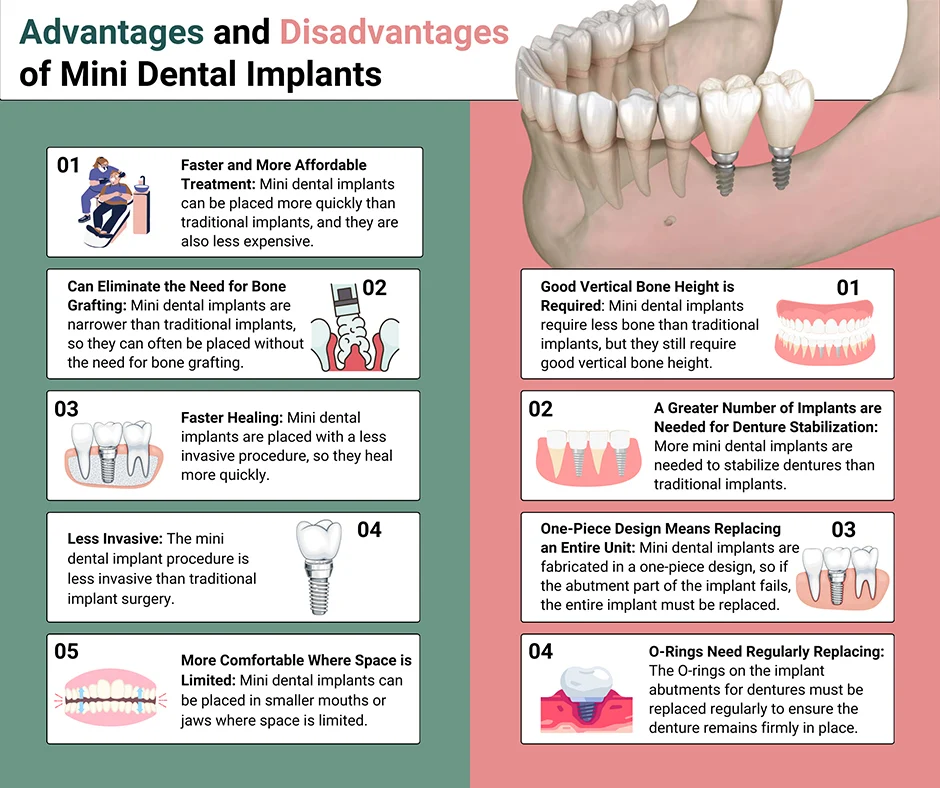
Understanding the mini dental implants disadvantages is crucial before opting for this procedure. While mini implants offer certain benefits, they also come with limitations that might affect their long-term success and suitability for all patients.
Overview of Mini Implants
Mini dental implants are smaller in diameter than traditional implants, typically ranging from 1.8 to 3.0 mm. They are often used to stabilize dentures or replace smaller teeth in areas with limited bone density. While their smaller size allows for less invasive placement, it also contributes to some of their inherent disadvantages.
Main Mechanical and Functional Disadvantages
- Reduced Stability: Due to their smaller size, mini implants have less surface area for osseointegration (bone fusion), which can lead to reduced stability compared to traditional implants.
- Lower Load-Bearing Capacity: Mini implants are not suitable for supporting large restorations like multi-unit bridges, as they cannot withstand the same biting forces as regular implants.
- Increased Risk of Fracture: Their smaller diameter makes them more susceptible to fracture, especially under heavy chewing forces or in patients who grind their teeth.
- Limited Applicability: Mini implants are not ideal for all areas of the mouth, particularly the posterior (back) regions where higher bite forces are exerted.
Considering these mechanical and functional limitations is essential for making an informed decision. If you require a more robust and versatile solution, Albania Dental Implants offers a wide range of implant options, including traditional implants, to ensure optimal outcomes.
Problems with Mini Implants
Beyond the basic disadvantages, it’s important to be aware of potential problems with mini implants that can arise after placement. These complications can affect the implant’s longevity and the overall success of the restoration.
Common Complications
- Implant Failure: Due to lower stability and load-bearing capacity, mini implants have a higher risk of failure compared to traditional implants.
- Inflammation and Infection: Peri-implantitis, an inflammation of the tissues surrounding the implant, can occur, leading to bone loss and potential implant failure.
- Loosening of the Implant: Over time, mini implants can loosen, particularly if subjected to excessive forces or in patients with poor bone quality.
- Damage to Adjacent Teeth: Improper placement or shifting of the implant can damage neighboring teeth.
- Soft Tissue Irritation: The implant or the denture it supports can irritate the surrounding soft tissues, causing discomfort and inflammation.
Patient-Specific Risks
Certain patient-specific factors can further increase the risk of complications with mini implants:
- Poor Oral Hygiene: Inadequate oral hygiene practices can lead to plaque accumulation and peri-implantitis.
- Smoking: Smoking impairs healing and increases the risk of implant failure.
- Bruxism (Teeth Grinding): Grinding teeth can place excessive forces on mini implants, leading to fracture or loosening.
- Underlying Medical Conditions: Conditions like diabetes or osteoporosis can compromise bone healing and increase the risk of complications.
If you’re concerned about these potential problems, consulting with the experienced team at Albania Dental Implants can help you assess your individual risk factors and determine the most appropriate treatment plan.
Mini Implants vs Traditional Implants
When considering dental implants, it’s vital to understand the key differences between mini implants vs traditional implants. This comparison will help you determine which option best suits your needs and expectations.
Structural Differences
- Size: Mini implants are significantly smaller in diameter (1.8-3.0 mm) compared to traditional implants (3.5-6.0 mm).
- Design: Mini implants are often one-piece, whereas traditional implants usually consist of two parts: the implant body and the abutment (the part that connects to the crown or denture).
- Surface Area: Traditional implants have a larger surface area, allowing for greater osseointegration and stability.
Functional Outcomes
- Stability: Traditional implants offer superior stability and load-bearing capacity compared to mini implants.
- Versatility: Traditional implants can support a wider range of restorations, including single crowns, multi-unit bridges, and full-arch dentures.
- Longevity: Traditional implants generally have a higher success rate and longer lifespan than mini implants.
Suitability for Various Dental Situations
- Mini Implants: Best suited for stabilizing dentures, replacing small teeth in areas with limited bone, or as temporary anchors for orthodontic treatment.
- Traditional Implants: Ideal for replacing single or multiple missing teeth, supporting large bridges, or providing a long-term, stable solution for full-arch restorations.
For complex cases or those requiring a more robust and lasting solution, traditional dental implants in Albania are generally recommended. Our expert team can assess your specific needs and recommend the most appropriate implant type.
Cost of Mini Dental Implants
One of the primary attractions of mini implants is often the cost of mini dental implants. However, it’s crucial to understand the full picture and consider the long-term implications of choosing a potentially less durable option.
Price Comparison with Regular Implants
Mini implants are typically less expensive than traditional implants, primarily due to their smaller size, simpler design, and less invasive placement procedure. The initial cost savings can be significant, potentially making them an appealing option for budget-conscious patients.
Cost-Related Limitations and Consequences
- Higher Failure Rate: The increased risk of failure with mini implants can lead to additional costs for replacement or alternative treatments.
- Limited Restoration Options: Mini implants may restrict your choice of restorations, potentially impacting the aesthetics and functionality of your smile.
- Maintenance and Repairs: Mini implants may require more frequent maintenance and repairs compared to traditional implants, adding to the overall cost over time.
- Long-Term Value: While the initial cost is lower, the potential for complications and shorter lifespan may reduce the long-term value of mini implants compared to the proven durability of traditional implants.
At Albania Dental Implants, we believe in providing transparent pricing and helping patients understand the long-term value of their investment in dental health. We offer various financing options to make high-quality implant solutions accessible.
Mini Implant Failure Rate
Understanding the mini implant failure rate is essential for anyone considering this treatment option. While mini implants can be a viable solution in certain cases, it’s important to be aware of their potential for failure and the factors that contribute to it.
Statistics and Trends
Studies have shown that mini implants generally have a higher failure rate compared to traditional implants. The exact failure rate can vary depending on factors such as implant placement technique, patient health, and the type of restoration supported. Some studies report failure rates ranging from 5% to 15% for mini implants, while traditional implants typically have success rates of 95% or higher.
Factors Affecting Failure
- Limited Osseointegration: The smaller surface area of mini implants can lead to reduced bone fusion and stability.
- Excessive Loading: Placing too much force on mini implants can cause them to loosen or fracture.
- Poor Bone Quality: Inadequate bone density can compromise the stability of mini implants.
- Infection: Peri-implantitis can lead to bone loss and implant failure.
- Parafunctional Habits: Bruxism (teeth grinding) can place excessive stress on mini implants.
If you’re concerned about the potential for failure, our experienced team at contact Albania Dental Implants can assess your individual risk factors and recommend the most appropriate implant solution to ensure long-term success.
Mini Implants Suitability
Determining mini implants suitability is a crucial step in the dental implant process. While mini implants offer certain advantages, they are not the right choice for everyone. Understanding the ideal candidates and limitations is essential for making an informed decision.
Who are Ideal Candidates
- Patients with Limited Bone Density: Mini implants can be a viable option for individuals who lack sufficient bone to support traditional implants, often avoiding the need for bone grafting.
- Denture Stabilization: Mini implants are commonly used to stabilize loose or ill-fitting dentures, providing improved comfort and function.
- Medically Compromised Patients: The less invasive nature of mini implant placement may make them a suitable option for patients with certain medical conditions that preclude more extensive surgery.
- Temporary Solutions: Mini implants can serve as temporary anchors for orthodontic treatment or to support temporary restorations while waiting for traditional implants to heal.
Limitations Due to Bone Density, Oral Health
- Severe Bone Loss: In cases of severe bone loss, even mini implants may not be adequately supported.
- Poor Oral Hygiene: Patients with poor oral hygiene are at higher risk of infection and implant failure, regardless of the implant type.
- Systemic Diseases: Certain systemic diseases, such as uncontrolled diabetes or autoimmune disorders, can compromise healing and increase the risk of complications.
- Bruxism: Grinding or clenching teeth can place excessive forces on mini implants, leading to loosening or fracture.
If you’re unsure whether mini implants are right for you, schedule a consultation with our expert team at Albania Dental Implants. We’ll conduct a thorough evaluation to assess your suitability and recommend the best course of treatment.
Mini Implant Complications
Being aware of potential mini implant complications is vital for patients considering this option. Understanding the risks associated with mini implants can help you make an informed decision and take proactive steps to minimize potential issues.
Infection Risks
Infection, or peri-implantitis, is a significant concern with all types of dental implants, including mini implants. Bacteria can accumulate around the implant, leading to inflammation, bone loss, and eventual implant failure. Maintaining excellent oral hygiene is crucial for preventing infection.
Longevity Concerns
As mentioned earlier, mini implants generally have a shorter lifespan compared to traditional implants. Their smaller size and reduced stability make them more susceptible to failure over time. Regular check-ups and proper maintenance are essential for maximizing their longevity.
Maintenance Issues
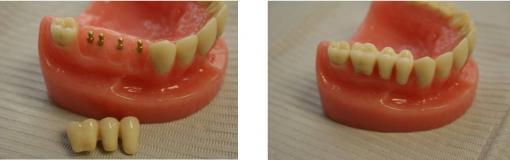
- Regular Tightening: Mini implants used to stabilize dentures may require periodic tightening to maintain a secure fit.
- Professional Cleanings: Frequent professional cleanings are necessary to remove plaque and tartar buildup around the implants and prevent infection.
- Dietary Restrictions: Patients with mini implants may need to avoid hard or sticky foods that can place excessive forces on the implants.
- Monitoring for Loosening: It’s important to monitor mini implants for any signs of loosening or instability and seek prompt treatment if problems arise.
At Albania Dental Implants Services, we provide comprehensive maintenance and support to help our patients maintain the health and longevity of their dental implants.
Longevity of Mini Implants
One of the critical considerations when choosing a dental implant is the longevity of mini implants. Understanding their expected lifespan and potential wear and tear issues can help you make an informed decision about your dental restoration.
Expected Lifespan
While traditional implants can often last a lifetime with proper care, mini implants typically have a shorter lifespan. Studies suggest that mini implants may last anywhere from 5 to 10 years, although some may last longer with meticulous maintenance and favorable conditions. The lifespan can vary depending on factors such as implant placement, patient health, and the forces placed on the implant.
Wear and Tear Issues
- Loosening: Mini implants are more prone to loosening over time, particularly if subjected to excessive forces or in patients with poor bone quality.
- Fracture: Their smaller diameter makes them more susceptible to fracture, especially under heavy chewing forces or in patients who grind their teeth.
- Bone Loss: Peri-implantitis can lead to bone loss around the implant, compromising its stability and longevity.
- Denture Wear: If mini implants are used to stabilize dentures, the dentures themselves may wear down over time and require replacement.
Choosing the right implant solution is a personal decision that should be made in consultation with a qualified dental professional. At Albania Dental Implants, we’re committed to providing our patients with the information and support they need to make the best choice for their individual needs.
Frequently Asked Questions about Mini Dental Implants
Here are some frequently asked questions regarding mini dental implants, addressing common concerns and providing essential information for those considering this treatment option.
Are mini implants as strong as regular implants?
No, mini implants are generally not as strong as regular (traditional) implants. Due to their smaller diameter, they have less surface area for osseointegration and cannot withstand the same biting forces as traditional implants. This makes them less suitable for supporting large restorations or replacing teeth in areas with high bite forces.
Who is not suitable for mini implants?
Who is not suitable for implants? Patients with severe bone loss, uncontrolled systemic diseases (such as diabetes), poor oral hygiene, or bruxism (teeth grinding) may not be good candidates for mini implants. These factors can increase the risk of implant failure and complications.
What is the typical failure rate of mini dental implants?
The failure rate of mini dental implants is generally higher than that of traditional implants. While the exact rate can vary, some studies report failure rates ranging from 5% to 15% for mini implants, compared to success rates of 95% or higher for traditional implants.
Do mini implants last as long as conventional implants?
No, mini implants typically do not last as long as conventional implants. While traditional implants can often last a lifetime with proper care, mini implants may only last 5 to 10 years, although some may last longer with meticulous maintenance and favorable conditions.
Can mini implants be used for molar replacements?
Generally, mini implants are not recommended for molar replacements. Molars are subjected to high biting forces, and mini implants lack the strength and stability to withstand these forces. Traditional implants are a better option for molar replacements.
What complications might arise from mini implants?
Potential complications from mini implants include implant failure, infection (peri-implantitis), loosening of the implant, damage to adjacent teeth, and soft tissue irritation. Maintaining excellent oral hygiene and regular check-ups are essential for minimizing these risks.
Are there ongoing maintenance costs with mini implants?
Yes, there are ongoing maintenance costs associated with mini implants. These may include periodic tightening of the implants (if used to stabilize dentures), professional cleanings to prevent infection, and potential repairs or replacements if the implants loosen or fracture. Cost of dental implants in Albania can be significantly lower than in other countries, potentially making maintenance more affordable.
Considering Dental Tourism in Albania for Implants
If you’re seeking high-quality and affordable dental implant solutions, consider dental tourism in Albania. Albania has emerged as a popular destination for dental tourists, offering experienced professionals, state-of-the-art facilities, and significantly lower costs compared to many Western countries. At Albania Dental Implants, we provide comprehensive dental implant services, including traditional implants, with a focus on patient comfort, safety, and satisfaction. Our team of skilled dentists and support staff are dedicated to providing you with a positive and rewarding experience.
Conclusion
While mini implants offer certain advantages, such as lower initial cost and less invasive placement, it’s essential to be aware of their potential downsides. They are generally not as strong or durable as traditional implants and may not be suitable for all patients or all areas of the mouth. Weighing the pros and cons carefully and consulting with a qualified dental professional is crucial for making an informed decision.
If you’re considering dental implants, we invite you to contact Albania Dental Implants to schedule a consultation. Our experienced team will assess your individual needs, discuss your options, and recommend the best course of treatment to restore your smile and confidence. Don’t let the limitations of mini implants hold you back from achieving the healthy, beautiful smile you deserve. Contact us today to learn more about our comprehensive dental implant services!