



NHS Dentist Eligibility
NHS dentist eligibility determines who can access NHS dental treatment. Several factors influence your qualification, including residency, immigration status, and age. Let’s explore these in detail.
Who can access NHS dental treatment?
Generally, anyone who is ordinarily resident in the UK is eligible for NHS dental treatment. This includes British citizens, individuals with indefinite leave to remain, and those with valid visas allowing them to live in the UK. Temporary visitors and those staying in the UK for a short period may have limited access.
Residency and immigration status
To qualify for NHS dental care, you typically need to demonstrate that you are legally residing in the UK. This may involve providing proof of address, such as a utility bill or bank statement, and documentation related to your immigration status, like a passport or visa. Individuals who are in the UK illegally or whose visas have expired are generally not eligible for NHS dental treatment, except for emergency care. If you are looking for dental tourism in albania it may be more suited to your needs..
Age requirements (children vs. adults)
Age also plays a role in NHS dentist eligibility. Children under 18 receive free NHS dental care. Once you turn 18, you become subject to NHS dental charges unless you qualify for an exemption (more on this later).
Differences for temporary residents, students, and overseas visitors
Temporary residents, students, and overseas visitors may have different eligibility criteria. Students from the EU, for instance, who have a European Health Insurance Card (EHIC) may be entitled to NHS dental treatment. Overseas visitors may only be eligible for emergency treatment. It’s crucial to check your specific situation and provide the relevant documentation when registering with an NHS dentist.
For individuals seeking affordable, high-quality dental care, especially those who may not qualify for extensive NHS coverage, Albania Dental Implants offers a compelling alternative. They provide a range of services, including full mouth reconstruction in Albania, often at a fraction of the cost compared to private dental care in the UK.
How to Register as an NHS Dental Patient
NHS patient registration involves a straightforward process. However, it’s essential to understand the steps and required documentation to ensure a smooth experience.
The process for registering with an NHS dentist
To register with an NHS dentist, you must first find a dental practice that is accepting new NHS patients. You can use the NHS website to search for dentists in your local area. Once you’ve found a suitable practice, contact them to inquire about registration. They will usually ask you to complete a registration form, providing your personal details and medical history.
Documentation needed for registration
When registering, you will typically need to provide proof of identity and address. Acceptable forms of identification include a passport, driving license, or birth certificate. Proof of address can be a utility bill, bank statement, or council tax bill. If you are claiming an exemption from NHS dental charges, you will need to provide evidence of your eligibility, such as a benefit award letter or maternity certificate. This documentation is crucial to confirm your NHS dentist eligibility.
Many individuals also consider options outside the NHS due to long waiting times or limited availability of certain treatments. For instance, cosmetic dentistry in Albania offers services like dental veneers in albania and dental implants with shorter wait times.
What NHS Dental Services Include
Understanding what NHS dental services include is important for managing your expectations and planning your dental care. The NHS provides a range of treatments aimed at maintaining and improving oral health.
Overview of treatments available under the NHS
Routine check-ups, fillings, root canal treatments, crowns, and extractions are standard NHS dental services. The NHS also covers preventative care, such as scaling and polishing (hygiene appointments) and fluoride treatments.
What services are routine and what treatments may not be covered
While the NHS covers essential treatments, certain cosmetic procedures may not be included. For example, teeth whitening and some types of orthodontic treatment are generally not available on the NHS. Additionally, complex procedures like dental implants are rarely provided unless there is a clear medical need.
Patients seeking treatments not routinely covered by the NHS often turn to private dental care or consider dental tourism in Albania where the cost of dental implants in albania is more affordable.
NHS Dental Charges and Exemptions
NHS dental charges vary depending on the type of treatment you receive. However, certain groups are eligible for free NHS dental care.
What are the typical NHS dental charges?
NHS dental charges are divided into three bands:
- Band 1: £26.80 – This covers examinations, diagnosis, and preventative advice, such as scale and polish if clinically necessary.
- Band 2: £73.50 – This includes everything listed in Band 1, plus fillings, root canal treatment, and extractions.
- Band 3: £319.10 – This covers all treatments included in Bands 1 and 2, as well as more complex procedures like crowns, dentures, and bridges.
Who is eligible for free NHS dental care?
The following groups are automatically entitled to free NHS dental treatment:
- Children under 18
- Pregnant women and women who have had a baby in the past 12 months
- Individuals receiving certain means-tested benefits
Categories of exemptions (children, pregnant women, low-income support, etc.)
Specific categories of exemptions include:
- Children under 18
- Pregnant women and those who have given birth in the last 12 months
- People receiving Income Support, income-based Jobseeker’s Allowance, income-related Employment and Support Allowance, or Universal Credit (meeting specific criteria)
- People entitled to or named on a valid NHS Tax Credit Exemption Certificate
- People entitled to or named on a valid HC2 certificate
How to prove exemption
To prove your exemption, you must provide evidence to your dentist. This could include a maternity certificate (MAT B1), an award notice for your benefit, or an NHS Tax Credit Exemption Certificate. Make sure to have the necessary documentation ready when attending your appointment.
Given the costs associated with more extensive dental work, many individuals explore options like orthodontics in Albania to manage expenses while still accessing high-quality care.
NHS Dental Care for Children and Special Groups
Children and other special groups have specific provisions within the NHS dental system to ensure they receive adequate care.
How children can access NHS care
Children under 18 are entitled to free NHS dental treatment. Parents or guardians can register their children with an NHS dentist by completing a registration form and providing proof of the child’s age. Regular check-ups and preventative care are essential for children’s oral health.
Special provisions for certain groups (students, pregnant women, people on benefits, asylum seekers)
Students, pregnant women, individuals on benefits, and asylum seekers may have specific entitlements or exemptions. Pregnant women receive free NHS dental treatment during pregnancy and for 12 months after giving birth. Those receiving certain benefits, such as Universal Credit, may also be eligible for free or reduced-cost dental care. Asylum seekers may be entitled to NHS treatment, but it’s best to check with the relevant authorities.
For complex procedures such as single tooth implants in albania, some families consider options abroad to balance quality with cost.
Access Issues—Finding an NHS Dentist and Waiting Lists
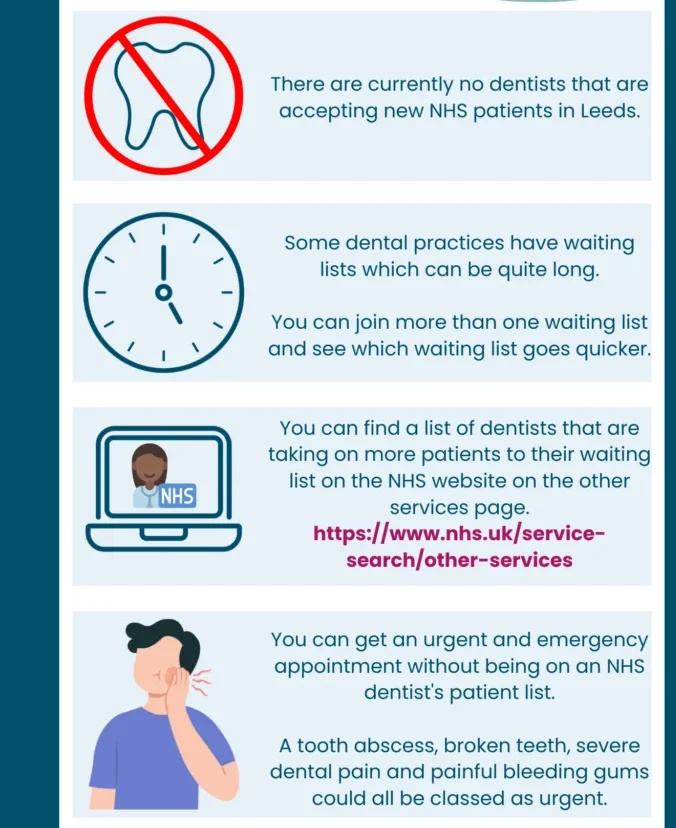
Finding an NHS dentist currently accepting new patients can be challenging due to high demand. Waiting lists are also a common issue.
How to locate an NHS dentist currently accepting new patients
The NHS website is the primary resource for finding NHS dentists. You can search by postcode or town to identify practices in your area. It’s advisable to contact multiple practices to inquire about availability, as the information on the website may not always be up-to-date.
What to do if you are put on a waiting list
If you are placed on a waiting list, it’s essential to inquire about the estimated waiting time and whether there are any options for expediting your treatment. You can also contact NHS England to explore alternative dental practices in your area. If the waiting time is too long, consider private dental care or options such as dental tourism.
For patients experiencing long waiting times, seeking care from Albania Dental Implants offers quicker access to treatments such as immediate loading dental implants in albania.
NHS Dental Care for Overseas Visitors
The eligibility of overseas visitors for NHS dental care depends on their residency status and the purpose of their visit to the UK.
Are overseas visitors eligible for NHS dental care?
Overseas visitors who are not ordinarily resident in the UK are generally only entitled to emergency NHS dental treatment. This covers immediate and necessary care to alleviate pain or prevent a condition from worsening. Routine treatments are usually not available.
What documentation is needed and what charges may apply
Overseas visitors may be asked to provide proof of their residency status and the purpose of their visit. If they are not eligible for free NHS treatment, they will be required to pay for the services they receive. The charges are the same as those for UK residents who are not exempt.
Overseas visitors often find that Albania Dental Implants offers an affordable alternative with high-quality services, including options for a hollywood smile in albania.
Frequently Asked Questions
Can anyone register as an NHS dental patient?
Generally, yes, anyone ordinarily resident in the UK can register as an NHS dental patient. However, registration depends on whether a dental practice is currently accepting new NHS patients. Some practices may have limited capacity or long waiting lists.
What documents do I need to register as an NHS dental patient?
You’ll typically need proof of identity (such as a passport or driving license) and proof of address (like a utility bill or bank statement). If you’re claiming an exemption from NHS dental charges, you’ll also need to provide evidence of your eligibility, such as a benefit award letter or maternity certificate.
Do I have to be a UK citizen to get NHS dental treatment?
No, you don’t have to be a UK citizen to receive NHS dental treatment. Eligibility is primarily based on residency. If you are legally residing in the UK, you are generally eligible for NHS dental care.
How much does NHS dental treatment cost?
NHS dental charges are divided into three bands: Band 1 (£26.80), Band 2 (£73.50), and Band 3 (£319.10), depending on the type of treatment you need. Emergency treatment may also have a separate charge.
Who qualifies for free NHS dental treatment?
Children under 18, pregnant women, and individuals receiving certain means-tested benefits are eligible for free NHS dental treatment.
I am a student/new immigrant—am I eligible for NHS dental services?
Students and new immigrants may be eligible for NHS dental services depending on their residency status and visa conditions. It’s best to check with the NHS or a local dental practice to confirm your eligibility.
What should I do if I can’t find an NHS dentist taking new patients?
If you struggle to find an NHS dentist accepting new patients, contact NHS England for assistance. You can also consider private dental care or explore options like dental tourism for more affordable alternatives.
If I move, do I need to re-register as an NHS dental patient?
Yes, if you move to a new area, you will typically need to register with a new NHS dentist. Contact dental practices in your new location to inquire about registration.
Are there any treatments not covered by the NHS?
Cosmetic treatments, such as teeth whitening and some types of orthodontics, are generally not covered by the NHS. Procedures like dental implants are rarely available unless there is a clear medical need.
How do I prove I am exempt from NHS dental charges?
Provide evidence of your exemption to your dentist, such as a maternity certificate, an award notice for your benefit, or an NHS Tax Credit Exemption Certificate.
While the NHS provides essential dental care, many individuals explore options such as Albania Dental Implants for more comprehensive and affordable dental solutions. They offer services including general dentistry in albania and more complex procedures with transparent pricing.
Navigating the NHS dental system requires understanding eligibility criteria, registration processes, and available services. For those seeking affordable and high-quality dental care, particularly for procedures not readily available on the NHS, consider Albania Dental Implants. Offering a range of services, from dental crowns in albania to full mouth restoration, they provide an excellent alternative for those looking to enhance their smile and oral health. Contact Albania Dental Implants today to explore your options and discover how you can achieve a confident, healthy smile without breaking the bank!