


Not everyone is a suitable candidate for dental implants. This article explores who cannot have a dental implant, delving into the medical, dental, and lifestyle reasons behind these restrictions, and what alternatives exist for those deemed ineligible.
Medical Conditions That Prevent Dental Implants
Certain medical conditions can significantly impact the success rate of dental implants. Understanding these dental implant contraindications is crucial for ensuring patient safety and optimizing treatment outcomes. Several systemic illnesses can make dental implants a risky or unsuitable option.
What medical conditions make someone ineligible for dental implants?
Here’s a look at some of the key medical factors that may rule out dental implants:
- Uncontrolled Diabetes: High blood sugar levels impair healing and increase the risk of infection. While people with well-managed diabetes can often get implants, uncontrolled diabetes poses a significant risk.
- Active Cancer or Undergoing Chemotherapy: Cancer treatments like chemotherapy and radiation therapy can weaken the immune system and compromise bone healing.
- Autoimmune Diseases: Conditions like lupus and rheumatoid arthritis can affect the body’s ability to heal and integrate the implant.
- Severe Osteoporosis: Osteoporosis weakens the bones, potentially leading to implant failure due to insufficient bone density. While not an absolute contraindication, the severity of osteoporosis is a factor.
- Immunosuppressive Conditions: Patients with weakened immune systems, whether due to disease or medication, are at higher risk of infection and implant failure.
These conditions increase the risk of complications such as infection, poor healing, and implant failure. A thorough medical evaluation is essential to determine suitability. It is important to consult with a qualified medical professional for personalized advice.
Age Restrictions for Dental Implants
Age is a significant factor in determining candidacy for dental implants. While there’s no upper age limit, there are age restrictions for dental implants at the younger end of the spectrum. Careful consideration must be given to growing jaws. At Albania Dental Implants, we prioritize patient safety and well-being above all else. We conduct thorough assessments to ensure that dental implants are suitable for each individual, regardless of age.
Can children or teenagers get dental implants?
Dental implants are generally not recommended for children or teenagers whose jaws are still developing. Placing implants before the jaw has fully matured can interfere with normal growth and development. Dental implants are not suitable for children whose jaws are still developing. Generally, dental implants are only considered after the age of 18, however, the dentist needs to see their patient to make a proper assessment.
- Ongoing Jaw Development: Dental implants are fused to the jawbone. If the jaw is still growing, the implant’s position may shift over time.
- Potential for Future Orthodontic Treatment: Placing implants too early can limit future orthodontic options, as the implants cannot be moved like natural teeth.
There might be exceptions for adults with fully developed jaws after accidents. But, generally, you have to have your jaws examined by a dentist to confirm development. An orthodontic assessment can help determine when jaw growth is complete.
Bone Loss and Dental Implants
Adequate bone density is essential for successful dental implant integration. Bone loss and dental implants are closely linked, as the jawbone needs to be strong enough to support the implant. Severe bone loss can be a barrier to dental implant placement. At Albania Dental Implants, we offer comprehensive solutions for patients with bone loss, including bone grafting procedures to restore jawbone volume and density.
Is bone loss a barrier to dental implants?
Significant bone loss in the jaw can make it difficult or impossible to place dental implants without additional procedures. Here’s why:
- Insufficient Support: Implants need adequate bone to anchor them securely. Without enough bone, the implant may not integrate properly, leading to failure.
- Risk of Implant Failure: Lack of bone support increases the risk of implant instability and eventual failure.
However, bone grafting in albania is an option for some patients. Bone grafting involves transplanting bone tissue to the jaw to increase its density and volume. This can create a stable foundation for implant placement. In some cases, bone loss may be too severe for implants, even with bone grafting.
Smoking and Dental Implants
Smoking has detrimental effects on oral health, particularly when it comes to dental implants. Smoking and dental implants don’t mix well, as smoking significantly increases the risk of implant failure. At Albania Dental Implants, we strongly advise patients to quit smoking before considering dental implant treatment to maximize their chances of success.
Can smokers get dental implants?
While it’s not an absolute contraindication, smoking significantly increases the risk of implant failure due to:
- Impaired Healing: Smoking reduces blood flow to the gums, hindering the healing process after implant placement.
- Increased Risk of Infection: Smokers are more prone to infections, which can compromise implant integration.
- Higher Failure Rate: Studies show that smokers have a significantly higher risk of implant failure compared to non-smokers.
Quitting or reducing smoking may improve eligibility. Dentists often recommend quitting smoking for several weeks or months before and after implant surgery to improve healing and increase the chances of success. Patients who are unable to quit smoking may still be eligible for dental implants, but they need to be aware of the increased risks and be diligent about oral hygiene. The clinic can then review patient’s circumstances and make a full risk assement. The effects of smoking depend on several factors including the level of smoking.
Diabetes and Dental Implants
Diabetes can affect the success of dental implants, but it doesn’t automatically disqualify someone from getting them. Diabetes and dental implants require careful management and consideration. At Albania Dental Implants, we work closely with patients with diabetes to ensure their condition is well-controlled before proceeding with dental implant treatment.
Can people with diabetes have dental implants?
The key factor is whether the diabetes is well-controlled. Here’s what to consider:
- Well-Controlled Diabetes: Patients with well-managed diabetes and stable blood sugar levels can often undergo dental implant treatment with a good prognosis.
- Uncontrolled Diabetes: Uncontrolled diabetes increases the risk of infection, impairs healing, and elevates the risk of implant failure.
Blood sugar management is crucial for diabetic patients considering dental implants. Regular monitoring and proper medication are essential. Good oral hygiene is especially important for diabetic patients with implants to minimize the risk of infection. It’s important to consult with both a dentist and a physician to assess suitability and manage diabetes effectively.
Heart Disease and Dental Implants
Certain heart conditions can pose risks during dental implant surgery. Heart disease and dental implants require careful evaluation and collaboration between the dentist and the patient’s cardiologist. It’s essential to ensure that the patient is medically stable before proceeding with implant treatment. At dental clinic in albania , we prioritize patient safety and work closely with medical professionals to ensure that all necessary precautions are taken.
What heart conditions prevent dental implants?
The following heart conditions may require special consideration or may contraindicate dental implants:
- Recent Heart Attack or Stroke: Recent cardiovascular events increase the risk of complications during surgery.
- Unstable Angina: Unstable angina can lead to chest pain and other cardiac events during dental procedures.
- Severe Heart Failure: Patients with severe heart failure may not be able to tolerate the stress of surgery.
Medical clearance from a cardiologist is often required for patients with heart conditions. The cardiologist can assess the patient’s cardiac status and provide recommendations for managing risks during dental implant surgery. In some cases, heart conditions may be too severe for implants, even with medical clearance.
Other Factors That Affect Eligibility
Beyond the major medical conditions, several other factors can impact a person’s eligibility for dental implants. These include lifestyle choices, oral hygiene, and certain temporary conditions. It’s crucial to address these factors to ensure the success of the implant procedure.
Can pregnant women get dental implants?
Dental implant procedures are generally deferred during pregnancy due to:
- Radiation Exposure: X-rays are typically taken during the implant planning process, and radiation exposure should be minimized during pregnancy.
- Stress on the Body: Surgery can be stressful for the body, and it’s best to avoid elective procedures during pregnancy.
Dental implant treatment is typically postponed until after childbirth. However, temporary tooth replacement options, such as dentures or bridges, can be used during pregnancy.
How does poor oral hygiene affect eligibility for dental implants?
Poor oral hygiene is a significant risk factor for implant failure. Patients must demonstrate a commitment to good oral hygiene before undergoing implant treatment. Here’s why:
- Increased Risk of Infection: Poor oral hygiene leads to a buildup of bacteria, increasing the risk of peri-implantitis (inflammation around the implant).
- Compromised Healing: Inadequate oral hygiene can impair the healing process after implant placement.
Active gum disease or untreated infections must be addressed before implant treatment. Dentists often recommend improving oral hygiene through regular brushing, flossing, and professional cleanings before proceeding with implants. Poor oral hygiene will almost definitely affect eligibility for dental implants.
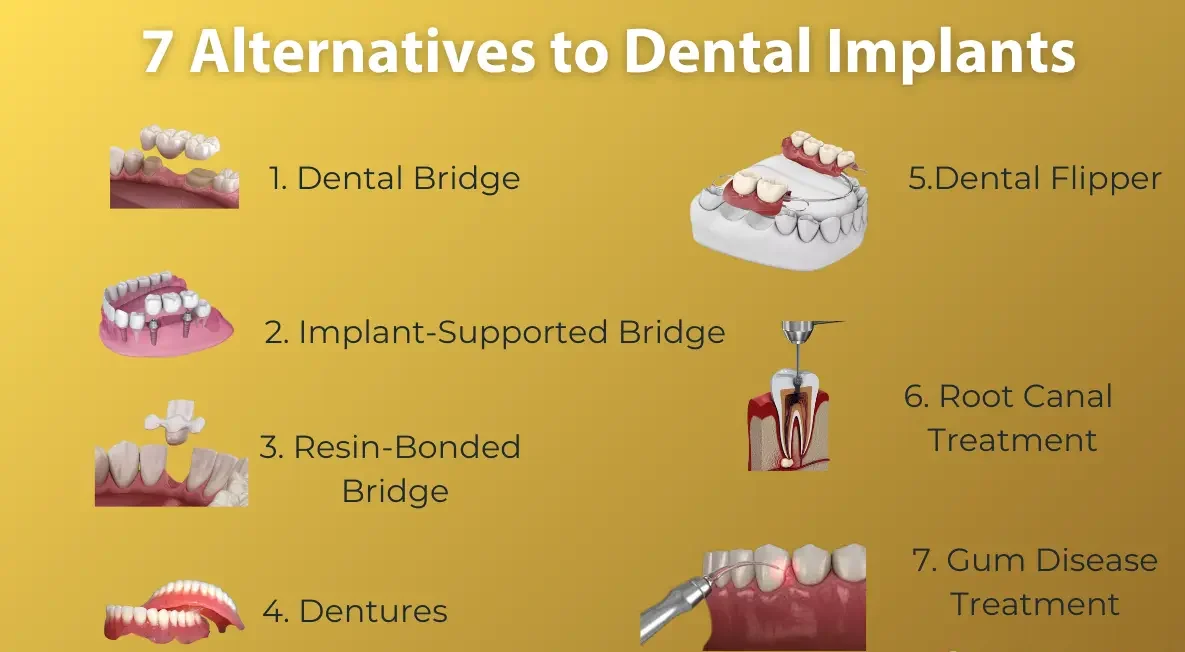
Alternatives to Dental Implants
If dental implants aren’t a suitable option, several alternatives can restore your smile and chewing function. Each has its own advantages and disadvantages, depending on your individual needs and preferences. Remember, at Albania Dental Implants, we prioritize your overall oral health. Whether you choose implants or an alternative, we’re committed to providing you with the best possible care and guidance.
What are the alternatives if you can’t have a dental implant?
Here are some of the most common alternatives to dental implants:
- Dentures (Full or Partial): Removable appliances that replace all or some of the teeth.
- Dental Bridges: Fixed appliances that bridge the gap between missing teeth, using adjacent teeth for support.
- Resin-Bonded Bridges: Less invasive bridges that are bonded to the back of adjacent teeth.
- Removable Partial Dentures: Removable appliances that replace some of the teeth and are supported by clasps that attach to adjacent teeth.
Dentures are more affordable than implants, but they may not be as stable or comfortable. Dental bridges are a fixed option, but they require altering adjacent teeth. The best alternative depends on factors such as the number of missing teeth, the health of adjacent teeth, and your budget. Consult with a dentist to determine the most appropriate tooth replacement option for your needs. Alternatives to dental implants, like dentures, can be a more affordable solution to missing teeth.
Dental Tourism in Albania: An Affordable Alternative
Many patients are considering going to Albania for Dental Implants, an option for those who are not able to have the treatment in their own country. At Albania Dental Implants, we understand that the cost of dental care can be a significant barrier for many individuals seeking to restore their smiles. That’s why we offer high-quality, affordable dental implant services in Albania. Our experienced team of dental professionals uses state-of-the-art technology and materials to deliver exceptional results at a fraction of the cost of treatment in the UK. With dental tourism in albania, you can save up to 70% on the cost of dental implants without compromising on quality.
Here’s why Albania Dental Implants is an excellent choice for your dental implant needs:
- Affordable Prices: Save significantly on the cost of dental implants compared to the UK.
- Experienced Team: Our team of dental professionals has years of experience in dental implantology.
- State-of-the-Art Technology: We use the latest technology and materials to ensure exceptional results.
- Beautiful Location: Enjoy a relaxing and rejuvenating dental vacation in the beautiful country of Albania.
Conclusion
Dental implants are a popular and effective solution for missing teeth, but they are not suitable for everyone. Eligibility depends on various medical, dental, and lifestyle factors. Several medical conditions, such as uncontrolled diabetes, active cancer, and severe heart disease, can increase the risk of complications and implant failure.
Age restrictions also apply, as implants are generally not recommended for children or teenagers whose jaws are still developing. Factors such as bone loss, smoking, and poor oral hygiene can also impact eligibility. A thorough dental and medical assessment is crucial to determine whether dental implants are the right choice for you.
At cost of dental implants in albania, we offer comprehensive dental implant services and work closely with our patients to ensure the best possible outcomes. If you’re unsure about your eligibility, contact us today to schedule a consultation with one of our experienced dental professionals.
If you’re considering restoring your smile and are unsure about your eligibility for dental implants, contact contact albania dental implants today to book a consultation with our skilled dental team. You can find out more about albania dental implants services today. If you are interested in finding out about albania dental implants reviews contact us today.
We also provide comprehensive dental tourism services in Albania, combining top-quality dental care with an affordable and enjoyable travel experience.
Take the first step towards a confident and healthy smile – contact us today for personalised advice and explore your dental implant options.
If you’re unsure about your eligibility, book a consultation with a dental professional today