



Is there an alternative to a dental implant? Many people search for other ways to replace missing teeth without choosing an implant. Dental implants are a fantastic, long-lasting solution, but they aren’t the only option. This article explores the main dental implant alternatives, helping you make an informed decision about the best way to restore your smile and oral health. At Albania Dental Implants, we understand that everyone’s needs are different, and we’re committed to providing clear, comprehensive information to guide you through the choices.
What Are the Main Alternatives to Dental Implants?
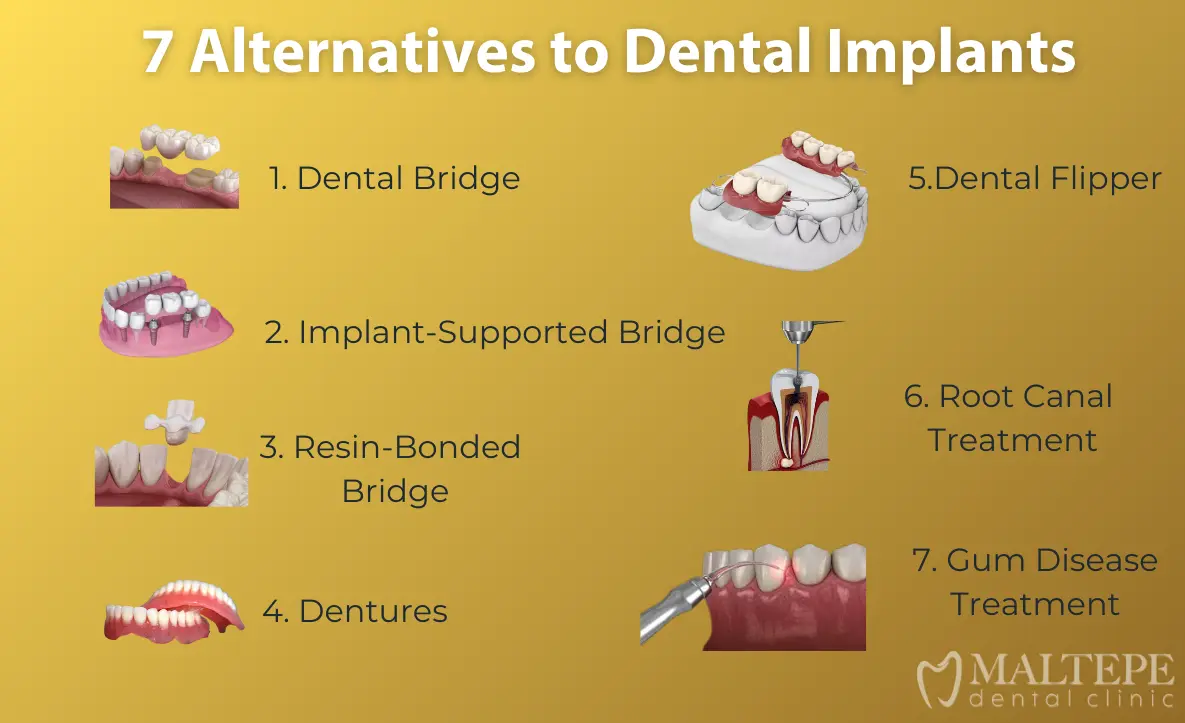
When exploring tooth replacement options, it’s important to consider all available methods. Dental implant alternatives offer varied approaches to address missing teeth, ranging from fixed to removable solutions. These dental clinic in Albania options include traditional dental bridges, removable partial dentures, complete dentures, resin-bonded bridges, and temporary dentures. Each comes with its unique set of advantages and disadvantages, so it’s crucial to understand them thoroughly.
Traditional Dental Bridges
Dental bridges are a classic solution to fill the gap caused by one or more missing teeth. They work by anchoring a false tooth (pontic) to the adjacent teeth, which are crowned for support. This creates a “bridge” across the gap, restoring the appearance and function of your smile. Dental bridges are a common and often more affordable alternative to dental implants.
Removable Partial Dentures
Removable partial dentures are designed to replace several missing teeth in either the upper or lower jaw. They consist of replacement teeth attached to a plastic or metal framework that clasps onto your existing teeth for support. Partial dentures are easily removable for cleaning and maintenance, offering a flexible solution for multiple missing teeth.
Complete Dentures
Complete dentures are used when all the teeth in either the upper or lower jaw are missing. They are custom-made to fit snugly over your gums, providing a full set of replacement teeth. While dentures can take some getting used to, they offer a way to restore your smile and improve your ability to eat and speak.
Resin-Bonded (Maryland) Bridges
Resin-bonded bridges, also known as Maryland bridges, are a less invasive option compared to traditional bridges. They consist of a false tooth with metal or porcelain “wings” that are bonded to the back of the adjacent teeth. Maryland bridges are often used for replacing a single missing tooth, particularly in the front of the mouth.
Temporary or Immediate Dentures
Temporary or immediate dentures are placed immediately after tooth extraction to provide a temporary solution while your gums heal. They help maintain your appearance and allow you to eat and speak normally during the healing process. Once the healing is complete, you can then consider a more permanent tooth replacement option like dental implants, a bridge, or a conventional denture.
Dental Bridge vs Implant: Which Is Right for You?
The debate between dental bridge vs implant is a common one. Both offer effective solutions for missing teeth, but they differ significantly in terms of procedure, longevity, and impact on surrounding teeth. Understanding the advantages of dental bridges and the differences between these two options is crucial for making the right decision for your oral health.
How Bridges Work
As mentioned earlier, a dental bridge consists of a false tooth (pontic) supported by two adjacent teeth (abutments). The abutment teeth are prepared by removing some enamel to accommodate crowns that will hold the pontic in place. The entire bridge is then cemented onto the abutment teeth, effectively filling the gap. This is a less invasive procedure than getting dental implants in Albania.
Pros and Cons of Bridges
Pros of Dental Bridges:
- Faster Treatment: Bridges can be completed in a few weeks, whereas implants require several months for osseointegration.
- Lower Cost: Generally, bridges are less expensive than dental implants upfront.
- Non-Surgical: Bridges don’t require surgery, making them a suitable option for individuals who are not good candidates for implants.
Cons of Dental Bridges:
- Impact on Adjacent Teeth: Bridges require altering the structure of adjacent teeth, which can increase their risk of decay and require future treatments.
- Shorter Lifespan: Bridges typically last 5-15 years, whereas implants can last a lifetime with proper care.
- Bone Loss: Bridges do not stimulate the jawbone, leading to potential bone loss in the area of the missing tooth.
- Maintenance: More difficult to clean under bridge than natural teeth so requires better dental hygeine to keep the supporting teeth healthy.
Comparison Table: Bridge vs Implant
To help you visualize the differences, here’s a comparison table:
| Feature | Dental Bridge | Dental Implant |
|---|---|---|
| Appearance | Natural-looking | Very natural-looking and feeling |
| Durability | 5-15 years | Lifetime with proper care |
| Cost | Lower upfront cost | Higher upfront cost |
| Maintenance | Requires special flossing techniques | Brushed and flossed like natural teeth |
| Impact on Adjacent Teeth | Requires altering adjacent teeth | Does not affect adjacent teeth |
| Bone Loss Prevention | Does not prevent bone loss | Stimulates bone growth, preventing bone loss |
Dentures Instead of Implants: What to Expect
Considering dentures instead of implants is a viable option for many, especially those seeking a more affordable solution or who aren’t suitable candidates for surgery. Dentures have evolved significantly over the years, offering improved comfort, fit, and appearance. Let’s explore what you can expect from choosing dentures as your tooth replacement option. Partial dentures alternative options can be discussed with one of our dentists to determine the best choice.
Types of Dentures (Full vs Partial)
Dentures come in two main types:
- Full Dentures: These are used when all the teeth are missing in either the upper or lower jaw. They rest directly on the gums and rely on suction and natural adhesion for stability.
- Partial Dentures: These are used when some natural teeth remain. They consist of replacement teeth attached to a plastic or metal framework that clasps onto the existing teeth for support.
Benefits and Drawbacks
Benefits of Dentures:
- Affordability: Dentures are generally more affordable than dental implants.
- Non-Invasive: They don’t require surgery, making them suitable for individuals with health conditions that preclude implant surgery.
- Improved Appearance: Dentures can significantly improve your smile and facial structure.
Drawbacks of Dentures:
- Comfort and Fit: Dentures can take some getting used to, and they may not feel as secure or comfortable as natural teeth or implants.
- Maintenance: Dentures require daily cleaning and soaking, and they may need to be adjusted or replaced over time.
- Bone Loss: Like bridges, dentures do not stimulate the jawbone, which can lead to bone loss over time.
- Dietary Restrictions: Certain foods may be difficult to eat with dentures.
When Dentures Are Preferable to Implants
Dentures may be preferable to implants in the following situations:
- Limited Budget: If cost is a major concern, dentures are a more affordable option.
- Health Conditions: Individuals with certain health conditions that make surgery risky may be better suited for dentures.
- Bone Loss: In cases of severe bone loss, implants may require extensive bone grafting, making dentures a less complicated option.
Costs and Maintenance
The cost of dentures varies depending on the type of denture, the materials used, and the dentist’s fees. On average, full dentures can range from £500 to £2,000 per arch, while partial dentures can range from £400 to £1,500. Contact Albania Dental Implants for more information on prices. Proper denture maintenance involves daily cleaning with a denture brush and soaking them in a denture cleaning solution overnight. Regular check-ups with your dentist are also essential to ensure proper fit and address any issues.
Additional Non-Implant Tooth Replacement Options
Besides bridges and dentures, several other non-implant tooth replacement options exist. These alternative methods can provide temporary or long-term solutions for missing teeth, catering to various needs and preferences. Understanding these non-implant tooth replacement options can help you make the most appropriate choice for your unique circumstances. Resin-bonded bridge solutions provide minimally invasive alternatives worth discussing.
Overview of Maryland Bridges
As previously mentioned, Maryland bridges are a conservative option for replacing a single missing tooth, particularly in the front of the mouth. They involve bonding a false tooth to the back of adjacent teeth using metal or porcelain wings. Maryland bridges require minimal alteration of the adjacent teeth, making them a less invasive alternative to traditional bridges.
Removable Flippers (Temporary Solutions)
Removable flippers are lightweight, temporary dentures used to fill a gap while waiting for a more permanent solution, such as an implant or bridge. They consist of a replacement tooth attached to a plastic base that fits against your gums. Flippers are easily removable and relatively inexpensive, making them a convenient temporary option.
Snap-in or Overdentures
Snap-in or overdentures are dentures that attach to a small number of dental implants for added stability and retention. While they do involve implants, they require fewer implants than full implant-supported dentures, making them a less invasive and more affordable option for some individuals. Overdentures offer improved comfort, function, and confidence compared to traditional dentures.
Cost Comparison: Implants vs Alternatives
Understanding the cost of dental implants vs alternatives is a crucial factor in deciding which tooth replacement option is right for you. The cost can vary significantly depending on the specific treatment, materials used, and the dentist’s fees. Let’s break down the typical costs associated with each option to help you make an informed decision. Finding affordable tooth replacement options is possible.
Typical Costs for Implants, Bridges, Partial Dentures, and Full Dentures
Here’s a general cost comparison:
- Dental Implants: £2,000 – £4,000 per implant
- Dental Bridges: £700 – £1,500 per bridge
- Partial Dentures: £400 – £1,500
- Full Dentures: £500 – £2,000 per arch
These are estimates, and the actual cost may vary depending on your specific needs and location.
NHS and Private Treatment Options
In the UK, dental implants are rarely available on the NHS, except in cases of medical necessity. Bridges and dentures are more commonly available on the NHS, but waiting times can be long. Private treatment options offer faster access to care and a wider range of materials and techniques. For many, the cost of dental implants in Albania, along with the dental tourism aspect, makes private treatment an enticing and viable choice.
Insurance, Financing, and Long-Term Value
Dental insurance may cover a portion of the cost of bridges and dentures, but it typically does not cover dental implants. Many dental clinics offer financing options to help you spread the cost of treatment over time. When considering the long-term value, it’s important to factor in the durability and potential need for future replacements. While implants have a higher upfront cost, they can last a lifetime with proper care, making them a cost-effective option in the long run.
Factors to Consider When Choosing an Alternative
Selecting the best alternative to dental implant involves carefully evaluating several factors to ensure the chosen solution meets your specific needs and circumstances. These factors include bone health and gum status, the number and location of missing teeth, aesthetic considerations, durability and comfort, and your lifestyle and patient preferences. Balancing these elements will guide you toward the most suitable tooth replacement option.
Bone Health and Gum Status
The condition of your jawbone and gums plays a crucial role in determining the suitability of different tooth replacement options. Implants require sufficient bone density for successful osseointegration. If you have significant bone loss, bone grafting may be necessary, adding to the cost and treatment time. Bridges and dentures rely on healthy gums and supporting teeth for stability. If you have gum disease or weakened teeth, these options may not be as effective.
Number and Location of Missing Teeth
The number and location of missing teeth will influence the type of replacement option that is most appropriate. For a single missing tooth, a Maryland bridge or a single-tooth implant may be suitable. For multiple missing teeth, a traditional bridge, partial denture, or implant-supported bridge may be considered. Full dentures are used when all the teeth are missing in either the upper or lower jaw. The location of the missing teeth can also affect the aesthetic outcome, particularly for front teeth.
Aesthetic Considerations
Aesthetics are an important consideration for many individuals seeking tooth replacement options. Implants are generally considered the most natural-looking option, as they emerge from the gums like natural teeth. Bridges and dentures can also provide a pleasing aesthetic outcome, but they may not blend in as seamlessly as implants. The materials used, such as porcelain or composite resin, can also affect the appearance. Discuss your aesthetic goals with your dentist to determine the best option for achieving your desired smile.
Durability and Comfort
Durability and comfort are essential factors to consider for long-term satisfaction with your tooth replacement. Implants are known for their durability and can last a lifetime with proper care. Bridges typically last 5-15 years, while dentures may need to be replaced every 5-10 years. Comfort is also a key consideration. Implants feel and function most like natural teeth, while bridges and dentures may take some getting used to. Snap-in dentures can provide added stability and comfort compared to traditional dentures.
Lifestyle and Patient Preference
Your lifestyle and personal preferences should also be taken into account when choosing a tooth replacement option. If you prefer a non-surgical option and are willing to accept some limitations in terms of comfort and function, bridges or dentures may be a suitable choice. If you value long-term durability, a natural-looking appearance, and the ability to eat and speak without restrictions, implants may be the best option, especially with the options for all on 4 dental implants in Albania.
Latest Advances in Tooth Replacement Without Implants
The field of dentistry is constantly evolving, and there are ongoing advances in tooth replacement without implants. These new dental technologies and tooth replacement innovations aim to provide more comfortable, durable, and aesthetically pleasing solutions for individuals who are not candidates for implants or prefer non-implant options. Staying informed about these advancements can help you make the best decision for your oral health.
Mini-Implants and Implant-Retained Dentures (if relevant)
Mini-implants are smaller versions of traditional dental implants that can be used to stabilize dentures. They require less bone density than traditional implants and can be placed with a less invasive surgical procedure. Implant-retained dentures, also known as overdentures, snap onto mini-implants for added stability and retention. While they do involve implants, they require fewer implants than full implant-supported dentures.
Emerging Materials and Methods
Researchers are constantly developing new materials and methods for tooth replacement that offer improved aesthetics, durability, and biocompatibility. These include:
- High-Strength Ceramics: Advanced ceramic materials are being used to create bridges and crowns that are stronger, more natural-looking, and less likely to fracture.
- CAD/CAM Technology: Computer-aided design and computer-aided manufacturing (CAD/CAM) technology is used to create custom-fitted bridges and dentures with greater precision and efficiency.
- 3D Printing: 3D printing is being used to create dentures and temporary tooth replacement options with improved fit and aesthetics.
What’s on the Horizon for Non-Implant Solutions
The future of non-implant tooth replacement looks promising, with ongoing research focused on developing innovative solutions that are more comfortable, durable, and aesthetically pleasing. Some potential future developments include:
- Regenerative Dentistry: Researchers are exploring ways to regenerate lost teeth using stem cells and other biological techniques.
- Smart Dentures: Smart dentures equipped with sensors that monitor oral health and provide feedback to the patient and dentist.
- Virtual Reality Dentistry: Virtual reality technology is being used to simulate dental procedures and educate patients about their treatment options.
Frequently Asked Questions About Dental Implant Alternatives
Here are some frequently asked questions about dental implant alternatives to help you make a more informed decision:
What is the cheapest alternative to a dental implant?
The cheapest alternative to a dental implant is typically a removable partial denture or a flipper. These options are less expensive upfront than dental implants, bridges, or full dentures. However, it’s important to consider the long-term costs and potential need for replacements or adjustments.
Are dental bridges better than implants?
Whether dental bridges are better than implants depends on your individual circumstances. Implants generally offer better long-term durability and do not affect adjacent teeth. Bridges are less invasive and have a lower upfront cost, but they may require altering adjacent teeth and have a shorter lifespan.
Can I eat normally with dentures or bridges?
With bridges, you can typically eat normally once you adjust to the restoration. Dentures may require some adjustments to your diet and eating habits. You may need to avoid hard, sticky, or chewy foods that can dislodge or damage the dentures. Start with soft foods and gradually introduce more solid foods as you become more comfortable.
Is it possible to have a permanent tooth replacement without an implant?
While dental implants are considered a permanent solution, dental bridges can also provide a long-lasting tooth replacement option. With proper care and maintenance, a dental bridge can last for 5-15 years or even longer. However, bridges do not stimulate the jawbone like implants, so bone loss may occur over time.
How long do dental bridges or dentures last?
Dental bridges typically last 5-15 years, while dentures may need to be replaced every 5-10 years. The lifespan of these restorations depends on factors such as oral hygiene, diet, and maintenance. Regular check-ups with your dentist are essential to ensure proper fit and address any issues.
Can everyone get a dental bridge or denture instead of an implant?
Not everyone is a suitable candidate for a dental bridge or denture. The health of your adjacent teeth and gums is crucial for the success of a bridge. Dentures require sufficient bone support and good oral hygiene. Individuals with severe bone loss, gum disease, or weakened teeth may not be good candidates for these options.
What happens if I don’t replace a missing tooth?
If you don’t replace a missing tooth, several problems can occur. Adjacent teeth may shift into the space, affecting your bite and causing jaw pain. You may also experience bone loss in the area of the missing tooth, which can affect your facial structure. Additionally, missing teeth can affect your ability to eat and speak properly, and they can impact your self-confidence.
Are there new non-implant options in the UK?
Yes, there are ongoing advancements in non-implant tooth replacement options in the UK. These include new materials, CAD/CAM technology, and 3D printing techniques that offer improved aesthetics, durability, and fit. Stay informed about the latest developments and discuss them with your dentist to determine the best option for you.
How do I choose the best option for me?
Choosing the best tooth replacement option for you involves carefully evaluating your individual needs, preferences, and budget. Consider factors such as bone health, gum status, number and location of missing teeth, aesthetic goals, durability, comfort, and lifestyle. Consult with your dentist to discuss your options and receive personalized recommendations based on your specific circumstances.
Conclusion
Exploring dental implant alternatives offers a range of solutions for replacing missing teeth, each with its unique advantages and considerations. From traditional bridges and dentures to innovative non-implant options, the key is to find the best solution for missing tooth that aligns with your individual needs, budget, and lifestyle. At Albania Dental Implants, we provide expert care and guidance to help you navigate these choices and restore your smile with confidence. Our skilled team also offer Albania Dental Implants Services so that you can be sure that you are in the best hands.
If you’re considering alternatives to dental implants, we encourage you to seek a dental professional’s advice. Our team at Albania Dental Implants is ready to assess your oral health, discuss your goals, and provide personalized recommendations tailored to your specific circumstances. Contact us today to schedule a consultation and take the next steps toward restoring your smile and improving your quality of life. Don’t let missing teeth hold you back – explore your options and discover the best path to a confident, healthy smile with contact Albania Dental Implants.