



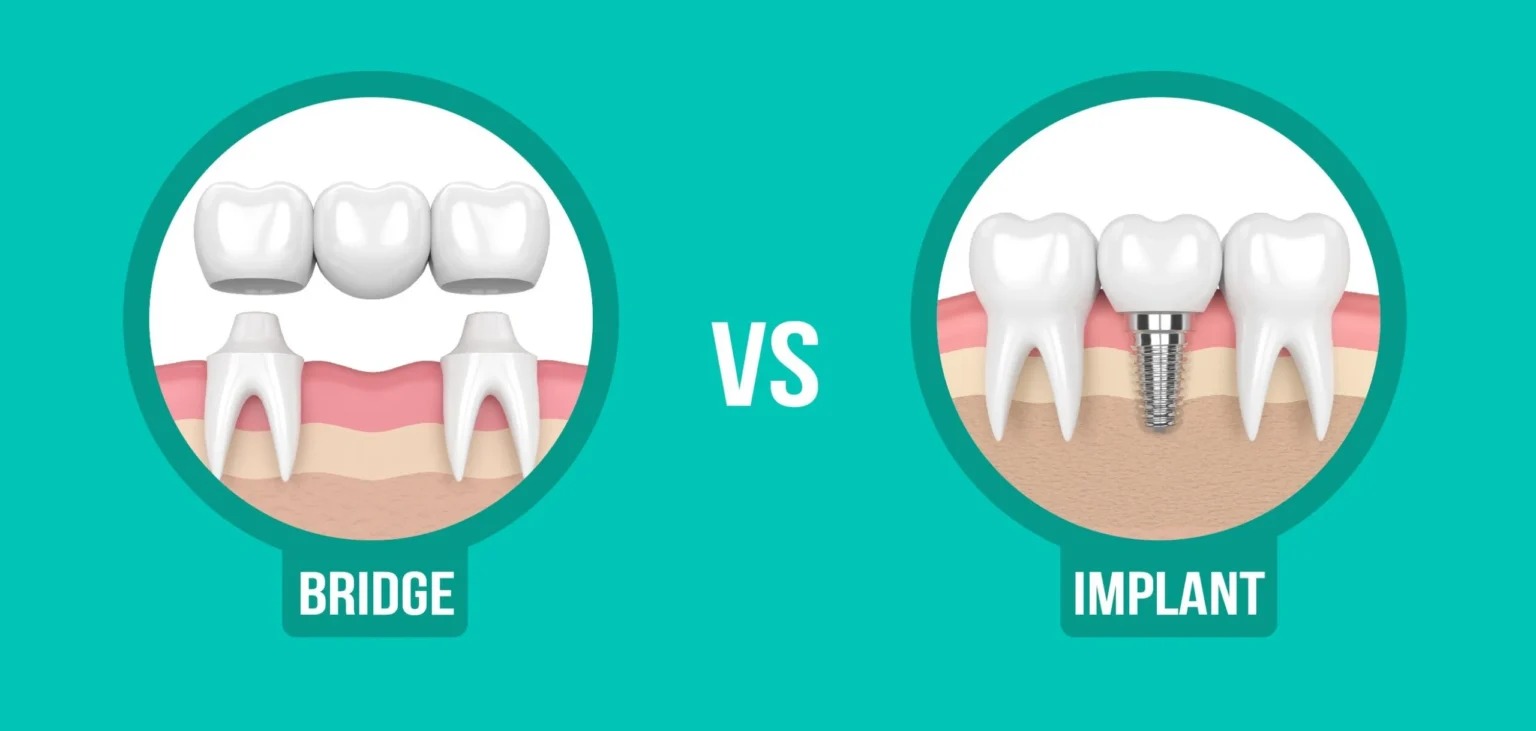
When considering tooth replacement options, deciding which is better, implant or bridge can be a complex decision. Both dental implants and dental bridges are effective solutions for restoring your smile and oral function after tooth loss, but they each have their own unique advantages and disadvantages. Understanding these differences is crucial in making an informed choice that aligns with your individual needs, preferences, and budget. At Albania Dental Implants, we’re committed to helping you find the best tooth replacement option for a healthy, confident smile, and we provide affordable, high-quality dental care for patients seeking dental tourism in Albania.
Introduction—Which is better, implant or bridge?
Losing a tooth can impact your confidence and affect your ability to eat and speak properly. Fortunately, modern dentistry offers several excellent options for replacing missing teeth. The two most common solutions are dental implants and dental bridges. The ideal choice depends on a variety of factors, including your oral health, the location of the missing tooth, your budget, and your personal preferences.
This guide will provide a comprehensive overview of dental implants and dental bridges, exploring their pros and cons, costs, procedures, and long-term outcomes. We’ll also discuss who might be a better candidate for each option, helping you determine the best course of action for your individual situation. Whether you’re looking for a permanent, long-lasting solution like an implant, or a more traditional approach like a bridge, we’ll give you the information you need to make an informed decision about your dental restoration.
Understanding Dental Implants
Related Keywords: Dental implant, implant procedure, longevity of implants
Dental implants have become a leading solution for replacing missing teeth, offering a durable and natural-looking alternative to traditional methods. If you are struggling with missing teeth, and are considering visiting a dental clinic in Albania, dental implants might be right for you!
What are dental implants?
A dental implant is a small titanium post that is surgically inserted into the jawbone to serve as a replacement for the root of a missing tooth. Over time, the implant fuses with the bone through a process called osseointegration, providing a stable foundation for a replacement tooth, such as a dental crown. Dental implants can be used to replace a single tooth, multiple teeth, or even an entire arch of teeth. If you are considering a single tooth implants in Albania, it is important to understand the procedure and the potential benefits.
How are they placed?
The dental implant procedure typically involves several steps:
- Consultation and evaluation: Your dentist will conduct a thorough examination, including X-rays or CT scans, to assess your oral health and determine if you are a good candidate for dental implants.
- Implant placement: The implant is surgically inserted into the jawbone under local anesthesia. In some cases, bone grafting may be necessary to ensure sufficient bone volume.
- Healing period: The implant is left to heal for several months, allowing osseointegration to occur.
- Abutment placement: Once the implant has fully integrated with the bone, an abutment (a connector piece) is attached to the implant.
- Crown placement: Finally, a custom-made dental crown is attached to the abutment, completing the restoration.
Benefits of dental implants
Dental implants offer numerous advantages over other tooth replacement options:
- Longevity: With proper care, dental implants can last a lifetime. Studies show that dental implants have a high success rate, with many lasting for 20 years or more.
- Natural look and feel: Implants look, feel, and function like natural teeth, restoring your smile and confidence.
- Improved oral health: Unlike bridges, implants do not require altering adjacent teeth, preserving more of your natural tooth structure.
- Bone preservation: Implants stimulate bone growth, preventing bone loss that can occur after tooth loss.
- Enhanced chewing ability: Implants provide a stable base for chewing, allowing you to eat your favorite foods without difficulty.
Potential disadvantages & risks
While dental implants offer many benefits, it’s important to be aware of the potential drawbacks:
- Cost: Dental implants are generally more expensive than dental bridges or dentures.
- Surgical procedure: Implant placement requires a surgical procedure, which carries some risks, such as infection, bleeding, or nerve damage.
- Healing time: The implant process can take several months to complete, requiring multiple visits to the dentist.
- Not suitable for everyone: Certain medical conditions, such as uncontrolled diabetes or severe bone loss, may make you ineligible for dental implants. If you are wondering who should not get dental implants, it is best to consult with your dentist.
Understanding Dental Bridges
Related Keywords: Dental bridge, bridge procedure, longevity of bridges
Dental bridges are a traditional and cost-effective option for replacing missing teeth, restoring your smile and preventing adjacent teeth from shifting. If you are considering a dental bridge, it is important to understand how it works and what it can offer.
What are dental bridges?
A dental bridge is a prosthetic tooth (or teeth) that fills the gap created by one or more missing teeth. The bridge is anchored to the adjacent teeth, which are called abutment teeth. The abutment teeth are prepared by removing some enamel to allow the bridge to fit properly. There are several types of dental bridges, including traditional bridges, cantilever bridges, and resin-bonded bridges.
How are they placed?
The dental bridge procedure typically involves the following steps:
- Consultation and evaluation: Your dentist will examine your oral health and determine if a dental bridge is the right option for you.
- Abutment teeth preparation: The abutment teeth are prepared by removing some enamel to create space for the bridge.
- Impressions: Impressions are taken of your teeth to create a custom-made bridge.
- Temporary bridge: A temporary bridge is placed to protect the abutment teeth while the permanent bridge is being fabricated.
- Permanent bridge placement: Once the permanent bridge is ready, it is cemented onto the abutment teeth.
Benefits of dental bridges
Dental bridges offer several benefits as a tooth replacement option:
- Cost-effectiveness: Dental bridges are generally less expensive than dental implants.
- Faster treatment time: The bridge procedure can usually be completed in two to three visits, compared to the several months required for implants.
- Restored smile: Bridges fill the gap created by missing teeth, restoring your smile and confidence.
- Improved chewing and speaking ability: Bridges can improve your ability to chew and speak properly.
- Preventing teeth shifting: Bridges can prevent adjacent teeth from shifting into the space created by missing teeth.
Potential disadvantages & risks
Like any dental procedure, bridges also come with potential drawbacks:
- Impact on adjacent teeth: Bridges require altering the adjacent teeth, which can weaken them and make them more susceptible to decay or damage.
- Shorter lifespan: Dental bridges typically last for 5 to 15 years, which is shorter than the lifespan of dental implants.
- Bone loss: Bridges do not stimulate bone growth, so bone loss can still occur in the area of the missing tooth.
- Difficulty cleaning: Bridges can be more difficult to clean than natural teeth, increasing the risk of decay and gum disease.
- Potential for complications: Bridges can sometimes cause complications, such as sensitivity, pain, or loosening of the bridge.
Direct Comparison: Implant vs Bridge
Related Keywords: Dental restoration comparison, implant vs bridge, tooth replacement options
Now that we’ve explored dental implants and dental bridges individually, let’s take a closer look at a direct comparison of the two options. Understanding the key differences between these procedures can help you make the right choice for your oral health and smile.
Key differences in procedure
The procedures for implant and bridge placement differ significantly:
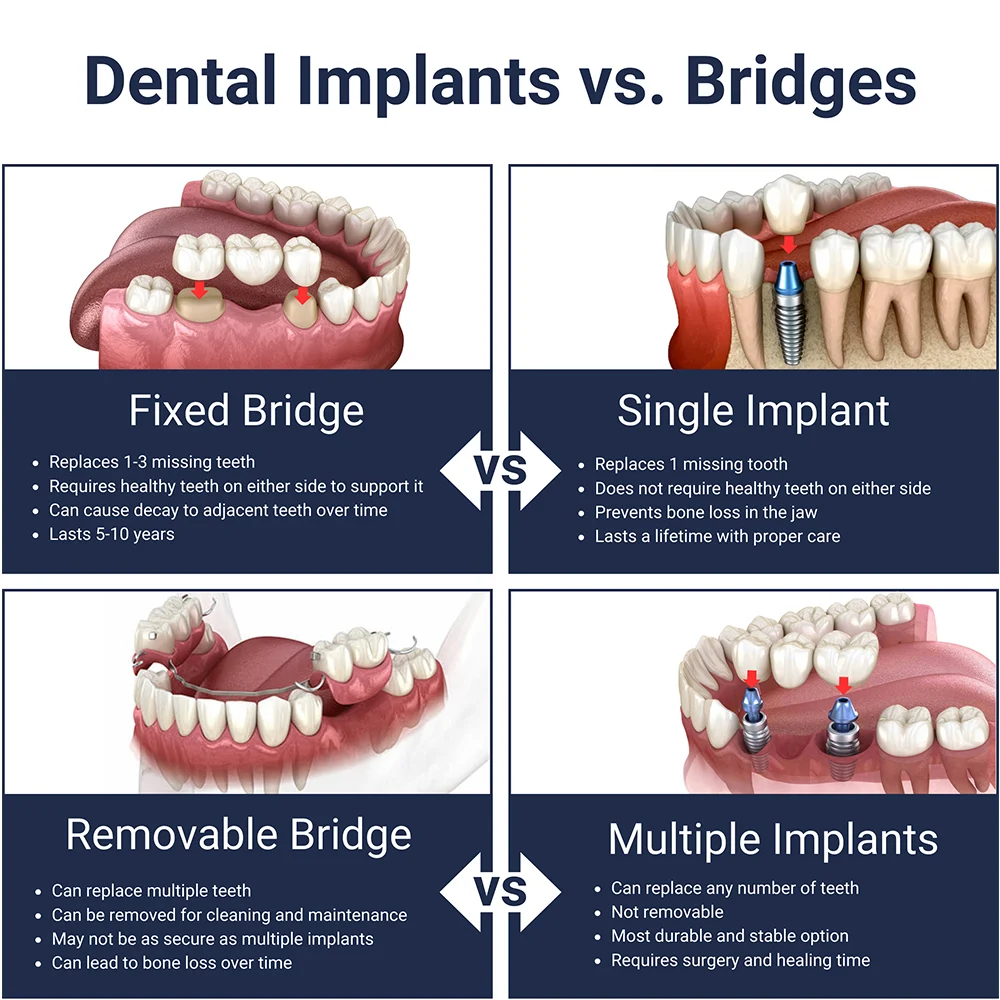
- Implants: Involve surgically placing a titanium post into the jawbone, followed by a healing period and the attachment of a crown.
- Bridges: Require altering adjacent teeth to support the prosthetic tooth or teeth, followed by the creation and cementation of a custom-made bridge.
Cost comparison
The cost of dental implants and bridges can vary depending on several factors, including the location of the procedure, the materials used, and the complexity of the case. As a general rule, dental implants are typically more expensive than dental bridges.
- Dental Implants: cost of dental implants in Albania are often less expensive than in the UK or other European countries, making it an attractive option for those seeking quality care at a lower price.
- Dental Bridges: Bridges typically have a lower upfront cost but may require replacement over time, potentially leading to higher long-term expenses.
Longevity/durability
One of the most significant differences between implants and bridges is their longevity:
- Implants: With proper care, dental implants can last a lifetime, making them a long-term investment in your oral health.
- Bridges: Dental bridges typically last for 5 to 15 years, requiring replacement over time.
Aesthetics
Both implants and bridges can provide excellent aesthetic results, but there are some subtle differences:
- Implants: Implants look and feel the most like natural teeth, seamlessly blending in with your smile.
- Bridges: Bridges can also provide a natural-looking result, but may not always match the appearance of adjacent teeth as closely as implants.
Impact on adjacent teeth
The impact on adjacent teeth is a key consideration when choosing between implants and bridges:
- Implants: Do not require altering adjacent teeth, preserving more of your natural tooth structure.
- Bridges: Require altering the adjacent teeth, which can weaken them and make them more susceptible to decay or damage.
Healing and recovery times
The healing and recovery times for implants and bridges also differ:
- Implants: The implant process can take several months to complete, requiring multiple visits to the dentist.
- Bridges: The bridge procedure can usually be completed in two to three visits.
Which Should You Choose? Implant or Bridge
Related Keywords: Who should choose implant, single tooth replacement, maintenance
Deciding between a dental implant and a dental bridge can be challenging, as both options have their own advantages and disadvantages. To make the best choice for your individual needs, it’s important to consider several factors, including your oral health, budget, and personal preferences.
Factors to consider before choosing
Before making a decision, consider the following factors:
- Oral health: Do you have any underlying dental problems, such as gum disease or bone loss?
- Budget: How much are you willing to spend on tooth replacement?
- Long-term goals: Are you looking for a long-lasting solution, or are you comfortable with a shorter-term option?
- Personal preferences: Do you prefer a more natural-looking and feeling restoration, or are you more concerned with cost and convenience?
Ideal candidates for implants vs bridges
Certain individuals may be better suited for implants or bridges:
- Implants: Ideal candidates for implants are typically healthy individuals with sufficient bone volume in the jaw.
- Bridges: Bridges may be a better option for individuals with limited bone volume, underlying medical conditions, or budgetary constraints.
Maintenance and care requirements for each
Proper maintenance and care are essential for the longevity of both implants and bridges:
- Implants: Implants require regular brushing, flossing, and dental checkups to prevent peri-implantitis (inflammation around the implant).
- Bridges: Bridges require careful cleaning around the abutment teeth and under the bridge to prevent decay and gum disease.
Long-term outcomes
The long-term outcomes of implants and bridges can vary:
- Implants: Implants have a high success rate and can last a lifetime with proper care.
- Bridges: Bridges typically last for 5 to 15 years, requiring replacement over time.
Frequently Asked Questions (FAQs)
Related Keywords: FAQs dental implants, bridge FAQs, implant complications, bridge complications
To help you further understand the differences between implants and bridges, here are answers to some frequently asked questions:
Is a dental implant more expensive than a bridge?
Yes, dental implants are generally more expensive than dental bridges. The cost of a dental implant typically includes the surgical placement of the implant, the abutment, and the crown. Dental bridges, on the other hand, involve preparing the adjacent teeth and creating a custom-made bridge. While bridges may have a lower upfront cost, they may require replacement over time, potentially leading to higher long-term expenses.
How long do implants and bridges last?
Dental implants are designed to be a long-term solution, with the potential to last a lifetime with proper care. Dental bridges, on the other hand, typically last for 5 to 15 years, requiring replacement over time. Factors such as oral hygiene, diet, and lifestyle can affect the lifespan of both implants and bridges. If you are looking for a restoration to last, check out how long do dental implants last in the UK.
Is the procedure painful?
Both the dental implant and bridge procedures are typically performed under local anesthesia, minimizing discomfort during the procedure. Some patients may experience mild discomfort or soreness after the procedure, which can be managed with over-the-counter pain medication. At Albania Dental Implants, we prioritize patient comfort and offer various sedation options to ensure a relaxed and pain-free experience.
Can anyone get an implant or a bridge?
While dental implants and bridges are generally safe and effective, not everyone is a suitable candidate. Ideal candidates for dental implants are typically healthy individuals with sufficient bone volume in the jaw. Bridges may be a better option for individuals with limited bone volume, underlying medical conditions, or budgetary constraints. A thorough evaluation by a dentist is essential to determine if you are a good candidate for either procedure.
What are the risks and complications?
Both dental implants and bridges carry some risks and potential complications. Dental implant risks may include infection, bleeding, nerve damage, or implant failure. Bridge complications may include decay of the abutment teeth, gum disease, or loosening of the bridge. Choosing an experienced and qualified dentist can help minimize these risks.
How do I maintain my dental implant or bridge?
Proper maintenance is essential for the longevity of both dental implants and bridges. Implants require regular brushing, flossing, and dental checkups to prevent peri-implantitis. Bridges require careful cleaning around the abutment teeth and under the bridge to prevent decay and gum disease. Your dentist can provide specific instructions on how to care for your restoration.
Can implants and bridges fail, and what happens next?
While dental implants have a high success rate, they can sometimes fail due to factors such as infection, poor bone integration, or trauma. Bridges can also fail due to decay, gum disease, or loosening of the bridge. If either an implant or bridge fails, your dentist can discuss alternative treatment options, such as replacing the implant, placing a new bridge, or considering other tooth replacement solutions.
Conclusion
Choosing between a dental implant and a dental bridge is a personal decision that depends on your individual needs and circumstances. Dental implants offer a long-lasting, natural-looking, and bone-preserving solution, but they are typically more expensive and require a surgical procedure. Dental bridges are a cost-effective and faster alternative, but they may require altering adjacent teeth and have a shorter lifespan.
Generally, dental implants are often the preferred choice for those seeking a permanent and aesthetically pleasing solution, while dental bridges may be a more suitable option for those with budgetary constraints or specific medical conditions. Whether you are missing one or multiple teeth, visiting Albania for affordable dental implants is a great solution. Contact Albania Dental Implants today for a consultation and start your journey towards a healthier, more confident smile.
Call-to-action: Ready to restore your smile? Contact Albania Dental Implants today to schedule a consultation and explore your tooth replacement options. Our experienced team can help you determine the best solution for your needs and budget, and we offer affordable dental tourism packages to make your treatment even more accessible.