




NHS Dental Implant Cost Explained
When considering NHS dental implant cost, it’s important to understand that the NHS rarely covers the full cost of dental implants. Dental implants are generally considered a cosmetic procedure, and the NHS primarily focuses on providing essential dental treatments. However, in specific cases of medical necessity, such as congenital disabilities, trauma, or cancer treatment, the NHS may provide dental implants.
NHS Dental Implant Cost
While it’s difficult to give a precise figure for NHS dental implant cost due to the variability of individual cases and funding availability, patients will usually pay something towards the overall cost. This payment will be determined by the relevant NHS dental treatment band.
Dental treatment bands and what they cover
NHS dental treatments are categorised into three main treatment bands, each with a set charge:
- Band 1 course of treatment: £26.80 – This covers an examination, diagnosis and advice. It also includes x-rays, scale and polish and preventative care such as applications of fluoride varnish or fissure sealant if needed.
- Band 2 course of treatment: £73.50 – This covers everything listed in Band 1, plus further treatment such as fillings, root canal work or extractions.
- Band 3 course of treatment: £319.10 – This covers everything listed in Bands 1 and 2, plus more complex procedures such as crowns, dentures or bridges.
It’s important to note that dental implants would likely fall under Band 3 due to their complexity. This banding system applies if you are eligible for NHS treatment, and dental implants are deemed necessary by your dentist.
Are implants fully or partially funded by the NHS?
In most cases, dental implants are partially funded by the NHS. This means you would contribute towards the cost, with the NHS covering the remaining amount. However, full funding is possible in exceptional circumstances.
For example, if you require dental implants due to a severe medical condition, such as oral cancer, or have suffered significant facial trauma, you may be eligible for full funding. Each case is assessed individually, and the decision is based on medical need and the availability of NHS resources.
If you are not eligible for NHS funding, you may want to consider the cost of dental implants in Albania.
Eligibility for NHS Dental Implants
Eligibility for NHS dental implants is stringent and based on strict criteria. The NHS prioritises treatments based on medical need rather than cosmetic enhancement. This means that only a limited number of people qualify for implant treatment on the NHS.
Who qualifies for NHS dental implants?
Generally, the following groups of people may be considered for NHS dental implants:
- Individuals who have lost teeth due to trauma, such as a car accident.
- Patients who have lost teeth as a result of cancer treatment, such as surgery or radiation therapy.
- People born with congenital dental abnormalities, such as missing teeth (hypodontia).
- Patients with severe medical conditions that significantly affect their oral health.
Medical necessity and assessment process
To determine medical necessity, a thorough assessment process is conducted by an NHS dentist or specialist. This involves a comprehensive examination of your dental history, current oral health, and overall medical condition.
The dentist will evaluate the impact of tooth loss on your ability to eat, speak, and maintain proper nutrition. They will also assess the psychological effects of missing teeth on your self-esteem and social well-being. If the dentist believes that dental implants are the most appropriate treatment option, they will submit an application to the NHS for funding approval.
Private vs NHS Dental Implant Cost
One of the main considerations when deciding on dental implants is the private vs NHS dental implant cost. While the NHS offers a more affordable route for those who qualify, private dental care provides quicker access and a wider range of treatment options.
Private vs NHS dental implant cost
The primary difference between private and NHS dental implant costs lies in the level of funding provided. As previously mentioned, the NHS only covers dental implants in specific cases of medical necessity. This means that the majority of people seeking dental implants will need to pursue private treatment.
Typical private dental implant costs
Typical private dental implant costs in the UK can vary significantly depending on several factors, including the location of the clinic, the experience of the dentist, the type of implant used, and the complexity of the case.
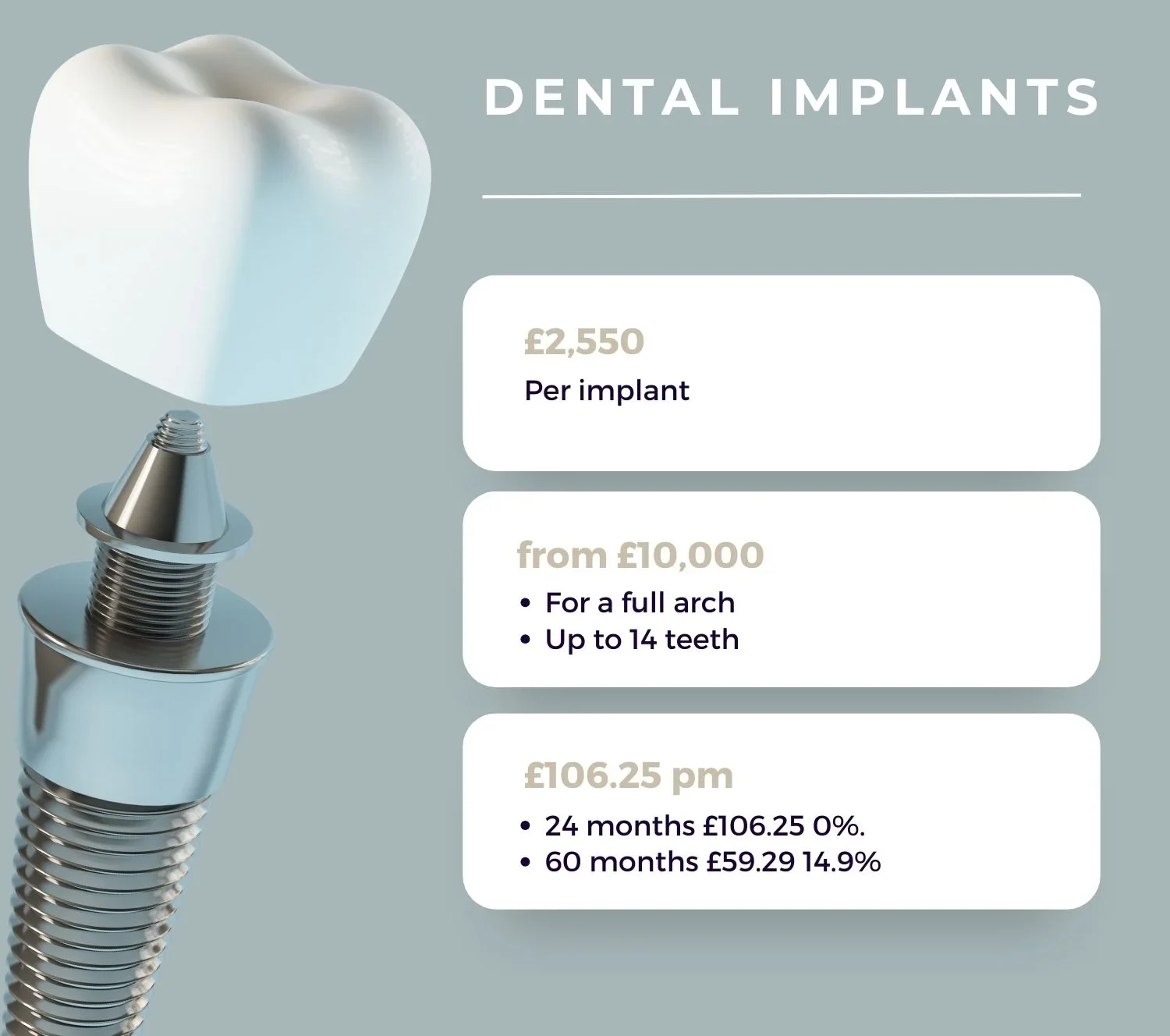
Generally, you can expect to pay anywhere from £2,500 to £4,000 for a single dental implant, including the implant, abutment, and crown. Full mouth dental implants can cost between £7,000 to £25,000 per arch.
Cost-saving when going through NHS
If you are eligible for NHS dental implants, the cost-saving when going through NHS can be substantial. As the NHS subsidises the cost of treatment, you will only need to pay a portion of the overall fee, making it a much more affordable option than private dental care.
However, it’s important to consider that NHS funding is limited, and waiting times for treatment can be lengthy. You also have to consider what is the best alternative to dental implants if you are not able to get NHS funding.
Types of Dental Implants Available on NHS
The types of dental implants available on NHS may be more limited compared to private practices. The NHS typically offers standard implant systems that have been proven effective and provide good long-term results.
Types of dental implants available on NHS
The most common types of dental implants available on NHS include:
- Endosteal implants: These implants are placed directly into the jawbone and are the most widely used type of dental implant.
- Subperiosteal implants: These implants are placed under the gum but on top of the jawbone. They are typically used when there is insufficient bone volume for endosteal implants.
Custom vs standard options
While private practices often offer custom-designed implants to meet specific patient needs, the NHS typically relies on standard options. Custom implants can be more expensive and require additional manufacturing time, making them less practical for NHS funding.
How to Apply for NHS Dental Implants
How to apply for NHS dental implants involves a series of steps to determine eligibility and secure funding. It’s important to follow the correct procedures to ensure your application is considered.
Getting a referral
The first step in getting a referral for NHS dental implants is to visit your general dentist. They will assess your oral health and determine if you meet the basic criteria for implant treatment. If they believe you are a suitable candidate, they will refer you to an NHS specialist or dental hospital for further evaluation.
Assessment and waiting times for NHS dental implants
Once you have been referred, you will undergo a comprehensive assessment and waiting times for NHS dental implants to determine your eligibility for NHS funding. This may involve x-rays, scans, and a thorough examination of your dental and medical history.
If your application is approved, you will be placed on a waiting list for treatment. Waiting times for NHS dental implants can vary depending on the availability of resources and the complexity of your case. In some areas, waiting lists can be several months or even years long.
Alternatives to NHS Dental Implants
If you are not eligible for NHS dental implants or are unwilling to wait for treatment, several alternatives to NHS dental implants are available. These options can provide functional and aesthetic solutions for missing teeth.
Dentures, bridges, and other replacement options
Some of the most common alternatives to NHS dental implants include:
- Dentures: These are removable appliances that replace missing teeth. Dentures can be full (replacing all teeth in an arch) or partial (replacing some teeth).
- Dental bridges: These are fixed appliances that bridge the gap between missing teeth. Bridges are typically supported by adjacent natural teeth.
- Adhesive bridges (Maryland bridges): These bridges are bonded to the back of adjacent teeth, requiring minimal preparation of the supporting teeth.
While these alternatives may be more affordable than dental implants, they may not offer the same level of stability, function, or aesthetics. Implants are often considered the gold standard for tooth replacement due to their long-term success rate and ability to preserve jawbone health.
If you find that these alternatives aren’t suitable for you then you could explore options for cosmetic dentistry in Albania.
NHS Dental Charges Exemptions
Some individuals may be eligible for NHS dental charges exemptions, which can significantly reduce the cost of dental treatment, including implants in certain cases. It’s important to understand the criteria for these exemptions to determine if you qualify.
Who gets free dental implants UK NHS?
While completely free dental implants UK NHS are rare, certain groups of people are entitled to free NHS dental treatment, which may include some aspects of implant care. These groups include:
- Children under 18.
- Pregnant women and mothers who have given birth in the past 12 months.
- Individuals receiving certain benefits, such as Income Support, Income-based Jobseeker’s Allowance, Income-related Employment and Support Allowance, or Universal Credit (meeting specific criteria).
Low income, benefits, and other exemptions
In addition to the groups listed above, individuals with low income, benefits, and other exemptions may be eligible for reduced-cost or free NHS dental treatment. The NHS Low Income Scheme (LIS) provides financial assistance to those who qualify.
Through the LIS, you may be able to receive full or partial help with NHS dental costs. The level of assistance depends on your income, savings, and expenses. To apply for the LIS, you will need to complete an HC1 form, which is available from Jobcentre Plus offices or the NHS website.
Frequently Asked Questions (FAQ)
Here are some of the most frequently asked questions about dental implants on the NHS:
How much does an implant cost on the NHS in 2025?
The cost of an implant on the NHS in 2025 will depend on the specific treatment band and your eligibility for NHS funding. As dental implants typically fall under Band 3, you can expect to pay £319.10 for the course of treatment if you are eligible for NHS care. However, this cost may be reduced or waived if you qualify for NHS dental charges exemptions.
Is it possible to get free dental implants on the NHS?
While it is rare, it is possible to get free dental implants on the NHS if you meet specific criteria, such as having lost teeth due to trauma, cancer treatment, or congenital abnormalities. Additionally, individuals who are eligible for NHS dental charges exemptions, such as those receiving certain benefits or those with low incomes, may receive free or reduced-cost dental implants.
Why are dental implants not commonly available on the NHS?
Dental implants are not commonly available on the NHS because they are often considered a cosmetic procedure, and the NHS prioritises essential dental treatments based on medical need. Funding for dental implants is limited, and only a small percentage of people qualify for treatment.
What is the difference in cost between private and NHS dental implants?
The difference in cost between private and NHS dental implants can be significant. Private dental implants typically range from £2,500 to £4,000 per implant, while NHS implants, if you are eligible, will cost £319.10 for the course of treatment. This makes NHS implants a much more affordable option for those who qualify.
What are the eligibility criteria for NHS dental implants?
The eligibility criteria for NHS dental implants are stringent and based on medical need. You may be eligible if you have lost teeth due to trauma, cancer treatment, or congenital abnormalities. A thorough assessment process is conducted by an NHS dentist or specialist to determine your eligibility.
What band are dental implants on the NHS?
Dental implants on the NHS typically fall under Band 3, which covers more complex procedures such as crowns, dentures, and bridges. The current charge for Band 3 treatment is £319.10.
How long does it take to get dental implants through the NHS?
The waiting time for dental implants through the NHS can vary depending on the availability of resources and the complexity of your case. In some areas, waiting lists can be several months or even years long. It’s important to inquire about waiting times during your assessment.
Are there any exemptions from NHS implant charges?
Yes, there are exemptions from NHS implant charges for certain groups of people, such as children under 18, pregnant women, and individuals receiving certain benefits or those with low incomes who qualify for the NHS Low Income Scheme (LIS).
What are the alternatives if you’re not eligible for NHS implants?
If you’re not eligible for NHS implants, several alternatives are available, including dentures, dental bridges, and adhesive bridges. These options may be more affordable but may not offer the same level of stability, function, or aesthetics as dental implants. Another option could be to explore alternatives abroad and arrange dental tourism in Albania.
How do NHS and private implant procedures differ?
NHS and private implant procedures differ in several ways, including cost, waiting times, treatment options, and the level of customisation. NHS implants are more affordable but have longer waiting times and may offer fewer treatment options. Private implants are more expensive but offer quicker access, a wider range of treatment options, and personalised care.
Conclusion
In conclusion, understanding the cost of dental implants on the NHS, eligibility criteria, and available alternatives is crucial for making informed decisions about your oral health. While NHS dental implants offer a more affordable option for those who qualify, private dental care provides quicker access and a wider range of treatment choices.
If you are considering dental implants, it’s important to consult with your dentist to discuss your individual needs and determine the most appropriate treatment plan for you. Whether you choose to pursue NHS or private dental care, taking proactive steps to restore your smile and improve your oral health can have a significant impact on your overall well-being.
For those seeking affordable and high-quality dental implant solutions, Albania Dental Implants offers comprehensive services and dental tourism options. Contact us today to learn more about our services and start your journey towards a confident and healthy smile.





