



Introduction
When faced with a missing tooth, understanding your tooth replacement options is crucial. Both dental bridges and dental implants offer solutions, but they function differently and come with their own sets of pros and cons. Let’s break down each option to help you navigate this important decision.
What is a dental bridge?
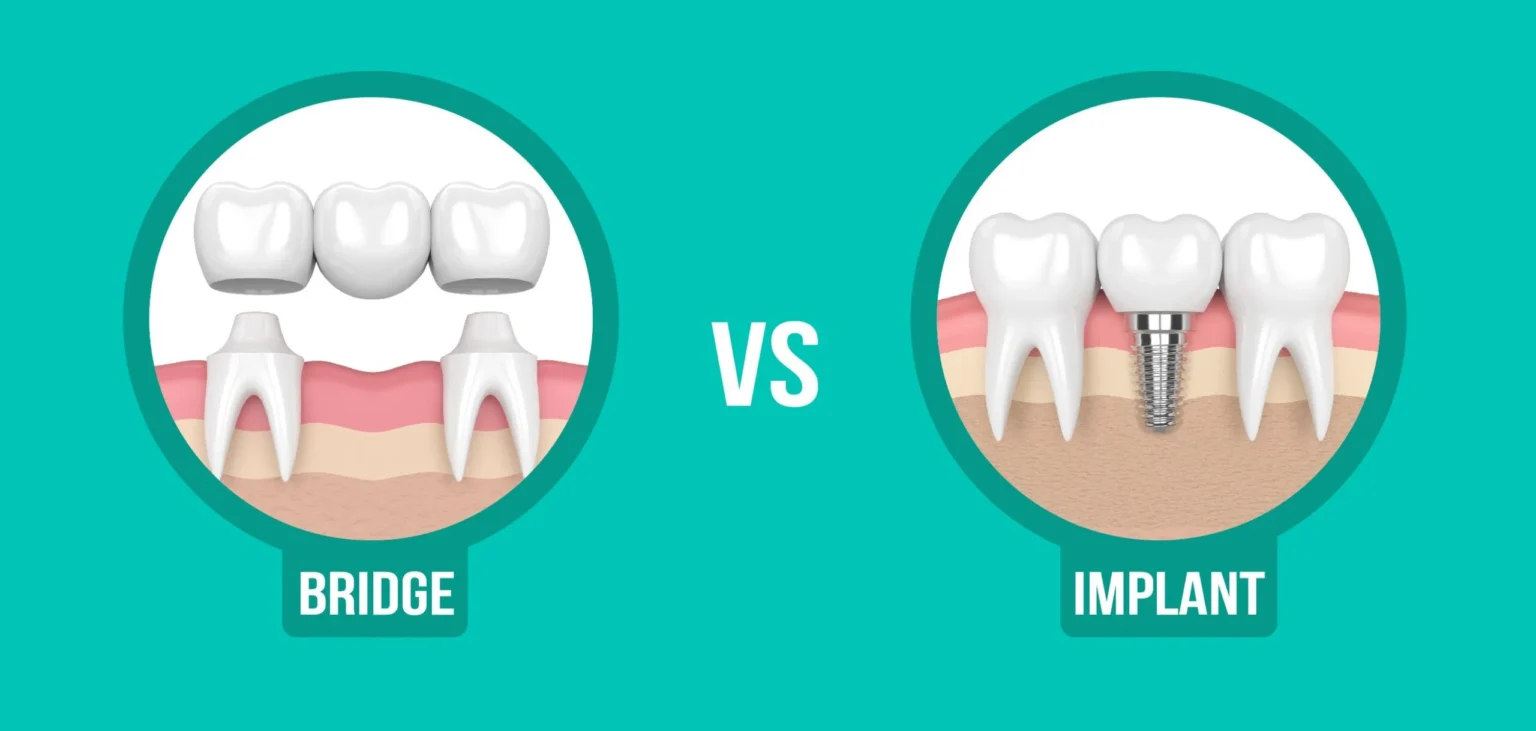
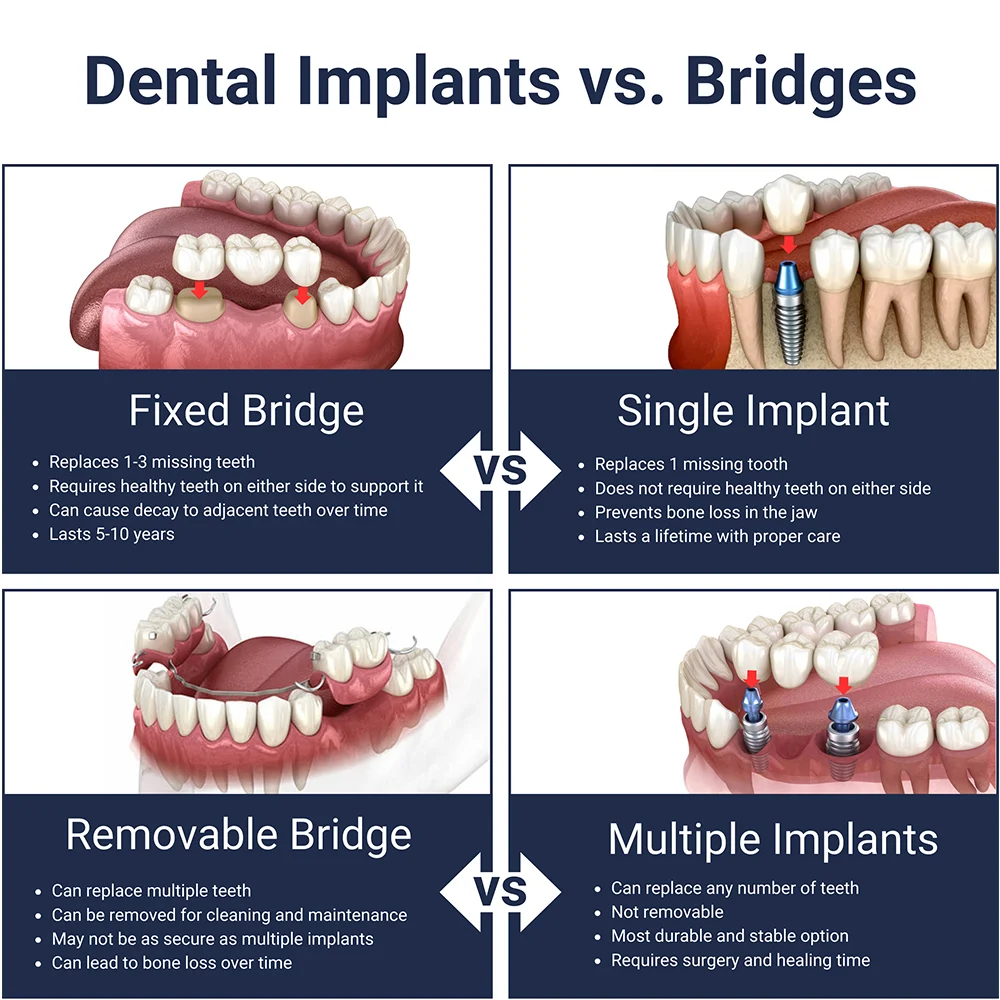
A dental bridge is a prosthetic device used to fill the gap created by one or more missing teeth. It consists of artificial teeth (pontics) that are anchored to adjacent natural teeth (abutments). The abutment teeth are prepared by being crowned, providing support for the pontic. Essentially, a bridge “bridges” the gap, restoring the appearance and function of your smile.
What is a dental implant?
A dental implant is a titanium post that is surgically placed into the jawbone to act as a replacement tooth root. After the implant fuses with the bone (osseointegration), a crown is attached to the implant, creating a complete and stable tooth replacement. Dental implants offer a permanent solution that looks, feels, and functions like a natural tooth.
Why compare these two tooth replacement options?
Choosing between a dental bridge and a dental implant involves considering several factors, including cost, longevity, suitability for your specific situation, and your overall oral health. Both options have their advantages and disadvantages, and the “best” choice depends on your individual needs and preferences. By comparing these tooth replacement options, this guide aims to provide clarity and empower you to make an informed decision in consultation with your dentist.
For patients considering cost-effective options without compromising quality, dental tourism in Albania might be the right choice. Our services offer top-tier dental care with significant savings compared to UK prices.
Dental Bridge: Definition and Overview
The dental bridge vs implant conversation is an important one when exploring tooth replacement options. A dental bridge is a fixed dental restoration used to replace one or more missing teeth by joining an artificial tooth definitively to adjacent teeth or dental implants. It provides a cost-effective and relatively quick solution for restoring your smile’s appearance and functionality.
Types of dental bridges
- Traditional Bridges: These are the most common type of bridge, consisting of a pontic (artificial tooth) supported by two abutment teeth that have been crowned.
- Cantilever Bridges: These bridges are used when there are adjacent teeth on only one side of the missing tooth or teeth. This isn’t always recommended as it can put extra stress on the abutment tooth.
- Maryland Bridges: Also known as resin-bonded bridges, these bridges use a metal or porcelain framework that is bonded to the back of the abutment teeth. They are less invasive than traditional bridges.
- Implant-Supported Bridges: These bridges are supported by dental implants rather than natural teeth. This option is used when there are multiple missing teeth, and implants provide a strong and stable foundation.
How bridges are placed
- Consultation and Examination: Your dentist will evaluate your oral health and determine if a bridge is the right option for you.
- Abutment Preparation: The abutment teeth are prepared by being reshaped to accommodate the crowns that will support the bridge.
- Impressions: Impressions of your teeth are taken to create a model for the bridge.
- Temporary Bridge: A temporary bridge is placed to protect the prepared teeth while the permanent bridge is being fabricated.
- Permanent Bridge Placement: Once the permanent bridge is ready, it is cemented onto the abutment teeth, restoring your smile.
When a bridge may be recommended
A dental bridge may be recommended in the following situations:
- When you have one or more missing teeth.
- When the adjacent teeth are healthy and can support the bridge.
- When you prefer a less invasive option compared to dental implants.
- When you are looking for a more affordable tooth replacement solution.
Dental Implant: Definition and Overview
Understanding the advantages of dental implants is key to making an informed choice about tooth replacement. A dental implant is a permanent solution for missing teeth, offering stability, functionality, and a natural appearance. Unlike bridges, implants do not rely on adjacent teeth for support, preserving the health of your remaining teeth.
Explanation of dental implants
A dental implant consists of three main components:
- Implant Post: A titanium screw that is surgically placed into the jawbone to act as a replacement tooth root.
- Abutment: A connector that attaches to the implant post and provides a base for the crown.
- Crown: A custom-made artificial tooth that is attached to the abutment, restoring the appearance and function of your smile.
How implants are placed
- Consultation and Examination: Your dentist will evaluate your oral health, bone density, and determine if you are a suitable candidate for dental implants.
- Implant Placement: The implant post is surgically placed into the jawbone. This may require bone grafting if there is insufficient bone volume.
- Osseointegration: The implant is allowed to fuse with the jawbone over a period of several months.
- Abutment Placement: Once osseointegration is complete, the abutment is attached to the implant post.
- Crown Placement: The custom-made crown is attached to the abutment, completing the tooth replacement.
When dental implants are preferred
Dental implants are often preferred in the following situations:
- When you want a long-lasting and stable tooth replacement.
- When you want to preserve the health of adjacent teeth.
- When you have sufficient bone density in the jawbone.
- When you are looking for a solution that closely mimics the look, feel, and function of a natural tooth.
If you are considering dental implants, Albania Dental Implants Services offers comprehensive implant solutions. We invite you to contact us to explore how our expertise can assist in your tooth restoration journey.
Comparing Suitability: When Is Each Option Better?
Choosing the best choice for missing tooth replacement depends heavily on your individual circumstances. Both bridges and implants offer viable solutions, but their suitability varies based on the number of missing teeth, bone health, overall oral health, and other factors.
Suitability based on number of missing teeth, bone health, overall oral health
- Number of Missing Teeth: Bridges are generally suitable for replacing one or a few missing teeth in a row. Implants can be used to replace a single tooth or multiple teeth, and can even support an entire arch of teeth with implant-supported dentures.
- Bone Health: Implants require sufficient bone density in the jawbone for successful osseointegration. If there is bone loss, bone grafting may be necessary. Bridges do not require as much bone support, making them a more viable option for individuals with bone loss.
- Overall Oral Health: Both bridges and implants require good oral hygiene to prevent complications. Individuals with uncontrolled gum disease or other oral health issues may not be suitable candidates for either option.
Table comparing suitability scenarios
| Scenario | Dental Bridge | Dental Implant |
|---|---|---|
| Single Missing Tooth | Viable, but requires altering adjacent teeth | Excellent, preserves adjacent teeth |
| Multiple Missing Teeth in a Row | Suitable for a few teeth, may require support from multiple abutment teeth | Excellent, can support multiple teeth with individual implants or an implant-supported bridge |
| Insufficient Bone Density | More suitable, does not require as much bone support | Requires bone grafting, which adds to the cost and treatment time |
| Good Oral Health | Suitable with proper oral hygiene | Excellent, promotes long-term oral health |
| Poor Oral Health | Increased risk of complications, may not be suitable | Requires strict oral hygiene, may not be suitable |
While the table provides general guidance, a thorough assessment by a qualified dentist is crucial to determine the most suitable option for your specific situation. Our team at Albania Dental Implants can provide a comprehensive evaluation and personalized recommendations to help you achieve a healthy and confident smile.
Cost Comparison: Dental Bridge vs Implant
Understanding the cost of dental bridges and implants is an essential part of making an informed decision. While dental bridges often have a lower upfront cost, dental implants may offer better long-term value due to their longevity and reduced need for replacement.
Upfront costs
- Dental Bridge: The upfront cost of a dental bridge typically ranges from £700 to £2,500 per unit, depending on the type of bridge and materials used.
- Dental Implant: The upfront cost of a dental implant typically ranges from £2,000 to £4,000 per implant, including the implant post, abutment, and crown.
Insurance and NHS options
- Insurance: Many dental insurance plans cover a portion of the cost of dental bridges and implants. However, coverage varies widely, so it’s important to check with your insurance provider to understand your benefits.
- NHS: The NHS may cover dental bridges in certain cases, but dental implants are rarely covered unless there is a medical necessity. If you qualify for NHS coverage, you may still need to pay a portion of the cost.
It is important to understand the Can you get implants on a NHS dentist? as dental implants are only available if there is a clinical need.
Long-term cost considerations
- Dental Bridge: Bridges typically last 5-15 years and may need to be replaced several times over your lifetime. The cost of replacement can add up over time.
- Dental Implant: Implants can last a lifetime with proper care, making them a more cost-effective option in the long run. While the upfront cost is higher, you may save money on replacement costs over time.
For patients seeking more affordable options, exploring dental implant treatments in Albania can significantly reduce costs. At Albania Dental Implants, we offer high-quality dental implants at competitive prices, making it a viable option for those on a budget.
Longevity and Maintenance
Considering how long do dental bridges last and how long do dental implants last is essential when comparing tooth replacement options. The longevity of each option can significantly impact your long-term oral health and overall satisfaction.
Which option typically lasts longer?
Dental implants generally last longer than dental bridges. With proper care, dental implants can last a lifetime, while dental bridges typically need to be replaced every 5-15 years. The longevity of implants is due to their integration with the jawbone, providing a stable and durable foundation.
Maintenance needs for both options
- Dental Bridge: Bridges require meticulous oral hygiene to prevent decay and gum disease around the abutment teeth. Special floss or interdental brushes may be needed to clean under the bridge. Regular dental check-ups are essential to monitor the bridge and abutment teeth.
- Dental Implant: Implants require similar oral hygiene practices as natural teeth, including brushing, flossing, and regular dental check-ups. While implants are not susceptible to decay, gum disease can still develop around the implant, leading to complications.
Proper maintenance is crucial for both bridges and implants to ensure their longevity and prevent complications. Our team at Albania Dental Implants can provide detailed instructions on oral hygiene and maintenance to help you keep your smile healthy and beautiful for years to come.
Benefits and Drawbacks of Each Option
Weighing the advantages of dental implants alongside dental bridge disadvantages and dental implant disadvantages is crucial for making an informed decision. Understanding the pros and cons of each option can help you determine which one best aligns with your needs and preferences.
Pros and cons list for bridges
- Pros:
- Lower upfront cost compared to implants
- Less invasive procedure
- Faster treatment time
- Cons:
- Requires altering adjacent teeth
- Shorter lifespan compared to implants
- Increased risk of decay and gum disease around abutment teeth
- Bone loss in the area of the missing tooth
Pros and cons list for implants
- Pros:
- Long-lasting and stable tooth replacement
- Preserves the health of adjacent teeth
- Prevents bone loss in the area of the missing tooth
- Natural look, feel, and function
- Cons:
- Higher upfront cost
- More invasive procedure
- Longer treatment time
- Requires sufficient bone density
By carefully considering these benefits and drawbacks, you can make a more informed decision about which tooth replacement option is right for you. Our expert team at Albania Dental Implants is available to discuss your specific needs and provide personalized recommendations.
Patient Experience and Recovery
Understanding what to expect during and after each procedure can help ease any anxiety and prepare you for a smooth recovery.
What to expect during and after procedures
- Dental Bridge:
- During the procedure, you will receive local anesthesia to numb the area.
- After the procedure, you may experience some sensitivity or discomfort, which can be managed with over-the-counter pain medication.
- You will need to follow specific instructions on oral hygiene and diet to protect the bridge and abutment teeth.
- Dental Implant:
- During the procedure, you will receive local anesthesia and may also opt for sedation to help you relax.
- After the procedure, you may experience some swelling, bruising, and discomfort, which can be managed with pain medication and ice packs.
- You will need to follow a soft diet and maintain meticulous oral hygiene to promote healing.
Healing time
- Dental Bridge: The healing time for a dental bridge is relatively short, typically a few days to a week.
- Dental Implant: The healing time for a dental implant is longer, typically several months, to allow for osseointegration.
Potential complications
- Dental Bridge:
- Decay and gum disease around abutment teeth
- Bridge failure
- Sensitivity and discomfort
- Dental Implant:
- Infection
- Implant failure
- Nerve damage
- Sinus problems
While complications are rare, it’s important to be aware of the potential risks associated with each procedure. Our experienced team at Albania Dental Implants takes every precaution to minimize these risks and ensure a successful outcome.
Decision Factors: How to Choose
Choosing between a dental bridge and a dental implant can feel overwhelming, but by considering key factors and seeking professional guidance, you can make the right decision for your unique needs.
Key factors: oral health, budget, timeline, medical considerations
- Oral Health: Assess the health of your existing teeth and gums. Implants generally require better oral health for long-term success.
- Budget: Consider the upfront and long-term costs of each option, as well as your insurance coverage.
- Timeline: Determine how quickly you want to restore your smile. Bridges offer a faster solution, while implants require a longer treatment time.
- Medical Considerations: Discuss any medical conditions or medications you are taking with your dentist, as these may impact your suitability for each procedure.
Dentist’s perspective: clinical guidelines
Your dentist will consider several clinical guidelines when recommending a tooth replacement option:
- The number and location of missing teeth
- The health and stability of adjacent teeth
- Your bone density and overall oral health
- Your aesthetic goals and functional needs
It is critical that you contact contact albania dental implants so our dentist can help you evaluate your personal needs.
Patient testimonials (if available)
Hearing from other patients who have undergone these procedures can provide valuable insights. While we don’t have testimonials directly in this article, we encourage you to seek out online reviews and ask your dentist for patient referrals to learn more about the experiences of others.
Conclusion
Ultimately, the decision of whether is bridging better than implant? depends on your individual circumstances. Both dental bridges and dental implants offer effective solutions for tooth replacement, but they come with their own sets of advantages and disadvantages.
Recap: Is bridging better than implant?
Bridges are typically more affordable and less invasive, making them a viable option for some individuals. However, they require altering adjacent teeth and have a shorter lifespan compared to implants. Implants offer a long-lasting and stable solution that preserves the health of adjacent teeth, but they come with a higher upfront cost and require a more invasive procedure.
When each option makes sense
- Choose a bridge if:
- You are looking for a more affordable and less invasive option.
- You have healthy adjacent teeth that can support the bridge.
- You are not concerned about the long-term lifespan of the restoration.
- Choose an implant if:
- You want a long-lasting and stable tooth replacement.
- You want to preserve the health of adjacent teeth.
- You are willing to invest in a more permanent solution.
Importance of professional assessment
The best way to determine which option is right for you is to consult with a qualified dentist who can evaluate your oral health and provide personalized recommendations. At Albania Dental Implants, our experienced team can help you make an informed decision and achieve a healthy and confident smile. Contact us today to schedule a consultation and explore your tooth replacement options. Our commitment to providing high-quality and affordable dental care makes us an excellent choice for patients seeking lasting solutions for missing teeth.
Frequently Asked Questions
Which lasts longer, a dental bridge or an implant?
Dental implants generally last longer than dental bridges. Implants can last a lifetime with proper care, whereas bridges typically last between 5 to 15 years.
Is it cheaper to get a bridge or an implant?
In most cases, a dental bridge is initially cheaper than a dental implant. However, the long-term costs may even out or favor implants, as bridges may require replacement several times over a lifetime.
Are dental implants painful compared to bridges?
Both procedures involve some discomfort, which can be managed with local anesthesia during the procedure and pain medication afterward. Many patients find dental implants to be less painful than expected.
Can anyone get a dental implant?
Not everyone is a suitable candidate for dental implants. Factors such as bone density, overall health, and certain medical conditions can affect eligibility. A thorough evaluation by a dentist is necessary.
When should I choose a bridge over an implant?
You might choose a bridge over an implant if you’re looking for a quicker, less invasive, and more affordable option. Bridges are also suitable if the adjacent teeth already have large fillings or crowns.
How do I clean and maintain a bridge or implant?
Bridges require special floss or interdental brushes to clean underneath, while implants require regular brushing and flossing, just like natural teeth. Regular dental check-ups are essential for both.
What are dental bridges and implants made of?
Dental bridges are typically made of porcelain, metal alloys, or a combination of both. Dental implants are usually made of titanium, a biocompatible material, with a porcelain crown attached.
Will my insurance cover dental bridges or implants?
Many dental insurance plans cover a portion of the cost of dental bridges and implants, but coverage varies widely. Check with your insurance provider to understand your benefits.
Does a bridge damage surrounding teeth?
Yes, a traditional bridge requires altering the adjacent teeth to support the restoration, which can potentially weaken them over time.
What are the risks of dental bridges and implants?
Risks of dental bridges include decay and gum disease around the abutment teeth, while risks of dental implants include infection, implant failure, nerve damage, and sinus problems.
Ready to Restore Your Smile?
Contact Albania Dental Implants today to schedule a consultation and explore your tooth replacement options. Our expert team is dedicated to providing high-quality and affordable dental care to help you achieve a healthy and confident smile. Schedule your consultation now!





