



All on Four Dental Implants – The Complete Guide
“All on four dental implants” are a revolutionary solution for patients seeking full-arch tooth replacement using just four dental implants. This innovative technique offers a fixed, stable, and natural-looking set of teeth, transforming smiles and improving quality of life. If you are considering a permanent solution to missing or failing teeth, this comprehensive guide will provide you with all the information you need to know about All-on-4 dental implants, including the procedure, benefits, costs, and aftercare.
What Are All on Four Dental Implants?
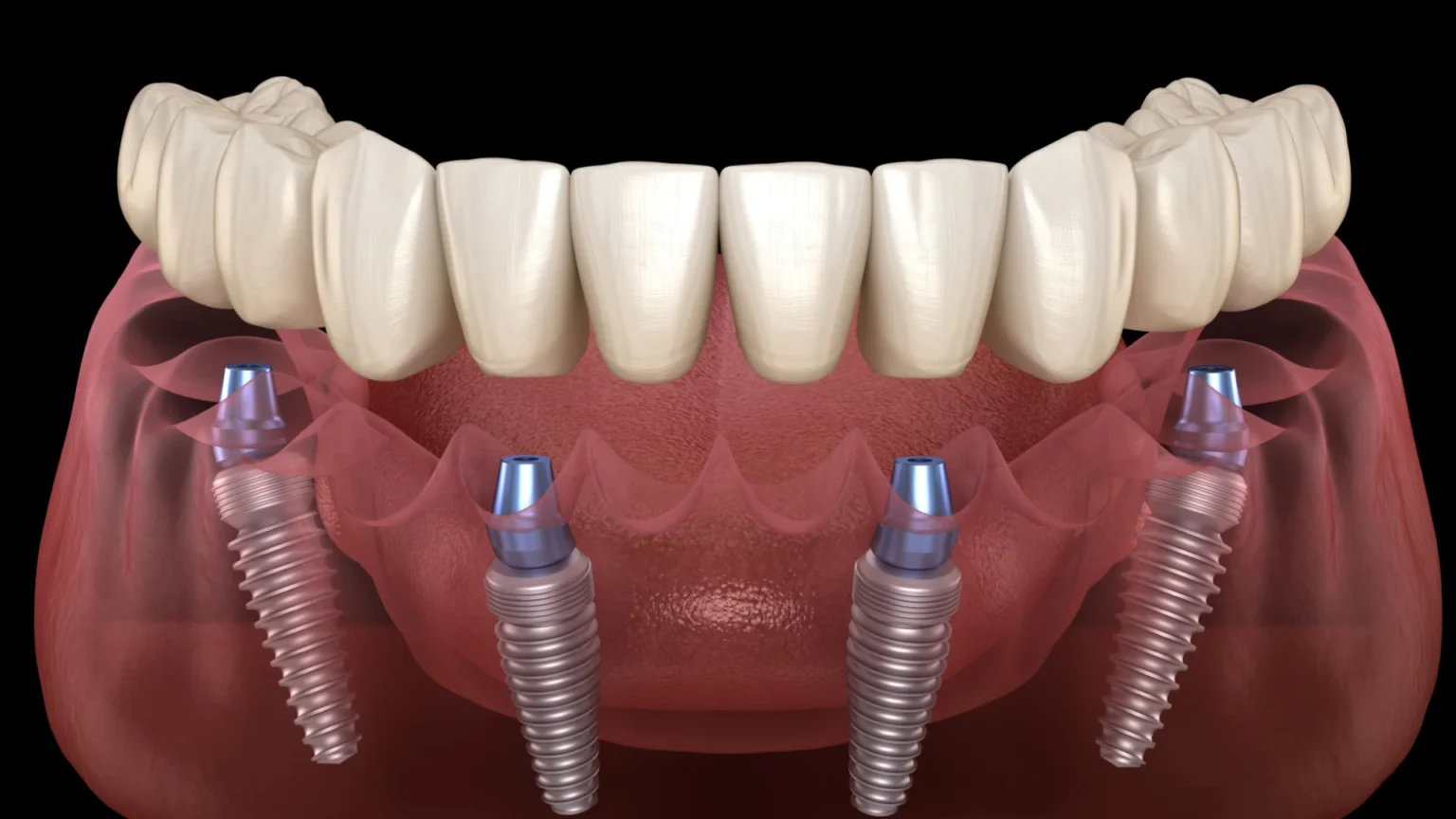
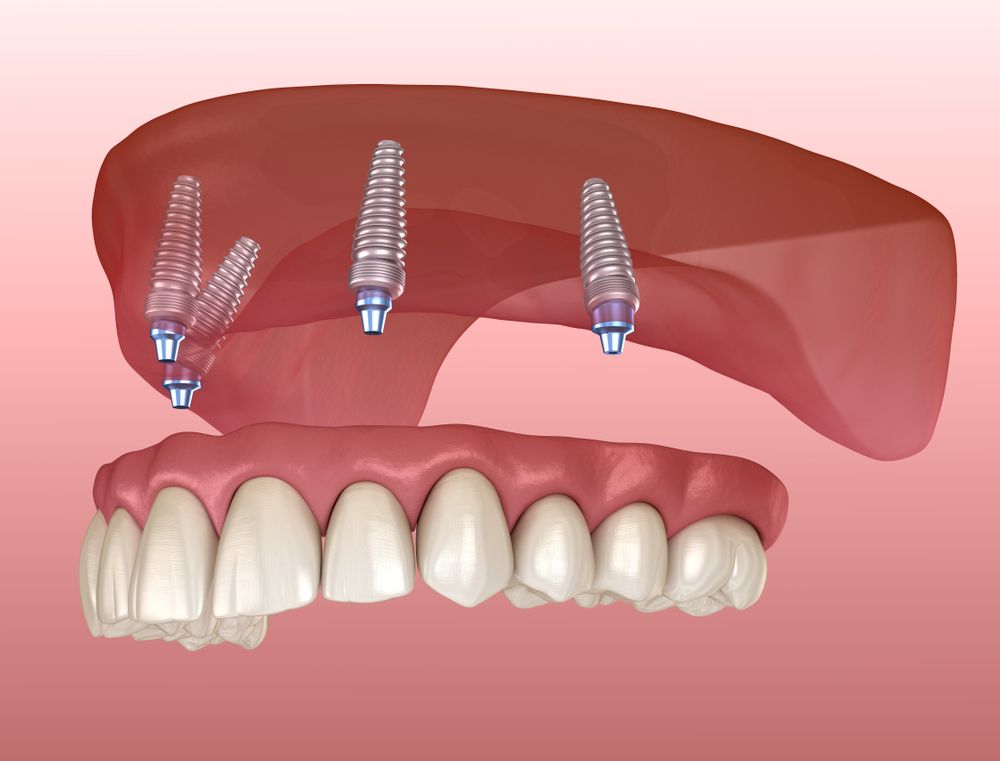
Understanding full mouth dental implants is essential for anyone considering a complete smile restoration. The All-on-4 technique involves placing four dental implants in the jawbone to support a full arch of replacement teeth. This approach is designed to maximize the use of available bone, often eliminating the need for bone grafting. Unlike traditional dentures, All-on-4 implants are fixed in place, providing greater stability, comfort, and functionality.
Full Mouth Dental Implants Explained
Full mouth dental implants, like All-on-4, are designed for patients who have lost or are about to lose all of their teeth in one or both jaws. Instead of replacing each tooth individually, a full arch of teeth is supported by a few strategically placed implants. This method offers several advantages over traditional dentures, including:
- Improved Stability: Implants are anchored in the jawbone, providing a secure base for the replacement teeth.
- Enhanced Functionality: Patients can eat, speak, and smile with confidence, without worrying about slippage or discomfort. You will be able to enjoy a wide range of foods again with All-on-4 dental implants.
- Natural Appearance: The replacement teeth are custom-designed to look and feel like natural teeth.
- Bone Preservation: Implants stimulate bone growth, preventing bone loss that can occur with dentures.
How the Dental Implant Procedure Works
The dental implant procedure for All-on-4 involves several key steps:
- Consultation and Planning: A thorough examination, including X-rays and CT scans, is performed to assess your suitability for All-on-4 implants. A treatment plan is then created to address your specific needs.
- Implant Placement: Four dental implants are surgically placed in the jawbone. The posterior implants are often angled to maximize bone support and avoid anatomical structures.
- Temporary Prosthesis: A temporary set of teeth is attached to the implants on the same day, allowing you to leave the clinic with a functional smile.
- Osseointegration: Over the next few months, the implants fuse with the jawbone in a process called osseointegration.
- Permanent Prosthesis: Once osseointegration is complete, a custom-made, permanent set of teeth is attached to the implants.
Benefits of All-on-4 Compared to Alternatives
The advantages of All-on-4 technology are numerous, making it a popular choice for full-arch tooth replacement. When compared to traditional dentures or individual implants, All-on-4 offers several distinct benefits. Also, its important to understand is all on 6 better than All-on-4 to pick the right procedure.
Advantages of All-on-4 Technology
Here are some key advantages of All-on-4 dental implants:
- Reduced Treatment Time: All-on-4 typically requires fewer appointments and a shorter overall treatment time compared to traditional implants.
- Lower Cost: Because only four implants are used, the cost of All-on-4 can be lower than replacing each tooth individually.
- Immediate Results: Patients receive a functional set of teeth on the same day as implant placement.
- Improved Comfort: All-on-4 implants are fixed in place, eliminating the discomfort and instability associated with dentures.
- Enhanced Aesthetics: The replacement teeth are custom-designed to look and feel like natural teeth.
All-on-4 vs Traditional Implants
All-on-4 vs traditional implants is a common consideration for patients seeking full mouth restoration. Traditional implants typically involve placing one implant for each missing tooth, which can require more extensive surgery and a longer treatment time. All-on-4, on the other hand, uses just four implants to support an entire arch of teeth, making it a more efficient and cost-effective option. Here’s a comparison table:
| Feature | All-on-4 | Traditional Implants |
|---|---|---|
| Number of Implants | 4 | 8 or more (per arch) |
| Treatment Time | Shorter | Longer |
| Cost | Lower | Higher |
| Bone Grafting | Less likely | More likely |
| Immediate Loading | Possible | Not always possible |
Who is a Candidate for Teeth in a Day?
“Teeth in a day”, or immediate loading, is a significant advantage of All-on-4. However, not everyone is a suitable candidate for this approach. Ideal candidates typically include:
- Patients who have lost or are about to lose all of their teeth in one or both jaws.
- Patients who have sufficient bone density to support dental implants (although All-on-4 can sometimes be used in cases with limited bone).
- Patients who are in good overall health and have no contraindications to surgery.
- Patients who are committed to maintaining good oral hygiene and attending regular follow-up appointments.
All-on-4 Dental Implant Procedure – Step by Step
A detailed explanation of the dental implant procedure, step by step, helps patients understand what to expect. The All-on-4 process is carefully planned and executed to ensure the best possible outcome.
Consultation and Planning
The first step in the All-on-4 process is a comprehensive consultation. During this appointment, the dentist will:
- Review your medical and dental history.
- Perform a thorough oral examination.
- Take X-rays and CT scans to assess your bone density and identify any anatomical structures.
- Discuss your treatment goals and expectations.
- Develop a customized treatment plan that addresses your specific needs.
This initial consultation is crucial for determining your suitability for All-on-4 implants and ensuring that the procedure is tailored to your individual circumstances.
Surgery Day: What to Expect
On the day of surgery, you can expect the following:
- Anesthesia: Local anesthesia, sedation, or general anesthesia will be administered to ensure your comfort during the procedure. At Albania Dental Implants, we prioritize patient comfort throughout the process.
- Tooth Extraction: If any remaining teeth need to be removed, this will be done at the beginning of the procedure.
- Implant Placement: Four dental implants are strategically placed in the jawbone. The posterior implants are typically angled to maximize bone support.
- Temporary Prosthesis: A temporary set of teeth is attached to the implants, allowing you to leave the clinic with a functional smile.
- Post-operative Instructions: You will receive detailed instructions on how to care for your implants and manage any discomfort.
Typical Timeline for the Dental Implant Procedure
The dental implant procedure timeline for All-on-4 typically looks like this:
- Initial Consultation: 1-2 hours
- Surgery Day: 2-4 hours
- Osseointegration Period: 3-6 months
- Permanent Prosthesis Placement: 1-2 hours
- Follow-up Appointments: Regular check-ups to monitor the health of your implants.
Cost of All-on-4 Dental Implants in the UK
Understanding the cost of All-on-4 dental implants is a crucial consideration. Several factors can influence the final price. How much do All-on-4 dental implants cost in the UK is an important question to ask your dentist.
Factors Influencing Cost of All-on-4 Dental Implants
The cost of All-on-4 dental implants can vary depending on several factors, including:
- Location of the Clinic: Prices may be higher in certain areas of the UK, such as London.
- Dentist’s Experience: More experienced dentists may charge higher fees.
- Materials Used: The type of materials used for the implants and replacement teeth can affect the cost.
- Complexity of the Case: Cases that require additional procedures, such as bone grafting, may be more expensive.
- Anesthesia Type: The type of anesthesia used can also impact the cost.
Generally, All-on-4 dental implants in the UK can range from £15,000 to £30,000 per arch.
Consider affordable options like dental implants in Albania
Is it Covered by Insurance?
Whether All-on-4 dental implants are covered by insurance depends on your specific policy. Many dental insurance plans do not cover the full cost of implants, but they may cover a portion of the treatment. It’s important to check with your insurance provider to determine your coverage.
Financing Options
Given the significant cost of All-on-4 dental implants, many clinics offer financing options to help patients manage the expense. These options may include:
- Payment Plans: Spreading the cost of treatment over several months or years.
- Dental Loans: Taking out a loan specifically for dental treatment.
- Third-Party Financing: Using a company that specializes in financing medical and dental procedures.
Aftercare and Recovery
Proper recovery and healing is essential for the long-term success of All-on-4 dental implants. Following the aftercare instructions provided by your dentist can help minimize complications and ensure optimal results. Also, you should know how do you clean under all 4 implants.
Recovery and Healing Process
The recovery process after All-on-4 surgery typically involves:
- Initial Healing: The first few days after surgery may involve some discomfort, swelling, and bruising. Pain medication can help manage any discomfort.
- Dietary Restrictions: For the first few weeks, you will need to follow a soft diet to avoid putting too much pressure on the implants. You may need to change your lifestyle if you chew gum with All-on-4 implants.
- Regular Check-ups: You will need to attend regular follow-up appointments to monitor the healing process and ensure that the implants are integrating properly with the bone.
Tips for Aftercare for Dental Implants
To promote healing and prevent complications, follow these tips for aftercare for dental implants:
- Maintain Good Oral Hygiene: Brush your teeth gently twice a day and floss daily. Use an antiseptic mouthwash to help prevent infection.
- Follow Dietary Restrictions: Avoid hard, sticky, or chewy foods that could damage the implants or replacement teeth.
- Avoid Smoking: Smoking can impair healing and increase the risk of implant failure.
- Attend Regular Check-ups: Regular dental check-ups are essential for monitoring the health of your implants and addressing any potential problems.
Common Risks and Complications
While All-on-4 dental implants are generally safe and effective, there are some potential risks and complications, including:
- Infection: Infection at the implant site can occur, especially if good oral hygiene is not maintained.
- Implant Failure: In rare cases, the implants may not fuse properly with the bone, leading to implant failure.
- Nerve Damage: Damage to nearby nerves can cause numbness or tingling in the lips, chin, or tongue.
- Sinus Problems: Implants placed in the upper jaw can sometimes protrude into the sinus cavity, causing sinus problems.
- Prosthesis Problems: The replacement teeth can sometimes become loose, chipped, or fractured.
Guide to Choosing the Best All-on-4 Clinic in the UK
Selecting from the best clinics for All-on-4 is a crucial decision. Look for a clinic with experienced dentists and a proven track record of success.
What to Look for in a Clinic
When choosing a clinic for All-on-4 dental implants, consider the following factors:
- Dentist’s Experience: Choose a dentist who has extensive experience in implant dentistry and All-on-4 procedures.
- Technology and Equipment: Look for a clinic that uses advanced technology and equipment, such as CT scanners and 3D printers.
- Patient Reviews: Read online reviews and testimonials to get an idea of other patients’ experiences with the clinic.
- Consultation Process: The clinic should offer a thorough consultation process that includes a comprehensive examination and a customized treatment plan.
- Financing Options: The clinic should offer flexible financing options to help you manage the cost of treatment.
Patient Testimonials and Results
Reading patient testimonials can provide valuable insights into the quality of care and results offered by different clinics. Look for testimonials that highlight:
- The dentist’s skill and expertise.
- The comfort and care provided by the staff.
- The overall success of the All-on-4 procedure.
- The patient’s satisfaction with the final results.
Frequently Asked Questions
What are all on four dental implants and how do they work?
All-on-4 dental implants are a revolutionary solution for replacing an entire arch of missing teeth using only four dental implants. These implants are strategically placed in the jawbone to provide a stable foundation for a full set of replacement teeth. The posterior implants are often angled to maximize bone support and avoid anatomical structures. This technique allows for a fixed, functional, and natural-looking smile, improving quality of life for patients with significant tooth loss.
How long do All-on-4 dental implants last?
The lifespan of All-on-4 dental implants can vary depending on several factors, including oral hygiene, lifestyle, and overall health. With proper care and maintenance, All-on-4 implants can last for many years, even a lifetime. Regular dental check-ups, professional cleanings, and good oral hygiene practices are essential for ensuring the longevity of your implants. Studies have shown that All-on-4 implants have a high success rate, with many patients enjoying their new smiles for 20 years or more. Proper maintenance of All-on-4 implants is essential; the best toothpaste for the job is a non-abrasive fluoride option. Ask your dentist to recommend the best option.
Are All-on-4 dental implants suitable for everyone?
While All-on-4 dental implants are a great option for many, they are not suitable for everyone. Ideal candidates are those who have lost or are about to lose all of their teeth in one or both jaws, have sufficient bone density to support dental implants, are in good overall health, and are committed to maintaining good oral hygiene. Patients with certain medical conditions, such as uncontrolled diabetes or severe bone disorders, may not be suitable candidates. A thorough evaluation by a qualified dentist is necessary to determine if All-on-4 implants are right for you. It’s also important to determine who is a poor candidate for dental implants.
What is the recovery time after the procedure?
The recovery time after the All-on-4 procedure typically involves some initial discomfort, swelling, and bruising, which can be managed with pain medication. Most patients are able to return to their normal activities within a few days. However, it’s important to follow a soft diet for the first few weeks to avoid putting too much pressure on the implants. The complete osseointegration process, where the implants fuse with the jawbone, takes several months. During this time, regular follow-up appointments are necessary to monitor the healing process and ensure the success of the implants. At Albania Dental Implants, we provide detailed post-operative instructions to ensure a smooth recovery.
How much do All-on-4 dental implants cost in the UK?
The cost of All-on-4 dental implants in the UK can vary depending on several factors, including the location of the clinic, the dentist’s experience, the materials used, and the complexity of the case. Generally, All-on-4 dental implants in the UK can range from £15,000 to £30,000 per arch. It’s important to get a detailed cost estimate from your dentist that includes all aspects of the treatment, such as consultations, surgery, temporary prosthesis, and permanent prosthesis. Also, consider the cost of All-on-4 dental implants in Turkey as a more affordable alternative.
Are there risks or drawbacks to All-on-4?
While All-on-4 dental implants are generally safe and effective, there are some potential risks and drawbacks. These may include infection, implant failure, nerve damage, sinus problems, and prosthesis problems. However, these complications are rare and can often be prevented or managed with proper care and attention. Choosing an experienced dentist and following their aftercare instructions can help minimize the risks and ensure the success of your All-on-4 implants. Its important to address what are the negatives of All-on-4 before starting treatment.
What is the difference between All-on-4 and traditional dental implants?
The difference between All-on-4 and traditional dental implants lies in the number of implants used and the treatment approach. Traditional implants typically involve placing one implant for each missing tooth, which can require more extensive surgery and a longer treatment time. All-on-4, on the other hand, uses just four implants to support an entire arch of teeth, making it a more efficient and cost-effective option. All-on-4 also often eliminates the need for bone grafting, which is sometimes required with traditional implants.
Can I eat normally with All-on-4 implants?
Yes, one of the major benefits of All-on-4 implants is that they allow you to eat normally. Unlike traditional dentures, which can be unstable and uncomfortable, All-on-4 implants are fixed in place, providing greater stability and functionality. This means you can enjoy a wide range of foods without worrying about slippage or discomfort. However, it’s important to follow a soft diet for the first few weeks after surgery to allow the implants to heal properly. After this initial period, you can gradually reintroduce harder foods into your diet.
How do I care for my All-on-4 implants?
Caring for All-on-4 implants involves maintaining good oral hygiene and attending regular dental check-ups. Brush your teeth gently twice a day and floss daily. Use an antiseptic mouthwash to help prevent infection. It’s also important to avoid smoking, which can impair healing and increase the risk of implant failure. Regular dental check-ups are essential for monitoring the health of your implants and addressing any potential problems.
Does insurance cover All-on-4 dental implants?
Whether insurance covers All-on-4 dental implants depends on your specific policy. Many dental insurance plans do not cover the full cost of implants, but they may cover a portion of the treatment. It’s important to check with your insurance provider to determine your coverage. If your insurance does not cover the full cost, there are often financing options available to help you manage the expense.
Ready to transform your smile with All-on-4 dental implants? Contact Albania Dental Implants today to schedule a consultation and learn more about our services and how we can help you achieve a confident, healthy smile!





