



Losing a tooth can shake your confidence, but dental implants have changed the way british patients restore their smiles. Nearly 90% of dental implants in the UK succeed over a decade, far outlasting most traditional options. People want lasting comfort, a natural look, and better oral health without the hassle of dentures. This guide unpacks how dental implants work, who qualifies, and which factors matter most if you’re considering this advanced tooth replacement.
Table of Contents
- Dental Implants Explained: Core Concepts and Facts
- Eligibility Criteria For Dental Implant Candidacy
- Health And Bone Requirements For Implants
- Assessment Process And Treatment Planning Steps
- Costs, Risks, And Alternative Treatment Options
Key Takeaways
| Point | Details |
|---|---|
| Dental Implants Structure | Dental implants consist of an implant fixture, abutment, and prosthetic crown, offering a functional alternative to missing teeth. |
| Eligibility for Implants | Candidates typically must have good health, adequate bone density, and be free from active dental diseases to qualify for dental implants. |
| Assessment Process | A thorough evaluation including medical history, imaging, and a personalised treatment plan is essential for successful implant procedures. |
| Financial Considerations | The costs for dental implants range between £2,000-£6,000 each, and patients should be aware of limited insurance coverage for such procedures. |
Dental Implants Explained: Core Concepts and Facts
Dental implants represent a sophisticated medical solution for replacing missing teeth, providing patients with a permanent and functional alternative to traditional dental prosthetics. According to Guys and St Thomas NHS, dental implants are essentially artificial tooth roots surgically inserted directly into the jawbone, designed to support various dental restorations like crowns, bridges, or dentures.
The technology behind dental implants is remarkably advanced, with two primary categorisations based on placement technique. As explained by the Association of Dental Implantology, implants can be classified into tissue-level and bone-level types. Tissue-level implants partially emerge above the gum line, which simplifies soft tissue management, while bone-level implants are completely submerged within the bone structure, allowing for more precise aesthetic contouring.
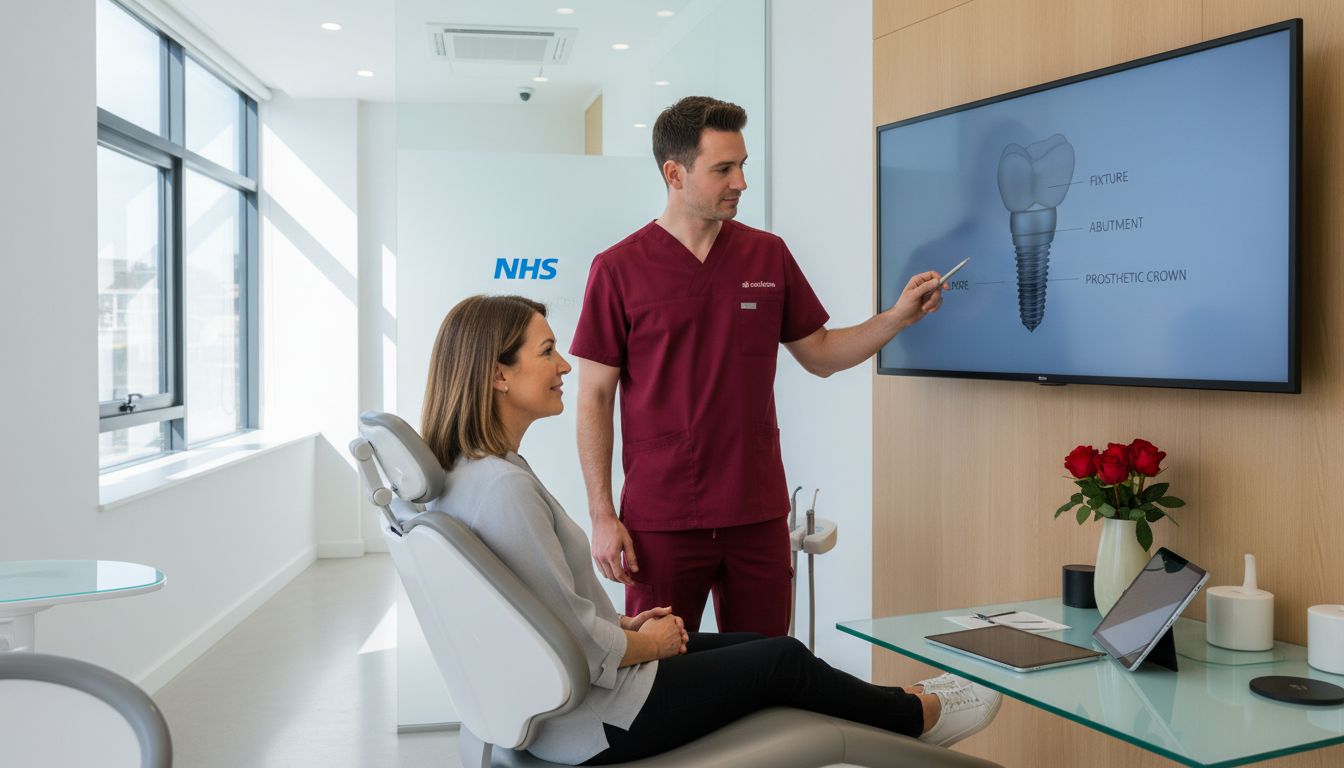
Understanding the fundamental components of dental implants is crucial for patients considering this treatment. A standard dental implant typically consists of three primary elements:
- Implant Fixture: A titanium screw surgically placed into the jawbone, acting as an artificial tooth root
- Abutment: A connector piece that links the implant fixture to the prosthetic tooth
- Prosthetic Crown: The visible, custom-designed tooth restoration that mimics natural tooth appearance and function
The success of dental implants depends on several critical factors, including patient health, bone density, oral hygiene, and the expertise of the dental professional performing the procedure. Modern implant technologies have dramatically improved success rates, making them a reliable and long-lasting solution for tooth replacement.
Eligibility Criteria for Dental Implant Candidacy
Determining whether an individual qualifies for dental implants involves a comprehensive assessment of multiple health and physiological factors. According to the British Society of Periodontology, dental implants are generally suitable for most fully grown adults who maintain good overall health and do not have active dental disease. Patients must undergo a thorough evaluation to ensure they meet the necessary candidacy requirements.
Certain lifestyle and medical conditions can significantly impact implant suitability. Health Centre highlights that smoking, for instance, can temporarily disqualify individuals from receiving dental implants due to increased risks of procedural failure. Other critical factors influencing candidacy include:
- Bone Density: Sufficient jawbone volume and quality to support implant integration
- Oral Health: Absence of active periodontal disease or untreated dental infections
- Overall Health: Stable medical conditions without compromising healing potential
- Age: Fully developed skeletal structure (typically 18 years and older)
Patients with certain medical conditions may require additional medical clearance or specialised treatment protocols.
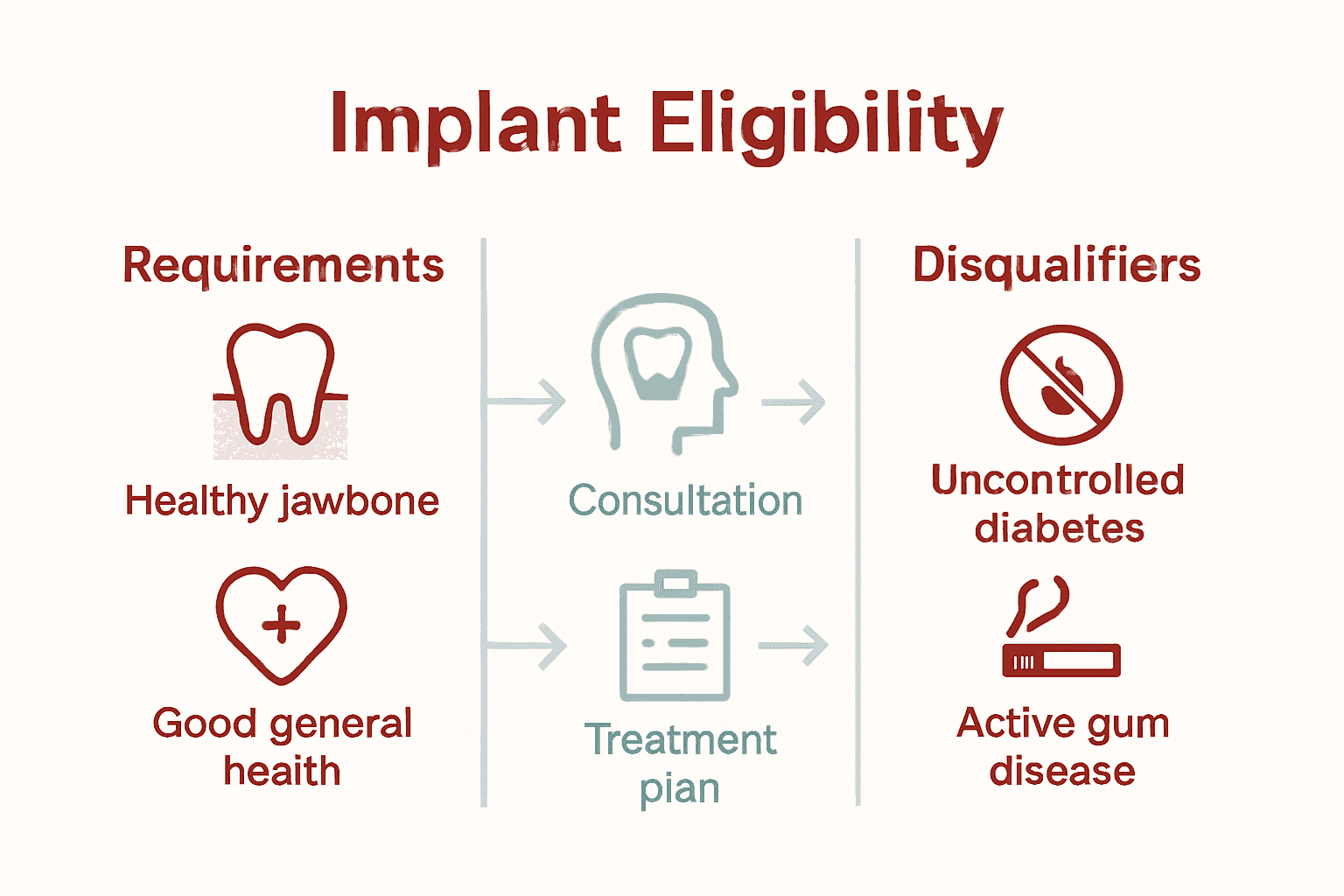 Conditions such as uncontrolled diabetes, autoimmune disorders, or those undergoing radiation therapy might necessitate a more nuanced approach. For a deeper understanding of specific contraindications, refer to our guide on who cannot have dental implants, which provides detailed insights into potential limitations and alternative treatment strategies.
Health and Bone Requirements for Implants
Dental implant success hinges critically on specific health and physiological prerequisites. According to the British Society of Periodontology, successful implant placement requires good general health and adequate bone density in the jaw to support the implant structure. Untreated dental conditions can significantly compromise the procedure’s long-term effectiveness, necessitating comprehensive pre-surgical evaluation.
Guys and St Thomas NHS emphasises that a detailed pre-operative assessment is crucial to evaluate bone quality and quantity. When natural bone volume proves insufficient, advanced surgical techniques like bone grafting become essential to enhance the implant site’s structural integrity.
Key health and bone requirements for dental implant candidacy include:
- Bone Density: Minimum bone width and height to securely anchor the implant
- Bone Quality: Sufficient bone mineral density and structural integrity
- Jaw Health: Absence of active periodontal disease or significant bone deterioration
- Medical Stability: Well-managed chronic conditions that do not impair healing
Patients with compromised bone structure aren’t automatically disqualified. Modern dental technologies offer innovative solutions like sinus lifts, bone grafting, and advanced imaging techniques that can enhance implant feasibility. For more detailed insights into potential limitations, explore our guide on when dental implants are not recommended, which provides comprehensive information about complex candidacy scenarios.
Assessment Process and Treatment Planning Steps
Navigating the dental implant journey requires a meticulously structured approach that ensures patient safety and optimal treatment outcomes. Guys and St Thomas NHS outlines the comprehensive process, which typically encompasses several critical stages from initial consultation to final prosthetic placement.
Professional standards play a pivotal role in treatment planning. The Association of Dental Implantology emphasises that dentists must adhere to the General Dental Council’s Standards for the Dental Team, ensuring care is delivered within professional knowledge boundaries and based on current evidence-based guidance.
The comprehensive assessment and treatment planning process typically involves the following key steps:
- Initial Consultation
- Comprehensive medical and dental history review
- Discussion of patient expectations and treatment goals
- Preliminary oral examination
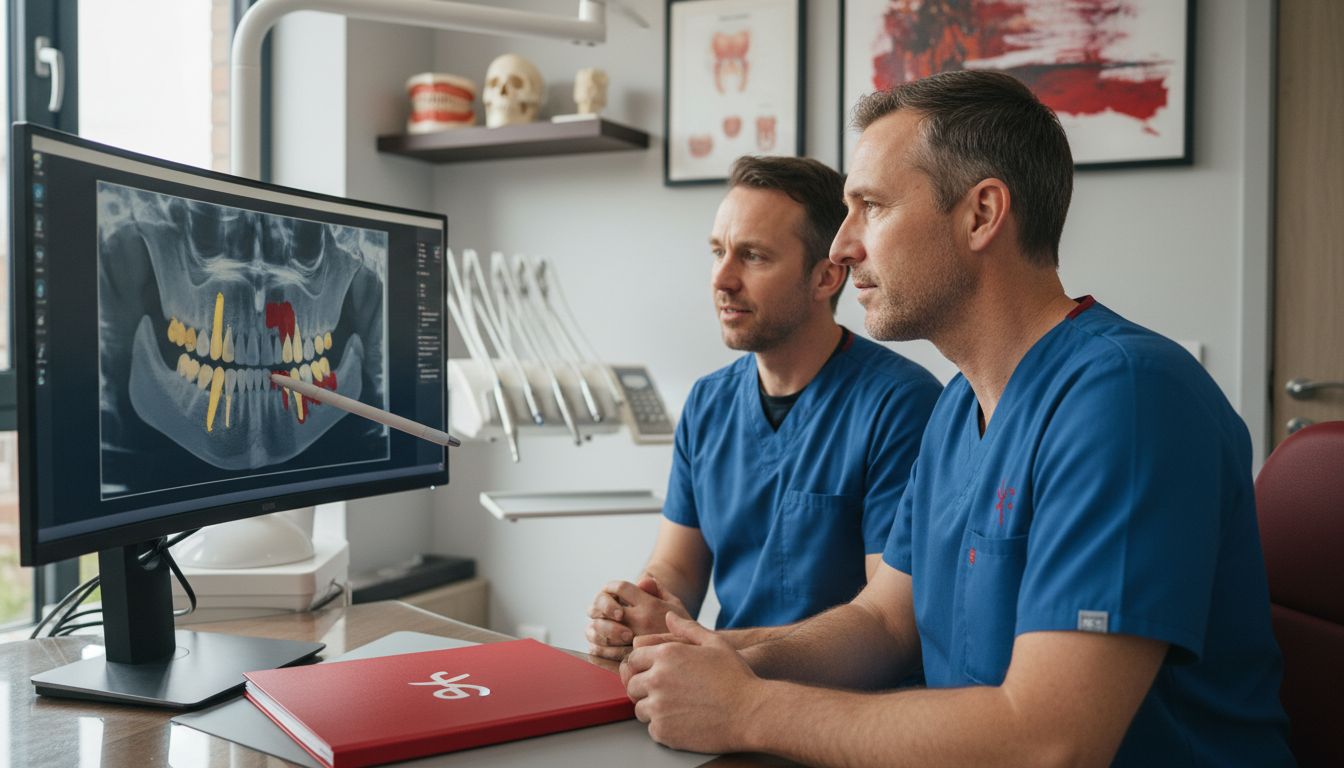
- Diagnostic Imaging
- 3D digital scans and X-rays
- Detailed assessment of bone structure
- Comprehensive treatment visualisation
- Treatment Strategy Development
- Personalised implant placement plan
- Identification of potential challenges
- Selection of appropriate implant type and technique
- Pre-Surgical Preparation
- Potential bone grafting or preparatory procedures
- Patient health optimisation
- Detailed informed consent process
Patients seeking a more in-depth understanding of potential treatment complexities can explore our guide on when dental implants are not recommended, which provides additional insights into nuanced clinical scenarios and patient considerations.
Costs, Risks, and Alternative Treatment Options
Navigating the landscape of dental implants requires a comprehensive understanding of financial implications and potential treatment risks. According to the British Society of Periodontology, dental implants are primarily provided through private healthcare, demanding significant financial investment for initial placement, restoration, and ongoing maintenance. NHS funding remains extremely limited, typically reserved for patients with specific medical conditions.
Guys and St Thomas NHS highlights potential risks associated with dental implant procedures, emphasising that implant integration failure remains a genuine concern. Smoking significantly increases these risks, potentially compromising the long-term success of the treatment.
Key considerations for patients include:
Financial Aspects
- Private treatment costs ranging from £2,000-£6,000 per implant
- Additional expenses for consultation and potential preparatory procedures
- Limited insurance coverage for cosmetic dental interventions
Potential Risks
- Implant Integration Failure: Approximately 5-10% chance of unsuccessful bone fusion
- Potential infection or inflammatory responses
- Temporary discomfort during healing process
- Rare complications involving nerve damage
Alternative Treatment Options
- Traditional removable dentures
- Fixed dental bridges
- Partial prosthetic replacements
- Conservative dental restoration techniques
Patients seeking comprehensive information about potential treatment alternatives can explore our guide on when dental implants are not recommended, which offers detailed insights into alternative dental restoration strategies tailored to individual clinical scenarios.
Ready to Discover If You Qualify for Dental Implants with Confidence
If you feel overwhelmed by the complex eligibility criteria and worry about bone density or overall health requirements, you are not alone. Successfully qualifying for dental implants means understanding every step from initial assessment to treatment planning, and that is exactly where expert guidance can make all the difference. You deserve a solution that not only meets professional standards but also fits your budget without compromising quality.
At Albania Dental Implants we specialise in helping international patients navigate these challenges with ease. Our team utilises advanced diagnostics and minimally invasive techniques to tailor your treatment plan, including options like bone grafting or sinus lifts when needed. Benefit from up to 70% cost savings compared to Western Europe while receiving care from internationally trained doctors using CE-certified materials. Don’t let uncertainty delay your journey to a confident smile. Explore our detailed patient information and start your personalised consultation today by visiting our comprehensive medical tourism platform. Your path to lasting dental health begins now.
Frequently Asked Questions
What are the eligibility criteria for dental implants?
To qualify for dental implants, candidates generally need to be fully grown adults in good health, with sufficient jawbone density and without active dental disease. A comprehensive evaluation by a dental professional is necessary to determine individual suitability.
Can smoking affect my eligibility for dental implants?
Yes, smoking can temporarily disqualify individuals from receiving dental implants because it significantly increases the risks of procedural failure and can hinder healing post-surgery.
What are the health requirements for dental implant candidacy?
Candidates must have good general health and adequate bone density to support the implant. Conditions like uncontrolled diabetes, autoimmune disorders, or significant periodontal disease may require additional consideration before proceeding with implants.
What steps are involved in the dental implant assessment process?
The assessment process typically includes an initial consultation, diagnostic imaging (such as 3D scans and X-rays), development of a personalised treatment strategy, and pre-surgical preparation, which may involve health optimisation and informed consent.