



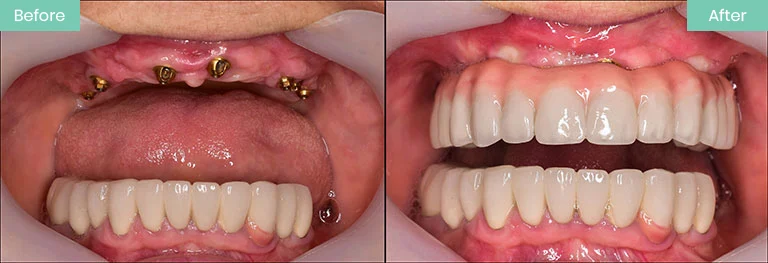

What are All-on-4 Dental Implants?
When exploring solutions for full mouth dental restoration, you’ll likely encounter the term “All-on-4 dental implants.” This innovative technique, also sometimes referred to as full arch dental implants, offers a streamlined and efficient way to replace an entire arch of missing teeth. But what exactly are All-on-4 implants and how do they work?
Definition of All-on-4 Implants
All-on-4 is a dental implant procedure that provides a permanent, fixed solution for replacing all teeth in either the upper or lower jaw, or both. Unlike traditional implants that require one implant per tooth, All-on-4 uses just four strategically placed implants to support an entire arch of replacement teeth. This is possible because the posterior implants are angled, maximizing contact with the available bone and often eliminating the need for bone grafting. This reduces overall treatment time and cost.
How All-on-4 Works: Procedure Overview
The All-on-4 procedure typically involves these steps:
- Initial Consultation and Assessment: A comprehensive examination, including X-rays and CT scans, to assess your bone density, jaw structure, and overall oral health. This stage helps determine if you are a suitable candidate for the procedure.
- Treatment Planning: A customized treatment plan is created, outlining the precise placement of the implants and the design of the final restoration.
- Implant Placement: On the day of the surgery, any remaining failing teeth are extracted. The four dental implants are then surgically placed into the jawbone. Two implants are placed vertically in the front of the jaw, while the other two are angled in the back.
- Provisional Restoration: A temporary set of teeth is attached to the implants, allowing you to function and smile confidently while the implants integrate with the bone (osseointegration).
- Osseointegration: Over the next few months (typically 3-6 months), the implants fuse with the jawbone, providing a stable and permanent foundation for the final restoration.
- Final Restoration: Once osseointegration is complete, the temporary set of teeth is replaced with a custom-designed, permanent set of teeth that look, feel, and function like natural teeth.
The key advantage of All-on-4 is its ability to provide a fully functional set of teeth with a minimally invasive procedure, often avoiding the need for bone grafting and significantly reducing recovery time. If you are looking for dental implants in Albania, Albania Dental Implants can offer you this dental treatment plan that best fits you.
How Much Do All-on-4 Dental Implants Cost in the UK?
One of the primary considerations when evaluating if All-on-4 dental implants are worth the money is understanding the cost. The cost vs. value proposition of All-on-4 is often a determining factor for patients in the UK, where dental care can be expensive. Also, it is good to note the availability on the NHS compared to private options.
Typical Price Range (Private, NHS Availability)
In the UK, the cost of All-on-4 dental implants typically ranges from £12,000 to £25,000 per arch (upper or lower). This price can vary depending on several factors, but generally includes the surgery, implants, abutments (connecting pieces), and the final restoration (the set of teeth).
Unfortunately, All-on-4 dental implants are rarely available on the NHS. The NHS primarily focuses on essential dental care, and cosmetic procedures like All-on-4 are typically not covered unless there’s a clear medical need and prior approval. Even then, access is very limited. Most patients seeking All-on-4 in the UK will need to pursue private dental treatment.
Factors Affecting Cost (Clinic, Region, Materials)
Several factors can influence the overall cost of All-on-4 dental implants:
- Clinic Location: Dental clinics in major cities like London or Edinburgh tend to have higher overhead costs, which can translate to higher prices. Clinics in more rural areas may offer slightly lower prices.
- Dentist’s Experience and Expertise: Highly experienced and qualified implant dentists may charge more for their services. While it might be tempting to opt for the cheapest option, it’s crucial to choose a dentist with a proven track record of successful All-on-4 procedures.
- Materials Used: The type of materials used for the implants and the final restoration can impact the cost. For example, zirconia implants may be more expensive than titanium implants. Similarly, the quality of the acrylic or porcelain used for the teeth can affect the price.
- Complexity of the Case: If you require additional procedures like bone grafting or sinus lifts, this will add to the overall cost.
Cost Breakdown (Surgery, Restoration, Aftercare)
A typical cost breakdown for All-on-4 dental implants might look like this:
- Initial Consultation and Assessment: £100 – £300
- CBCT Scan (3D X-ray): £150 – £300
- Implant Placement Surgery (per arch): £8,000 – £15,000
- Abutments (per arch): £1,000 – £2,000
- Provisional Restoration (temporary teeth): £2,000 – £4,000
- Final Restoration (permanent teeth): £3,000 – £6,000
- Aftercare and Follow-up Appointments: £200 – £500
It’s essential to get a detailed, written quote from your dentist outlining all the costs involved. Be sure to ask about any potential hidden costs or additional fees. For example, cost of dental implants in Albania offer much cheaper prices.
All-on-4 vs. Other Dental Implant Options
When considering All-on-4, it’s vital to compare it with other dental implant options, as well as alternative solutions like dentures. Understanding the pros and cons of each will help you determine which is the best fit for your needs and budget. This section will provide a comparison with traditional implants, dentures, and All-on-6.
Comparison with Traditional Implants, Dentures, All-on-6
Here’s a comparison of All-on-4 with other common tooth replacement options:
Table: All-on-4 vs. All-on-6 vs. Traditional Dental Implants vs. Dentures
| Feature | All-on-4 | All-on-6 | Traditional Dental Implants | Dentures |
|---|---|---|---|---|
| Number of Implants | 4 | 6 | Varies (typically 8-10 per arch) | 0 (removable) |
| Bone Grafting | Often not required | May be required in some cases | Often required | Not required |
| Cost | Mid-range | Higher than All-on-4 | Highest | Lowest |
| Stability | Excellent | Excellent | Excellent | Moderate |
| Maintenance | Similar to natural teeth | Similar to natural teeth | Similar to natural teeth | Requires daily cleaning and soaking |
| Longevity | Long-term (10+ years) | Long-term (10+ years) | Long-term (10+ years) | 5-10 years (need replacement) |
| Procedure Time | Shorter | Shorter | Longer | Fastest |
| Aesthetics | Very natural-looking | Very natural-looking | Very natural-looking | Can look artificial |
Pros and Cons of Each
- All-on-4:
- Pros: Cost-effective compared to traditional implants, often avoids bone grafting, shorter treatment time, stable and functional.
- Cons: Requires specific jawbone structure, potential for complications like implant failure.
- All-on-6:
- Pros: Increased stability compared to All-on-4, better distribution of forces, may be suitable for more complex cases.
- Cons: Higher cost than All-on-4, may still require bone grafting in some cases.
- Traditional Dental Implants:
- Pros: Maximum stability and longevity, can replace individual teeth or full arches.
- Cons: Highest cost, often requires bone grafting, longest treatment time.
- Dentures:
- Pros: Lowest cost, non-invasive, fastest treatment time.
- Cons: Least stable, can be uncomfortable, may affect speech and taste, requires regular replacement.
The decision of which option is best depends on your individual needs, budget, and preferences. It’s essential to consult with a qualified dentist to discuss your options and determine the most suitable solution for your specific case. If you are considering this treatment plan, explore Albania Dental Implants Services.
Are All-on-4 Dental Implants Worth the Money?
The ultimate question is: are All-on-4 dental implants worth the money? This depends on your individual circumstances, priorities, and expectations. To answer this, consider the long-term savings vs. initial investment, clinical outcomes and patient satisfaction, as well as any common regrets or issues reported.
Long-Term Savings vs. Initial Investment
While the initial cost of All-on-4 dental implants can seem high, it’s important to consider the potential long-term savings. Dentures, for example, may seem like a cheaper option upfront, but they require regular replacement (every 5-10 years) and can incur additional costs for adhesives, cleaning solutions, and adjustments.
All-on-4 implants, on the other hand, are a permanent solution that, with proper care, can last for many years. This eliminates the need for ongoing replacement costs and can save you money in the long run. Additionally, All-on-4 implants can improve your overall oral health, reducing the risk of gum disease, bone loss, and other dental problems that can lead to further expenses.
Clinical Outcomes and Patient Satisfaction
Clinical studies have shown that All-on-4 dental implants have a high success rate, with many patients experiencing significant improvements in their quality of life. Patients report increased confidence, improved ability to eat and speak, and enhanced overall comfort compared to dentures. The fixed nature of All-on-4 implants provides a stable and secure foundation for the teeth, allowing patients to function and smile without worrying about slippage or discomfort.
Patient satisfaction is generally high with All-on-4 implants, with many patients expressing that the procedure was worth the investment. However, it’s essential to have realistic expectations and understand that All-on-4 implants are not a perfect solution for everyone.
Common Regrets or Issues Reported
While most patients are happy with their All-on-4 implants, some do report certain regrets or issues. These may include:
- Initial Discomfort: Some patients experience discomfort, swelling, and bruising after the surgery. This is typically temporary and can be managed with pain medication.
- Speech Difficulties: Some patients may experience temporary speech difficulties as they adjust to their new teeth. This usually resolves within a few weeks.
- Dietary Restrictions: Initially, patients may need to follow a soft diet while the implants integrate with the bone.
- Maintenance Requirements: All-on-4 implants require regular cleaning and maintenance to ensure their longevity. This includes brushing, flossing, and regular dental checkups.
- Potential Complications: Although rare, complications like implant failure, infection, or nerve damage can occur.
It’s crucial to discuss these potential issues with your dentist and have a clear understanding of the risks and benefits before proceeding with All-on-4 dental implants. At Albania Dental Implants, we prioritize patient education and transparency, ensuring that you have all the information you need to make an informed decision. Also read What is the Downside of All on Four Dental Implants?.
Longevity, Maintenance, and Aftercare
When evaluating the worth of All-on-4 dental implants, it’s crucial to consider their longevity, the maintenance they require, and the necessary aftercare. These factors directly impact the long-term value and success of the treatment.
How Long All-on-4 Lasts Compared to Other Solutions
All-on-4 dental implants are designed to be a long-term solution for tooth replacement. With proper care and maintenance, they can last for 10 years or more. In many cases, they can even last a lifetime.
Compared to other solutions like dentures, which typically need to be replaced every 5-10 years, All-on-4 implants offer a significantly longer lifespan. Traditional dental implants also have a high success rate and can last for many years, but they often require more extensive procedures like bone grafting.
The longevity of All-on-4 implants depends on several factors, including:
- Oral Hygiene: Maintaining good oral hygiene is essential for the success of All-on-4 implants. This includes brushing, flossing, and using an antibacterial mouthwash daily.
- Regular Dental Checkups: Regular dental checkups and cleanings are crucial for monitoring the health of your implants and addressing any potential problems early on.
- Lifestyle Factors: Smoking, excessive alcohol consumption, and teeth grinding can negatively impact the longevity of All-on-4 implants.
- Overall Health: Certain medical conditions like diabetes and osteoporosis can increase the risk of implant failure.
Ongoing Maintenance Requirements (Cleaning Visits, Replacement Parts)
While All-on-4 implants are a permanent solution, they do require ongoing maintenance to ensure their longevity. This includes:
- Professional Cleaning: Regular professional cleanings are essential for removing plaque and tartar buildup around the implants. Your dentist or hygienist will use specialized tools to clean the implants without damaging them.
- Home Care: Maintaining good oral hygiene at home is crucial. This includes brushing your teeth twice a day with a soft-bristled toothbrush, flossing daily, and using an antibacterial mouthwash.
- Replacement Parts: In some cases, certain parts of the All-on-4 restoration may need to be replaced over time. This could include the acrylic or porcelain teeth, the abutments, or the screws that hold the restoration in place.
Hidden/Future Costs
While All-on-4 implants are designed to be a long-term solution, there are some potential hidden or future costs to be aware of:
- Replacement Parts: As mentioned above, certain parts of the All-on-4 restoration may need to be replaced over time. The cost of these replacements can vary depending on the materials used and the complexity of the repair.
- Additional Procedures: In rare cases, additional procedures like bone grafting or gum surgery may be needed to maintain the health of the implants.
- Emergency Repairs: Accidents or injuries can damage the All-on-4 restoration and require emergency repairs.
- Maintenance Costs: The cost of regular professional cleanings and checkups should also be factored into the overall cost of All-on-4 implants.
It’s essential to discuss these potential hidden costs with your dentist and have a clear understanding of the long-term maintenance requirements before proceeding with All-on-4 dental implants. At Albania Dental Implants, we provide transparent pricing and comprehensive aftercare instructions to ensure that our patients are fully informed and prepared for the long-term success of their implants.
Who is (and Isn’t) a Good Candidate for All-on-4 Implants?
Determining if All-on-4 dental implants are worth the money also involves assessing your suitability as a candidate. Not everyone is a good fit for this procedure, and understanding the ideal patient profile and potential alternatives is crucial for making an informed decision.
Ideal Patient Profile
The ideal candidate for All-on-4 dental implants typically:
- Has Significant Tooth Loss or Decay: All-on-4 is best suited for individuals who have lost most or all of their teeth in one or both arches due to decay, gum disease, or injury.
- Has Sufficient Bone Density: While All-on-4 can often avoid the need for bone grafting, it’s still important to have sufficient bone density in the jaw to support the implants.
- Is in Good Overall Health: Patients with uncontrolled medical conditions like diabetes or autoimmune diseases may not be good candidates for All-on-4.
- Is a Non-Smoker: Smoking significantly increases the risk of implant failure and can negatively impact the healing process.
- Is Committed to Good Oral Hygiene: Maintaining good oral hygiene is essential for the long-term success of All-on-4 implants.
Specifically, patients with all their teeth removed and replaced with implants are often ideal candidates.
Who Should Consider Alternatives
All-on-4 dental implants may not be the best option for everyone. Individuals who should consider alternatives include:
- Those with Insufficient Bone Density: If you have significant bone loss in the jaw, All-on-4 may not be possible without bone grafting. In this case, traditional dental implants or other solutions may be more suitable.
- Those with Uncontrolled Medical Conditions: Certain medical conditions can increase the risk of implant failure. If you have uncontrolled diabetes, autoimmune disease, or other serious health issues, All-on-4 may not be recommended.
- Heavy Smokers: Smoking significantly increases the risk of implant failure. If you are a heavy smoker and unwilling to quit, All-on-4 may not be the best option for you.
- Those with Poor Oral Hygiene: Maintaining good oral hygiene is essential for the long-term success of All-on-4 implants. If you are unable or unwilling to commit to a rigorous oral hygiene routine, All-on-4 may not be the right choice.
- Those with Certain Jawbone Conditions: Specific jawbone conditions may make it difficult or impossible to place All-on-4 implants successfully.
Alternatives to All-on-4 dental implants include traditional dental implants, dentures, and implant-supported dentures. If you are not a good candidate for dental implants, explore How to Fix Missing Teeth Without Implants?. It’s essential to consult with a qualified dentist to discuss your options and determine the most suitable solution for your specific needs and circumstances.
Keep in mind that who is not suitable for implants is a very important question you should ask before starting with the treatment.
Financing Options for All-on-4 in the UK
Given the significant cost of All-on-4 dental implants, understanding the financing options available in the UK is crucial. Exploring private financing and payment plans, as well as considering dental insurance or NHS options, can help make this treatment more accessible.
Private Financing and Payment Plans
Many private dental clinics in the UK offer financing options or payment plans to help patients manage the cost of All-on-4 dental implants. These options may include:
- Dental Finance Companies: Several companies specialize in providing financing for dental treatments. These companies typically offer loans with fixed interest rates and repayment terms.
- In-House Payment Plans: Some dental clinics offer in-house payment plans, allowing you to spread the cost of treatment over several months or years.
- Credit Cards: Using a credit card with a low interest rate or a 0% introductory period can be a way to finance All-on-4 implants. However, it’s essential to pay off the balance before the interest rate increases.
When considering financing options, it’s important to compare interest rates, repayment terms, and any associated fees. Be sure to read the fine print and understand the terms of the loan or payment plan before signing up. At Albania Dental Implants, we can work with you to explore financing options that may be available to UK patients seeking treatment in Albania.
Dental Insurance or NHS Considerations
Unfortunately, most dental insurance plans in the UK do not cover the full cost of All-on-4 dental implants. Some plans may cover a portion of the treatment, but it’s essential to check with your insurance provider to understand the extent of your coverage. Also, explore if Can NHS pay for my dental implants?.
As mentioned earlier, All-on-4 dental implants are rarely available on the NHS. In exceptional cases where there is a clear medical need, the NHS may cover a portion of the treatment, but access is very limited and requires prior approval.
For many patients in the UK, traveling abroad for dental treatment is a more affordable option. Albania Dental Implants offers high-quality All-on-4 dental implants at a fraction of the cost compared to private clinics in the UK. This can make All-on-4 implants a more accessible and worthwhile investment for those seeking a permanent solution for tooth loss.
Frequently Asked Questions (FAQs)
To further assist you in determining if All-on-4 dental implants are worth the money, here are answers to some frequently asked questions:
How painful is the All-on-4 procedure?
While any surgical procedure involves some level of discomfort, the All-on-4 procedure is generally well-tolerated by patients. Most patients receive local anesthesia and/or sedation during the surgery to minimize pain. After the procedure, some discomfort, swelling, and bruising are normal and can be managed with pain medication. The level of pain varies from person to person, but most patients report that it is manageable. To understand more about it read How painful is All-on-4 dental implants?.
Are All-on-4 implants available on the NHS in the UK?
As mentioned earlier, All-on-4 dental implants are rarely available on the NHS in the UK. In exceptional cases where there is a clear medical need, the NHS may cover a portion of the treatment, but access is very limited and requires prior approval. Most patients seeking All-on-4 in the UK will need to pursue private dental treatment. To understand more about it read Can I get All-on-4 implants on the NHS?.
What if a single implant in the bridge fails?
While All-on-4 implants have a high success rate, it is possible for a single implant to fail. If this happens, there are several options:
- Replace the Failed Implant: In some cases, the failed implant can be replaced with a new one.
- Convert to All-on-3: If replacing the implant is not possible, the restoration can be modified to be supported by the remaining three implants.
- Add Additional Implants: In some cases, additional implants can be placed to provide extra support.
The best course of action will depend on the specific circumstances of the case and will be determined by your dentist.
Can I eat anything with All-on-4 implants?
One of the great benefits of All-on-4 implants is that they restore your ability to eat a wide range of foods. Initially, you may need to follow a soft diet while the implants integrate with the bone. However, after the implants have fully integrated, you should be able to eat most foods without any problems. To understand more about it read Can I eat normally with All-on-4 dental implants?.
How do All-on-4 look and feel compared to natural teeth or dentures?
All-on-4 implants are designed to look and feel as natural as possible. The replacement teeth are custom-designed to match the shape, size, and color of your natural teeth. They are also fixed in place, so they don’t slip or move around like dentures. While they may not feel exactly like natural teeth, most patients report that All-on-4 implants are a comfortable and natural-feeling solution. To understand more about it read Do All-on-4 Feel Like Real Teeth?.
What if I am not happy with the results?
While rare, it is possible to be unhappy with the results of All-on-4 implants. If this happens, it’s important to communicate your concerns to your dentist. In many cases, adjustments or modifications can be made to the restoration to improve the aesthetics or function. If the issues cannot be resolved, alternative solutions may be considered.
Are there age limits or health restrictions?
There is generally no upper age limit for All-on-4 dental implants. However, certain health conditions may make individuals unsuitable candidates. These include uncontrolled diabetes, autoimmune diseases, and other serious health issues. It’s important to discuss your medical history with your dentist to determine if All-on-4 is a safe and appropriate option for you.
It is important to ask when not to have a dental implant so that you know all the details about the treatment plan.
Conclusion
So, are All-on-4 dental implants worth the money? The answer is highly individual and depends on your specific circumstances, priorities, and budget. However, for many patients seeking a permanent, stable, and functional solution for tooth loss, All-on-4 implants can be a life-changing investment.
By carefully considering the cost vs. value proposition, exploring alternatives, understanding the longevity and maintenance requirements, and assessing your suitability as a candidate, you can make an informed decision about whether All-on-4 implants are the right choice for you.
At Albania Dental Implants, we are committed to providing high-quality, affordable All-on-4 dental implants to patients in the UK. Our experienced team of dental professionals, state-of-the-art facilities, and transparent pricing make us a compelling alternative for those seeking significant savings on this transformative treatment. Contact Albania Dental Implants today to schedule a consultation and learn more about how we can help you restore your smile and improve your quality of life.





