



Process for Dental Implants: Step-by-Step Guide to Tooth Implant Treatment
The process for dental implants involves several clinical steps, from initial assessment to final restoration, ensuring a long-lasting and functional tooth replacement. At Albania Dental Implants, we understand the importance of a confident smile, and we’re here to guide you through each stage of this transformative journey. Whether you are considering traveling abroad for affordable and high-quality care through dental tourism in Albania, or simply want to understand the process better, this guide will provide you with all the information you need.
What is a Dental Implant?
Dental implants are a modern and effective solution for replacing missing teeth. The dental implant procedure has revolutionized restorative dentistry, offering a permanent and natural-looking alternative to dentures and bridges. Unlike other tooth replacement options, implants fuse with your jawbone, providing unparalleled stability and support.
Components and Function
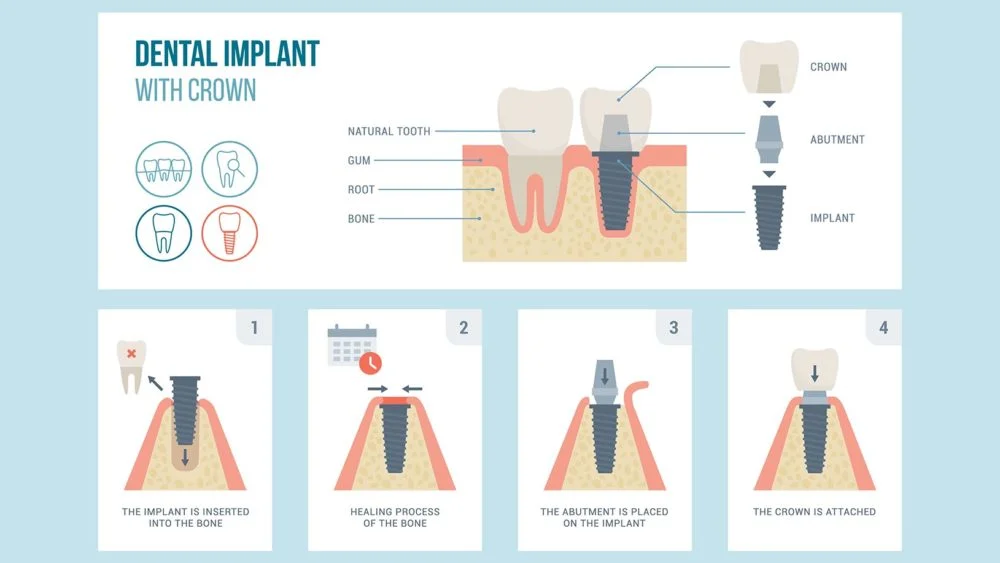
- Definition: A dental implant is a surgical component that interfaces with the bone of the jaw or skull to support a dental prosthesis such as a crown, bridge, denture, or facial prosthesis.
- Parts of an Implant:
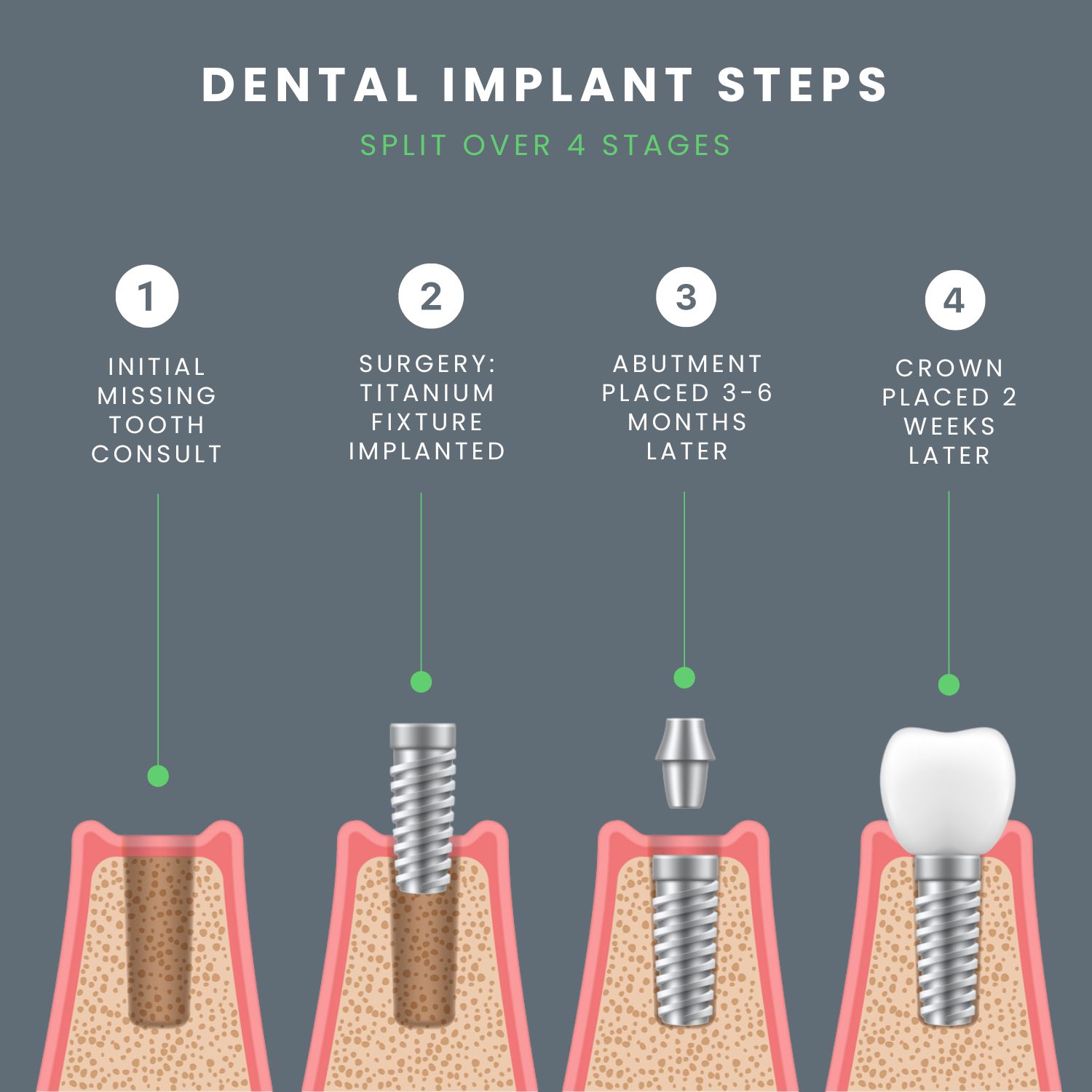
- Fixture: The titanium post that is surgically placed into the jawbone, acting as the artificial root.
- Abutment: A connector that is attached to the implant fixture, serving as the base for the final restoration.
- Crown: The artificial tooth that is custom-made to match your natural teeth and attached to the abutment.
Who is a Candidate for Dental Implants?
Ideal candidates for dental implants generally include individuals who:
- Have one or more missing teeth.
- Have adequate bone density in the jaw to support an implant.
- Are in good overall health.
- Are committed to maintaining good oral hygiene.
However, certain conditions may affect candidacy, such as uncontrolled diabetes, heavy smoking, or certain bone disorders. A thorough consultation with a qualified dentist at Albania Dental Implants can determine if dental implants are the right solution for you.
Stages of Dental Implants: Complete Procedure Timeline
The stages of dental implants are carefully planned to ensure optimal results. The dental implant surgery process is a multi-step approach that typically spans several months. Understanding each phase can help you prepare and know what to expect.
Initial Consultation & Diagnosis
The first step involves a comprehensive evaluation, including:
- Clinical Examination: Assessing your overall oral health and identifying any potential issues.
- X-rays and 3D Scans: Evaluating bone density and identifying the best location for implant placement.
- Treatment Planning: Developing a customized plan tailored to your specific needs and goals.
Tooth Extraction (If Needed)
If the tooth needs to be extracted, this is typically done before implant placement. The extraction site needs time to heal before proceeding to the next stage. In some cases, immediate implant placement may be possible.
Bone Grafting for Implants (When Required)
Bone grafting for implants is sometimes necessary if there is insufficient bone density in the jaw. This procedure helps to create a solid foundation for the implant. The bone grafting in Albania procedure involves adding bone material to the jawbone, which then fuses with the existing bone over several months.
Implant Placement Surgery: Process and Expectations
The implant placement surgery involves:
- Anesthesia: Local anesthesia is typically used, but sedation options are available for anxious patients. Are you wondering, Are you put to sleep for dental implants?
- Incision: A small incision is made in the gum tissue to expose the bone.
- Implant Insertion: The implant fixture is carefully placed into the prepared site in the jawbone.
- Suturing: The gum tissue is stitched back into place, covering the implant.
Osseointegration & Healing Time
Osseointegration and healing time is the crucial process where the implant fuses with the jawbone. This typically takes several months. During this time, it’s essential to follow your dentist’s instructions for oral hygiene and diet.
Abutment Placement
Once osseointegration is complete, the abutment is attached to the implant fixture. This may require a minor surgical procedure to expose the implant.
Fitting the Final Dental Crown
The final step involves creating and fitting the custom dental crown. The crown is designed to match the color, shape, and size of your natural teeth, ensuring a seamless and natural-looking result.
Preparation: Consultation and Planning
Thorough preparation is key to a successful dental implant procedure. This is where the dental implant assessment happens and detailed planning takes place.
Importance of X-rays, 3D Scans, and Treatment Plan
- Detailed Imaging: X-rays and 3D scans provide a comprehensive view of your jawbone, allowing the dentist to assess bone density and identify any potential issues.
- Accurate Planning: This information is used to create a precise treatment plan, ensuring the implant is placed in the optimal location for long-term stability and function.
Assessing Bone Density
Adequate bone density is crucial for implant success. If bone density is insufficient, bone grafting may be necessary to create a solid foundation for the implant. What can you do if you don’t have enough bone for dental implants?
Discussing Medical History and Patient Needs
Your dentist will review your medical history to identify any factors that may affect the implant procedure. They will also discuss your goals and expectations to ensure the treatment plan aligns with your needs. Here we make sure to discuss things like if, Who Should Not Get Dental Implants?
The Dental Implant Surgery
The dental implant surgery is a carefully executed procedure designed to ensure precise implant placement and long-term success.
Anesthesia Options
- Local Anesthesia: Numbing the specific area where the implant will be placed.
- Sedation: Options include oral sedation, IV sedation, or general anesthesia for anxious patients.
Surgery Steps Explained
- Incision: A small incision is made in the gum tissue to expose the bone.
- Drilling: A pilot hole is drilled into the bone to create space for the implant fixture.
- Implant Placement: The implant fixture is carefully screwed into the prepared site.
- Closure: The gum tissue is stitched back into place, covering the implant.
Duration and What to Expect
The surgery typically takes 1-2 hours per implant, depending on the complexity of the case. You may experience some swelling and discomfort after the procedure, but this can be managed with pain medication. How painful are dental implants?
Immediate Aftercare
- Pain Management: Take prescribed pain medication as directed.
- Cold Compress: Apply ice packs to reduce swelling.
- Soft Diet: Eat soft foods to avoid irritating the surgical site.
- Oral Hygiene: Gently rinse with salt water to keep the area clean.
Bone Grafting for Implants
Bone grafting for implants is a common procedure to augment the jawbone and provide adequate support for dental implants.
When Bone Grafting is Necessary
Bone grafting is typically necessary when:
- Bone Loss: There has been significant bone loss due to tooth extraction, gum disease, or injury.
- Insufficient Bone Density: The jawbone lacks the necessary density to support an implant.
- Sinus Lift: In the upper jaw, a sinus lift may be needed to create space for the implant by lifting the sinus membrane and adding bone material.</li.
Can you do a sinus lift in albania?
Types of Bone Graft Materials
- Autograft: Bone harvested from your own body, typically from the hip or jaw.
- Allograft: Bone from a deceased donor that has been processed and sterilized.
- Xenograft: Bone from an animal source, such as bovine bone, that has been processed and sterilized.
- Synthetic Graft: Man-made materials that mimic the structure of bone.
Healing Period Before Implant Placement
The healing period for bone grafting typically ranges from 3-6 months, depending on the extent of the graft and individual healing factors. During this time, the bone graft material fuses with the existing bone, creating a solid foundation for the implant. We may suggest, what to do if your teeth are rotting and you can’t afford to fix it in the UK while you wait.
Healing Time and Osseointegration
The implant healing time and osseointegration process are critical for the long-term success of dental implants.
What is Osseointegration?
Osseointegration is the process by which the bone cells grow and fuse directly onto the surface of the implant fixture. This creates a strong and stable foundation for the dental restoration. Is it Can I get a dental implant 10 years later?
Typical Healing Durations
- Lower Jaw: Osseointegration typically takes 3-4 months.
- Upper Jaw: Osseointegration may take 5-6 months due to the softer bone in the upper jaw.
Temporary Restorations During Healing
During the healing period, you may have temporary restorations to maintain aesthetics and function, such as:
- Temporary Crown: A temporary crown can be placed on the implant site for single tooth implants.
- Temporary Denture: A removable denture can be used to replace multiple missing teeth.
- Immediate Loading: In some cases, immediate loading dental implants may be an option, where a temporary crown is placed on the implant immediately after surgery.
How Can I Cover My Missing Teeth While Waiting for the Implant?
Placing the Abutment and Crown
Once osseointegration is complete, the next step is placing the abutment and crown. This involves a minor procedure to attach the abutment and then fitting the custom dental crown.
Minor Surgery for Abutment
The abutment placement typically involves:
- Anesthesia: Local anesthesia is used to numb the area.
- Incision: A small incision is made to expose the implant fixture.
- Abutment Attachment: The abutment is screwed onto the implant fixture.
- Closure: The gum tissue is repositioned around the abutment.
Impressions and Custom Crown Design
After the abutment is placed, impressions are taken to create a custom dental crown. The crown is designed to match the color, shape, and size of your natural teeth, ensuring a seamless and natural-looking result.
Permanent Restoration
The final step involves attaching the custom dental crown to the abutment. This can be done using screws or dental cement, depending on the type of crown. Dental Crown What exactly is a crown on a tooth?
Cost of Dental Implants in the UK
The dental implant cost in the UK can vary significantly depending on several factors. Understanding these costs can help you make an informed decision.
Average Prices
The average prices for dental implants in the UK are:
- Single Implant: £2,000 – £4,000
- All-on-4 Implants: £8,000 – £15,000 per arch
- Full Mouth Implants: £15,000 – £30,000
Wondering, How Much Does a Full Set of Teeth Implants Cost in the UK?
What Factors Impact Cost?
- Location: Prices can vary depending on the dental clinic’s location and overhead costs.
- Materials: The type of implant fixture and crown material can affect the cost.
- Complexity: More complex cases requiring bone grafting or sinus lifts may incur additional costs.
- Dentist’s Experience: Experienced dentists may charge higher fees.
NHS Versus Private Options
Can you get a dental implant on the NHS in the UK? Dental implants are rarely available on the NHS, and are typically reserved for cases of medical necessity, such as:
- Trauma resulting in tooth loss.
- Congenital defects.
- Severe medical conditions.
Most patients opt for private dental care to receive dental implants.
Financing and Insurance
Many private dental clinics offer financing options to help you manage the cost of dental implants. Some dental insurance plans may cover a portion of the cost, but it’s essential to check your policy details.
Benefits, Risks, and Alternatives
Dental implants offer numerous benefits, but it’s essential to be aware of the potential risks and alternatives before making a decision.
Main Advantages
- Long-lasting: With proper care, dental implants can last a lifetime. How How long do dental implants last in the UK?
- Natural-looking: Dental implants look and feel like natural teeth.
- Improved Function: Dental implants restore your ability to eat, speak, and smile with confidence.
- Bone Preservation: Dental implants help to preserve bone density in the jaw.
Common Complications or Failures
- Infection: Infection at the implant site can lead to implant failure.
- Nerve Damage: Nerve damage during surgery can cause numbness or tingling in the mouth.
- Implant Failure: In rare cases, the implant may not fuse with the bone, leading to failure. What percentage of people reject dental implants?
Comparison to Dentures and Bridges
- Dentures: Removable appliances that replace missing teeth. They are less expensive than implants but can be less stable and require more maintenance.
- Bridges: Fixed appliances that attach to adjacent teeth to fill the gap. They are less invasive than implants but may require altering the adjacent teeth. Which is Which is better, implant or bridge?
Dental Implant Aftercare and Long-Term Success
Proper dental implant aftercare is crucial for ensuring the long-term success of your implants.
Daily Hygiene
- Brushing: Brush your teeth twice a day with a soft-bristled toothbrush.
- Flossing: Floss daily to remove plaque and food particles from around the implant.
- Interdental Brushes: Use interdental brushes to clean hard-to-reach areas.
Professional Check-Ups
Visit your dentist regularly for professional check-ups and cleanings. Your dentist can identify and address any potential issues early on.
Lifestyle Tips for Implant Longevity
- Avoid Smoking: Smoking can increase the risk of implant failure.
- Limit Sugar: Reduce your intake of sugary foods and drinks.
- Protect Implants: Wear a mouthguard during sports or other activities that may cause trauma to the mouth.
When are What foods can you not eat with dental implants?
FAQs about the Process for Dental Implants
How long does the process for dental implants take from start to finish?
The entire process for dental implants can take anywhere from 6 months to a year or more, depending on individual factors such as the need for bone grafting and the healing rate. The initial consultation and diagnosis take about 1-2 weeks. Bone grafting, if required, adds 3-6 months to the timeline. Implant placement surgery and osseointegration typically take 3-6 months, followed by abutment placement and final crown fitting, which can take an additional 1-2 months.
Is the dental implant procedure painful?
Most patients report minimal discomfort during the dental implant procedure. Local anesthesia is used to numb the area, and sedation options are available for anxious patients. After the surgery, some swelling and discomfort are normal, but this can be managed with pain medication.
What are the risks or complications associated with dental implants?
Potential risks and complications of dental implants include infection, nerve damage, sinus problems, and implant failure. However, these complications are rare and can be minimized by choosing an experienced dentist and following proper aftercare instructions.
Who is not suitable for dental implants?
Individuals with certain medical conditions, such as uncontrolled diabetes, severe heart disease, or certain bone disorders, may not be suitable candidates for dental implants. Heavy smokers and people with poor oral hygiene may also be at higher risk of implant failure. These factors determine, Who is not suitable for implants?
Can you get a dental implant on the NHS in the UK?
Dental implants are rarely available on the NHS and are typically reserved for cases of medical necessity. Most patients opt for private dental care to receive dental implants.
What should I avoid after a dental implant?
After a dental implant, you should avoid smoking, eating hard or sticky foods, and engaging in strenuous activities. Follow your dentist’s instructions for oral hygiene and diet to ensure proper healing. Here is What Not to Do Before a Dental Implant?
How do I care for my new implant?
Care for your new implant by brushing twice a day, flossing daily, and visiting your dentist regularly for check-ups and cleanings. Use interdental brushes to clean hard-to-reach areas and follow your dentist’s specific instructions for oral hygiene.
How do dental implants compare to bridges or dentures?
Dental implants offer several advantages over bridges and dentures, including improved stability, natural-looking results, and bone preservation. Implants are a long-term solution that can last a lifetime with proper care, while bridges and dentures may require replacement over time.
What if I don’t have enough bone for an implant?
If you don’t have enough bone for an implant, bone grafting may be necessary to augment the jawbone and provide adequate support for the implant. Bone grafting involves adding bone material to the jawbone, which then fuses with the existing bone over several months.
How successful are dental implants?
Dental implants have a high success rate, with most studies reporting success rates of 95% or higher. With proper care and maintenance, dental implants can last a lifetime.
Considering Dental Implants? Contact Albania Dental Implants Today!
If you’re considering dental implants, Albania Dental Implants offers high-quality, affordable dental care in a beautiful setting. Our experienced team of dentists uses the latest technology and techniques to ensure optimal results. Contact us today to schedule a consultation and learn more about how we can help you restore your smile and confidence!
- Expert Care
- Affordable Prices
- State-of-the-Art Technology
- Personalized Treatment Plans
Don’t wait any longer to achieve the smile of your dreams. Reach out to Albania Dental Implants to begin your journey towards a confident, healthy smile. We can also go over, How Much Does It Take to Implant a Tooth?





